07 May 2014
by The Hare Krishna Movement
in A.C. Bhaktivedanta Swami Prabhupada, Nectar of Instruction, Rupa Goswami
Tags: A.C. Bhaktivedanta Swami Prabhupada, Govardhana Hill, Krsna, Krsna's rasa lila pastimes, Mathura, Nectar on Instruction, Radha-kunda, Sri Krsna, Srila Rupa Goswami, Text 9, transcendental forest of Vrndavan, transcendental world, Vaikuntha
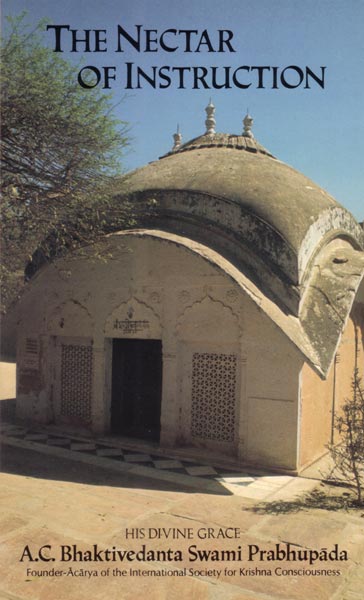
Continuing with our series on the Nectar of Instruction (Upadeśāmṛta), we are posting Text 9, the very important instructions given by Śrīla Rūpa Gosvāmī on visiting the holy places of pilgrimage.
The Nectar of Instruction
By His Divine Grace A. C. Bhaktivedanta Swami Prabhupāda
Text Nine
vaikuṇṭhāj janito varā madhu-purī tatrāpi rāsotsavād
vṛndāraṇyam udāra-pāṇi-ramaṇāt tatrāpi govardhanaḥ
rādhā-kuṇḍam ihāpi gokula-pateḥ premāmṛtāplāvanāt
kuryād asya virājato giri-taṭe sevāṁ vivekī na kaḥ
SYNONYMS
vaikuṇṭhāt—than Vaikuṇṭha, the spiritual world; janitaḥ—because of birth; varā—better; madhu-purī—the transcendental city known as Mathurā; tatra api—superior to that; rāsa-utsavāt—because of the performance of the rāsa-līlā; vṛndā-araṇyam—the forest of Vṛndāvana; udāra-pāṇi—of Lord Kṛṣṇa; ramaṇāt—because of various kinds of loving pastimes; tatra api—superior to that; govardhanaḥ—Govardhana Hill; rādhā-kuṇḍam—a place called Rādhā-kuṇḍa; iha api—superior to this; gokula-pateḥ—of Kṛṣṇa, the master of Gokula; prema-amṛta—with the nectar of divine love; āplāvanāt—because of being overflooded; kuryāt—would do; asya—of this (Rādhā-kuṇḍa); virājataḥ—situated; giri-taṭe—at the foot of Govardhana Hill; sevām—service; vivekī—who is intelligent; na—not; kaḥ—who.
TRANSLATION
The holy place known as Mathurā is spiritually superior to Vaikuṇṭha, the transcendental world, because the Lord appeared there. Superior to Mathurā-Purī is the transcendental forest of Vṛndāvana because of Kṛṣṇa’s rāsa-līlā pastimes. And superior to the forest of Vṛndāvana is Govardhana Hill, for it was raised by the divine hand of Śrī Kṛṣṇa and was the site of His various loving pastimes. And, above all, the superexcellent Śrī Rādhā-kuṇḍa stands supreme, for it is overflooded with the ambrosial nectarean prema of the Lord of Gokula, Śrī Kṛṣṇa. Where, then, is that intelligent Person who is unwilling to serve this divine Rādhā-kuṇḍa, which is situated at the foot of Govardhana Hill?
PURPORT
The spiritual world is three fourths of the total creation of the Supreme Personality of Godhead, and it is the most exalted region. The spiritual world is naturally superior to the material world; however, Mathurā and the adjoining areas, although appearing in the material world, are considered superior to the spiritual world because the Supreme Personality of Godhead Himself appeared at Mathurā. The interior forests of Vṛndāvana are considered superior to Mathurā because of the presence of the twelve forests (dvādaśa-vana), such as Tālavana, Madhuvana and Bahulāvana, which are famous for the various pastimes of the Lord. Thus the interior Vṛndāvana forest is considered superior to Mathurā, but superior to these forests is the divine Govardhana Hill because Kṛṣṇa lifted Govardhana Hill like an umbrella, raising it with His lotuslike beautiful hand to protect His associates, the denizens of Vraja, from the torrential rains sent by the angry Indra, King of the demigods. It is also at Govardhana Hill that Kṛṣṇa tends the cows with His cowherd friends, and there also He had His rendezvous with His most beloved Śrī Rādhā and engaged in loving pastimes with Her. Rādhā-kuṇḍa, at the foot of Govardhana, is superior to all because it is there that love of Kṛṣṇa overflows. Advanced devotees prefer to reside at Rādhā-kuṇḍa because this place is the site of many memories of the eternal loving affairs between Kṛṣṇa and Rādhārāṇī (rati-vilāsa).
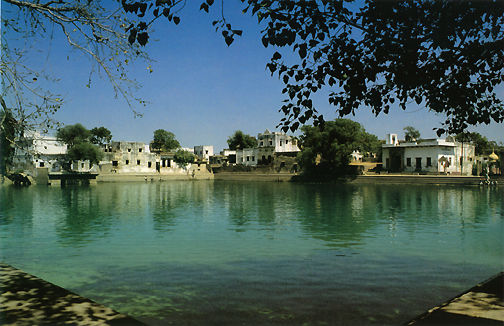
In Caitanya-caritāmṛta (Madhya-līlā) it is stated that when Śrī Caitanya Mahāprabhu first visited the area of Vrajabhūmi, He could not at first find the location of Rādhā-kuṇḍa. This means that Śrī Caitanya Mahāprabhu was actually searching for the exact location of Rādhā-kuṇḍa. Finally He found the holy spot, and there was a small pond there. He took His bath in that small pond and told His devotees that the actual Rādhā-kuṇḍa was situated there. Later the pond was excavated by Lord Caitanya’s devotees, headed first by the six Gosvāmīs, such as Rūpa and Raghunātha dāsa. Presently there is a large lake known as Rādhā-kuṇḍa there. Śrīla Rūpa Gosvāmī has given much stress to Rādhā-kuṇḍa because of Śrī Caitanya Mahāprabhu’s desire to find it. Who, then, would give up Rādhā-kuṇḍa and try to reside elsewhere? No person with transcendental intelligence would do so. The importance of Rādhā-kuṇḍa, however, cannot be realized by other Vaiṣṇava sampradāyas, nor can persons uninterested in the devotional service of Lord Caitanya Mahāprabhu understand the spiritual importance and divine nature of Rādhā-kuṇḍa. Thus Rādhā-kuṇḍa is mainly worshiped by the Gauḍīya Vaiṣṇavas, the followers of Lord Śrī Kṛṣṇa Caitanya Mahāprabhu.
04 May 2014
by The Hare Krishna Movement
in A.C. Bhaktivedanta Swami Prabhupada, Bhagavad-gita, Demigod, Durga, Srimad Bhagavatam
Tags: A. C. Bhaktivedanta Swami Prabhuada, Bg 9.10, Durga, goddess Parvati, Krishna, Krsna, Lord Siva, material nature, Siva, the goddess durga
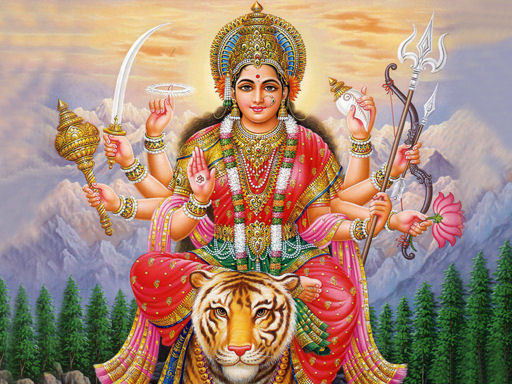
This morning, the above picture of the Goddess Durga crossed my desk, so I thought I would do a short post on Her. After some research in Srila Prabhupada’s books it is described: “Following the orders of Śrī Kṛṣṇa, the goddess Durgā creates, maintains and annihilates…Because the goddess Durgā satisfies Kṛṣṇa, we should therefore offer respects to goddess Durgā.” As devotees there is no need to worship the demigods, but because the demigods are also servants of Lord Krishna, we offer them our respect.
…Durgā—the goddess Pārvatī, the wife of Lord Śiva—is extremely powerful. She can create, maintain and annihilate any number of universes by her sweet will, but she acts under the direction of the Supreme Personality of Godhead, Kṛṣṇa, not independently. Kṛṣṇa is impartial, but because this is the material world of duality, such relative terms as happiness and distress, curses and favors, are created by the will of the Supreme. Those who are not nārāyaṇa-para, pure devotees, must be disturbed by this duality of the material world, whereas devotees who are simply attached to the service of the Lord are not at all disturbed by it. For example, Haridāsa Ṭhākura was beaten with cane in twenty-two bazaars, but he was never disturbed; instead, he smilingly tolerated the beating. Despite the disturbing dualities of the material world, devotees are not disturbed at all. Because they fix their minds on the lotus feet of the Lord and concentrate on the holy name of the Lord, they do not feel the so-called pains and pleasures caused by the dualities of this material world. (from purport SB 6.17.29)
This material nature is working under My direction, O son of Kuntī, and it is producing all moving and unmoving beings. By its rule this manifestation is created and annihilated again and again. (Bg 9.10)
More
03 May 2014
by The Hare Krishna Movement
in A.C. Bhaktivedanta Swami Prabhupada, Pure Devotee, Qualities of a Devotee, Srila Prabhupada, Twenty-Six Qualities of a Devotee
Tags: A.C. Bhaktivedanta Swami Prabhupada, peaceful, pure devotee, qualities of a devotee, Srila Prabhupada, Srila Prabhupada's Beautiful Transcendental Qualities

click on image to enlarge
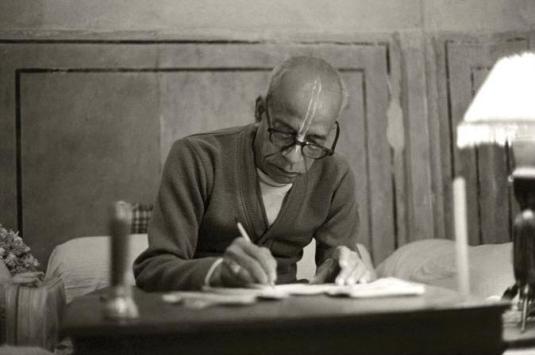
I was looking through some pictures this morning of Srila Prabhupada and my attention was drawn to this above image. He looked so peaceful, and I remembered that peacefulness is one of the transcendental qualities of the pure devotee. You can click on link at bottom of post to see the other Beautiful Transcendental Qualities of Srila Prabhupada.
Peaceful
Srila Prabhupada once described the mind of a pure devotee as being very peaceful, like a country pond filled with crystal-clear water, beautiful lotus flowers and swans gliding happily across it. This much desired state of mind is a natural quality of one who is situated in transcendence, at the lotus feet of Lord Krishna, far beyond the turbulent material world and senses. Srila Prabhupada was very peaceful due to his own pure Krishna consciousness. Shouldering the immense pressure and responsibility of a worldwide spiritual family, with its concomitant problems, Srila Prabhupada gracefully meted out love, guidance and practical instructions with full composure, never once losing touch with his peaceful Lord Krishna. (from “Srila Prabhupada’s Beautiful Transcendental Qualities” by Ajitananda das)
More
01 May 2014
by The Hare Krishna Movement
in A.C. Bhaktivedanta Swami Prabhupada, Books by Srila Prabhupada, Nectar of Devotion, Qualities of a Devotee
Tags: A.C. Bhaktivedanta Swami Prabhupada, devotees of Krsna, Krsna, Nectar of Devotion, Srila Rupa Gosvami, the devotees of Krishna

click on image to enlarge
Continuing with our series on the Nectar of Devotion, we share with you Chapter 25 entitled “Devotees of Kṛṣṇa”. The Nectar of Devotion is a summary study of Bhakti-rasāmṛta-sindhu, which was written in Sanskrit by Śrīla Rūpa Gosvāmī Prabhupāda. He was the chief of the six Gosvāmīs, who were the direct disciples of Lord Caitanya Mahāprabhu, and has since been translated into English by His Divine Grace A.C. Bhaktivedanta Swami Prabhupada, Founder-Acarya of the International Society for Krishna Consciousness.
…A person who is always absorbed in Kṛṣṇa consciousness is called a devotee of Kṛṣṇa….In the Tenth Canto, Fourteenth Chapter, verse 32, of Śrīmad-Bhāgavatam there is this statement: “How wonderful are the fortunate residents of Vṛndāvana…The Supreme Personality of Godhead, the Supreme Brahman, has actually become their intimate friend!”
Full Chapter More
30 Apr 2014
by The Hare Krishna Movement
in A.C. Bhaktivedanta Swami Prabhupada, Bhagavad-gita
Tags: A.C. Bhaktivedanta Swami Prabhupada, Arjuna, as it is, Bhagavad Gita, bhagavad-gita, Bhaktivedanta purports, Krishna, Sri Bhagavan uvaca, the Supreme Personality of Godhead said

After the introduction chapter [Observing the Armies on the Battlefield of Kurukṣetra] to the Bhagavad-gita As It Is, Krishna begins His instructions to Arjuna:
The Supreme Person [Bhagavān] said: My dear Arjuna, how have these impurities come upon you? They are not at all befitting a man who knows the progressive values of life. They do not lead to higher planets, but to infamy.
O son of Pṛthā, do not yield to this degrading impotence. It does not become you. Give up such petty weakness of heart and arise, O chastiser of the enemy.
Full text and purport More
29 Apr 2014
by The Hare Krishna Movement
in A.C. Bhaktivedanta Swami Prabhupada, Guru & Disciple, Letters by Srila Prabhupada, My Dear Sons and Daughters
Tags: A.C. Bhaktivedanta Swami Prabhu, Letters by Srila Prabhupada, My Dear Sons and Daughters, Srila Prabhupada letters
I was reading some of the letters that Srila Prabhupada had written addressed to “My Dear Sons and Daughters”, and was moved by how affectionate and personal these letters are. So I put together this post of some of these letters. How fortunate are all the devotees who in Srila Prabhupada’s words; “So you have now got the golden opportunity of this human form of life, and it is not by chance that you have met your spiritual master…” We are meeting him again each day through his vani, his words.
My Dear Sons and Daughters,
…I can understand that you are all very eligible candidates for going back to Home, back to Godhead. And the process is simple. Simply follow the regulative principles with determination, and you will become free from all attachment to maya, by Krishna’s Grace. The example is when the sun is in the sky, there is no question of darkness. Similarly, when Hare Krishna Mantra is vibrating on your tongue and you are hearing attentively, then your consciousness becomes clear or Krishna Consciousness, and there is no question of maya or hazy consciousness. Just as when the light and the darkness come together, the darkness cannot stand before the light, so maya cannot remain in the presence of Krishna. Always remember therefore to chant Hare Krishna, and that will save you in all circumstances without any doubt.
Hoping this will meet you all in good health.
Your ever well-wisher,
A.C. Bhaktivedanta Swami
…Now my request to you all is that you very seriously stick to the principles of devotional service, observing strictly the four basic restrictions, and without fail always chant at least 16 rounds on your beads daily, and be happy.
If you practice these basic principles successfully, not forgetting your duty even for a moment, automatically your love for Krishna will come out and you will keep yourselves always enthusiastic to serve Krishna. So you have now got the golden opportunity of this human form of life, and it is not by chance that you have met your spiritual master, so if you are intelligent you will conclude that, whatever else I may do, I must accomplish the supreme goal of my life in this very lifetime and go back to home, back to Godhead…
Hoping this meets you all in good health.
Your ever well-wisher,
A.C. Bhaktivedanta Swami
…Now it is your duty that you always must keep yourselves fit in Krishna’s service. The formula is very simple and if you will follow undeviatingly then your rapid advancement in Krishna Consciousness is certain. All of you must chant at least 16 rounds of beads daily and without fail. That is first and foremost. And follow all the rules and regulations of devotional life rigidly. Read all our books, attend classes and aratis, go on street Sankirtana, and always be thinking of Krishna. That is the point. Somehow or other always be thinking of Krishna. Then you will be happy and your going back to home, back to Godhead will be certain…
Your ever well-wisher,
A.C. Bhaktivedanta Swami
More
23 Apr 2014
by The Hare Krishna Movement
in A.C. Bhaktivedanta Swami Prabhupada, Devotional Service, Krsna Consciousness, KRSNA The Supreme Personality of Godhead
Tags: A.C. Bhaktivedanta Swami Prabhupada, devotional service, exquisite garlands, florist of the name Sudama, Krsna, Krsna and Balarama, Krsna enters Mathura, Krsna The Supreme Personality of Godhead, My Dear Lord, service to Krsna, Sudama

…After dressing nicely, Kṛṣṇa and Balarāma went to a florist of the name Sudāmā. As soon as They reached the precinct of his house, the florist immediately came out and with great devotion fell down on his face to offer his respectful obeisances. He offered a nice seat to Kṛṣṇa and Balarāma and asked his assistant to bring out flowers and betel nuts smeared with pulp of candana. The florist’s welcome greatly satisfied the Lord.
The florist very humbly and submissively offered his prayers to the Lord, saying, ”My dear Lord, because You have come to my place, I think all my forefathers and all my worshipable superiors are pleased and delivered. My dear Lord, You are the supreme cause of all causes of this cosmic manifestation, but for the benefit of the residents of this earthly planet, You have appeared with Your plenary portion to give protection to Your devotees and annihilate the demons. You are equally disposed as the friend of all living entities; You are the Supersoul, and You do not discriminate between friend and enemy. Yet You are pleased to give Your devotees the special result of their devotional activities. My Lord, I am praying that You please tell me whatever You wish me to do, because I am Your eternal servant. If You will allow me to do something, it will be a great favor to me.“ The florist, Sudāmā, was greatly pleased within his heart by seeing Kṛṣṇa and Balarāma in his place, and thus, as his choicest desire, he made two exquisite garlands of various flowers and presented them to the Lord. Both Kṛṣṇa and Balarāma were very pleased with his sincere service, and Kṛṣṇa offered the florist His salutation and benediction, which He is always prepared to bestow upon the surrendered souls. When the florist was offered benediction, he begged from the Lord that he might remain His eternal servant in devotional service and by such service do good to all living creatures. By this, it is clear that a devotee of the Lord in Kṛṣṇa consciousness should not be simply satisfied by his own advancement in devotional service; he must be willing to work for the welfare of all others. This example was followed by the six Gosvāmīs of Vṛndāvana. It is therefore stated in their prayer, lokānāṁ hita-kāriṇau: Vaiṣṇavas, or devotees of the Lord, are not selfish. Whatever benefit they derive from the Supreme Personality of Godhead as benediction they want to distribute to all other persons. That is the greatest of all humanitarian activities. Being satisfied with the florist, Lord Kṛṣṇa not only gave him benediction for whatever he wanted, but over and above that, He offered him all material opulences, family prosperity, long duration of life, and whatever else his heart desired within the material world.
Full Chapter More
22 Apr 2014
by The Hare Krishna Movement
in A.C. Bhaktivedanta Swami Prabhupada, Bhagavad-gita As It Is 1972 Edition, Bhakti Yoga, Karma
Tags: A.C. Bhaktivedanta Swami Prabhupada, as it is, bhagavad-gita, buddhi-yoga, karma, karma yoga, krsna consciousness, religion and philosophy, Sankhya-yoga, spirit and matter, yoga

Sometime back one of our readers asked the question; “What is the difference between karma and karma-yoga?” I answered his question in some length, I recall, referring to the Bhagavad-gita As It Is as reference. But just this morning, I was reading from the Srimad Bhagavatam, and I read this very short and concise explaination.
“There is a difference between karma and karma-yoga. Karma is regulated action for the enjoyment of the fruit by the performer, but karma-yoga is action performed by the devotee for the satisfaction of the Lord. Karma-yoga is based on bhakti, or pleasing the Lord, whereas karma is based on pleasing the senses of the performer himself.” (from purport to SB 1.3.4)
More
31 Mar 2014
by The Hare Krishna Movement
in A.C. Bhaktivedanta Swami Prabhupada, Ecstasy, Spiritual Life, Spring, Srila Prabhupada's Books, Srimad Bhagavatam
Tags: A.C. Bhaktivedanta Swami, devotee, lotus feet of the Lord, material enjoyment, perfection in devotional service, pure devotional service, remembering Krishna, SB 1.5.19, spiritually relishable, spring break, Srila Prabhupada's books

I guess we all have our favorite verse or sloka from Srila Prabhupada’s books, and a favorite picture as well. This is probably my favorite verse from the Srimad Bhagavatam. It speaks to me, and I find that I quote this verse often when I am speaking with others about the joyous nature of Krishna consciousness.
I will be away from the computer for the next few weeks as we are taking a ‘spring break’, but I wanted our last post to be about Remembering Krishna.
My dear Vyāsa, even though a devotee of Lord Kṛṣṇa sometimes falls down somehow or other, he certainly does not undergo material existence like others [fruitive workers, etc.] because a person who has once relished the taste of the lotus feet of the Lord can do nothing but remember that ecstasy again and again. (Srimad Bhagavatam 1.5.19)
…Pure devotional service is so spiritually relishable that a devotee becomes automatically uninterested in material enjoyment. That is the sign of perfection in progressive devotional service. A pure devotee continuously remembers the lotus feet of Lord Śrī Kṛṣṇa and does not forget Him even for a moment, not even in exchange for all the opulence of the three worlds. (from purport)
Full Verse and Purport More
28 Mar 2014
by The Hare Krishna Movement
in A.C. Bhaktivedanta Swami Prabhupada, Srila Sukadeva Goswami
Tags: A.C. Bhaktivedanta Swami, Absolute Truth, Bhagavan, bhagavatam, brahman, material existence, Paramatma, SB 1.1.4, Srila Sukladeva Goswami
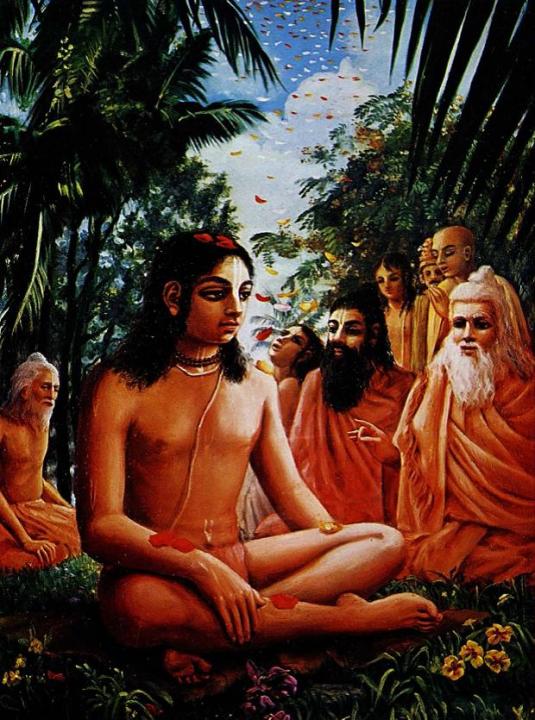
…those who are really anxious to get out of this material existence may take shelter of this Bhāgavatam because it is uttered by the liberated Śrīla Śukadeva Gosvāmī. It is the transcendental torchlight by which one can see perfectly the transcendental Absolute Truth realized as Brahman, Paramātmā and Bhagavān. (from purport to SB 1.1.4)
full text and purport More
28 Mar 2014
by The Hare Krishna Movement
in A.C. Bhaktivedanta Swami Prabhupada, Krishna Consciousness, nitya siddha, Srila Prabhupada
Tags: A.C. Bhaktivedanta Swami Prabhupada, associates of the Lord, ever liberated associate of the Supreme Lord, krsna consciousness, Krsna parisada, nitya baddhas, nitya muktas, nitya siddha, prabhupada, saintly erson, threefold miseries

…Sometimes an ever-liberated personal associate of the Supreme Personality of Godhead descends into this universe just as the Lord descends. Although working for the liberation of conditioned souls, the messenger of the Supreme Lord remains untouched by the material energy. Generally ever-liberated personalities live in the spiritual world as associates of Lord Kṛṣṇa, and they are known as kṛṣṇa-pāriṣada, associates of the Lord. Their only business is enjoying Lord Kṛṣṇa’s company, and even though such eternally liberated persons come within this material world to serve the Lord’s purpose, they enjoy Lord Kṛṣṇa’s company without stoppage. The ever-liberated person who works on Kṛṣṇa’s behalf enjoys Lord Kṛṣṇa’s company through his engagement.
… The conditioned soul subjected to the threefold material miseries is ceaselessly kicked by māyā, and this is his disease. If by chance he meets a saintly person who works on Kṛṣṇa’s behalf to deliver conditioned souls, and if he agrees to abide by his order, he can gradually approach the Supreme Personality of Godhead, Kṛṣṇa.(from purport to Madhya-lila 22.14-15)
More
26 Mar 2014
by The Hare Krishna Movement
in A.C. Bhaktivedanta Swami Prabhupada, Ananta das, Ananta das Sastri, Srila Prabhupada
Tags: A.C. Bhaktiveanta Swami Prabhupada, Ananta Dasa Sastri, devotion, disciple of Srila Prabhupada, Krsna, prabhupada, prabhupadanugas, pride and illusion, Sanskrit department, Srila Prabhupada, Srila Prabhupada Stotram, Vyasasana
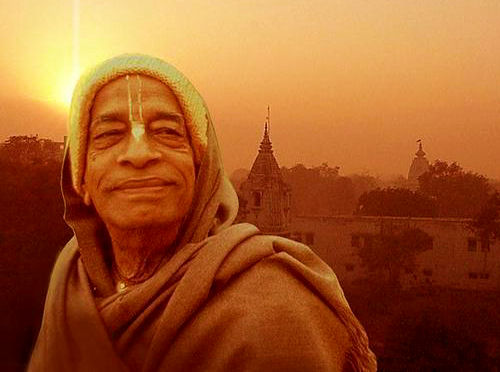
Śrīla Prabhupāda Stotram
(Composed by Ananta Dasa Sastri)
Ananta Dasa Sastri was a disciple of Srila Prabhupāda. He used to travel with Srila Prabhupāda in India and he was in the Sanskrit department assisting Srila Prabhupāda in translation work. He compiled five slokas which describe much of Srila Prabhupāda’s divine character and his divine mission also.Prabhupāda very much liked these five slokas. We used to sing them every morning before Guru Puja by his vyasasana, so some of you may remember them.
More
25 Mar 2014
by The Hare Krishna Movement
in A.C. Bhaktivedanta Swami Prabhupada, Caitanya Mahaprabhu, Chanting Hare Krishna, Devotional Service, Gauranga, Gaurangera Duti Pada, Narottama Dasa Thakura
Tags: A.C. Bhaktivedanta Swami Prabhupada, devotional service, gaura, Gauranga, gaurangera duti pada, Gaurasundara, Hare Krishna, Lord Caitanya, Narottama dasa Thakrua, self realization, Srila Prabhupada

click on image to enlarge
…Gauranga refers to Lord Caitanya, who has a fair complexion. One who has a fair complexion is called gaura, and since Lord Caitanya was very fair, just like molten gold, He was also named Gaurasundara. Narottama dasa Thakura says, gaurangera duti pada, jar dhana-sampada, se jane bhakati-rasa-sar. Anyone who has accepted the two lotus feet of Lord Caitanya can understand the true essence of devotional service. Devotional service is very difficult. It cannot be understood by any ordinary man. As it is stated in the Bhagavad-gita, out of many thousands of persons who are trying to achieve the perfection of human life, only some actually become perfect and realize the self. And out of many thousands of such self-realized persons, only one can understand Krsna. Without understanding Krsna, how can one engage himself in the service of Krsna? Therefore, the devotional service of Krsna is not an ordinary thing. But fortunately, if one follows in the footsteps of Lord Caitanya (gaurangera duti pada) by following the path shown by Lord Caitanya-the process of simply chanting Hare Krsna-he can very easily understand what devotional service is. (from purport to the song “Gaurangera Duti Pada”)
Full song with Bengali Lyrics, English translation, and purport by His Divine Grace A. C. Bhaktivedanta Swami Prabhupada
More
25 Mar 2014
by The Hare Krishna Movement
in A.C. Bhaktivedanta Swami Prabhupada, Diksha, Disciplic succession, Guru & Disciple, guru-tattva, Hencefoward, ISKCON, Iskcon Bangalore, Krishna Consciousness
Tags: A.C. Bhaktivedanta Swami Prabhupada, dikska, dikska questions, GBC, guru and disciple, Harinama diksa, harinama dikska question paper, Iskcon, ISKCON Bangalore, July 9th Letter, spiritual master, Srila Prabhupada
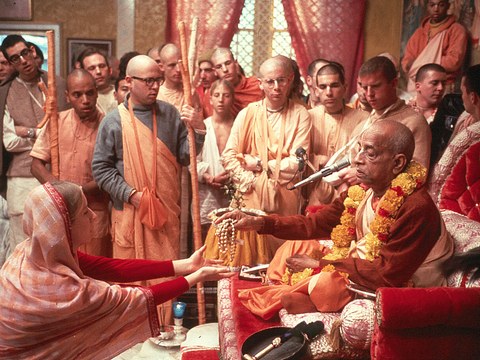

Sometime back, we published the “Harinama Diksha Reference Material and Study Guide“. Today we share with you the “Harinama Dikska Question Paper”. This was put out by the devotees at ISKCON Bangalore, and is very interesting. I won’t say anymore about it now, other than to say it is worth taking a few minutes to ‘take the test’, by answering the few basic questions.
click on following link
Harinam_Diksha_Question_Paper
More
24 Mar 2014
by The Hare Krishna Movement
in A.C. Bhaktivedanta Swami Prabhupada, Bhagavad-gita, Krishna Consciousness, Krishna Consciousness Movement, Srila Prabhupada, Srimad Bhagavatam, The Hare Krishna Movement, Vaisnava
Tags: 26 qualities of a devotee, A.C. Bhaktivedanta Swami Prabhupada, demigods, devotee of the Lord, devotion to the Lord, godly qualities, good qualities, Krsnadasa Kaviraja, pure devotee, vaisnava
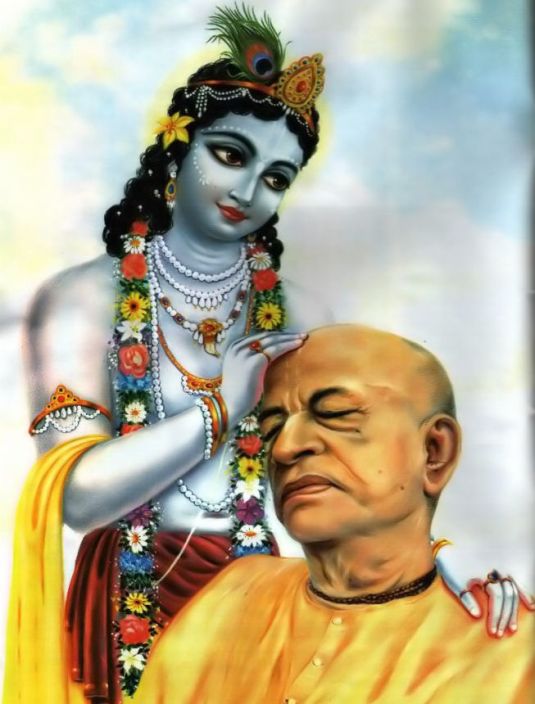
I like this picture very much and it became my meditation this morning. I began to think what it was, that first attracted me to Srila Prabhupada and the Hare Krishna Movement, or Krsna Consciousness. And it was the idea of becoming a better person, that first attracted me.
…Any man who has genuine devotion to the Lord has all the good qualities which are found in godly persons or in the demigods, whereas the nondevotee, however advanced he may be in material qualifications by education and culture, lacks in godly qualities (from purport Bg. 1.28)
Śrī Kṛṣṇadāsa Kavirāja, the author of Caitanya-caritāmṛta, says that all good qualities become manifest in the body of a Vaiṣṇava and that only by the presence of these good qualities can one distinguish a Vaiṣṇava from a non-Vaiṣṇava. Kṛṣṇadāsa Kavirāja lists the following twenty-six good qualities of a Vaiṣṇava: (1) He is very kind to everyone. (2) He does not make anyone his enemy. (3) He is truthful. (4) He is equal to everyone. (5) No one can find any fault in him. (6) He is magnanimous. (7) He is mild. (8) He is always clean. (9) He is without possessions. (10) He works for everyone’s benefit. (11) He is very peaceful. (12) He is always surrendered to Kṛṣṇa. (13) He has no material desires. (14) He is very meek. (15) He is steady. (16) He controls his senses. (17) He does not eat more than required. (18) He is not influenced by the Lord’s illusory energy. (19) He offers respect to everyone. (20) He does not desire any respect for himself. (21) He is very grave. (22) He is merciful. (23) He is friendly. (24) He is poetic. (25) He is expert. (26) He is silent. (from purport to SB 5.18.12)
Reference Verses More
22 Mar 2014
by The Hare Krishna Movement
in A.C. Bhaktivedanta Swami Prabhupada, Bhagavad-gita
Tags: A.C. Bhaktivedanta Swami Prabhupada, atomic aprticle, Bhagavad Gita, Bhaktivedanta purports, conditioned living entity, Krsna and Arjuna, living enity, marginal energy of the Lord, pure spirit, Supreme Spirit
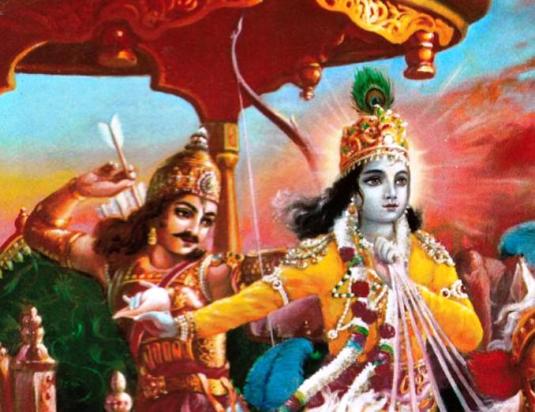
This morning I opened the Bhagavad-gita As It Is by His Divine Grace A. C. Bhaktivedanta Swami Prabhupada and for some reason just went to the last verse and purport. I couldn’t remember what where the very last words Srila Prabhupada spoke, what was the final purport? So we share it with you here today. Hare Krishna!
Wherever there is Kṛṣṇa, the master of all mystics, and wherever there is Arjuna, the supreme archer, there will also certainly be opulence, victory, extraordinary power, and morality. That is my opinion. (Bhagavad-gita 18.78)
…The living entity in his original position is pure spirit. He is just like an atomic particle of the Supreme Spirit. The conditioned living entity, however, is the marginal energy of the Lord; he tends to be in contact with both the material energy and the spiritual energy. In other words, the living entity is situated between the two energies of the Lord, and because he belongs to the superior energy of the Lord, he has a particle of independence. By proper use of that independence he comes under the direct order of Kṛṣṇa. Thus he attains his normal condition in the pleasure-giving potency. (from final purport)
Thus end the Bhaktivedanta Purports to the Eighteenth Chapter of the Śrīmad-Bhagavad-gītā in the matter of its Conclusions-the Perfection of Renunciation.
More
21 Mar 2014
by The Hare Krishna Movement
in A.C. Bhaktivedanta Swami Prabhupada, Teachings of Lord Kapila, Transcendental Knowledge
Tags: A.C. Bhaktivedanta, books of His Divine Grace, Devahuti Desires Transcendental Knowledge, Kapila Muni, Lord Kapila, Srila Prabhupada, Teachings of Lord Kapila, transcendental knowledge

The following is chapter six in our series on the Teaching of Lord Kapila entitled “Devahūti Desires Transcendental Knowledge”. This chapter contains the timeless instructions on receiving spiritual knowledge. It is very difficult to get out of this entanglement and attain freedom, but if one is fortunate enough to get the association of a spiritual master like Kapila Muni or His representative, then by his grace one can be delivered from the mire of ignorance. The spiritual master is therefore worshiped as one who delivers the disciple from the mire of ignorance with the light of the torch of knowledge. We are fortunate in this age to have the books of His Divine Grace A. C. Bhaktivedanta Swami Prabhupada to guide us. Human knowledge was originally preserved through oral tradition, but today we have this knowledge preserved in the books of His Divine Grace.
Full Chapter More
20 Mar 2014
by The Hare Krishna Movement
in A.C. Bhaktivedanta Swami Prabhupada, Spring, Srimad Bhagavatam
Tags: A.C. Bhaktivedanta Swami Prabhupada, enchantment with material energy, material existence, SB 4.25.18, Spring, spring air, spring fever, Srimad Bhagavatam, waterfall

click on image to enlarge
Like many of you, I am happy about the first day of Spring. It was a long hard winter for many places in the country and I am sure that most everyone welcomes the coming of spring. The following is a verse from the Srimad Bhagavatam which describes our enchantment with the material existence. A symptom of this enchantment is our spring fever.
The branches of the trees standing on the bank of the lake received particles of water carried by the spring air from the falls coming down from the icy mountain. (SB 4.25.18)
…The spring air (kusumākara) is smell. All these varieties of enjoyment make life very pleasing, and thus we become captivated by material existence. (from purport)
Full text and purport More
20 Mar 2014
by The Hare Krishna Movement
in A.C. Bhaktivedanta Swami Prabhupada, Bhagavad-gita, Spring
Tags: A.C. Bhaktivedanta Swami Prabhupada, as it is, Bg. 10.35, bhagavad-gita, flower bearing spring, I am the flower bearing spring, Krsna's pastimes, Spring, spring flowers, spring lamb, spring season

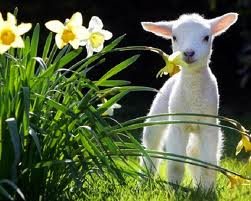
…and of seasons I am flower-bearing spring(Bhagavad-gita 10.35)
…Of course spring is a season universally liked because it is neither too hot nor too cold, and the flowers and trees blossom and flourish. In spring there are also many ceremonies commemorating Kṛṣṇa’s pastimes; therefore this is considered to be the most joyful of all seasons, and it is the representative of the Supreme Lord Kṛṣṇa. (from purport)
Full text and purport More
18 Mar 2014
by The Hare Krishna Movement
in A.C. Bhaktivedanta Swami Prabhupada, Bhagavad-gita, Krishna, Krishna Consciousness
Tags: A.C. Bhaktivedanta Swami Prabhupada, avajanati mam mudha, bhagavad-gita, fools, fools deride my transcendental nature, human being, human form, Krishna, Krsna, mudha, supreme dominion, the supreme personality, transcendental nature

This morning I was reading from the Srimad-Bhagavatam and the purport directed my attention to the verse from the Bhagavad-gita; “Fools deride Me when I descend in the human form. They do not know My transcendental nature and My supreme dominion over all that be.. So I went to the Bhagavad-gita and read again this very important verse and purport, and we share it with you today…
…it is clear that the Supreme Personality of Godhead, although appearing like a human being, is not a common man. The Personality of Godhead, who conducts the creation, maintenance and annihilation of the complete cosmic manifestation, cannot be a human being. Yet there are many foolish men who consider Kṛ,sṇa to be merely a powerful man and nothing more. Actually, He is the original Supreme Personality, as is confirmed in the Brahma-saṁhitā (iśvaraḥ paramaḥ kṛsṇaḥ); He is the Supreme Lord. (from purport Bg.9.11)
full text and purport More
Previous Older Entries Next Newer Entries







 The Hare Krishna Movement