24 Apr 2011
by The Hare Krishna Movement
in Devotee's, Diksha, Guru & Disciple, Locanananda das, Siksa
Tags: A.C. Bhaktivedanta Swami Prabhupada, Final Order, GBC, Godbrothers, gurus, Initiation, Iskcon, Locanananda das, officiating acharyas, ritvik, Srila Prabhupadas instructions
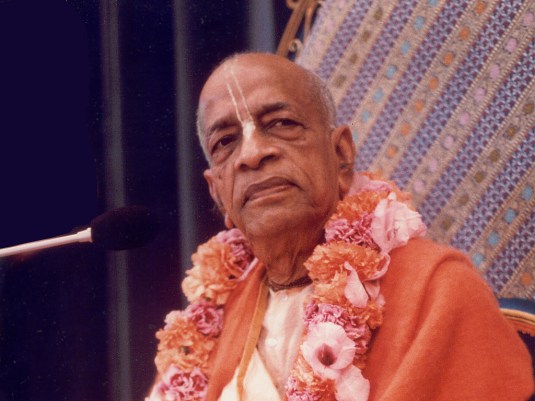
The Real Final Order
10/25/1998 – 2410
Editorial (VNN) – by Sriman Locanananda Prabhu
Submitted on the disappearance day of His Divine Grace A.C. Bhaktivedanta Swami Prabhupada
During what Srila Prabhupada thought might be his final days, he summoned his GBC representatives from all over the world to come to his bedside in May of 1977. He was about to pronounce his final instruction concerning how the movement should be expanded after he was no longer physically present to oversee things. When he was specifically asked how initiations would be performed in the future, he replied that he would recommend some of his GBC men to act as officiating acharyas in his absence. This was a momentous pronouncement. He was going to create the post of officiating acharya by naming some of his disciples to initiate on his behalf. They would actually be gurus, but would act as representatives of the acharya in initiating members into Srila Prabhupada’s movement after His Divine Grace had left this world. Although everyone present said that this instruction was understood, in the twenty-one years since this revelation, not a single ISKCON guru has called himself an “officiating acharya”. This has produced a contrary result.
To resolve the conflict and ongoing debate between the proponents of “ritvik” initiation and ISKCON’s official interpretation of Srila Prabhupada’s instructions, we must find a common denominator upon which both parties can agree. That one camp is ready to excommunicate or overthrow the other is causing a massive headache in the minds of peaceful devotees everywhere. With the greatest urgency, the fracture in our movement must be healed before it becomes a permanent schism. To avoid causing further embarrassment to our spiritual master, and to protect innocent devotees and well-wishers of the Krishna consciousness movement from the devastating effect of our fratricidal follies, all followers of Srila Prabhupada should stop their sabre rattling and calmly consider how to resolve their differences.
More
24 Apr 2011
by The Hare Krishna Movement
in Narada-bhakti-sutra
Tags: atmarama, bhakti, chanting, devotional service, ecstasy, ecstasy of bhakti, Love of Godhead, Narada Muni, Srila Prabhupada

Narada-bhakti-sutra Text 6
Translation & Purport by His Divine Grace A. C. Bhaktivedanta Swami Prabhupada
TRANSLATION
One who understands perfectly the process of devotional service in love of Godhead becomes intoxicated in its discharge. Sometimes he becomes stunned in ecstasy and thus enjoys his whole self, being engaged in the service of the Supreme Self.
PURPORT
The Śrīmad-Bhāgavatam (1.7.10) states,
ātmārāmāś ca munayo nirgranthā apy urukrame
kurvanty ahaitukīṁ bhaktiṁ itthaṁ-bhūta-guṇo hariḥ
“Although those who are ātmārāma, self-satisfied, are liberated from all material contamination, they are still attracted by the pastimes of the Supreme Lord, and thus they engage themselves in His transcendental service.” When Lord Caitanya explained this ātmārāma verse to Śrīla Sanātana Gosvāmī, He described sixty-one meanings, and all of them point toward the devotional service of the Lord.
How one becomes intoxicated in devotional service is very nicely described in the Śrīmad-Bhāgavatam (11.2.40):
More
23 Apr 2011
by The Hare Krishna Movement
in Chanting Hare Krishna, Devotee Books, Devotee's, Vishnujana Swami
Tags: Book Distribution, Dhristadyumna das, Diamond Jim's, Labangalatika dd, Madhudvisa, prabhupada, Radha-Damodar Vilasa, sankirtan, sankirtan party, Sukadeva, Sunset Strip, Vaiyasaki das, vishnujana swami

Vishnujana Swami: Chanting Hare Krishna on the Street 8-10 Hours DAILY!
From Radha-Damodar Vilasa by Vaiyasaki dasa Adhikari
In the early days sankirtan [chanting Hare Krishna and distributing books in public] is everybody’s prime function. All the devotees are inspired by Vishnujana’s love and dedication to sankirtan.
More
23 Apr 2011
by The Hare Krishna Movement
in Chanting Hare Krishna, The Hare Krishna Movement
Tags: chanting Hare Krishna, Hare Krishna, Maha Mantra, prabhupada, spiritual sound, Srimad Bhagavatam, The Hare Krishna Movement, transcendental vibration

What is the meaning of Hare Krishna?
It is the short form of the maha-mantra, the great spiritual sound of final liberation:
Hare Krishna Hare Krishna Krishna Krishna Hare Hare
Hare Rama Hare Rama Rama Rama Hare Hare
“By vibrating this transcendental sound, the meaning of everything, both material and spiritual, is revealed. This Hare Krishna is nondifferent from the Personality of Godhead.” (from Bhaktivedanta Prabhupada Commentary, Srimad Bhagavatam 4.24.40)
What is the deeper meaning of the Hare Krishna mantra?
Caitanya Mahaprabhu teaches us that we should only beg God for His service life after life. This is the actual meaning of the Hare Krsna maha-mantra. When we are chanting Hare Krsna, Hare Krsna, Krsna Krsna, Hare Hare. Hare Rama, Hare Rama, Rama, Rama, Hare Hare, we are actually addressing God and His energy, Hara. Hara is Krsna’s internal potency, Srimati Radharani or Laksmi. Jaya radhe! This is daivi prakrti, and the devotees take shelter of the daivi prakrti, Srimati Radharani. Thus the Vaisnavas worship Radha-Krsna, Laksmi-Narayana and Sita-Rama. In the beginning of the Hare Krsna maha-mantra we first address the internal energy of Krsna, Hare. Thus we say, “O Radharani! O Hare! O energy of the Lord!” When we address someone in this way, he usually says, “Yes, what do you want?” The answer is, “Please engage me in Your service.” This should be our prayer. We should not say, “O energy of the Lord, O Krsna, please give me money. Please give me a beautiful wife. Please give me many followers. Please give me some prestigious position. Please give me the presidency.” These are all material hankerings, which should be avoided. Lord Buddha advocated that we give up all material desires. It is not possible to become desireless, but it is possible to give up material desires. It is the nature of the living entity to desire; it is not possible to be desireless. If one is desireless, he is dead. Desirelessness means purifying one’s desire, and desire is purified when we only desire the service of Krsna. (from “Teachings of Lord Kapila”)
Why is the Hare Krishna mantra so special?
Lord Krsna says in Bhagavad-gita (7.8), pranavah sarva-vedesu: ‘In all the Vedic mantras, I am represented by pranava, or omkara.’ Thus chanting of the Vedic mantras beginning with omkara is directly chanting of Krsna’s name. There is no difference. Whether one chants omkara or addresses the Lord as ‘Krsna’, the meaning is the same, but Sri Caitanya Mahaprabhu has recommended that in this age one chant the Hare Krsna mantra (harer nama eva kevalam). Although there is no difference between Hare Krsna and the Vedic mantras beginning with omkara, Sri Caitanya Mahaprabhu, the leader of the spiritual movement for this age, has recommended that one chant Hare Krsna, Hare Krsna, Krsna Krsna, Hare Hare. Hare Rama, Hare Rama, Rama Rama, Hare Hare. (from Bhaktivedanta Prabhupada Commentary, Srimad Bhagavatam 6.5.26)
Pasted from; http://www.harekrsna.de/artikel/faq.htm
21 Apr 2011
by The Hare Krishna Movement
in Srila Prabhupada Conversations, The Hare Krishna Movement
Tags: Gaudiya Matha, guru-puja, Iskcon temples, Iskcon's, post-samadhi, spiritual institution, spiritual instruction, Srila Prabhupada conversation
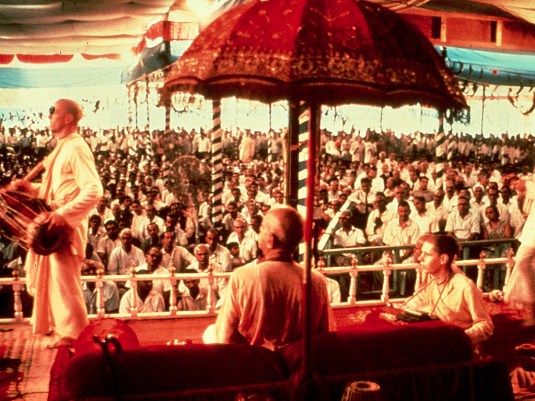
ISKCON’s Decline after Srila Prabhupada’s Departure
The following conversation of Srila Prabhupada’s clearly explains the reasons for ISKCON’s decline after Prabhupada’s departure. Though Srila Prabhupada was speaking about the failure of the Gaudiya Matha, amazingly it perfectly matches ISKCON’s own post-samadhi history, line for line. Seven sentences have been numbered for direct comparison to ISKCON.
“1) Why this Gaudiya Matha failed? Because they tried to become more than guru. 2) He, before passing away, he gave all direction and never said that ‘This man should be the next acharya.’ But these people, just after his passing away they began to fight, who shall be acharya. That is the failure. 3) They never thought, ‘Why Guru Maharaja gave us instruction so many things, why he did not say that this man should be acharya?’ 4) They wanted to create artificially somebody acharya and everything failed. 5) They did not consider even with common sense that if Guru Maharaja wanted to appoint somebody as acharya, why did he not say? He said so many things, and this point he missed? The real point? And they insist upon it. 6) They declared some unfit person to become acharya. Then another man came, then another, acharya, another acharya. 7) So better remain a foolish person perpetually to be directed by Guru Maharaja. That is perfection.” – Srila Prabhupada Room Conversation, 08-16-76, Bombay
More
19 Apr 2011
by The Hare Krishna Movement
in Krsna is the Source of All Incarnations
Tags: Bhagavan, incarnation, Krishna, Krsna, loka, material creation, material universe, Paurusam, Purusa, Srila Prabhupada, Srimad Bhagavatam, Universal Form
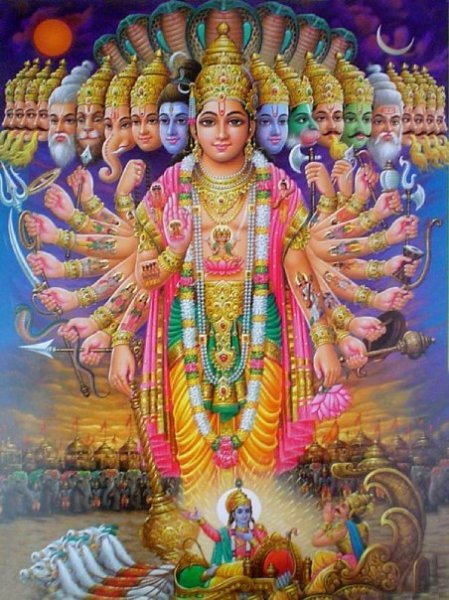
Krsna Is the Source of All Incarnations
Srimad Bhagavatam Canto 1, Chapter 3, Text 1
By His Divine Grace A.C. Bhaktivedanta Swami Prabhupada
TEXT 1
sūta uvāca
jagṛhe pauruṣaṁ rūpaṁ
bhagavān mahad-ādibhiḥ
sambhūtaṁ ṣoḍaśa-kalam
ādau loka-sisṛkṣayā
SYNONYMS
sūtaḥ uvāca—Sūta said; jagṛhe—accepted; pauruṣam—plenary portion as the puruṣa incarnation; rūpam—form; bhagavān—the Personality of Godhead; mahat-ādibhiḥ—with the ingredients of the material world; sambhūtam—thus there was the creation of; ṣoḍaśa-kalam—sixteen primary principles; ādau—in the beginning; loka—the universes; sisṛkṣayā—on the intention of creating.
TRANSLATION
Sūta said: In the beginning of the creation, the Lord first expanded Himself in the universal form of the puruṣa incarnation and manifested all the ingredients for the material creation. And thus at first there was the creation of the sixteen principles of material action. This was for the purpose of creating the material universe.
PURPORT
The Bhagavad-gītā states that the Personality of Godhead Śrī Kṛṣṇa maintains these material universes by extending His plenary expansions. So this puruṣa form is the confirmation of the same principle. The original Personality of Godhead Vāsudeva, or Lord Kṛṣṇa, who is famous as the son of King Vasudeva or King Nanda, is full with all opulences, all potencies, all fame, all beauty, all knowledge and all renunciation. Part of His opulences are manifested as impersonal Brahman, and part of His opulences are manifested as Paramātmā. This puruṣa feature of the same Personality of Godhead Śrī Kṛṣṇa is the original Paramātmā manifestation of the Lord. There are three puruṣa features in the material creation, and this form, who is known as the Kāraṇodakaśāyī Viṣṇu, is the first of the three. The others are known as the Garbhodakaśāyī Viṣṇu and the Kṣīrodakaśāyī Viṣṇu, which we shall know one after another. The innumerable universes are generated from the skin holes of this Kāraṇodakaśāyī Viṣṇu, and in each one of the universes the Lord enters as Garbhodakaśāyī Viṣṇu.
In the Bhagavad-gītā it is also mentioned that the material world is created at certain intervals and then again destroyed. This creation and destruction is done by the supreme will because of the conditioned souls, or the nitya-baddha living beings. The nitya-baddha, or the eternally conditioned souls, have the sense of individuality or ahaṅkāra, which dictates them sense enjoyment, which they are unable to have constitutionally. The Lord is the only enjoyer, and all others are enjoyed. The living beings are predominated enjoyers. But the eternally conditioned souls, forgetful of this constitutional position, have strong aspirations to enjoy. The chance to enjoy matter is given to the conditioned souls in the material world, and side by side they are given the chance to understand their real constitutional position. Those fortunate living entities who catch the truth and surrender unto the lotus feet of Vāsudeva after many, many births in the material world join the eternally liberated souls and thus are allowed to enter into the kingdom of Godhead. After this, such fortunate living entities need not come again within the occasional material creation. But those who cannot catch the constitutional truth are again merged into the mahat-tattva at the time of the annihilation of the material creation. When the creation is again set up, this mahat-tattva is again let loose. This mahat-tattva contains all the ingredients of the material manifestations, including the conditioned souls. Primarily this mahat-tattva is divided into sixteen parts, namely the five gross material elements and the eleven working instruments or senses. It is like the cloud in the clear sky. In the spiritual sky, the effulgence of Brahman is spread all around, and the whole system is dazzling in spiritual light. The mahat-tattva is assembled in some corner of the vast, unlimited spiritual sky, and the part which is thus covered by the mahat-tattva is called the material sky. This part of the spiritual sky, called the mahat-tattva, is only an insignificant portion of the whole spiritual sky, and within this mahat-tattva there are innumerable universes. All these universes are collectively produced by the Kāraṇodakaśāyī Viṣṇu, called also the Mahā-Viṣṇu, who simply throws His glance to impregnate the material sky.
19 Apr 2011
by The Hare Krishna Movement
in Diksha, Guru & Disciple, Hansadutta das, Shiva, Srila Prabhupada His Movement & You
Tags: A.C. Bhaktivedanta Swami Prabhupada, disciples of Srila Prabhupada, eleven representatives of acharya, hansadutta das, His Divine Grace, initiated disciples book, Letter to Hansadutta, Letter to Kirtananda, ritvik representatives of the acharya, VNN

Role Of The Rittvik Representatives Of The Acharya
By Sriman Hansadutta Prabhu — January 7, 1999 VNN2806
“You are a suitable person and you can give initiation to those that are ready for it. I have selected you among eleven men as ‘Rittvik representative of the Acharya, to give initiations, both first and second initiation, on my behalf.’ A newsletter is being sent to all temple presidents and GBC in this regard, listing the eleven representatives selected by His Divine Grace. Those who are initiated are the disciples of Srila Prabhupada, and anyone whom you deem fit and initiate in this way, you should send their names to be included in Srila Prabhupada’s ‘Initiated disciples’ book.”
EDITORIAL, Jan 7 (VNN) — The discussions that took place on 28th May 1977 between Srila Prabhupada and some GBC regarding initiations in the future were not known to me till years after his disappearance. Srila Prabhupada would say many things on many subjects, but unless a particular policy was written in letter form, or some other legal document such discussions on different matters were not accepted as final. Prabhupada often said you can say anything, but do not put it in writing; writing makes it legal.
More
18 Apr 2011
by The Hare Krishna Movement
in Hayagriva das, The Hare Krishna Explosion
Tags: Haight Street, hayagriva das, Jagannatha Deities, Janaki, Jayananda, Mukunda, Rathayatra, San Francisco 1967, Swamiji, the hare krishna explosion

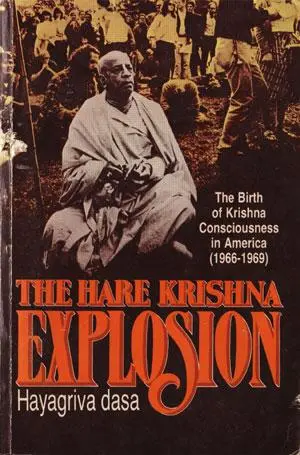
The Hare Krishna Explosion
by Hayagriva das
Part II: San Francisco, 1967
Chapter 11
San Francisco Rathayatra
As the passengers file through the gate into the terminal, we all wait anxiously, wondering how Swamiji will look. Somehow, we cannot imagine him gaunt, disabled or feeble. It is difficult for us to accept that his body, the medium for his teaching, could in any way break down, in defiance of the great spiritual personality within.
He is the last off the plane, accompanied by Kirtanananda. Despite the severity of his stroke, he looks virtually unchanged, only a little weary. The girls rush toward him and burst into tears. We throw flowers taken from Golden Gate Park: rhododendrons and hibiscus. He smiles appreciatively, but says nothing, and this is strange. Instead of giving his usual airport talk, he looks to us to show him the direction out. He chants Hare Krishna softly, his fingers incessantly caressing the japa beads in the beadbag, counting the rounds.
More
16 Apr 2011
by The Hare Krishna Movement
in Uncategorized
 Practicing Krishna Consciousness at Home by Padmapani Prabhu Since the vast majority of our readers are coming to Srila Prabhupada and Krishna Consciousness for the first time through Internet searches, and without access to devotee association or a nearby Hare Krishna temple, many people have inquired about how they can set up an altar in their homes and start practicing Krishna Consciousness at their own pace. The first and foremost principle o … Read More
via The Hare Krishna Movement
15 Apr 2011
by The Hare Krishna Movement
in Srimati Radharani
Tags: Caitanya-caritamrita, feminine aspect of God, friend of devotees, Krsna, Radha Kund, Radharani, Srila Rupa Goswami, Srimati Radharani, Stephen Knapp, Surpreme Goddess, topmost of all Goddesses
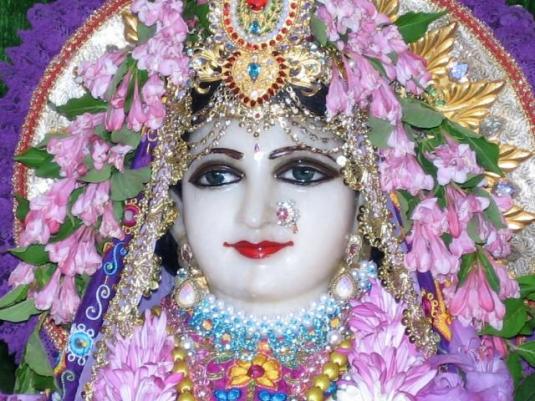
The descriptions of the beauty of Radharani are wonderfully poetic and descriptive. Actually, the residents of Vrindavana care more for Radharani than they do for Lord Krishna. They know that Krishna can be influenced through Radharani. They know that Radha can bring one to Krishna. She is also the compassionate nature of the Lord, and thus more easily approached than trying to reach Lord Krishna directly.
Srimati Radharani
By Stephen Knapp
Srimati Radharani is the Supreme Goddess. She is most always seen with Lord Krishna. It is described that She is the Chief Associate and devotee of Lord Krishna, and topmost of all Goddesses. Her name means the She is the most excellent worshiper of Lord Krishna. However, She is also an expansion of the Lord’s energy. Since She is also an extension of Krishna, She is the feminine aspect of God. Thus, in the Gaudiya Vaishnava tradition, God is both male and female. They are One, but Krishna expands into two, Himself and Radharani, for the sake of divine loving pastimes. If They remained as One, then there is no relationship, there are no pastimes, and there can be no dynamic exchange of love. (Caitanya-caritamrita, Adi-lila, 4.55-56) Actually, if we all remained merged or amalgamated into one single force or light, then there is no further need of anything else. There certainly would be no need for the material manifestation to provide the innumerable conditioned souls with the means to seek out the way to satisfy their senses, minds, emotions, desires for self-expression, intellectual pursuits, and on and on.
More
15 Apr 2011
by The Hare Krishna Movement
in Jayananda Thakur, Vishoka das
Tags: A Day in the Life of Jayananda Thakur, devotee, great acharyas, Jayananda Thakur, ordinary souls, reincarnation, saints, Srila Prabhupada, Vishoka das

So we continue with the new upcoming book by Vishoka Prabhu; “A Day in the lLfe of Jayananda Thakur” We look foward to the release of this new book, and we thank him for sharing some of it with you.
Great Souls Sometimes Re-appear
By Sriman Vishoka Prabhu
Part one
Can devotees appear, disappear and then re-appear? Well, in a way, all souls are re-appearing again and again by the process of reincarnation. This report is very different from that. It’s about the re-appearance of great saints who once walked this earth, and who are not obliged or forced to reincarnate into a material body again, but sometimes re-appear in their devotee form. It’s about life after the disappearance of the soul from a material body, and the difference between great acharyas and ordinary souls in this regard. It is about how and why great acharyas appear, and after disappearance, they sometimes they give special re-appearances, and are always giving mercy to the conditioned souls.
More
15 Apr 2011
by The Hare Krishna Movement
in Narada-bhakti-sutra
Tags: devotional service, material activity, Narada Muni, pure devotional service, sense gratification, Srila Rupa Goswami

Narada-bhakti-sutra Text 5
Translation & Purport by His Divine Grace A. C. Bhaktivedanta Swami Prabhupada
TRANSLATION
A person engaged in such pure devotional service neither desires anything for sense gratification, nor laments for any loss, nor hates anything, nor enjoys anything on his personal account, nor becomes very enthusiastic in material activity.
PURPORT
According to Śrīla Rūpa Gosvāmī, there are six impediments to the discharge of devotional service, and also six activities favorable to progress in devotional service.
The first impediment is atyāhāra, overeating or accumulating more wealth than we need. When we give free rein to the senses in an effort to enjoy to the highest degree, we become degraded. A devotee should therefore eat only enough to maintain his body and soul together; he should not allow his tongue unrestricted license to eat anything and everything it likes. The Bhagavad-gītā and the great ācāryas, or spiritual masters, have prescribed certain foods for human beings, and one who eats these foods eats in the mode of goodness. These foods include grains, fruits, vegetables, milk products, and sugar—and nothing more. A devotee does not eat extravagantly; he simply eats what he offers to the Supreme Lord, Kṛṣṇa. He is interested in kṛṣṇa-prasādam (food offered to the Lord) and not in satisfying his tongue. Therefore he does not desire anything extraordinary to eat.
Similarly, a devotee does not wish to accumulate a large bank balance: he simply earns as much as he requires. This is called yāvad-artha or yuktāhāra. In the material world everyone is very active in earning more and more money and in increasing eating and sleeping and gratifying the senses; such is the mission of most people’s lives. But these activities should be absent from the life of a devotee.
More
14 Apr 2011
by The Hare Krishna Movement
in Devotee's, Diksha, Disciplic succession, Gauridas Pandit das, Guru & Disciple, Siksa
Tags: Bhaktivedanta Book Trust, Gauridasa Pandita, GBC, guru, Initiation, Iskcon, officiating acharyas, On My Behalf, ritvik, ritvik-acharya, Sri Vrindavan Dhama, Srila Prabhupada's Initiation System, Temple Property Trust
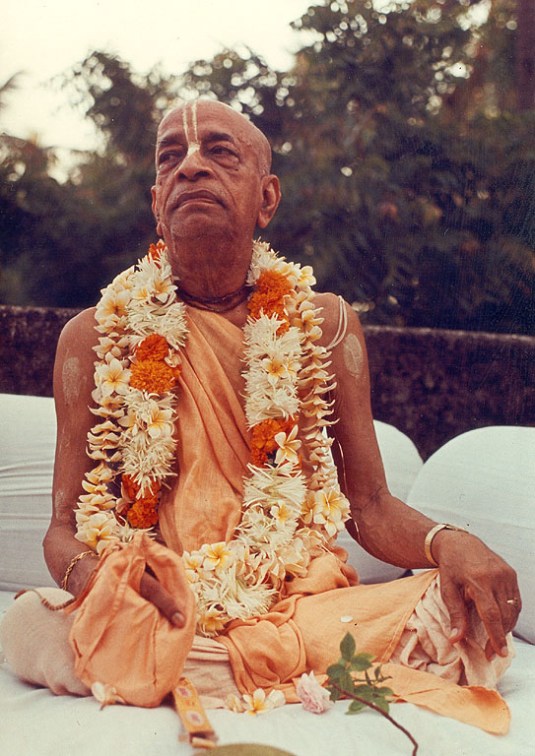
“So I cannot speak. I am feeling weak. I was to go to other places like Chandigarh, but I canceled the program because the condition of my health is very deteriorating. So I preferred to come to Vrindavan. If death takes place, let it take here. So there is nothing new to be said. Whatever I have to speak, I have spoken in my books. Now you try to understand it and continue your endeavor. Whether I am present or not present, it doesn’t matter. As Krsna is living eternally, similarly, the living being also lives eternally.
On My Behalf
Srila Prabhupada’s Initiation System
by Sriman Gauridasa Pandita Prabhu
Srila Prabhupada arrived in Sri Vrindavan Dhama on May 17th 1977 to prepare to ‘leave his body.’ He made all of the arrangements for the future of his movement. He formed his Will, the Temple Property Trusts, he gave instructions for the Bhaktivedanta Book Trust and the GBC and he established his initiation system for the future of ISKCON.
Due to some unseen good fortune I got the opportunity to serve Srila Prabhupada, at that time. Actually, I began to personally serve him in Bombay as one of his guards and then went with him to Hrsikesh to ‘regain his failing health’ on the advice of one of the life members, Mahadevia Kartikeya.
Things were like heaven in Hrsikesh serving Srila Prabhupada.
We were staying in a two story house right on the bank of the Holy Ganges River. We had the best Jalebi maker (Vedic sweets) in the world, according to Srila Prabhupada, right across the street. We used to have fruit, yogurt and hot Jalebis for breakfast. Srila Prabhupada said that hot Jalebis could cure the common cold.
I used to enjoy taking Japa Walks in the Himalayan Mountains. The forests are lush, filled with singing birds, and wandering devotees. Some Shivite’s live in the cave’s and only leave to bath in the Ganga. They eat only what is offered to them.
More
14 Apr 2011
by The Hare Krishna Movement
in Diksha, Disciplic succession, Guru & Disciple, Siksa
Tags: Founder Acarya, GBC, Hare Krishna, Hare Krishna Society, His Divine Grace A.C. Bhaktivedanta Swami Prabhupada, Iskcon, July 9th Letter, krishnaconsciousnessmovement.com, Krsna consciousness movement, prabhupadanugas, Will

I, A.C. Bhaktivedanta Swami Prabhupada, founder-acarya of the International Society for Krishna consciousness, Settlor of the Bhaktivedanta Book Trust, and disciple of Om Visnupada 108 Sri Srimad Bhaktisiddhanta Sarasvati Gosvami Maharaja Prabhupada, presently residing at Sri Krsna-Balarama Mandir in Vrndavana, make this my last will:
ANALYSIS OF SRILA PRABHUPADA’S LAST WILL AND JULY 9TH LETTER
Dear Maharajas and Prabhus,
Please accept my humble obeisances. All glories to Srila Prabhupada.
We would like to present two papers signed and approved by His Divine Grace Srila Prabhupada. The will of His Divine Grace and his last instructions for continuing the process of initiation. We ask only that you read the following statements of Srila Prabhupada with an open heart. Instead of analyzing his words to fit today’s circumstances, try to take these instructions just as they have been written. Without reading between the lines, try simply to accept his words. Rather than imagining esoteric meanings try to understand his commands, as they are. Srila Prabhupada often said that Krishna Consciousness is a simple process. The instructions that he gave us were always straightforward and clear. His language was never obscure or lacking in explanation. If something was important he always gave us a clear cut presentation. Before reading these last instructions of Srila Prabhupada’s, try to take to heart the following explanation from Caitanya Caritamrita on the nature of direct and indirect meanings. In it, Srila Prabhupada, Srila Bhaktisiddhanta Sarasvati Thakura and Lord Chaitanya, clearly explain the difference between a true understanding and an imaginary interpretation.
More
14 Apr 2011
by The Hare Krishna Movement
in Diksha, Disciplic succession, Guru & Disciple, Siksa
Tags: dakshina, Founder Acarya, Iskcon, July 9th Letter, mission of the guru, Narasimha das, officiating acaryas, prabhupada, priests recommended by the spiritual master, ritvik, ritviks, Srila Prabhupada, Srimad Bhagavatam, VNN
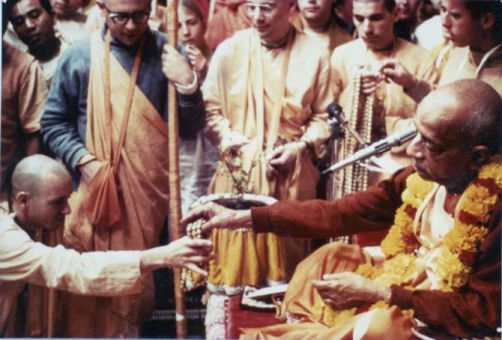
Ritvik Defined — By Narasimha Das
November 13, 1998 VNN2498
Srila Prabhupada never created any special status for “officiating acaryas.” Their function as ritivks is to assure that Srila Prabhupada requirements are met before a student is formally accepted for initiation in ISKCON. Like all senior initiated disciples, they are meant to be teachers by their practical example. They have accepted an added responsibility, an added burden on behalf of Srila Prabhupada. Their burden is to assure that Srila Prabhupada’s standards for initiation are preserved in ISKCON. (Srila Prabhupada’s July 9th directive sent to every leader in ISKCON mentions three times that all devotees are Srila Prabhupada’s disciples and that the deputed ritviks offer initiation on behalf of Srila Prabhupada. This same instruction was repeated by Srila Prabhupada several times additionally after July 9th in letters, documents, and instructions.) Ritviks are the priests authorized by the spiritual master or his institution to accept students on behalf of ISKCON and Srila Prabhupada. Srila Prabhupada made this perfectly clear. This understanding of the procedure Prabhupada prescribed is consistent with references to ritviks mentioned in Srila Prabhupada’s books.
EDITORIAL, Nov 13 (VNN) — Currently the term “ritvik” is used to refer to 1.) devotees of a particular camp, 2.) the ideas and convictions of “ritvik” devotees, and 3.) the “officiating acarya” who initiates on behalf of the spiritual master. I will try to offer guidelines for understanding the word “ritvik” according to Srila Prabhupada and the current usage among devotees.
More
13 Apr 2011
by The Hare Krishna Movement
in Srimad Bhagavatam
Tags: 4.28.48, Founder Acarya, International Socity for Krishna Consciousness, Religion means abiding by the orders of God, rogues, so-called Kings, Srimad Bhagavatam
Srimad Bhagavatam
By His Divine Grace A.C. Bhaktivedanta Swami Prabhupada
Forth Canto, Chapter 28, Text 48
uttiṣṭhottiṣṭha rājarṣe
imām udadhi-mekhalām
dasyubhyaḥ kṣatra-bandhubhyo
bibhyatīṁ pātum arhasi
SYNONYMS
uttiṣṭha—please get up; uttiṣṭha—please get up; rāja-ṛṣe—O saintly king; imām—this earth; udadhi—by the ocean; mekhalām—surrounded; dasyubhyaḥ—from the rogues; kṣatra-bandhubhyaḥ—from the unclean kings; bibhyatīm—very much afraid; pātum—to protect; arhasi—you ought.
TRANSLATION
O best of kings, please get up! Get up! Just see this world surrounded by water and infested with rogues and so-called kings. This world is very much afraid, and it is your duty to protect her.
PURPORT
Whenever an ācārya comes, following the superior orders of the Supreme Personality of Godhead or His representative, he establishes the principles of religion, as enunciated in Bhagavad-gītā. Religion means abiding by the orders of the Supreme Personality of Godhead. Religious principles begin from the time one surrenders to the Supreme Personality of Godhead. It is the ācārya’s duty to spread a bona fide religious system and induce everyone to bow down before the Supreme Lord. One executes the religious principles by rendering devotional service, specifically the nine items like hearing, chanting and remembering. Unfortunately, when the ācārya disappears, rogues and nondevotees take advantage and immediately begin to introduce unauthorized principles in the name of so-called svāmīs, yogīs, philanthropists, welfare workers and so on. Actually, human life is meant for executing the orders of the Supreme Lord, and this is stated in Bhagavad-gītā (9.34):
man-manā bhava mad-bhakto
mad-yājī māṁ namaskuru
mām evaiṣyasi yuktvaivam
ātmānaṁ mat-parāyaṇaḥ
“Engage your mind always in thinking of Me and become My devotee. Offer obeisances and worship Me. Being completely absorbed in Me, surely you will come to Me.”
The main business of human society is to think of the Supreme Personality of Godhead at all times, to become His devotees, to worship the Supreme Lord and to bow down before Him. The ācārya, the authorized representative of the Supreme Lord, establishes these principles, but when he disappears, things once again become disordered. The perfect disciples of the ācārya try to relieve the situation by sincerely following the instructions of the spiritual master. At the present moment practically the entire world is afraid of rogues and nondevotees; therefore this Kṛṣṇa consciousness movement is started to save the world from irreligious principles. Everyone should cooperate with this movement in order to bring about actual peace and happiness in the world.
13 Apr 2011
by The Hare Krishna Movement
in Diksha, Disciplic succession, Guru & Disciple, Siksa
Tags: Iskcon, Kirtananda Swami, Radhanath das, ritvik, Ritvik initiation, Srila Prabhupada
Ritvik Initiation simply explained
There was a very simple and straight foward method which most of the early members of the Hare Krishna Society (ISKCON) were initiated, as explained in the following letter…
Letter to Kirtananda Swami
Los Angeles
7 January, 1974
Dear Kirtanananda Maharaja,
Please accept my blessings. I beg to acknowledge your requests for initiations of devotees at New Vrindaban, contained in your letter of December 30, 1973.
Upon your recommendation I am glad to accept the disciples for first initiation, and their spiritual names are as follows:
Susan Burchell—Madanalasa dasi
Jim Newsham—Jayanta dasa
Evelyn Newsham—Candrarekhika dasi
Sandra Chiefa—Kunjari dasi
Haynes Busby—Hari-dhama dasa
You may chant on their beads and instruct them seriously to always chant at least 16 rounds daily and obey the regulative principles. Only in this way is spiritual advancement possible.
Your recommendations for second initiation, Taru das, Radhanath das and Parambrahma das are accepted by me and their sacred threads and gayatri mantras are enclosed. See that they hear the mantra from the tape I have made, and have them hear it in their right ear. Give them further instructions on standards of a Brahman. Thank you for the daksina check for one hundred dollars.
Go on developing New Vrindaban: next month I am coming there. Is my apartment completed?
Your ever well-wisher,
A.C. Bhaktivedanta Swami
12 Apr 2011
by The Hare Krishna Movement
in High Thinking
Tags: electritcy, Kirtanananda Swami, necessities of life, New Vrindavan, petroleum, simple living high thinking, Srila Prabhupada, Western civilization
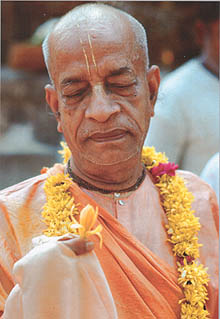
Plain Living, High Thinking
By Srila Prabhupada
The following conversation between His Divine Grace A.C. Bhaktivedanta Swami Prabhupada, Kirtanananda Swami , and Kulashekara dasa took place in New Vrindaban in June of 1976.
[Srila Prabhupada holds up a flower.] See the minute fibers in this flower. Can anyone manufacture this in a factory — such small fibers? And how brilliant the color is! If you study only one flower, you become God conscious. There is a machine that you call “nature,” and from this machine everything is coming. But who has built this machine?
More
11 Apr 2011
by The Hare Krishna Movement
in Rama
Tags: Hindus, incarnation of Lord Visnu, Lord Rama, Rama, Rama Navami, Ramanavami, Ramayana, Shukla Paksha
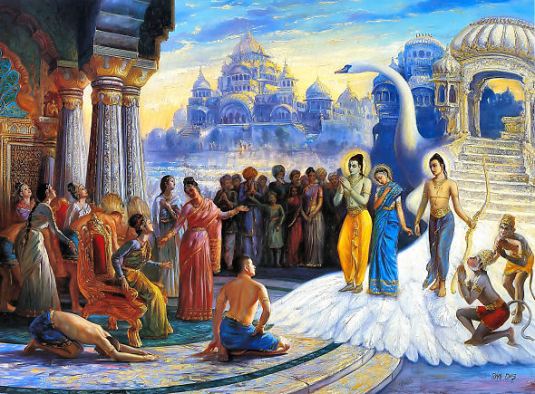
Rama Navami – the birthday of Lord Rama
Pasted from prabhupadanugas.eu
Rama Navami (Devanāgarī: राम नवमी) also known as Sri Rama Navami ( IAST SriRāma-navamī ). Sri Ram Navami is a great festival in India, celebrating the birth of Lord Rama to King Dasharatha and Queen Kausalya of Ayodhya. Rama is the 7th incarnation of the Dashavatara of Vishnu. The festival falls in the Shukla Paksha on the Navami, the ninth day of the month of Chaitra in the Hindu calendar. Thus it is also known as Chaitra Masa Suklapaksha Navami, and marks the end of the nine-day Chaitra-Navratri celebrations.
More
09 Apr 2011
by The Hare Krishna Movement
in Quotes by Srila Prabhupada, Srila Prabhupada
Tags: already successful, initiated by me spiritually, members of the Krsna Consciousness Society, prabhupadanugas, rules and regulations
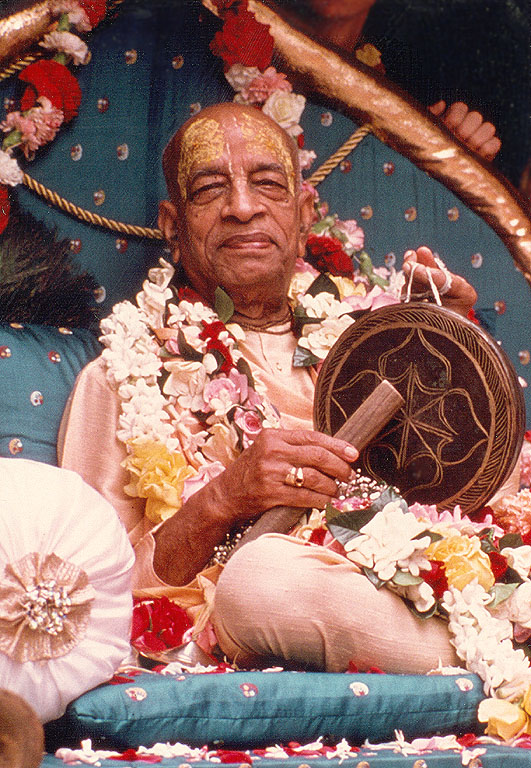
Srila Prabhupada: Already successful – No successor required
ALREADY SUCCESSFUL
Guest: Are you planning to choose a successor?
Srila Prabhupada: It is already successful.
Guest: But there must be somebody you know, needed to handle the thing.
Srila Prabhupada: Yes. That we are creating. We are creating these devotees who will handle.
Hanuman: One thing he’s saying, this gentlemen, and I would like to know, is your successor named or your successor will…
Srila Prabhupada: My success is always there.
(SP Room conversation, 12/2/75 Mexico)
Reporter: Are you training a successor?
Srila Prabhupada: Yes, my Guru Maharaja is there.
(SP Press conference, 16/7/75, San Francisco)
“I am the Spiritual Master of this institution, and all the members of the Society, they’re supposed to be my disciples. They follow the rules and regulations which I ask them to follow, and they are initiated by me spiritually.” Radio interview, March 12, 1968, San Francisco)
BOOKS WILL DO EVERYTHING
“After 80 years, no one can be expected to live long. My life is almost ended. So you have to carry on, and these books will do everything.” (SP Room conversation, 18/2/76)
Reporter: Who will succeed you when you die?
Srila Prabhupada: I will never die!
Devotees: Jaya! Haribol!
Srila Prabhupada: I will live forever from my books and you will utilise.
(Interview, Berkley, 17/7/75)
NO SUCCESSOR REQUIRED
Interviewer: What happens when that inevitable time comes a successor is needed?
Ramesvara: He is asking about the future, who will guide the Movement in the future.
Srila Prabhupada: They will guide, I am training them.
Interviewer: Will there be one spiritual leader though?
Srila Prabhupada: No. I am training GBC, 18 all over the world.
(SP Interview, 10/6/76, Los Angeles)
“This is the function of the GBC, to see that one may not be taken away by maya. The GBC should all be the instructor gurus. I am the initiator guru, and you should be the instructor guru by teaching what I am teaching and doing what I am doing. This is not a title, but you must actually come to this platform. This is what I want.”
(Letter to Madhudvisa, 4/8/1975)
Pasted from http://www.prabhupadanugas.eu/?p=9959
Previous Older Entries Next Newer Entries










 The Hare Krishna Movement