07 Sep 2013
by The Hare Krishna Movement
in A.C. Bhaktivedanta Swami Prabhupada, Caaitanya-caritamrta, Caitanya Mahaprabhu, Krsna is the Source of All Incarnations
Tags: A.C. Bhaktivedanta Swami Prabhupada, Caitanya Caritamrta, Caitanya Mahaprabhu, chanting Hare Krishna, confidential devotees, Hare Krishna, Krsnadasa Kaviraja Gosvami, Lord Caitanya, Radharani, Sri Krsna, Srimati Radharani, transcendental pleasure

“Lord Kṛṣṇa desired to taste the limitless nectarean mellows of the love of one of His multitude of loving damsels [Śrī Rādhā], and so He has assumed the form of Lord Caitanya. He has tasted that love while hiding His own dark complexion with Her effulgent yellow color. May that Lord Caitanya confer upon us His grace.”(This is the third verse of the second Caitanyāṣṭaka of Śrīla Rūpa Gosvāmī’s Stava-mālā.)
Śrī Caitanya-caritāmṛta
By His Divine Grace A. C. Bhaktivedanta Swami Prabhupāda
Summary of Ādi-līlā, Chapter 4
The Confidential Reasons for Lord Caitanya’s Appearance
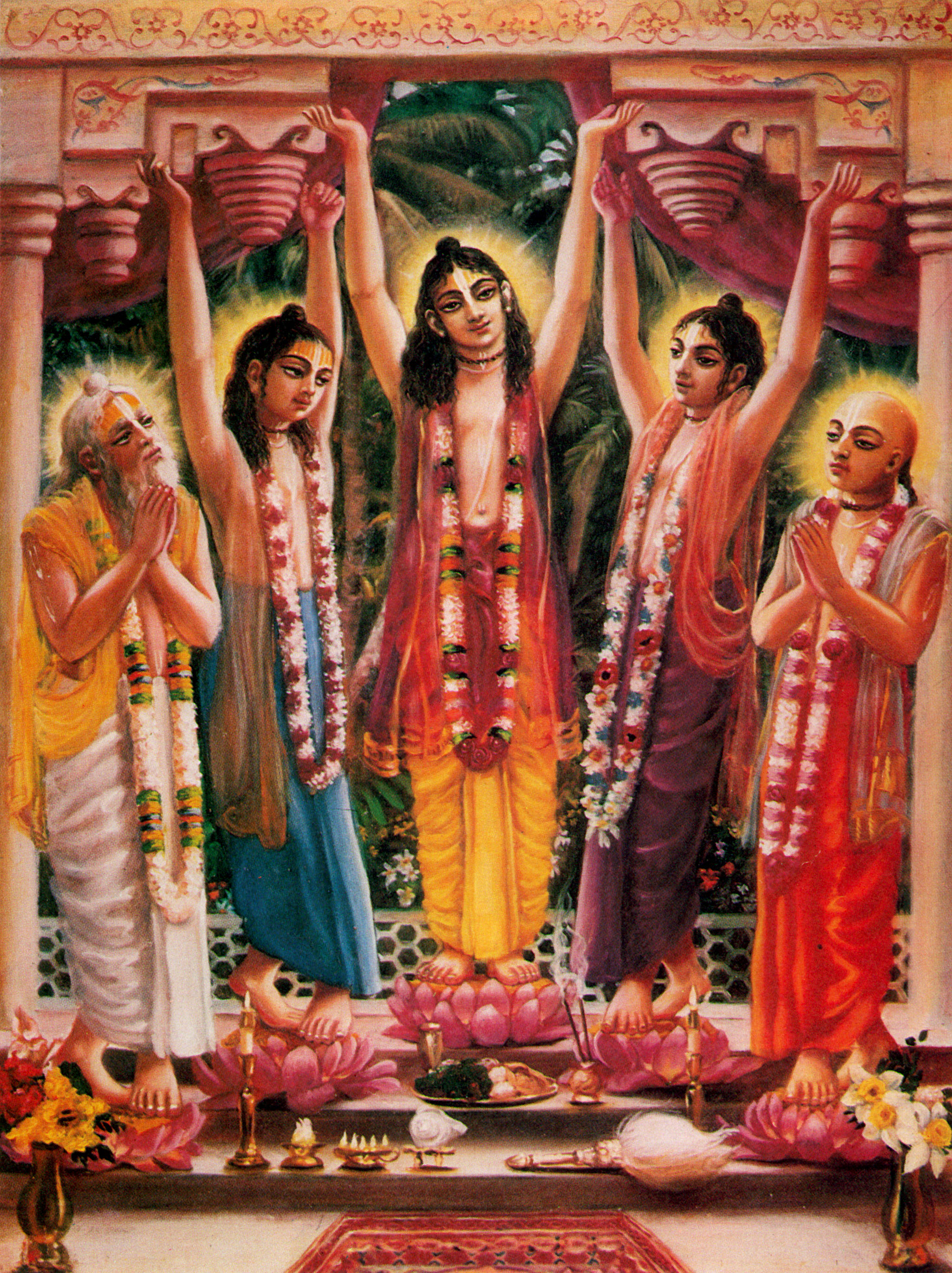
In this chapter of the epic Caitanya-caritāmṛta, Kṛṣṇadāsa Kavirāja Gosvāmī has stressed that Lord Caitanya appeared for three principal purposes of His own. The first purpose was to relish the position of Śrīmatī Rādhārāṇī, who is the prime reciprocator of transcendental love of Śrī Kṛṣṇa. Lord Kṛṣṇa is the reservoir of transcendental loving transactions with Śrīmatī Rādhārāṇī. The subject of those loving transactions is the Lord Himself, and Rādhārāṇī is the object. Thus the subject, the Lord, wanted to relish the loving mellow in the position of the object, Rādhārāṇī.
The second reason for His appearance was to understand the transcendental mellow of Himself. Lord Kṛṣṇa is all sweetness. Rādhārāṇī’s attraction for Kṛṣṇa is sublime, and to experience that attraction and understand the transcendental sweetness of Himself, He accepted the mentality of Rādhārāṇī.
The third reason that Lord Caitanya appeared was to enjoy the bliss tasted by Rādhārāṇī. The Lord thought that undoubtedly Rādhārāṇī enjoyed His company and He enjoyed the company of Rādhārāṇī, but the exchange of transcendental mellow between the spiritual couple was more pleasing to Śrīmatī Rādhārāṇī than to Śrī Kṛṣṇa. Rādhārāṇī felt more transcendental pleasure in the company of Kṛṣṇa than He could understand without taking Her position, but for Śrī Kṛṣṇa to enjoy in the position of Śrīmatī Rādhārāṇī was impossible because that position was completely foreign to Him. Kṛṣṇa is the transcendental male, and Rādhārāṇī is the transcendental female. Therefore, to know the transcendental pleasure of loving Kṛṣṇa, Lord Kṛṣṇa Himself appeared as Lord Caitanya, accepting the emotions and bodily luster of Śrīmatī Rādhārāṇī.
Lord Caitanya appeared to fulfill these confidential desires and also to preach the special significance of chanting Hare Kṛṣṇa, Hare Kṛṣṇa, Kṛṣṇa Kṛṣṇa, Hare Hare Hare Rāma, Hare Rāma, Rāma Rāma, Hare Hare, and to answer the call of Advaita Prabhu. These were secondary reasons.
More
06 Sep 2013
by The Hare Krishna Movement
in A.C. Bhaktivedanta Swami Prabhupada, Teachings of Lord Chaitanya
Tags: A.C. Bhaktivedanta Swami Prabhupada, gopis, Lord Caitanya, nectar produced on the mooon, pastimes of the Supreme personality of godhead, Sri Krsna, Teachings of Lord Caitanya, The Beauty of Krsna, unwanted desires
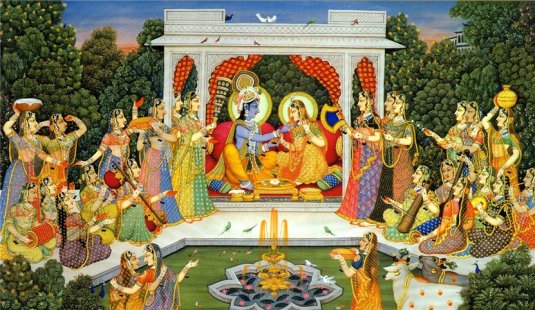
click on image to enlarge
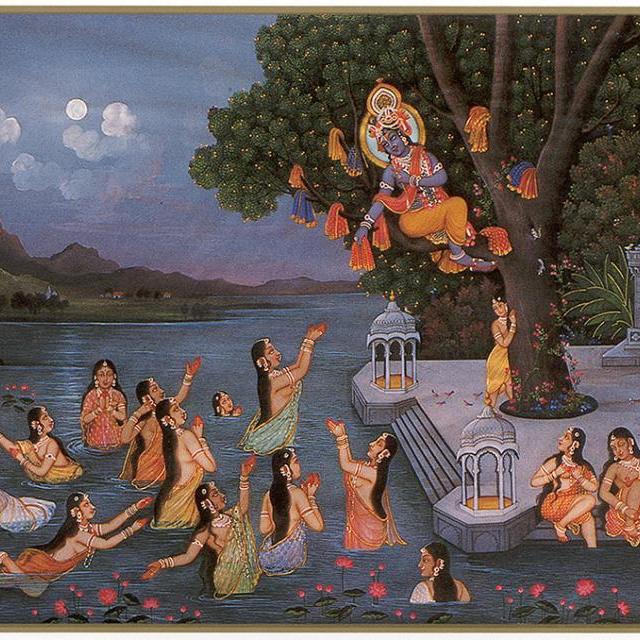
“The gopīs used to relish the beauty of Kṛṣṇa as a ceremony of perpetual enjoyment. They enjoyed the beautiful face of Kṛṣṇa, His beautiful ears with earrings, His broad forehead and His smile, and when enjoying this sight of Kṛṣṇa’s beauty, they used to criticize the creator Brahmā for causing their vision of Kṛṣṇa to be momentarily impeded by the blinking of their eyelids.” (Teachings of Lord Caitanya Chapter 10)
The beauty of Lord Kṛṣṇa increases at the sight of the beauty of the gopīs. And the more the gopīs see Lord Kṛṣṇa’s beauty, the more their beauty increases. (Cc. Adi 4.192)
“May the pastimes of Śrī Kṛṣṇa reduce the miseries existing in the material world and nullify all unwanted desires. The pastimes of the Supreme Personality of Godhead are like śikhariṇī, a blend of yogurt and sugar candy. They overpower the pride of even the nectar produced on the moon, for they distribute the sweet fragrance of the concentrated loving affairs of Śrīmatī Rādhārāṇī and the gopīs.” (Cc. Antya 1.128)
More
18 Aug 2013
by The Hare Krishna Movement
in Chanting Hare Krishna, Harinama Sankirtan, Sankirtan, The Hare Krishna Movement
Tags: chanting Hare Krishna, Hare Krishna, harinama sankirtan, His Divine Grace A.C. Bhaktivedanta Swami Prabhupada, Krishna consciousness movement, Lord Caitanya, Radha-Damodar Traveling Sankirtan Party, RDTSKP, sankirtan, The Hare Krishna Movement, traveling temple

Harinam Sankirtana
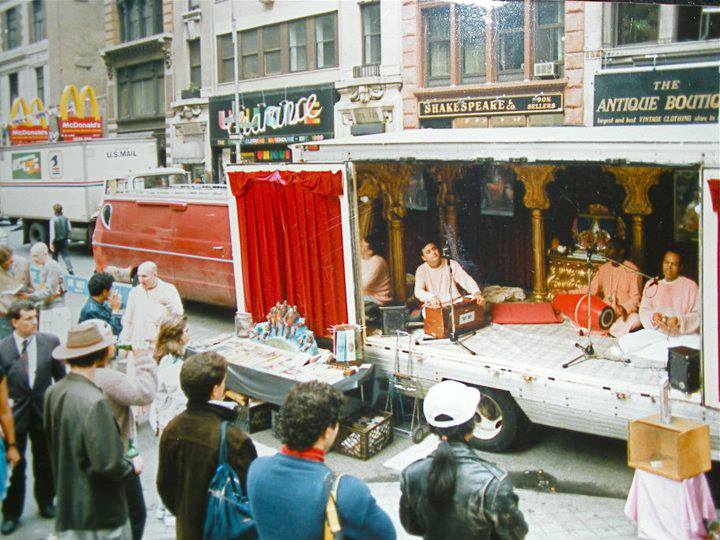
A friend shared these images with me on Facebook and we thought we would share them with you. I loved this idea of a traveling temple, and in the 1970’s I traveled on one of the famous Radha-Damodara bus’s. This idea of bringing the holy name to every Town & Village should be encouraged throughout our society more and more. This would help unite devotees under the banner of Lord Caitanya, and bring peace to the world.
In pursuance of the order of Lord Caitanya, the devotees of the Krishna Consciousness movement should try to introduce the chanting of the Hare Krishna maha-mantra throughout the world. It is only by chanting Hare Krishna that one may get free from the disease of forgetfulness of Krishna, which is the root cause of all suffering. However one is situated, whether one is single, married or renounced, one should have the determination to go out and preach Krishna consciousness. That was the instruction of our spiritual master, His Divine Grace A.C. Bhaktivedanta Swami Prabhupada. (Locanananda das)
“We are saying that this Hare Krishna maha-mantra can save everyone, and we are therefore distributing it publicly, free of charge… The devotees are preaching without charge, declaring in the streets, parks, and everywhere. “Here! Here is the Hare Krishna maha-mantra. Come on, take it!” (POP p. 72)
More
01 Aug 2013
by The Hare Krishna Movement
in A.C. Bhaktivedanta Swami Prabhupada, Caaitanya-caritamrta, Sankirtan, The Hare Krishna Movement
Tags: A.C. Bhaktivedanta Swami Prabhupada, Adi-lila 2.2, celestial kingdom, chanting Hare Krishna, dancing, Ganges, Hare Krishna, Hare Rama, krsna consciousness, Lord Caitanya, lotus flowers, materialistic persons, pastimes of Lord Krsna, singing, Sri Caitanya-caritamrta
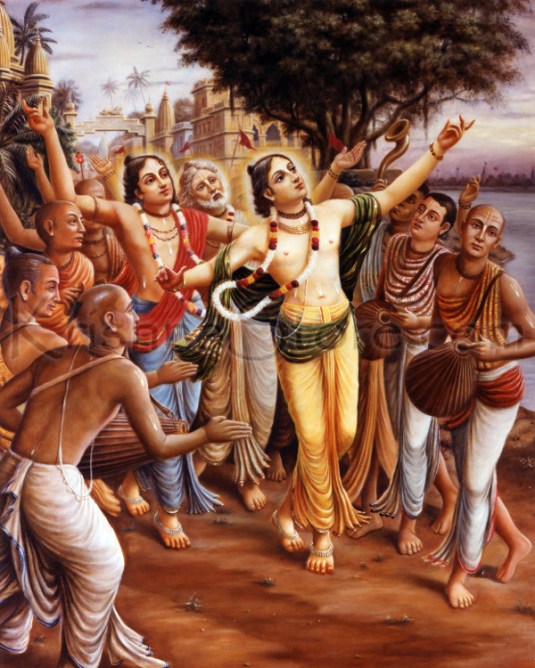
…Lord Caitanya’s movement of Kṛṣṇa consciousness is full of dancing and singing about the pastimes of Lord Kṛṣṇa. It is compared herein to the pure waters of the Ganges, which are full of lotus flowers. The enjoyers of these lotus flowers are the pure devotees, who are like bees and swans. They chant like the flowing of the Ganges, the river of the celestial kingdom. The author desires such sweetly flowing waves to cover his tongue. He humbly compares himself to materialistic persons who always engage in dry talk from which they derive no satisfaction. If they were to use their dry tongues to chant the holy name of the Lord-Hare Kṛṣṇa, Hare Kṛṣṇa, Kṛṣṇa Kṛṣṇa, Hare Hare Hare Rāma, Hare Rāma, Rāma Rāma, Hare Hare-as exemplified by Lord Caitanya, they would taste sweet nectar and enjoy life. (from purport to Adi 2.2)
Full Text and Purport More
25 Jun 2013
by The Hare Krishna Movement
in Back to Godhead, Bhaktisiddhanta Sarasvati Thakura, Bhaktivinoda Thakura, Brahmananda das, Caitanya Mahaprabhu, Gaudiya Vaisnavism
Tags: A.C. Bhaktivedanta Swami Prabhupada, Back to Godhead Magazine, Bhaktisiddhanta Sarasvati, Brahmananda dasa, Brahmananda Swami, brahmanas, devotional service, lion guru, Lord Caitanya, netyananda-vamsa, Srila Bhaktisiddhanta, Srila Bhaktivinoda Thakur

This is Part 2 of the very informative article by Sriman Brahmananda Prabhu as it appeared in Back to Godhead Magazine in 1974, which gives not only some of the History of Lord Caitanya’s Mission, but on the preaching of Srila Bhaktivinoda Thakur, Srila Bhaktisiddhanta, Gaudiya Vaisnavism, and the Hare Krishna Movement here in the West.
How the Teachings of Lord Caitanya Came to the Western World
Excerpted from Back to Godhead Magazine
Vol.1, No. 68, 1974
Part 2
by His Holiness Brahmananda Svami
[Lord Caitanya Mahaprabhu, who is Krsna Himself in the form of His own pure devotee, appeared 500 years ago in Bengal, India, to teach—by His own example—how one can become fully Krsna conscious. The teachings of Lord Caitanya were recorded and transmitted by many faithful disciples, but they were virtually unknown in the West until 1896, when Srila Bhaktivinoda Thakura, a great spiritual master in the disciplic line from Lord Caitanya, published a short book entitled Sri Caitanya Mahaprabhu—His Life and Precepts and sent copies to the Western world. The following is the second of three articles depicting the pioneering efforts of Srila Bhaktivinoda Thakura, and those who have followed him, in spreading the great benediction of Krsna consciousness to the West.]
More
22 Jun 2013
by The Hare Krishna Movement
in Back to Godhead, Bhaktivinoda Thakura, Brahmananda das, Gaudiya Vaisnavism
Tags: A.C. Bhaktivedanta Swami, Acaryas, age of quarrel, Back to Godhead Magazine, Bengali, Brahmananda dasa, Kali-yuga, Krsna, Lord Caitanya, sastras, scriptures, Srila Bhaktivinoda Thakur, Vedas
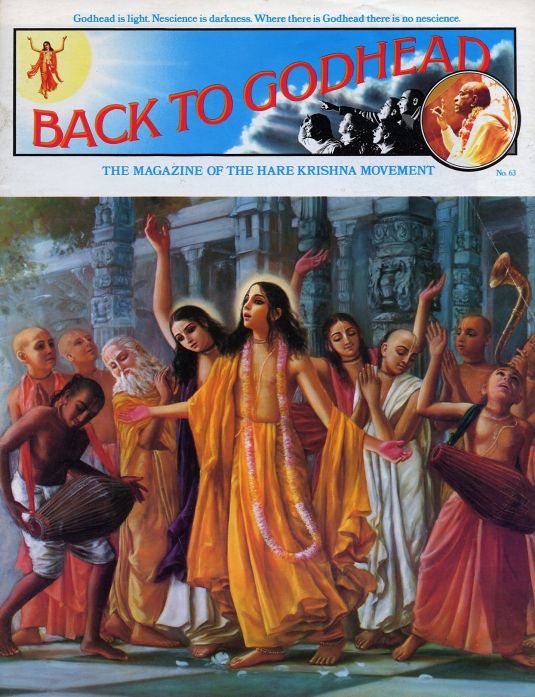
This is a very informative article which gives not only some of the History of Lord Caitanya’s Mission, but on the preaching of Srila Bhaktivinoda Thakur, Gaudiya Vaisnavism, and the Hare Krishna Movement here in the West.
How the Teachings of Lord Caitanya Came to the Western World
Excerpted from Back to Godhead Magazine
Vol.1, No. 66, 1974
Part 1
by His Holiness Brahmananda Swami
“He reasons ill who tells that Vaisnavas die When thou art living still in Sound! The Vaisnavas die to live and living try To spread a holy life around!”—verse by Srila Bhaktivinoda Thakura on the tomb of the great saint Thakura Haridasa at Puri, India
In Calcutta in 1896, the teachings of Lord Caitanya began their journey to the West. In Bengali-speaking Calcutta on August 20th of that year, Srila Bhaktivinoda Thakura published a small English treatise entitled Lord Caitanya—His Life and Precepts. Seventyone years later, in 1967, in Montreal, Canada, a graduate student came across a copy of this book while browsing through the rare-book collection of the McGill University library. The book was a wonderful find for him because he was a dedicated follower of Lord Caitanya’s, having been convinced of Lord Caitanya’s teachings by His Divine Grace A.C. Bhaktivedanta Swami Prabhupada, whom he had accepted as his spiritual master. Srila Prabhupada was born in Calcutta on September 1, 1896, only a few days after Lord Caitanya-His Life and Precepts was published. Thus by a transcendental arrangement this significant book and he who would fulfill the purpose of the book appeared together.
More
06 Jun 2013
by The Hare Krishna Movement
in Pranams, Songs of the Vaisnava Acaryas
Tags: A.C. Bhaktivedanta Swami Prabhupada, Jagannatha dasa babaji, Lord Caitanya, mangalacarana, om ajana-timirandhasya, pranams, sri guru pranama, sri-caitanya-mano-bistam, sri-varsabhanavi-devi, Srila Bhaktisiddhanta Sarasvati, Srila Bhaktivinoda, Srila Gaurakisora, Srila Rupa Goswami, vande ham

click on image to enlarge
One of the most used books in our temple room is the songbook. Everyday it seems, I am flipping through the “Songs of the Vaisnava Acaryas”, singing one of the many songs or reciting some of the numerous pranams (prayers) as part of my daily sadhana. The following post is the first 13 pages of songbook, which in my mind is a nice way to start the day and is a good prelude to other devotional service.
Pranams
from the Songs of the Vaisnava Acaryas More
21 May 2013
by The Hare Krishna Movement
in A.C. Bhaktivedanta Swami Prabhupada, Caitanya Mahaprabhu, Gaurangera Duti Pada, Narottama das Thakur, Narottama Dasa Thakura, Songs of the Vaisnava Acaryas
Tags: A.C. Bhaktivedanta Swami Prabhupada, devotee, eternal pastimes of Radha-Krsna, gaurangera duti pada, Lord Caitanya, Narottama Dasa, Narottama Dasa Thakura, O Gauranga, sabarana sri gaura mahima, Vaisnava songs

click on image to enlarge
This is a very nice song by Naottama dasa Thakura who says; Anyone who has accepted the two lotus feet of Lord Caitanya can understand the true essence of devotional service. Therefore, Narottama dasa Thakura prays that one take shelter of Lord Caitanya and follow in His footsteps.
We have included the Bengali/Elglish transliteration, translation, and 2 different purports by His Divine Grace Srila Prabhupada.
Gaurangera Duti Pada
by Narottama dasa Thakura
Anyone who has accepted the two lotus feet of Lord Caitanya can understand the true essence of devotional service. If one is captivated by the pleasing pastimes of Lord Caitanya, the dirty things in his heart will all become cleansed.
One who simply takes the holy name of Gaurasundara, Sri Krsna Caitanya, will immediately develop love of God. To such a person I say: Bravo! Very nice! Excellent! If one appreciates the merciful pastimes of Lord Caitanya and feels ecstasy and sometimes cries, this process will immediately help him to understand the eternal pastimes of Radha-Krsna.
Simply by understanding that the associates of Lord Gauranga are eternally free from material contamination, one can immediately be promoted to the transcendental abode of Lord Krsna. If one simply understands that the land of Navadvipa is not different from Vrndavana, then he actually lives in Vrndavana.
If one says: “Let me dive deep into the waves of the nectarean ocean of the transcendental loving movement introduced by Lord Caitanya”, he immediately becomes one of the confidential devotees of Radha and Krsna. It does not matter whether one is a householder living at home or a vanaprastha or sannyasi living in the forest, if he chants “O Gauranga, and becomes a devotee of Lord Caitanya, then Narottama dasa begs to have his association.
More
09 May 2013
by The Hare Krishna Movement
in Arunodaya Kirtan, Bhaktivinoda Thakura, Chanting Hare Krishna
Tags: Gauranga's golden features, Hari, karatalas, Lord Caitanya, Lord Gaurasundara, mrdangas, Mukunda Madhava, puraba bhage, Srila Bhaktivinoda Thakur, tathai tathai, udilo aruna, Yadava

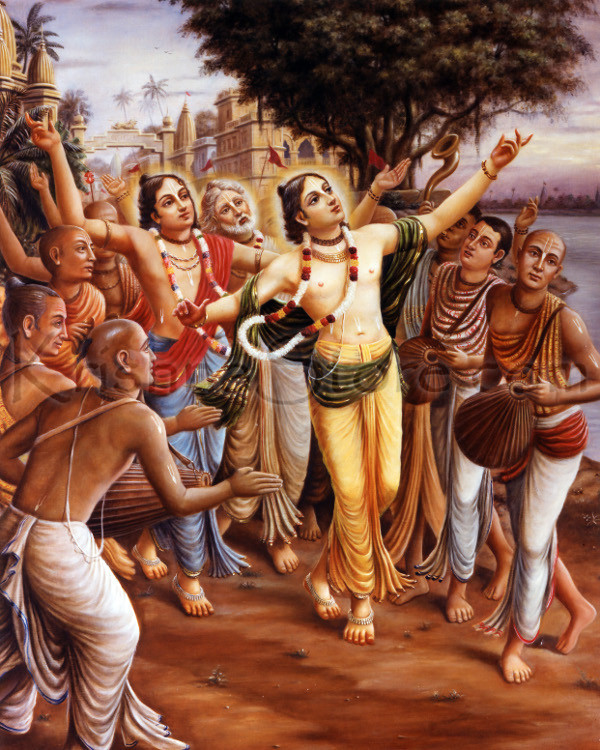
When the rising sun appeared in the East, the jewel of the twice-born, Lord Gaurasundara, awakened, and, taking His devotees with Him, He went all over the countryside towns and villages. The mṛdangas (khol) resounded “tāthaī, tāthaī,” and the jhājas [large metal karatālas that look like small cymbals] in that kīrtana played in time. Lord Gaurāńga’s golden form slightly trembled in ecstatic love of Godhead, and His footbells jingled. All the devotees chanted the names Mukunda, Mādhava, Yadava and Hari, their mouths being filled with the vibrations. They would announce to the still sleeping people, “You spend your nights uselessly sleeping and your days decorating your bodies! You have achieved such a rare human body, but you do not care for this gift. You remain not serving the darling of Yaśodā and slowly fall through your last moments to death. With every rising and setting of the sun, a day passes and is lost. Then, why do you remain idle and not serve the Lord of the heart? This temporary life is full of various miseries. Take shelter of the holy name as your only business. To penetrate the darkness of ignorance and bless everyone’s heart, the holy name has risen like the shining sun. Drink the pure nectar of the holy name. There is nothing but the name to be had in the fourteen worlds. It has filled the soul of Srī Bhaktivinoda Thākura.
Full Song with Bengali translation and word for word transliteration. More
18 Apr 2013
by The Hare Krishna Movement
in A.C. Bhaktivedanta Swami Prabhupada, Chanting Hare Krishna, Letters by Srila Prabhupada, Sankirtan, Susan Beckman, The Hare Krishna Movement
Tags: A.C. Bhaktivedanta Swami Prabhupada, chanting Hare Krishna, humble state of mind, Jayananda das, Letters by Srila Prabhupada, Lord Caitanya, lower than the straw in the street, sankirtan, sankirtan movement, Susan Beckman, The Hare Krishna Movement
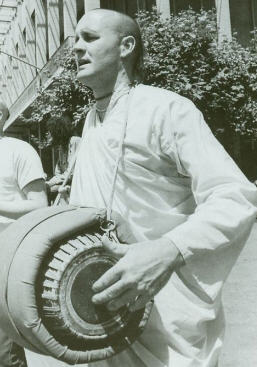
…Lord Sri Chaitanya Mahaprabhu, the incarnation of Godhead in this age has delivered the medicine for all problems of the world by his introducing the Sankirtan movement. The chanting is a process of purification. Just like we use soap to cleanse the body, this is material, but the chanting is spiritual cleansing.
…one should learn the art of chanting the Holy name of Krishna 24 hours a day and that alone is the remedy for all problems of material existence. How is it possible to chant 24 hours a day? Lord Chaitanya gave the hint, “One can chant the holy name of God in a humble state of mind, thinking himself lower than the straw in the street, more tolerant than a tree, devoid of all kinds of sense of false prestige, and always ready to offer all respects to others. In such a humble state of mind one can chant the Holy name of God constantly.” So I cannot give you any better advice for your problem, simply chant Hare Krishna and everything will be all right. (Letter to Susan Bekman from Srila Prabhupada)
Full Letter More
30 Mar 2013
by The Hare Krishna Movement
in A.C. Bhaktivedanta Swami Prabhupada, Gopis, Krsna Consciousness, KRSNA The Supreme Personality of Godhead, Spiritual World
Tags: A.C. Bhaktivedanta Swami Prabhupada, bank of the Yamuna, disciplic succession, Durga, goddess durga, goddess katyayani, gopi girls, gopis, Katyayani, Krsna, Lord Caitanya, Stealing the Garments of the Unmarried Gopi Girls, The Supreme Personality of Godhead, unmarried girsl, Vrndavana, Yamuna

…The unmarried gopīs used to prepare the deity of goddess Durgā and worship it with candana pulp, garlands, incense lamps and all kinds of presentations-fruits, grains and twigs of plants. After worshiping, it is the custom to pray for some benediction. The unmarried girls used to pray with great devotion to goddess Kātyāyanī, addressing her as follows: “O supreme eternal energy of the Personality of Godhead, O supreme mystic power, O supreme controller of this material world, O goddess, please be kind to us and arrange for our marriage with the son of Nanda Mahārāja, Kṛṣṇa.”
…Early in the morning, the gopīs used to go to the bank of the Yamunā to take bath. They would assemble together, capturing each other’s hands, and loudly sing of the wonderful pastimes of Kṛṣṇa. It is an old system among Indian girls and women that when they take bath in the river they place their garments on the bank and dip into the water completely naked. The portion of the river where the girls and women take bath was strictly prohibited to any male member, and this is still the system. The Supreme Personality of Godhead, knowing the minds of the unmarried young gopīs, benedicted them with their desired objective. They had prayed for Kṛṣṇa to become their husband, and Kṛṣṇa wanted to fulfill their desires.
More
26 Mar 2013
by The Hare Krishna Movement
in A.C. Bhaktivedanta Swami Prabhupada, Caitanya Mahaprabhu, Narottama das Thakur, Sri Krsna Caitanya Prabhu
Tags: A.C. Bhaktivedanta Swami Prabhupada, disciplic succession, Krishna, krsna consciousness, Lord Caitanya, Narottama Dasa, Narottama Dasa Thakura, six gosvamis, Sri Krsna Caitanya Prabhu, Srinivasa Acarya
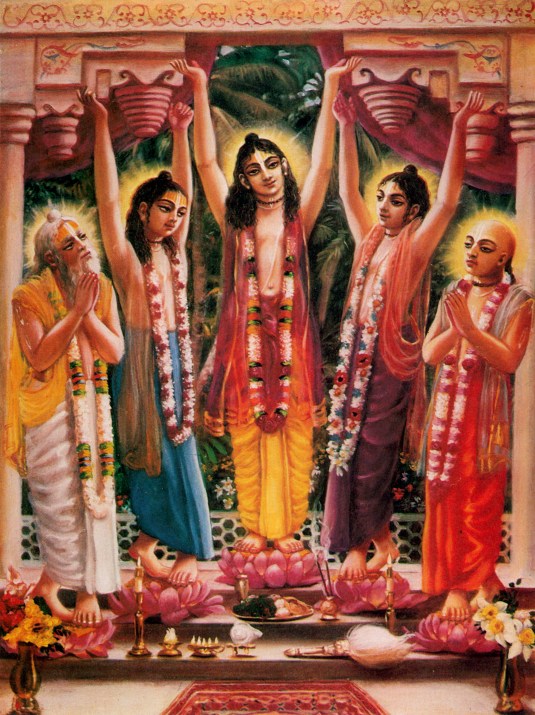
For Gaura Purnima, or the Appearance Celebration of Sri Caitanya Mahaprabhu, we are pleased to post one of our favorite songs from the “Songs of the Vaisnava Acaryas”, along with a purport by Srila Prabhupada, to honor this auspicious event.
…”My dear Lord, please be merciful to me, because who can be more merciful than Your Lordship within these three worlds?” Actually, this is a fact. Not only Narottama Dasa Thakura but Rupa Gosvami also prayed to Lord Caitanya in this way. At the time of the first meeting of Lord Caitanya and Rupa Gosvami at Prayaga (Allahabad), Srila Rupa Gosvami said, “My dear Lord, You are the most munificent of all incarnations, because You are distributing love of Krsna, Krsna consciousness.” When Krsna was personally present He simply asked us to surrender, but He did not distribute Himself so easily. He made conditions–“First of all you surrender.” But this incarnation, Lord Caitanya, although Krsna Himself, makes no such condition. He simply distributes: “Take love of Krsna.” Therefore Lord Caitanya is approved as the most munificent incarnation…(From Purport to song)
Full Song with Translation and Purport More
23 Mar 2013
by The Hare Krishna Movement
in A.C. Bhaktivedanta Swami Prabhupada, Bhagavad-gita, Book Changes, Books by Srila Prabhupada, Rupanuga das, The Hare Krishna Movement
Tags: A.C. Bhaktivedanta Swami Prabhupada, Bali Mardan, BBT, BBT Trustee, bhagavad-gita, Bhagavan das, hansadutta das, Harikesa das, Lord Caitanya, MacMillan Bhagavad-gita, Ramesvara das, Rascal editors, Rupanuga das, Sampradaya sun, Srila Prabhupada

This is a very nice article written by Sriman Rupanuga Prabhu, that I found on the Sampradaya Sun this morning. It gives us some more information of the history of the Srila Prabhupada’s Bhagavad-gita As It Is, 1972 Macmillan Edition, and the changes that have transpired since. Very informative!
…That new Gita was to prove big and heavy and only so many could be crammed into a bookbag, but people were to become immediately attracted to the gorgeous, colorful paintings; besides, where could they find such a book with so many color illustrations, and for how much? It was Srila Prabhupada’s transcendent genius to conceive of such a way to reveal to people the deepest philosophy and the highest truths comprehensible to human beings. No other volume of supposed philosophical content could compare to that Gita, decorated as it was with paintings allowing a view of the Spiritual Sky. Along with Prasadam, those paintings were Srila Prabhupada’s secret weapons.
…To reiterate, after examining and rejecting new paintings for the Krsna Book, Srila Prabhupada formulated the following instructions for paintings in his books:
“If a painting is to be replaced it must be the exact same pastime, same scene, but better technically; to take out an approved painting and replace it with a different one was not allowed; and a painting may be added but there is no question of removing anything.”
In other words, Srila Prabhupada was explaining that if he were to replace a painting as they were proposing, it would be only with a better painting technically, with the same scene. But once approved by him, a painting could not be replaced; but more, bona fide paintings could be added. The conclusion is that paintings personally approved by Srila Prabhupada were not to be changed or replaced then, or in the future. It’s noteworthy that he strongly resisted replacing illustrations or paintings he had previously approved, and often took the time to demonstrate how proposed replacement or additions were misconceived.
More
08 Mar 2013
by The Hare Krishna Movement
in A.C. Bhaktivedanta Swami Prabhupada, Disciplic succession, Isvara Puri, Sri Caitanya-Caritamrta
Tags: disciple of madhavendra puri, Hare Krsna Maha-mantra, Isvara Puri, Lord Caitanya, Madhavendra Puri, spiritual master, spiritual master of Caitanya Mahaprabhu, Sri Caitanya-caritmrta, usvara-puri gosani fare

Today is the the Disappearance of Śrī Īśvara Purī who was the spiritual master of Sri Caitanya Mahaprabhu. Even though Lord Caitanya, the Supreme Godhead, did not need a spiritual master, He accepted Śrī Īśvara Purī as His guru to establish the importance of accepting a spiritual master. In honor of his disappearance we are posting one verse from the Sri Caitanya-caritmrta describing the service he rendered to his spiritual master Śrīla Mādhavendra Purī.
…”At the last stage of his life Śrī Mādhavendra Purī became an invalid and was completely unable to move, and Īśvara Purī so completely engaged himself in his service that he personally cleaned up his stool and urine. Always chanting the Hare Kṛṣṇa mahā-mantra and reminding Śrī Mādhavendra Purī about the pastimes of Lord Kṛṣṇa in the last stage of his life, Īśvara Purī gave the best service among his disciples. Thus Mādhavendra Purī, being very pleased with him, blessed him, saying, ‘My dear boy, I can only pray to Kṛṣṇa that He will be pleased with you.’ Thus Īśvara Purī, by the grace of his spiritual master, Śrī Mādhavendra Purī, became a great devotee in the ocean of love of Godhead.”
More
20 Oct 2012
by The Hare Krishna Movement
in A.C. Bhaktivedanta Swami Prabhupada, Letters by Srila Prabhupada, Quotes by Srila Prabhupada, Vidura das
Tags: A.C. Bhaktivedanta Swami Prabhupada, Lord Caitanya, Prabhupada lectures, Prabhupada Letters, Srila Prabhupada, Srila Prabhupada vani, vani, Vidura das

Śrīla Prabhupāda vāṇī
From Letters, Lectures, and Conversations
Submitted by Vidura Prabhu
“They say that you are all my disciples. So the guru is not on the scene. He has fled away and nobody knows where he is, but the Krishna consciousness program is going on. That was also going on during the time of Lord Caitanya. In South India He used to travel, and in a village He would meet some man and induce him to chant, and the man would become a devotee, and Lord Caitanya would go away, but still the man would continue to chant. So, I am not personally present, but still things are going on, and it is increasing. So the books are selling and we are expanding. This book distribution is the brihat mrdangam. It is the greater preaching.” (Letter to: Sri Govinda: — Bombay 6 December, 1974)
More
10 Oct 2012
by The Hare Krishna Movement
in A.C. Bhaktivedanta Swami Prabhupada, Chanting Hare Krishna, Nama Sankirtan, Narottama Dasa Thakura, Songs of the Vaisnava Acaryas
Tags: A.C. Bhaktivedanta Swami Prabhupada, haraye namah, kirtan, Krishna consciousness, Lord Caitanya, Mayapur, Navadvipa, sankirtana, sri nama kirtan, Srila Bhaktivinoda Thakur, yadavaya namah

…The Lord ordered all the citizens of Navadvīpa to chant the Hare Kṛṣṇa mantra, and in each and every home they began performing saṅkīrtana regularly.
[All the devotees sang this popular song along with the Hare Kṛṣṇa mahā-mantra.] “Haraye namaḥ, kṛṣṇa yādavāya namaḥ gopāla govinda rāma śrī-madhusūdana.”
When the saṅkīrtana movement thus started, no one in Navadvīpa could hear any sound other than the words “Hari! Hari!” and the beating of the mrdaṅga and clashing of hand bells.
Song lyrics and text More
06 Oct 2012
by The Hare Krishna Movement
in A.C. Bhaktivedanta Swami Prabhupada, Krishna Consciousness, Sri Caitanya-Caritamrta
Tags: A.C. Bhaktivedanta Swami Prabhupada, cleanse the heart as the Lord cleansed the Gundica temple, devotee, devotional service, Gundica Temple, Krsna, krsna consciousness, Lord Caitanya, madhya-lila 12.135, Sri Caitanya-carimrta
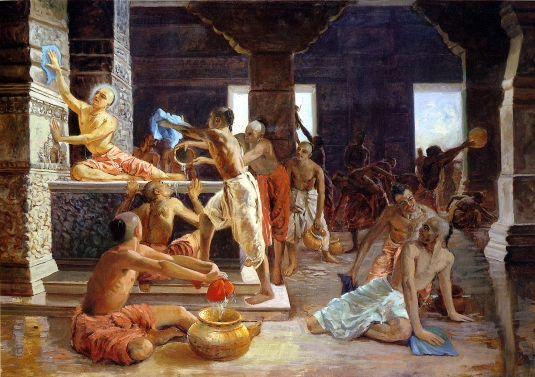
…If a devotee at all wants to cleanse his heart, he must chant and hear the glories of the Lord, Śrī Kṛṣṇa (śṛṇvatāṁ sva-kathāḥ kṛṣṇaḥ). This is a simple process. Kṛṣṇa Himself will help cleanse the heart because He is already seated there. Kṛṣṇa wants to continue living within the heart, and the Lord wants to give directions, but one has to keep his heart as clean as Lord Caitanya Mahāprabhu kept the Guṇḍicā temple. The devotee therefore has to cleanse his heart just as the Lord cleansed the Guṇḍicā temple. In this way one can be pacified and enriched in devotional service.
More
30 Sep 2012
by The Hare Krishna Movement
in A.C. Bhaktivedanta Swami Prabhupada, Back to Godhead, Caitanya Mahaprabhu
Tags: A.C. Bhaktivedanta Swami Prabhupada, Back to Godhead Magazine, BTG, Buddhist, Caitanya Mahaprabhu, Haridas Thakrua, holy names, Jagai and Madhai, Jharikhanda forest, jungle animals, Krsna! Krsna!, Lord Caitanya, love of God, Nityananda Prabhu, Sri Caitanya-caritamrta
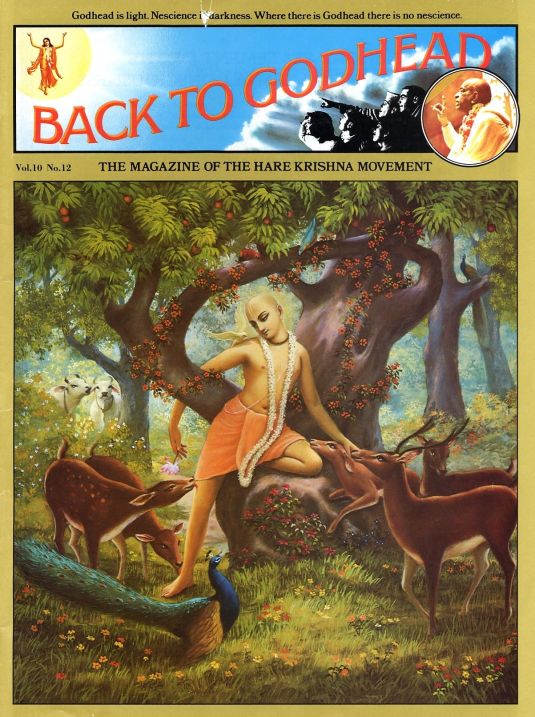
click on image to enlarge
The Special Kindness of Lord Caitanya
Sri Caitanya Mahaprabhu, an incarnation of the Supreme Lord, appeared in India in the fifteenth century. His mission was to freely distribute pure love of God to everyone without considering who was qualified or unqualified. He predicted that the whole world would one day hear the chanting of the Lord’s holy names. The first of the following three narratives is excerpted from Srila Prabhupada’s introduction to Srimad-Bhagavatam. The final two are taken from his English translation of Sri Caitanya-caritamrta, an extensive account of Lord Caitanya’s life and teachings.
More
18 Jul 2012
by The Hare Krishna Movement
in Caitanya Mahaprabhu, Lectures, Sri Caitanya-Caritamrta
Tags: A.C. Bhaktivedanta Swami Prabhupada, Caitanya Caritamrta, Krsna, krsnera svarupa ananta, Lord Caitanya, Mad. 20.146-151, photo by Gurudas, prabhupada, Prabhupada lectures, transcendental forms of Krsna, Vedas, Vedic knowledge points to Krishna

“Vedic Knowledge Points To Krsna”
Lecture on Caitanya-caritamrta Madhya 20.146-151
New York, December 3, 1966
By His Divine Grace A.C. Bhaktivedanta Swami Prabhupada
Prabhupada:
mukhya-gauna-vrtti, kimva anvaya-vyatireke
vedera pratijna kevala kahaye krsnake
So Lord Caitanya says, “You study Vedas in any way, directly, indirectly. In whatever way you like you study Vedas, but the ultimate objective is Krsna.”
Now, Caitanya, Lord Caitanya, is describing about the various forms of Krsna. This is very important subject. How Krsna is all-pervading, He is describing.
krsnera svarupa-ananta, vaibhava-apara
cic-chakti, maya-sakti, jiva-sakti ara
Krsnera svarupa ananta. The transcendental forms of Krsna, innumerable, vaibhava, and His opulence, that is also innumerable. Nobody can estimate. How many forms are there of Krsna or how much opulent He is, nobody can estimate; nobody can measure. This is inconceivable. The first proposition. Cic-chakti maya-sakti jiva-sakti ara. And His potencies are also unlimited, out of which, three potencies are generally accepted: cit-sakti, spiritual potency; material potency; and marginal potency. These three potencies I have described many times. Cit-sakti, the spiritual potency, is a manifestation of the spiritual world, and material potency is a manifestation of this material world, and the marginal potency, we are, we living entities. We are marginal potency. Why it is marginal? Because although we belong to the spiritual potency, but we have got tendency to come into contact of this material potency. Therefore it is called marginal, “this way or that way.” That a slight independence which is there in every living entity, he can use that, and he may select either to live in the spiritual potency or in the material potency. Therefore the living entities are called marginal potency. So parasya saktir vividhaiva sruyate [Cc. Madhya 13.65, purport]. Although the energies of the Supreme Lord are innumerable — nobody can count or measure — but they are divided into three.
More
14 Jun 2012
by The Hare Krishna Movement
in Chanting Hare Krishna, Letters by Srila Prabhupada
Tags: A.C. Bhaktivedanta Swami Prabhupada, chanting Hare Krishna, God's holy name, Hare Hare, holy name, Janardana, kingdom of God, Krishna consciousness movement, Krishna Krishna, Letters by Srila Prabhupada, Lord Caitanya, Lord Jesus Christ, millions of holy names

…The Lord Has millions of holy names and you can chant any one of them, and each and every Name of the Lord is of full potential. We chant the above mentioned holy Name of the Lord because the name was Chanted by Lord Caitanya, the father of this movement of Krishna Consciousness. We follow Lord Caitanya’s footprints to achieve very quick result…
Letter to: Mr. Dambergs (senior)
New York,12 April, 1967
Dear Mr. Senior Dambergs,
Kindly accept my greetings. I am unknown to you but I have heard about you from your very good grandson Sriman Janardana (Janis). I have heard that you have been ailing since a long time but I have heard also that you are a great devotee of Lord Jesus Christ. It is very good. I am also an insignificant servant of Lord Jesus Christ because I am preaching the same message as Lord Jesus did. I’m preaching God consciousness or Krishna consciousness. Fools thought that Lord Jesus Christ was dead by crucifixion but He resurrected. All living entities are parts and parcel of the Supreme Lord and therefore they are also eternal. All our ailments are due to the external body. Although we have to suffer some time from bodily inconveniences specially in the old age, still if we are God conscious, we shall not feel the pangs. The best thing is therefore to Chant the holy Name of the Lord Constantly. I would you request you to chant always God’s holy Name. We are chanting God’s holy name always and instructing our students to do so. If you have any holy name for God do chant Him always and it will do you the greatest benefit. And by chanting so when you will be remembering Him always then you transfer to the Kingdom of God is guaranteed. When you return to the Kingdom of God there is no necessity to come back again to the rotten world full of miseries. We are chanting God’s Name as
Hare Krishna Hare Krishna Krishna Krishna Hare Hare
Hare Rama Hare Rama Rama Rama Hare Hare.
More
Previous Older Entries Next Newer Entries










 The Hare Krishna Movement