16 Feb 2012
by The Hare Krishna Movement
in Teachings of Queen Kunti
Tags: A.C. Bhaktivedanta Swami Prabhupada, devotional service, hearts of advanced transcendentalists, Queen Kunti, Srimad Bhagavatam, sudras, vaisyas, women
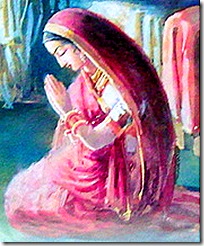
Even the greatest philosophical speculators cannot have access to the region of the Lord. It is said in the Upaniṣads that the Supreme Truth, the Absolute Personality of Godhead, is beyond the range of the thinking power of the greatest philosopher. He is unknowable by great learning or by the greatest brain. He is knowable only by one who has His mercy. Others may go on thinking about Him for years together, yet He is unknowable. This very fact is corroborated by the Queen, who is playing the part of an innocent woman. Women in general are unable to speculate like philosophers, but they are blessed by the Lord because they believe at once in the superiority and almightiness of the Lord, and thus they offer obeisances without reservation. The Lord is so kind that He does not show special favor only to one who is a great philosopher. He knows the sincerity of purpose. For this reason only, women generally assemble in great number in any sort of religious function. In every country and in every sect of religion it appears that the women are more interested than the men. This simplicity of acceptance of the Lord’s authority is more effective than showy insincere religious fervor.
Kuntīdevī prayed to the Lord very submissively, and this is the symptom of a Vaiṣṇava.
Teachings of Queen Kunti
By His Divine Grace A.C. Bhaktivedanta Swami Prabhupada
Chapter 3, The most Intelligent Woman
tathā paramahaṁsānāṁ
munīnām amalātmanām
bhakti-yoga-vidhānārthaṁ
kathaṁ paśyema hi striyaḥ
You Yourself descend to propagate the transcendental science of devotional service unto the hearts of the advanced transcendentalists and mental speculators, who are purified by being able to discriminate between matter and spirit. How, then, can we women know You perfectly? —Śrīmad-Bhāgavatam 1.8.20
More
14 Feb 2012
by The Hare Krishna Movement
in Devotional Service, Krishna Consciousness, KRSNA The Supreme Personality of Godhead
Tags: A.C. Bhaktivedanta Swami Prtabhupada, devotional service, entourage, feelings of separation, gopis, Krishna, Krsna The Supreme Personality of Godhead, Krsna's transcendental form Krsna's pastimes, Lord Caitanya, true love

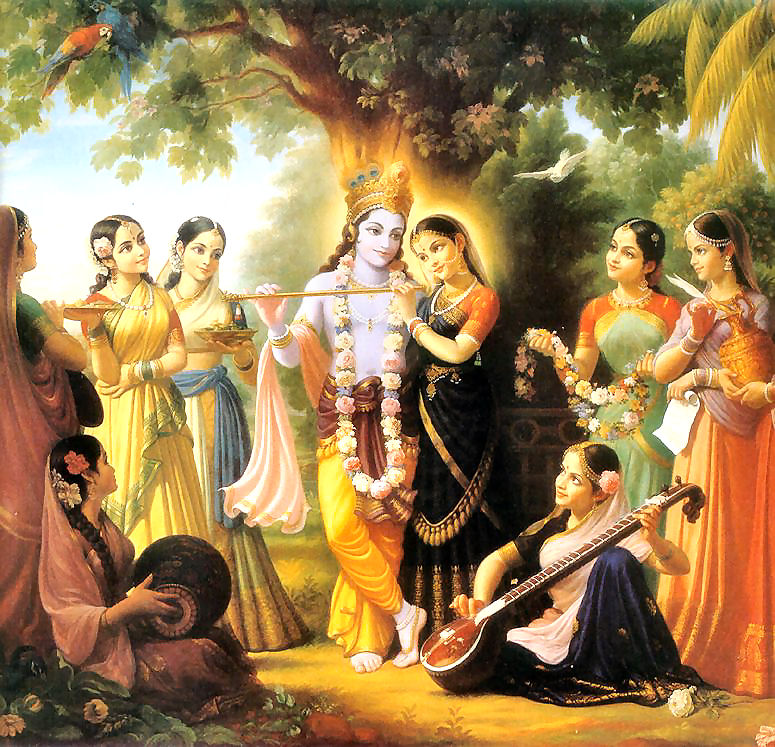
Today being Valentines Day, and with everyone absorbed in a loving mood, we thought we would post something about True Love.
…Everyone and everything is attracted to Kṛṣṇa–that is the perfect description of Kṛṣṇa’s attraction. The example of the gopīs is very instructive to persons who are trying to be absorbed in Kṛṣṇa consciousness. One can very easily associate with Kṛṣṇa simply by remembering His transcendental pastimes. Everyone has a tendency to love someone. That Kṛṣṇa should be the object of love is the central point of Kṛṣṇa consciousness. By constantly chanting the Hare Kṛṣṇa mantra and remembering the transcendental pastimes of Kṛṣṇa, one can be fully in Kṛṣṇa consciousness and thus make his life sublime and fruitful.
KRSNA The Supreme Personality of Godhead
By His Divine Grace A.C. Bhaktivedanta Swami Prabhupada
Chapter 34
The Gopīs’ Feelings of Separation
The gopīs of Vṛndāvana were so attached to Kṛṣṇa that they were not satisfied simply with the rāsa dance at night. They wanted to associate with Him and enjoy His company during the daytime also. When Kṛṣṇa went to the forest with His cowherd boy friends and cows, the gopīs did not physically take part, but their hearts went with Him. And because their hearts went, they were able to enjoy His company through strong feelings of separation. To acquire this strong feeling of separation is the teaching of Lord Caitanya and His direct disciplic succession of Gosvāmīs. When we are not in physical contact with Kṛṣṇa, we can associate with Him like the gopīs, through feelings of separation. Kṛṣṇa’s transcendental form, qualities, pastimes, and entourage are all identical with Him. There are nine different kinds of devotional service. Devotional service to Kṛṣṇa in feelings of separation elevates the devotee to the highest perfectional level, to the level of the gopīs.
More
30 Jan 2012
by The Hare Krishna Movement
in A.C. Bhaktivedanta Swami Prabhupada, Advaita Acarya, Sri Caitanya-Caritamrta
Tags: A.C. Bhaktivedanta Swami Prabhupada, Adi. 12-13, Advaita Acarya, devotional service, Lord Advaita Acarya, Lords devotee, Maha-Visnu, maya, Sri Caitanya-caritamrta

Thinking of the lotus feet of Śrī Kṛṣṇa, He constantly offered tulasī buds in water from the Ganges.
While most of the world celebrated the Appearance day of Advaita Acarya yesterday…according to the BBT Art Calendar the variant date for our area is today. (go figure?) So we are posting some verses from the Sri Caitanya-caritamrta in honor of His appearance.
Sri Caitanya-caritamrta – 1975 Edition
By His Divine Grace A.C. Bhaktivedanta Swami Prabhupada
Adi-lila Chapter 1, Text 12-13
mahā-viṣṇur jagat-kartā
māyayā yaḥ sṛjaty adaḥ
tasyāvatāra evāyam
advaitācārya īśvaraḥ
mahā-viṣṇuḥ—Mahā-Viṣṇu, the resting place of the efficient cause; jagat-kartā—the creator of the cosmic world; māyayā—by the illusory energy; yaḥ—who; sṛjati—creates; adaḥ—that universe; tasya—His; avatāraḥ—incarnation; eva—certainly; ayam—this; advaita-ācāryaḥ—of the name Advaita Ācārya; īśvaraḥ—the Supreme Lord, the resting place of the material cause.
Lord Advaita Ācārya is the incarnation of Mahā-Viṣṇu, whose main function is to create the cosmic world through the actions of Māyā.
advaitaṁ hariṇādvaitād
ācāryaṁ bhakti-śaṁsanāt
bhaktāvatāram īśaṁ tam
advaitācāryam āśraye
advaitam—known as Advaita; hariṇā—with Lord Hari; advaitāt—from being nondifferent; ācāryam—known as Ācārya; bhakti-śaṁsanāt—from the propagation of devotional service to Śrī Kṛṣṇa; bhakta-avatāram—the incarnation as a devotee; īśam—to the Supreme Lord; tam—to Him; advaita-ācāryam—to Advaita Ācārya; āśraye—I surrender.
Because He is nondifferent from Hari, the Supreme Lord, He is called Advaita, and because He propagates the cult of devotion, He is called Ācārya. He is the Lord and the incarnation of the Lord’s devotee. Therefore I take shelter of Him.
Pasted from; Prabhupada Books
25 Dec 2011
by The Hare Krishna Movement
in Bhagavad-gita, Devotional Service, Krishna Consciousness, Lord Jesus Christ
Tags: Arjuna, bhagavad-gita, devotee is friendly to every living entity, devotional service, God consciousness, Jesus Christ, Lord Jesus Christ, Srila Prabhupada
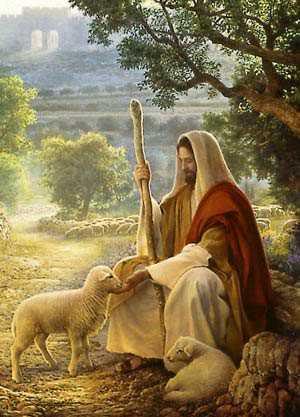
A devotee of Kṛṣṇa is friendly to everyone. Therefore it is said here that he has no enemy. How is this? A devotee situated in Kṛṣṇa consciousness knows that only devotional service to Kṛṣṇa (God) can relieve a person from all the problems of life. He has personal experience of this, and therefore he wants to introduce this system, Kṛṣṇa consciousness, or God Consciousness, into human society. There are many examples in history of devotees of the Lord risking their lives for the spreading of God consciousness. The favorite example is Lord Jesus Christ
He was crucified by the nondevotees, but He sacrificed His life for spreading God consciousness. Of course, it would be superficial to understand that He was killed. Similarly, in India also there are many examples, such as Ṭhākur Haridāsa. Why such risk? Because they wanted to spread Kṛṣṇa consciousness, and it is difficult. A Kṛṣṇa conscious person knows that if a man is suffering, it is due to his forgetfulness of his eternal relationship with Kṛṣṇa (God). Therefore, the highest benefit one can render to human society is relieving one’s neighbor from all material problems. In such a way, a pure devotee is engaged in the service of the Lord. Now, we can imagine how merciful Kṛṣṇa is to those engaged in His service, risking everything for Him. Therefore it is certain that such persons must reach the supreme planet after leaving the body.
Bhagavad-gita As It Is – Macmillan 1972 Edition
By His Divine Grace A.C. Bhaktivedanta Swami Prabhupada
Chapter 11 The Universial Form Text 55
mat-karma-kṛn mat-paramo
mad-bhaktaḥ saṅga-varjitaḥ
nirvairaḥ sarva-bhūteṣu
yaḥ sa mām eti pāṇḍava
mat-karma-kṛt—engaged in doing My work; mat-paramaḥ—concerning Me, the Supreme; mat-bhaktaḥ—engaged in My devotional service; saṅga-varjitaḥ—freed from the contamination of previous activities and mental speculation; nirvairaḥ—without an enemy; sarva-bhūteṣu—to every living entity; yaḥ—one who; saḥ—he; mām—unto Me; eti—comes; pāṇḍava—O son of Pāṇḍu.
Translation
My dear Arjuna, one who is engaged in My pure devotional service, free from the contaminations of previous activities and from mental speculation, who is friendly to every living entity, certainly comes to Me.
More
23 Dec 2011
by The Hare Krishna Movement
in Free Downloads, Free eBooks, The Hare Krsna Cookbook, Vegetarian Cooking, Vegetarian Recipies, Vegetarianism
Tags: A.C. Bhaktivedanta Swami Prabhupada, devotional service, Krishna, krsna consciousness, Krsna devi dasi, Prasadam, Sama devi dasi, singing dancing and feasting, The Hare Krsna Cookbook, vegetarian cooking, vegetarian recipies, vegetarianism

click on link at bottom to download entire book in pdf format
The Hare Krsna Cookbook
1973 Bhaktivedanta Book Trust
Compiled by Krsna devi dasi and Sama devi dasi
“The Hare Krsna Cookbook”, originally published in 1973, was the first widely distributed book of vegetarian recipes, throughout the Movement. This was the book myself and many early devotees learned to cook from, and remains today my all time favorite cookbook, and is a constant companion in our kitchen. We offer the complete book on a PDF Format as a gift to all our readers this Holiday Season.
Dedication
Prasadam means mercy, and this Prasadam Cookbook is dedicated to the fountainhead of all mercy, the spiritual master, His Divine Grace A.C. Bhaktivedanta Swami Prabhupada. He is by nature kind to every living entity, but that ocean of mercy becomes fully visible in his devotees.
Srila Prabhupada has not given us some dry, canned philosophy to chew; he has given us the nectar for which we have sought so long: he has taught us how to render transcendental loving service to the Lord in all our daily activities. This book illustrates on of them.
The Process of Krsna Consciousness is usually described as one of dinging, dancing and feasting. We have already demonstrated to the world how anyone can sing and dance to the holy names of God, Hare Krsna, and now, with the publication of this Prasadam Cookbook, we hope that the whole world will feast in honor of the Supreme Lord. That will make this world like Vrndavana, the transcendental abode of Krsna, where Krsna, Balarama and the monkeys visit every kitchen with thieving intend and bless the devotees with pure love of God. (Dedication from The Hare Krsna Cookbook)
Dwonload PDF Format 5.6MB The Hare KRSNA Cookbook
11 Dec 2011
by The Hare Krishna Movement
in Back to Godhead, Brahmananda das, Spiritual Life, Spiritual World, Vrindavan
Tags: Back to Godhead Magazine, Brahmananda dasa, devotional service, Krishna, Land of No Return, Srila Prabhupada, Vrindavan forest, Vrndavan

Vrndavana—Land of No Return
By His Holiness Brahmananda Swami
Originally Published in Back to Godhead 1975 Vol. 10, No. 11
Part 2
I once visited Vrndavana, India with His Divine Grace Srila Prabhupada. As I accompanied him on his daily walk one morning we suddenly came upon a particularly beautiful spot. The cool sands were thick with foliage; the tall trees full of singing birds. As the sun brightened the clear morning sky, peacocks filled the air with their peculiar call.
Srila Prabhupada looked over his shoulder and said to me, “So, Brahmananda, this is Vrndavana. How do you like it?”
“It’s wonderful, Srila Prabhupada,” was all I could reply. I felt that he was actually revealing the glories of Vrndavana to me even though I had no particular spiritual qualification.
Vrndavana is the place where the Supreme Lord Sri Krsna appeared five thousand years ago. Lord Krsna descended there from His own spiritual planet, Goloka Vrndavana to attract us by displaying His supernatural pastimes. Srila Prabhupada has explained that when Krsna descends to the material world, this same Vrndavana descends with Him just as an entourage accompanies an important personage. Because when Krsna comes His land also comes, Vrndavana is not considered to exist in the material world. Therefore devotees take shelter of the Vrndavana in India, for it is considered to be a replica of the original Goloka Vrndavana.
More
29 Sep 2011
by The Hare Krishna Movement
in Devotional Service, Nectar of Devotion
Tags: 1970 Edition, devotional service, fruitive activities, His Divine Grace A.C. Bhaktivedanta Swami Prabhupada, material sense enjoyment, Nectar of Devotion, renunciation, Sri Krsna

His Divine Grace A.C. Bhaktivedanta Swami Prabhupada
The Nectar of Devotion – 1970 Edition
By His Divine Grace A.C. Bhaktivedanta Swami
Chapter 3
Eligibility of the Candidate for Accepting Devotional Service
On account of his association with mahātmās, or great souls one hundred percent in the devotional service of the Lord, one may attain a little bit of attraction for Śrī Kṛṣṇa. But at the same time one may remain very much attached to fruitive activities and material sense enjoyment and not be prepared to undergo the different types of renunciation. Such a person, if he has unflinching attraction to Kṛṣṇa, becomes an eligible candidate for discharging devotional service.
This attraction for Kṛṣṇa consciousness in association with pure devotees is the sign of great fortune. It is confirmed by Lord Caitanya that only the fortunate persons, by the mercy of both a bona fide spiritual master and Kṛṣṇa, will get the seed of devotional service. In this connection, Lord Kṛṣṇa says in Śrīmad-Bhāgavatam, Eleventh Canto, 20th Chapter, verse 8: “My dear Uddhava, only by exceptional fortune does someone become attracted to Me (Kṛṣṇa). And even if one is not completely detached from fruitive activities, or is not completely attached to devotional service, such service is quickly effective.”
More
25 Sep 2011
by The Hare Krishna Movement
in A.C. Bhaktivedanta Swami Prabhupada, Devotional Service, Krishna Consciousness, Yoga
Tags: bhakti yoga, devotional service, His Divine Grace A.C. Bhaktivedanta Swami Prabhupada, krsna consciousness, Krsna's name, master of yoga, Srila Prabhupada, The Topmost Yoga System, yoga, Yoga and the Master of Yoga, yogesvara
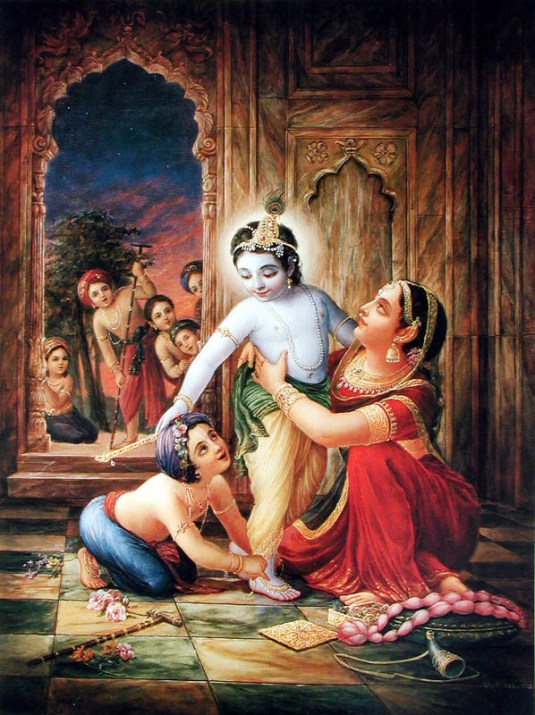
Yogesvara, the ultimate object of yoga
Krsna Consciousness The Topmost Yoga System
By His Divine Grace A. C. Bhaktivedanta Swami Prabhupada
Chapter 2
Yoga and the Master of Yoga
Yoga means the connecting link between the soul and the Supersoul, or the Supreme and the minute living creatures. Lord Śrī Kṛṣṇa is that Supreme, the Personality of Godhead. Being, therefore, the ultimate object of yoga, Kṛṣṇa’s name is yogeśvara, the master of yoga.
At the conclusion of the Bhagavad-gītā, it is said: “Where there is Kṛṣṇa, and where there is Arjuna, the greatest of bowmen, there, undoubtedly, is victory.”
The Bhagavad-gītā is a narrative spoken by Sañjaya, the secretary of Mahārāja Dhṛtarāṣṭra. This is just like airwaves from the radio: the play is going on in the auditorium, but you can hear from your room. So, just as we now have such a mechanical arrangement, at that time there were also certain arrangements, although there was no machine. Anyway, the secretary of Dhṛtarāṣṭra could see what was going on in the battlefield, and he was in the palace, telling this to Mahārāja Dhṛtarāṣṭra, who was blind. Now, the conclusion made by Sañjaya was that Kṛṣṇa is the Supreme Personality of Godhead.
When the yoga performance is described, it is said that Kṛṣṇa’s name is yogeśvara. No one can be a better yogī than the master of yoga, and Kṛṣṇa is the master. There are many different types of yoga. Yoga means the system, and yogi means the person who practices that system. The object of yoga, the ultimate goal, is to understand Kṛṣṇa. Therefore, Kṛṣṇa consciousness means to practice the topmost type of yoga.
This topmost yoga system was described by Kṛṣṇa in the Gītā to His most intimate friend, Arjuna. In the beginning, the Lord said that this system can be practiced only by a person who has developed attachment for it. This Kṛṣṇa conscious yoga system cannot be practiced by an ordinary man who has no attachment for Kṛṣṇa, for it is a different system, and the topmost—bhakti-yoga.
More
22 Sep 2011
by The Hare Krishna Movement
in A.C. Bhaktivedanta Swami Prabhupada, Back to Godhead, Devotional Service, Krishna Consciousness
Tags: Back to Godhead Magazine, devotional service, His Divine Grace A.C. Bhaktivedanta Swami Prabhupada, Krishna, krsna consciousness, materialism, spiritual endeavors, Supreme Personality of Godhead
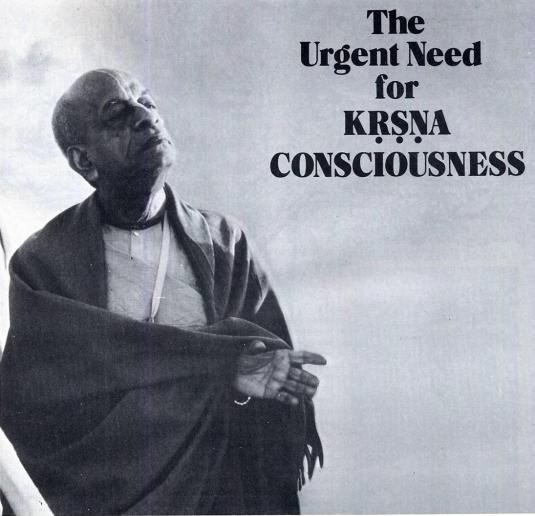
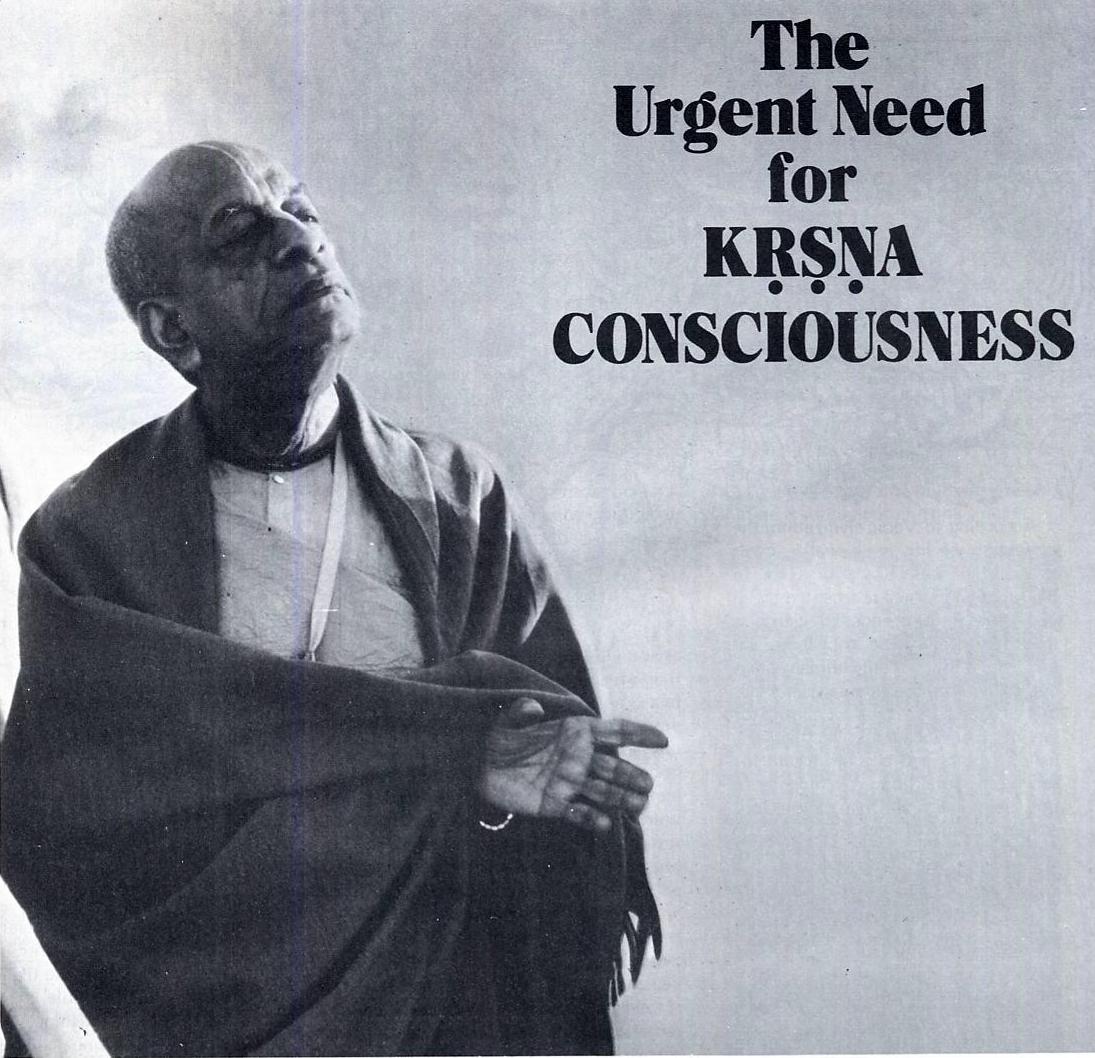
The Urgent Need for Krishna Consciousness
By His Divine Grace A.C. Bhaktivedanta Swami Prabhupada
This very important Krsna consciousness movement is meant to save human society from spiritual death. At present human society is being misled by leaders who are blind, for they do not know the aim and objective of human life, which is self-realization and the reestablishment of our lost relationship with the Supreme Personality of Godhead. That is the missing point. This Krsna consciousness movement is trying to enlighten human society in this important matter.
According to Vedic civilization, the perfection of life is to realize one’s relationship with Krsna or God. In Bhagavad-gita, which is accepted by all authorities in transcendental science as the basis of all Vedic knowledge, we understand that not only human beings but all living entities are parts and parcels of God. The parts are meant for serving the whole, just as the legs, hands, fingers and ears are meant for serving the total body. We living entities, being parts and parcels of God, are duty bound to serve Him.
Actually our position is that we are always rendering service to someone, either to our family, country or society. If we have no one to serve, sometimes we keep a pet cat or dog and render service to it. All these factors prove that we are constitutionally meant to render service, yet in spite of serving to our best capacity, we are no more satisfied. Nor is the person to whom we are rendering that service satisfied. On the material platform, everyone is frustrated. The reason for this is that the service which is being rendered is not properly directed. For example, if we want to render service to a tree, we must water the root. If we pour water on the leaves, branches and twigs, there is little benefit. If the Supreme Personality of Godhead is served, all other parts and parcels will be automatically satisfied. Consequently all welfare activities as well as service to society, family and nation are realized by serving the Supreme Personality of Godhead.
More
05 Aug 2011
by The Hare Krishna Movement
in Diksha, Guru & Disciple, Siksa
Tags: Ananda devi dasi, devotional service, diksa guru, disciplic succession, Iskcon, July 9th Letter, officiating Acarya, vani, vapuh

Vani Seva
By Ananda devi dasi
May 12 2009, UK
“In the absence of physical presentation of the Spiritual Master, the vaniseva is more important. My Spiritual Master Saraswati Goswami, may appear to be physically not present but still I try to serve His Instruction, I never feel separated from Him” (Srila Prabhupada Lecture, August 22, 1970)
After the disappearance of Srila Prabhupada His instructions remained the same, they didn’t change. Therefore Srila Prabhupada is the Diksa Guru and His ISKCON-specific instructions and the process of Diksa remains the same. A disciple who has had no chance of serving the Spiritual Master, Srila Prabhupada, when He was in His Vapuh, can still follow His Vani, instructions, and fully benefit from this association and advance in devotional service.
The Officiating Acarya process is not a replacement system for the Disciplic Succession, nor is it an initiating system, either. Srila Prabhupada is the Initiator Guru whether there is an Officiating Acarya system in place or not, whether or not the July 9th Letter is implemented or not. Devotees that join ISKCON can only be initiated by Srila Prabhupada because He is the Diksa Guru for ISKCON, period.
In Srimad Bhagavatam 4.28.47 we read:
“The disciple and spiritual master are never separated because the spiritual master always keeps company with the disciple as long as the disciple follows strictly the instructions of the spiritual master. This is called the association of Vani. Physical presence is called Vapuh. As long as the spiritual master is physically present, the disciple should serve the physical body of the spiritual master, and when the spiritual master is no longer physically existing, the disciple should serve the instructions of the spiritual master.”
Srila Prabhupada makes it crystal clear that after the disappearance of the Spiritual Master, the disciple follows the instructions of the Spiritual Master. The Spiritual Master left His instructions in the form of Books, verbal instructions, letters, tapes, videos, all these are instructions from the Spiritual Master,Vani.
After the disappearance of Srila Prabhupada His instructions remained the same, they didn’t change. Therefore Srila Prabhupada is the Diksa Guru and His ISKCON-specific instructions and the process of Diksa remains the same. A disciple who has had no chance of serving the Spiritual Master, Srila Prabhupada, when He was in His Vapuh, can still follow His Vani, instructions, and fully benefit from this association and advance in devotional service.
In Caitanya-caritamrta Adi 1.35 we read:
“It is imperative that one accepts a spiritual master if he at all desires to gain the favor of the Lord. The service of the Spiritual Master is essential. If there is no chance to serve the spiritual master directly, a devotee should serve Him by remembering His instructions. There is no difference between the spiritual masters instructions and the spiritual master Himself. In His absence,therefore,His words of direction should be the pride of the disciple.”
More
05 Aug 2011
by The Hare Krishna Movement
in Srila Prabhupada, Srimad Bhagavatam
Tags: Book Bhagavata, Devotee Bhagavata, devotional service, Divinity and Divine Service, Srila Prabhupada, Srimad Bhagavatam, transcendental knowledge
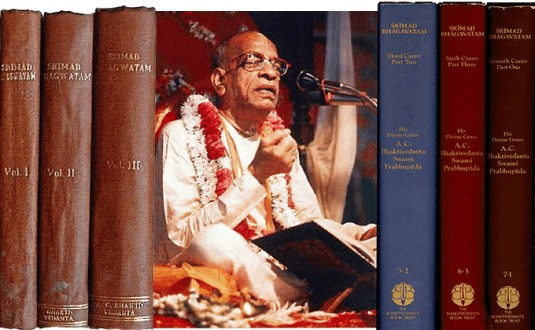
The message of the Book Bhagavata is received from the devotee Bhagavata, Srila Prabhupada, and under His guidance the devotee is able to progress in devotional service. By such sincere association the disciple is able to receive transcendental knowledge very easily.
Srimad Bhagavatam
By His Divine Grace A. C. Bhaktivedanta Swami Prabhupada
Chapter 3 Divinity and Divine Service
naṣṭa-prāyeṣv abhadreṣu
nityaṁ bhāgavata-sevayā
bhagavaty uttama-śloke
bhaktir bhavati naiṣṭhikī
By regular attendance in classes on the Bhāgavatam and by rendering of service to the pure devotee, all that is troublesome to the heart is almost completely destroyed, and loving service unto the Personality of Godhead, who is praised with transcendental songs, is established as an irrevocable fact.
Here is the remedy for eliminating all inauspicious things within the heart which are considered to be obstacles in the path of self-realization. The remedy is the association of the Bhāgavatas. There are two types of Bhāgavatas, namely the book Bhāgavata and the devotee Bhāgavata. Both the Bhāgavatas are competent remedies, and both of them or either of them can be good enough to eliminate the obstacles. A devotee Bhāgavata is as good as the book Bhāgavata because the devotee Bhāgavata leads his life in terms of the book Bhāgavata and the book Bhāgavata is full of information about the Personality of Godhead and His pure devotees, who are also Bhāgavatas. Bhāgavata book and person are identical.
The devotee Bhāgavata is a direct representative of Bhagavān, the Personality of Godhead. So by pleasing the devotee Bhāgavata one can receive the benefit of the book Bhāgavata. Human reason fails to understand how by serving the devotee Bhāgavata or the book Bhāgavata one gets gradual promotion on the path of devotion. But actually these are facts explained by Śrīla Nāradadeva, who happened to be a maidservant’s son in his previous life. The maidservant was engaged in the menial service of the sages, and thus he also came into contact with them. And simply by associating with them and accepting the remnants of foodstuff left by the sages, the son of the maidservant got the chance to become the great devotee and personality Śrīla Nāradadeva. These are the miraculous effects of the association of Bhāgavatas. And to understand these effects practically, it should be noted that by such sincere association of the Bhāgavatas one is sure to receive transcendental knowledge very easily, with the result that he becomes fixed in the devotional service of the Lord. The more progress is made in devotional service under the guidance of the Bhāgavatas, the more one becomes fixed in the transcendental loving service of the Lord. The messages of the book Bhāgavata, therefore, have to be received from the devotee Bhāgavata, and the combination of these two Bhāgavatas will help the neophyte devotee to make progress on and on.
14 Jul 2011
by The Hare Krishna Movement
in Devotional Service, Krishna Consciousness, Nectar of Devotion
Tags: Bhakti-rasamrta-sindhu, causless mercy, devotional service, devotional service is ecstasy, His Divine Grace A.C. Bhaktivedanta Swami Prabhupada, Nectar of Devotion, pure love of Godhead, Srila Rupa Goswami

Nectar of Devotion
by His Divine Grace A. C. Bhaktivedanta Swami Prabhupāda
Chapter Two
We should always try to mold the activities of our lives in such a way that we will constantly remember Viṣṇu, or Kṛṣṇa. That is Kṛṣṇa consciousness. Whether one concentrates his mind on the four-handed form of Viṣṇu or on the form of two-handed Kṛṣṇa, it is the same. The Padma Purāṇa recommends: somehow or other always think of Viṣṇu, without forgetting Him under any circumstances. Actually this is the most basic of all regulative principles. For, when there is an order from a superior about doing something, there is simultaneously a prohibition. When the order is that one should always remember Kṛṣṇa, the prohibition is that one should never forget Him. Within this simple order and prohibition, all regulative principles are found complete.
The First Stages of Devotion
The three categories of devotional service which Śrīla Rūpa Gosvāmī describes in Bhakti-rasāmṛta-sindhu are listed as devotional service in practice, devotional service in ecstasy and devotional service in pure love of Godhead. There are many subheadings in each of these categories. Generally it is understood that in the category of devotional service in practice there are two different qualities, devotional service in ecstasy has four qualities, and devotional service in pure love of Godhead has six qualities. These qualities will be explained by Śrīla Rūpa Gosvāmī later on.
In this connection, Śrīla Rūpa Gosvāmī suggests that the person eligible for Kṛṣṇa consciousness, or devotional service, can be classified by his particular taste. He says that devotional service is a continual process from one’s previous life. No one can take to devotional service unless he has had some previous connection with it. For example, suppose in this life I practice devotional service to some extent. Even though it is not one-hundred-percent perfectly performed, whatever I have done will not be lost. In my next life, from the very point where I stop in this life, I shall begin again. In this way there is always a continuity. But even if there is no continuity, if only by chance a person takes interest in a pure devotee’s instruction, he can be accepted and can advance in devotional service. Anyway, for persons who have a natural taste for understanding books like Bhagavad-gītā and Śrīmad-Bhāgavatam, devotional service is easier than for those who are simply accustomed to mental speculation and argumentative processes.
More
30 Jun 2011
by The Hare Krishna Movement
in Devotee's, Devotional Service, Palaka das, Remembering Srila Prabhupada
Tags: chanting Hare Krishna, devotional service, Hare Krsna, Hari Bol, Palaka das, Srila Prabhupada
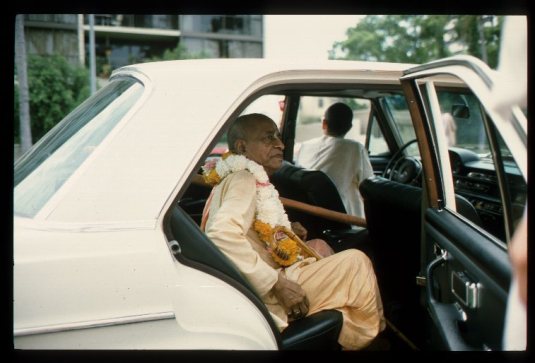
Opening the door for Srila Prabhupada
By; Palaka-dasa,
February 19, 2009:
When Srila Prabhupada traveled to Washington DC in the summer of 1976 I wanted desperately to do what ever little direct personal service for him that I could. So I eagerly looked for any opportunity an insignificant disciple such as my lowly self could find. Considering all of my Godbrothers and Godsisters out ranked me on every level, I would have to be a little aggressive if I were to render any direct service at all. Of course all of us were already assisting and serving Srila Prabhupada and his mission of spreading the Hare Krsna movement all over the world. Still, by some extra ordinary amount of good fortune, special mercy was coming our way. Srila Prabhupada was going to reside among us for one week and the potential for personal contact would be available like never before. Especially for the majority of us who never had been given the opportunity to serve directly along side of Srila Prabhupada. This would be a special time and a rare chance to gather up the nectar of his personal presence. As it turned out, this was the first and only time Srila Prabhupada came to Washington DC, thus making the memories of these days even that much sweeter.
More
08 Jun 2011
by The Hare Krishna Movement
in Gaudiya Math, Madhudvisa das, What Happened to the Hare Krishna's?
Tags: devotional service, envious, Gaudia Math, krsna consciousness, mercy of the Lord, pure vaisnava, so-called Vaisnavas, Srila Bhaktisiddhanta, Srila Prabhupada

What Happened to the Hare Krishna’s?
By Sriman Madhuvisa Prabhu
Chapter 6
Problems From India
A pure Vaisnava is very happy to see a person elevated in devotional service. Unfortunately, there are many so-called Vaisnavas who become envious to see someone actually recognized by Sri Caitanya Mahaprabhu. It is a fact that no one can preach Caitanya Mahaprabhu’s message without receiving the special mercy of the Lord. This is known to every Viasnava, yet there are some envious people who cannot tolerate the expansion of this Krishna consciousness movement all over the world. They find fault with a pure devotee preacher and do not praise him for the excellent service he renders in fulfilling Sri Caitanya Mahaprabhu’s mission.
The success of Srila Prabhupada’s preaching and his increasing number of temples and disciples all over the world caused some of his godbrothers (other disciples of Srila Bhaktsiddhanta Sarasvati Thakura, Srila Prabhupada’s spiritual master) in India to become envious of him and his society.
Some of Srila Prabhupada’s godbrothers did not approve of his preaching work in the West. Srila Prabhupada had only a relatively small amount of direct association with his spiritual master and spent very little time living in the Gaudiya Math temples (his spiritual masters preaching mission).
He sometimes spoke on the Srimad Bhagavatam in the Gaudiya Math and helped with raising funds, but basically he was considered a householder and businessman. No one within the Gaudiya Math ever imagined Prabhupada would go to America to preach and spread the mission of Krishna consciousness all over the world. However Prabhupada’s ISKCON had made their tiny preaching attempts in India look insignificant.
Srila Prabhupada’s godbrothers had more personal association with Srila Bhaktsiddhanta than him and some of them had been sannyasis (renounced) for many years. If anyone was to be a world preacher surely it would be one of these advanced, renounced sannyasis who had received so much personal training from Srila Bhaktsiddhanta. In the Gaudiya Math way of things Srila Prabhupada really didn’t have much importance and no one would have considered him even a candidate as a world preacher.
The real difficulty for the Gaudiya Math began when they disobeyed the orders of Srila Bhaktsiddhanta. He instructed them that after he left his body they should make a Governing Body and conjointly manage the preaching mission in that way. He didn’t want an acarya appointed in his place as he could not see anyone qualified. But after Srila Bhaktisiddhanta’s disappearance his disciples decided to reject his instructions and elect an acarya. It was a disaster and the result was the disintegration of the Gaudiya Math and the end of the preaching. Srila Prabhupada saw all this going on and criticized his godbrothers for going against Srila Bhaktsiddhanta’s instructions but he kept aloof from it. He preached independently and went about working and planning how to execute the order of his spiritual master. Srila Prabhupada was the only disciple of Srila Bhaktsiddhanta who sincerely took his instructions in regard to preaching in the Western countries to heart and was determined to follow them. He received the blessings and mercy of Srila Bhaktsiddhanta, Lord Caitanya and Krishna and was empowered by them to spread Krishna consciousness all over the world. But his godbrothers were far from happy.
More
12 May 2011
by The Hare Krishna Movement
in Devotional Service, Srimad Bhagavatam
Tags: devotional service, fearfulness, illusion, loving Krsna, Srila Prabhupada, Srimad Bhagavatam, submissive hearing, Supreme Personality of Godhead, transcending worldly miseries, Vedic literature
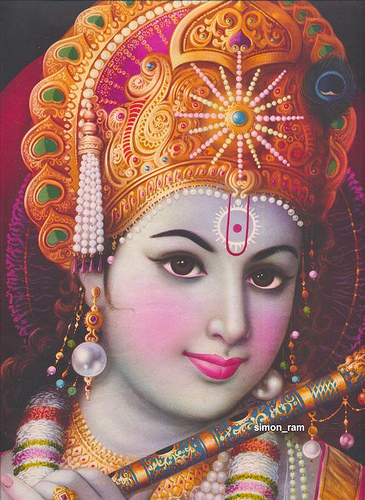
Srimad Bhagavatam
By His Divine Grace A.C. Bhaktivedanta Swami Prabhupada
Canto 1, Chapter 7, Text 7
The conclusion is that simply by hearing the Vedic literature Śrīmad-Bhāgavatam, one can have direct connection with the Supreme Personality of Godhead Śrī Kṛṣṇa, and thereby one can attain the highest perfection of life by transcending worldly miseries, illusion and fearfulness. These are practical tests for one who has actually given a submissive hearing to the readings of the Śrīmad-Bhāgavatam.
TEXT 7
yasyāṁ vai śrūyamāṇāyāṁ
kṛṣṇe parama-pūruṣe
bhaktir utpadyate puṁsaḥ
śoka-moha-bhayāpahā
SYNONYMS
yasyām—this Vedic literature; vai—certainly; śrūyamāṇāyām—simply by giving aural reception; kṛṣṇe—unto Lord Kṛṣṇa; parama—supreme; pūruṣe—unto the Personality of Godhead; bhaktiḥ—feelings of devotional service; utpadyate—sprout up; puṁsaḥ—of the living being; śoka—lamentation; moha—illusion; bhaya—fearfulness; apahā—that which extinguishes.
TRANSLATION
Simply by giving aural reception to this Vedic literature, the feeling for loving devotional service to Lord Kṛṣṇa, the Supreme Personality of Godhead, sprouts up at once to extinguish the fire of lamentation, illusion and fearfulness.
PURPORT
There are various senses, of which the ear is the most effective. This sense works even when a man is deep asleep. One can protect himself from the hands of an enemy while awake, but while asleep one is protected by the ear only. The importance of hearing is mentioned here in connection with attaining the highest perfection of life, namely, getting free from three material pangs. Everyone is full of lamentation at every moment, he is after the mirage of illusory things, and he is always afraid of his supposed enemy. These are the primary symptoms of material disease. And it is definitely suggested herein that simply by hearing the message of Śrīmad-Bhāgavatam one gets attachment for the Supreme Personality of Godhead Śrī Kṛṣṇa, and as soon as this is effected the symptoms of the material diseases disappear. Śrīla Vyāsadeva saw the all-perfect Personality of Godhead, and in this statement the all-perfect Personality of Godhead Śrī Kṛṣṇa is clearly confirmed.
More
26 Apr 2011
by The Hare Krishna Movement
in Madhudvisa das, What Happened to the Hare Krishna's?
Tags: bhakti yoga, chanting the holy names of the Lord, devotees, devotional service, Hare Krishna, Kali-yuga, Krishna consciousnss, Madhudvisa das, Srila Prabhupada, Vedic texts of India

One of the most common questions people ask is “What happened to the Hare Krishna’s?” Many people remember the devotees colorful chanting, festivals and book distribution which were so common in the seventies, but have now practically disappeared. This booklet written by Sriman Madhudvisa Prabhu, will shed some light on why the Hare Krishna’s disappeared. He has kindly agreed to let us post this fine publication from our site, and we will share it with you over the next 13 weeks.
What Happened to the Hare Krishna’s?
By Sriman Madhudvisa Prabhu
This booklet is dedicated to the Founder and Acarya of the International Society for Krishna Consciousness, His Divine Grace A.C. Bhaktivedanta Swami Prabhupada, who has dedicated his life to giving us, the fallen conditioned souls, a chance to achieve the greatest goal. He presented the timeless Vedic texts of India in English so clearly and unambiguously that even we, the most sinful and fallen persons, have a chance to understand the topmost goal of human life…To develop pure love for Krishna, the Supreme Personality of Godhead.
Introduction
Even a person with no knowledge can immediately acquire all knowledge simply by the benediction of Sri Caitanya Mahaprabhu. Therefore I am praying to the Lord for His causeless mercy upon me.
I offer my respectful obeisances unto Sri Krishna Caitanya and Lord Nityananda, who are like the sun and moon. They have arisen simultaneously on the horizon of Gauda to dissipate the darkness of ignorance and thus wonderfully bestow benediction upon all.
Glory to the all-merciful Radha and Madana-Mohana! I am lame and ill-advised, yet They are my directors, and Their lotus feet are everything to me.
In a temple of jewels in Vrndavana, underneath a desire tree, Sri Sri Radha Govinda, served by Their most confidential associates, sit upon an effulgent throne. I offer my humble obeisances to Them.
May Gopinathaji, who attracts all the gopis with the songs of His flute and who has begun the most melodious rasa dance on the bank of the Yamuna in Vamsivata, be merciful upon us. (Srila Krishnadas Kaviraja CC Mad 1.1-5)
Krishna consciousness is not a new creation. Krishna consciousness has always existed. It is our original pure consciousness. While we are in contaminated consciousness here in the material world we are in material consciousness, but if that material consciousness is purified our original consciousness, Krishna consciousness, is revived. There are different processes for reviving our original Krishna consciousness, basically divided into three: mental speculation, meditation yoga and devotional service. There are different ages, or yugas, which this universe passes through on a cycle lasting for 4,300,000 years. This cycle is similar to the changing seasons we see every year. We know that after winter there will be spring and after spring there will be summer. Similarly, on a larger scale, there are four ages, Satya-yuga, Tretya-yuga, Dvarpa-yuga and Kali-yuga. Satya-yuga is called the golden age because in this age everyone is pure and spiritually advanced. The conditions in the Satya Yuga are particularly suitable for the practice of meditational yoga as people have long lifetimes and are undisturbed. The conditions degrade until Kali Yuga, the present age, which is the most degraded age, people being short-lived, always disturbed, very sinful and not at all intelligent. Because in this age we are very unfortunate there is no chance for us to practice either meditational yoga or mental speculation. The only practical option open to us is devotional service, Krishna consciousness.
The Krishna consciousness movement of congregational chanting of the holy names of God actually began in full force five hundred years ago. At this time Lord Sri Caitanya Mahaprabhu, who was none other than Krishna, the Supreme Personality of Godhead Himself, took mercy on us, the fallen souls in Kali-yuga by flooding the subcontinent of India with the chanting of the maha mantra Hare Krishna, Hare Krishna, Krishna Krishna, Hare Hare / Hare Rama, Hare Rama, Rama Rama, Hare Hare. Lord Caitanya was delivering pure love of God, the topmost spiritual achievement, freely to everyone without consideration of their qualifications. No other incarnation of God has ever been so merciful. To reveal the secret of what real love is, Krishna came to earth in the guise of His own devotee – as Lord Caitanya Mahaprabhu. With his chief associates – Nityananda, Advaita, Gadadhara and Srivasa – He taught how to develop love of Godhead simply by chanting Hare Krishna and dancing in ecstasy.
Pasted from; http://krishna.org/ISKCON/WHTTHK/msg00int.html
24 Apr 2011
by The Hare Krishna Movement
in Narada-bhakti-sutra
Tags: atmarama, bhakti, chanting, devotional service, ecstasy, ecstasy of bhakti, Love of Godhead, Narada Muni, Srila Prabhupada

Narada-bhakti-sutra Text 6
Translation & Purport by His Divine Grace A. C. Bhaktivedanta Swami Prabhupada
TRANSLATION
One who understands perfectly the process of devotional service in love of Godhead becomes intoxicated in its discharge. Sometimes he becomes stunned in ecstasy and thus enjoys his whole self, being engaged in the service of the Supreme Self.
PURPORT
The Śrīmad-Bhāgavatam (1.7.10) states,
ātmārāmāś ca munayo nirgranthā apy urukrame
kurvanty ahaitukīṁ bhaktiṁ itthaṁ-bhūta-guṇo hariḥ
“Although those who are ātmārāma, self-satisfied, are liberated from all material contamination, they are still attracted by the pastimes of the Supreme Lord, and thus they engage themselves in His transcendental service.” When Lord Caitanya explained this ātmārāma verse to Śrīla Sanātana Gosvāmī, He described sixty-one meanings, and all of them point toward the devotional service of the Lord.
How one becomes intoxicated in devotional service is very nicely described in the Śrīmad-Bhāgavatam (11.2.40):
More
15 Apr 2011
by The Hare Krishna Movement
in Narada-bhakti-sutra
Tags: devotional service, material activity, Narada Muni, pure devotional service, sense gratification, Srila Rupa Goswami

Narada-bhakti-sutra Text 5
Translation & Purport by His Divine Grace A. C. Bhaktivedanta Swami Prabhupada
TRANSLATION
A person engaged in such pure devotional service neither desires anything for sense gratification, nor laments for any loss, nor hates anything, nor enjoys anything on his personal account, nor becomes very enthusiastic in material activity.
PURPORT
According to Śrīla Rūpa Gosvāmī, there are six impediments to the discharge of devotional service, and also six activities favorable to progress in devotional service.
The first impediment is atyāhāra, overeating or accumulating more wealth than we need. When we give free rein to the senses in an effort to enjoy to the highest degree, we become degraded. A devotee should therefore eat only enough to maintain his body and soul together; he should not allow his tongue unrestricted license to eat anything and everything it likes. The Bhagavad-gītā and the great ācāryas, or spiritual masters, have prescribed certain foods for human beings, and one who eats these foods eats in the mode of goodness. These foods include grains, fruits, vegetables, milk products, and sugar—and nothing more. A devotee does not eat extravagantly; he simply eats what he offers to the Supreme Lord, Kṛṣṇa. He is interested in kṛṣṇa-prasādam (food offered to the Lord) and not in satisfying his tongue. Therefore he does not desire anything extraordinary to eat.
Similarly, a devotee does not wish to accumulate a large bank balance: he simply earns as much as he requires. This is called yāvad-artha or yuktāhāra. In the material world everyone is very active in earning more and more money and in increasing eating and sleeping and gratifying the senses; such is the mission of most people’s lives. But these activities should be absent from the life of a devotee.
More
30 Mar 2011
by The Hare Krishna Movement
in Devotional Service, Narada-bhakti-sutra
Tags: devotional service, immortal, path of perfection, peaceful, perfect, pure love of God, transcendental devotion
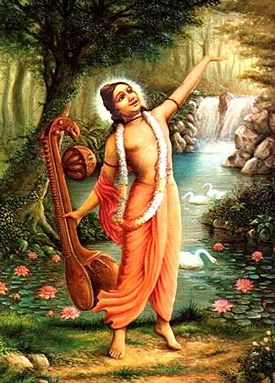
Narada-bhakti-sutra
Purport & Translation By A.C. Bhaktivedanta Swami Prabhupada
Text 4
TRANSLATION
Upon achieving that stage of transcendental devotional service in pure love of God, a person becomes perfect, immortal, and peaceful.
PURPORT
The part-and-parcel living entities are entangled in the conditioned life of material existence. Because of their diverse activities they are wandering all over the universe, transmigrating from one body to another and undergoing various miseries. But when a fortunate living entity somehow comes in contact with a pure devotee of the Lord and engages in devotional service, he enters upon the path of perfection. If someone engages in devotional service in all seriousness, the Lord instructs him in two ways—through the pure devotee and from within—so that he can advance in devotional service. By cultivating such devotional service, he becomes perfect.
More
15 Mar 2011
by The Hare Krishna Movement
in Sri Caitanya-Caritamrta
Tags: Caitanya Mahaprabhu, devotional service, diksa guru, Gopinath, Ishvara Puri, Madhavendra Puri, Malaya Mountains, Orissa, sankirtan movement of Chaitanya Mahaprabhu, Vrindavan

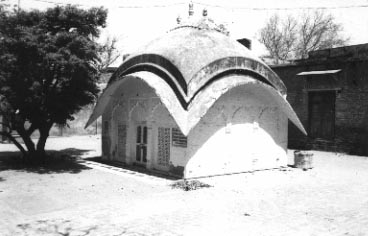
Sri Madhavendra Puri
Disappearance day – 17th March, 2011
Madhavendra Puri Discovers Gopala
Madhavendra Puri also known as Madhavendra Puri Goswami appeared in the 14th century.
After making an extensive pilgrimage of India as a sannyasi he passed his life in Vrindavana and Orissa. The main source of knowledge about him is Chaitanya Charitamrita. He belongs to the Madhva line being a disciple of Lakshmipati Tirtha and he was the founder of the Vaishnava centre at Mathura, Vrindavana. He is considered a fountainhead of devotional worship of Krishna and he has started the worship of the Gopala deity, better known as Shrinathji. He is attributed to the discovery of the famous deity of Gopala near Govardhana that was later worshiped by Vallabhacharya, follower of Vishnuswami in Rudra sampradaya, who in turn was influenced by devotional mood of Vrindavana. He is also famed for receiving direct instructions and gifts from the deity of Gopinatha, who commanded him to travel for the supply of scarce sandal wood paste from Orissa to the Malaya Mountains.
Initiating the sankirtana movement
Madhavendra Puri is accepted as the initiator of the movement of Chaitanya Mahaprabhu, who accepted Madhavendra’s intimate disciple, Ishvara Puri as his diksa guru. He was preaching the principles of Gaudiya Vaishnavism prior to Lord Chaitanya.
More
Previous Older Entries Next Newer Entries












 The Hare Krishna Movement