31 May 2012
by The Hare Krishna Movement
in Panca-Tattva, Sri Caitanya-Caritamrta
Tags: A.C. Bhaktivedanta Swami Prabhupada, Adi-lila 7.6, bhakta-saktikam, bhakta-svarupa, five tattvas, five truths, panca-tattvatmakam krsna, Pancha Tattva, Sri Advaita Prabhu, Sri Caitanya Mahaprabhu, Sri Caitanya-caritamrta, Sri Gadadhara Prabhu, Sri Nityananda Prabhu, Srivasa Prabhu, visnu-tattva

Sri Caitanya-caritamrta 1975 Edition
By His Divine Grace A.C. Bhaktivedanta Swami Prabhupada
Adi-lila 7.6
pañca-tattvātmakaṁ kṛṣṇaṁ
bhakta-rūpa-svarūpakam
bhaktāvatāraṁ bhaktākhyaṁ
namāmi bhakta-śaktikam
pañca-tattva-ātmakam—comprehending the five transcendental subject matters; kṛṣṇam—unto Lord Kṛṣṇa; bhakta-rūpa—in the form of a devotee; svarūpakam—in the expansion of a devotee; bhakta-avatāram—in the incarnation of a devotee; bhakta-ākhyam—known as a devotee; namāmi—I offer my obeisances; bhakta-śaktikam—the energy of the Supreme Personality of Godhead.
Let me offer my obeisances unto Lord Śrī Kṛṣṇa, who has manifested Himself in five as a devotee, expansion of a devotee, incarnation of a devotee, pure devotee and devotional energy.
PURPORT
Śrī Nityānanda Prabhu is the immediate expansion of Śrī Caitanya Mahāprabhu as His brother. He is the personified spiritual bliss of sac-cid-ānanda-vigraha. His body is transcendental and full of ecstasy in devotional service. Śrī Caitanya Mahāprabhu is therefore called bhakta-rūpa (the form of a devotee), and Śrī Nityānanda Prabhu is called bhakta-svarūpa (the expansion of a devotee). Śrī Advaita Prabhu, the incarnation of a devotee, is viṣṇu-tattva and belongs to the same category. There are also different types of bhaktas, or devotees, on the platforms of neutrality, servitude, friendship, parenthood and conjugal love. Devotees like Śrī Dāmodara, Śrī Gadādhara and Śrī Rāmānanda are different energies. This confirms the Vedic sūtra parāsya śaktir vividhaiva śrūyate. All these bhakta subjects taken together constitute Śrī Caitanya Mahāprabhu, who is Kṛṣṇa Himself.
The Pancha Tattva further described More
30 May 2012
by The Hare Krishna Movement
in A.C. Bhaktivedanta Swami Prabhupada, Back to Godhead, Lectures
Tags: A.C. Bhaktivedanta Swami Prabhupada, Back to Godhead Magazine, Bible, gospel according to Saint John, Hare Krishna, In The Begining Was the Word, mantra, Prabhupada Lecture, sound, sound is the origin of all creation, the Word, vibration of transcendental sound, Word was with God
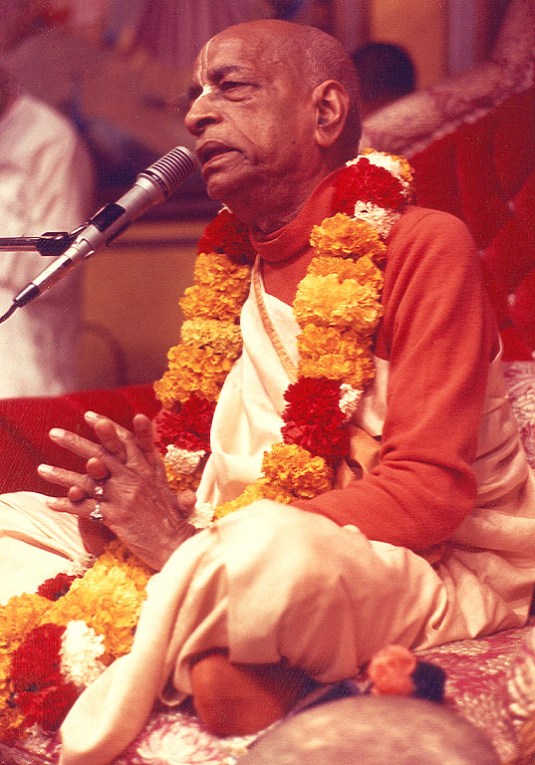
…”In the beginning was the Word.” This indicates that before creation, transcendental sound existed. That word or transcendental sound is not like material sound, for if we associate with the transcendental sound Hare Krsna, we become purified and thus become transcendental. To give a crude example, if we put an iron rod into a fire, it will gradually become warmer and warmer until it becomes red hot. When it is red hot, it will no longer be iron; it will be fire. How has it become fire? By association with the fire. Therefore if you simply keep yourself in touch with God through the transcendental sound, gradually you will become godly, and as soon as you become godly, you will become the same in quality as God full in riches, full in power, full in knowledge and everything else. Therefore the Vedic instruction is, “Don’t keep yourself in darkness. Come to the light.”
In the Beginning Was the Word
By His Divine Grace A.C. Bhaktivedanta Swami Prabhupada
From Back to Godhead Magazine 1975 Vol. 10, No. 1
Ladies and gentlemen, I thank you very much for kindly participating in this sankirtana movement, which is a movement for the vibration of transcendental sound. Sound is the origin of all creation. That is admitted in the Bible also. We are reading a passage from the Bible:
[A disciple reads] The Gospel According to Saint John. Chapter 1. “In the beginning was the Word, and the Word was with God, and the Word was God. The same was in the beginning with God. All things were made by him; and without him was not anything made that was made. In him was life; and the life was the light of men. And the light shineth in darkness; and the darkness comprehended it not.”
More
29 May 2012
by The Hare Krishna Movement
in Bhagavad-gita, Srimad Bhagavatam, Varnasrama Dharma
Tags: A.C. Bhaktivedanta Swami Prabhupada, Bg. 4.13, caste divisions, four orders of life, occupation according to caste, Personality of Godhead, prescribed duties, Sb 1.2.13, varnasrama institution, varnasrama-dharma
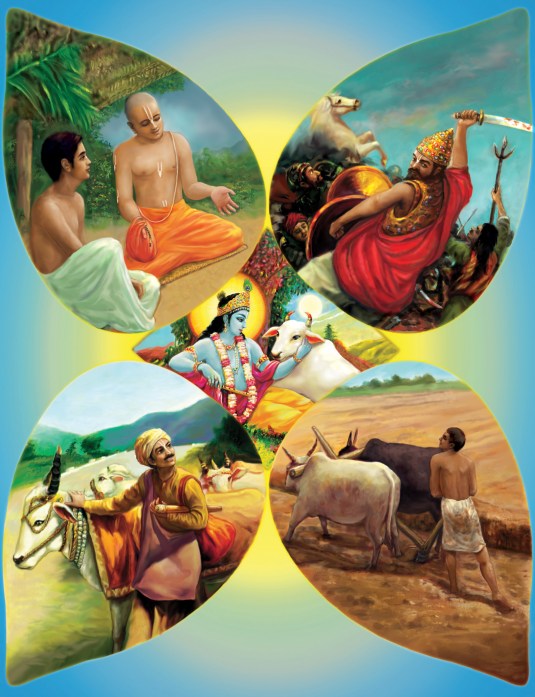
Here are two verses (one from the Srimad Bhagavatam; 1.2.13, and one from the Bhagavad-gita; 4.13) describing the importance of the varṇāśrama institution.
…the highest aim of life or the highest perfection of the institution of the varṇāśrama-dharma is to cooperate jointly for the satisfaction of the Supreme Lord.
Srimad Bhagavatam
By is Divine Grace A.C. Bhaktivedanta Swami PRabhupada
Canto One, Chapter 2, Text 13
ataḥ pumbhir dvija-śreṣṭhā
varṇāśrama-vibhāgaśaḥ
svanuṣṭhitasya dharmasya
saṁsiddhir hari-toṣaṇam
O best among the twice-born, it is therefore concluded that the highest perfection one can achieve by discharging the duties prescribed for one’s own occupation according to caste divisions and orders of life is to please the Personality of Godhead.
Human society all over the world is divided into four castes and four orders of life. The four castes are the intelligent caste, the martial caste, the productive caste and the laborer caste. These castes are classified in terms of one’s work and qualification and not by birth. Then again there are four orders of life, namely the student life, the householder’s life, the retired and the devotional life. In the best interest of human society there must be such divisions of life, otherwise no social institution can grow in a healthy state. And in each and every one of the abovementioned divisions of life, the aim must be to please the supreme authority of the Personality of Godhead. This institutional function of human society is known as the system of varṇāśrama-dharma, which is quite natural for the civilized life. The varṇāśrama institution is constructed to enable one to realize the Absolute Truth. It is not for artificial domination of one division over another. When the aim of life, i.e., realization of the Absolute Truth, is missed by too much attachment for indriya-prīti, or sense gratification, as already discussed hereinbefore, the institution of the varṇāśrama is utilized by selfish men to pose an artificial predominance over the weaker section. In the Kali-yuga, or in the age of quarrel, this artificial predominance is already current, but the saner section of the people know it well that the divisions of castes and orders of life are meant for smooth social intercourse and high-thinking self-realization and not for any other purpose.
More
27 May 2012
by The Hare Krishna Movement
in Krishna Consciousness, KRSNA The Supreme Personality of Godhead
Tags: 1970 Edition, A.C. Bhaktivedanta Swami Prabhupada, ahaituka, apratihata, gopis, Krishna, Krsna Book, Krsna The Supreme Personality of Godhead, Lord Caitanya, Lord Sri Krishna, Radharani

…The exemplary character of devotional service manifested by the devotees of Vṛndāvana is the purest type of devotion. It is enjoined in authoritative śāstra that devotional service must be ahaituka and apratihata. This means that devotional service to Kṛṣṇa cannot be checked by political or religious convention. The stage of devotional service is always transcendental. The gopīs particularly showed pure devotional service towards Kṛṣṇa, so much so that Kṛṣṇa Himself remained indebted to them. Lord Caitanya thus said that the devotional service manifested by the gopīs in Vṛndāvana excelled all other methods of approaching the Supreme Personality of Godhead.
Kṛṣṇa The Supreme Personality of Godhead 1970 Edition
By His Divine Grace A.C. Bhaktivedanta Swami Prabhupada
Vol.1, Chapter 31
Songs by the Gopīs
One gopī said, “My dear Kṛṣṇa, ever since You took Your birth in this land of Vrajabhūmi, everything appears to be glorious. The land of Vṛndāvana has become glorious, and it is as if the goddess of fortune is personally always existing here. But it is only we who are very unhappy, because we are searching for You, but cannot see You with our greatest effort. Our life is completely dependent upon You; therefore we request that You again come to us.”
More
25 May 2012
by The Hare Krishna Movement
in Krishna Consciousness, Lectures, Practicing Krishna Consciousness at Home
Tags: A.C. Bhaktivedanta Swami Prabhupada, Bg 7.8, bhagavad-gita, everywhere is Krishna, I am the light of Sun and Moon, I am the taste of water, Krishna consciousness, raso ham apsu kunteya, remembering Krishna, simple meditation, Srila Prabhupada, Srimad Bhagavatam

…Thus when a devotee drinks water or any other liquid, he immediately remembers Kṛṣṇa. For a devotee there is no difficulty in awakening Kṛṣṇa consciousness twenty-four hours a day. If you simply drink water, and practice the simple meditation of remembering that Krishna says in the Bhagavad-gita 7.8 “raso ‘ham apsu kaunteya prabhāsmi śaśi-sūryayoḥ”, “I am the taste of water, the light of the sun and the moon”. It is easy to remember Krishna (God)
Is there any land within this universe where there is no sunshine, moonshine? Everywhere. So where is the difficulty to become Kṛṣṇa conscious? You are practicing meditation. Why not this simple meditation?
“How I can think of Kṛṣṇa constantly? Kṛṣṇa says that you think of Kṛṣṇa while drinking water, you think of Kṛṣṇa when you see the sunshine, think of Kṛṣṇa when you see the moonshine, day and night. So at daytime there is sunshine, at night there is moonshine. So day and night you can think of Kṛṣṇa. So, so many ways…
Because our only business is to remember Kṛṣṇa. That we can do any stage of life. It does not require that you have to become a brāhmaṇa, an Indian, and so on, so on, great learned scholar in Vedic scripture. No. You may be in the far away country, in Europe, America, or you may not be in brāhmaṇa family. It doesn’t matter. But you can remember Kṛṣṇa. We are teaching this art through Kṛṣṇa consciousness, that you may remain in whichever position Kṛṣṇa has put you. It doesn’t matter. But try to understand Kṛṣṇa. “How can I understand?” Well, you are drinking water. You can understand Kṛṣṇa. Where is the difficulty? Raso ‘ham apsu kaunteya [Bg. 7.8]. Kṛṣṇa says that “I am the taste of water.” Then where there is a person who does not drink water? Is there any land where people do not drink water? Is there any land?
So many ways we can remember Kṛṣṇa always.
A devotee who has purified his existence through devotional service sees only Kṛṣṇa in every step of life. (Paraphrased from Lecture by His Divine Grace A.C. Bhaktivedanta Swami Prabhupada given in Vrndavan India August 17, 1974)
Full Bhagavad-gita verse 7.8 and Lecture follow More
24 May 2012
by The Hare Krishna Movement
in Srimad Bhagavatam, Sukadeva Goswami
Tags: A.C. Bhaktivedanta Swami Prabhupada, householder, material contamination, material distinctions, spiritual vision, Srila Prabhupada, Srila Sukadeva Gosvami, Srila Vyasadeva, Srimad Bhagavatam, Sukadeva Goswami, Vyasadeva

When Vyasadeva was following his son, Srila Sukadeva Gosvami, they came upon some damsels bathing in a pond, Sukadeva was also naked, yet the maidens did not cover themselves when he passed by. However, they did cover themselves when the fully-clad Vyasadeva approached. Astonished at the apparently inconsistent behavior of the young girls, Vyasadeva asked them to explain. “Your son is purified of all material contamination,” they said, “so when he looks at us he makes no distinction between male and female. But as a householder, you do make such distinctions. Therefore, while we feel no shame before your son, we must cover ourselves before you.
More
23 May 2012
by The Hare Krishna Movement
in Bhaktivinoda Thakura, Diksha, Disciplic succession, Gaura-kisora, Guru & Disciple, Siksa
Tags: A.C. Bhaktivedanta Swami Prabhupada, Bhaktivinode Thakur, Dayananda, Dayananda dasa, diksa, diksa guru, Gaura Kisora dasa Babaji Maharaja, Gaura-kisora, letter by Srila Prabhupada, siksa, Siksa guru, Thakur Bhaktivinode

…So far as your second question, Thakura Bhaktivinode was not official Spiritual Master of Gaura Kisora dasa Babaji Maharaja. Gaura Kisora dasa Babaji Maharaja was already renounced order, Paramahamsa, but Thakura Bhaktivinode, while He was even playing the part of a householder, was treated by Gaura Kisora dasa Babaji Maharaja as Preceptor, on account of His highly elevated spiritual understanding, and thus He was always treating Him as His Spiritual Master. The Spiritual Master is divided into two parts; namely, siksa guru and diksa guru. So officially Bhaktivinode Thakura was like siksa guru of Gaura Kisora das Babaji Maharaja.
Letter to: Dayananda
Allston, Mass
1 May, 1969
My Dear Dayananda,
Please accept my blessings. Just yesterday morning I was thinking of you that I did not hear from Dayananda for so many days, and immediately I got your nice letter dated April 25, 1969. You are such a nice soul that you are always thinking of Krishna and becoming more and more purified in Krishna Consciousness. As stated in the Srimad-Bhagavatam, First Canto, Second Chapter, Twenty-Seventh Verse, Krishna is sitting in everyone’s heart and He is purifying one who is Krishna Conscious. The symptoms of advancement in Krishna Consciousness is gradually feeling detached to materialistic way of life. Although you are young man, you have got your nice young wife and child, and by Krishna’s Grace, everything is all right so far as your family is concerned, still you are feeling detached. That is very nice. But when your wife and child all are cooperating in your Krishna Consciousness, there is no hampering in your progress. So keep yourself always in Krishna Consciousness with your family members, raise your children to that standard, and employ your energy for serving Krishna. Then, even though you are in family life, you are as good as sannyasi.
More
22 May 2012
by The Hare Krishna Movement
in Teachings of Queen Kunti
Tags: A.C. Bhaktivedanta Swami Prabhupada, Arjuna, Asvatthama, bhagavad-gita, Bhima, Bhisma, cannibals, Devaki, Draupadi, Drona, Dronacarya, exile in the forest, Karna, Kunti, Lord Krishna, man-eater Hidimba, My devotee is never vanquished, Pandavas, Queen Kunti, sons of Pandu, Srila Prabhupada, Teachings of Queen Kunti

…Here Kuntī remembers all the dangers through which she passed before the Pāṇḍavas regained their kingdom. In Bhagavad-gītā Lord Kṛṣṇa says, kaunteya pratijānīhi na me bhaktaḥ praṇaśyati: “My dear Arjuna, you may declare to the world that My devotee is never vanquished.” The Pāṇḍavas, the sons of Pāṇḍu, were great devotees of Lord Kṛṣṇa, but because people in the material world are interested in material things, the Pāṇḍavas were put into many dangers. Their materialistic uncle Dhṛtarāṣṭra was always planning to kill them and usurp the kingdom for his own sons. That was his policy from the very beginning.
Teachings of Queen Kunti
By His Divine Grace A.C. Bhaktivedanta Swami Prabhupada
Chapter 7
Dangerous Encounters
viṣān mahāgneḥ puruṣāda-darśanād
asat-sabhāyā vana-vāsa-kṛcchrataḥ
mṛdhe mṛdhe ’neka-mahārathāstrato
drauṇy-astrataś cāsma hare ’bhirakṣitāḥ
My dear Kṛṣṇa, Your Lordship has protected us from a poisoned cake, from a great fire, from cannibals, from the vicious assembly, from sufferings during our exile in the forest, and from the battle where great generals fought. And now You have saved us from the weapon of Aśvatthāmā.
—Śrīmad-Bhāgavatam 1.8.24
The list of dangerous encounters is submitted herein. Devakī was once put into difficulty by her envious brother, otherwise she was well. But Kuntīdevī and her sons were put into one difficulty after another for years and years together. They were put into trouble by Duryodhana and his party due to the kingdom, and each and every time the sons of Kuntī were saved by the Lord. Once Bhīma was administered poison in a cake, once they were put into the house made of shellac and set afire, and once Draupadī was dragged out, and attempts were made to insult her by stripping her naked in the vicious assembly of the Kurus. The Lord saved Draupadī by supplying an immeasurable length of cloth, and Duryodhana’s party failed to see her naked. Similarly, when they were exiled in the forest, Bhīma had to fight with the man-eater demon Hiḍimba Rākṣasa, but the Lord saved him. So it was not finished there. After all these tribulations, there was the great Battle of Kurukṣetra, and Arjuna had to meet such great generals as Droṇa, Bhīṣma, and Karṇa, all powerful fighters. And at last, even when everything was done away with, there was the brahmāstra released by the son of Droṇācārya to kill the child within the womb of Uttarā, and so the Lord saved the only surviving descendant of the Kurus, Mahārāja Parīkṣit.
More
20 May 2012
by The Hare Krishna Movement
in A.C. Bhaktivedanta Swami Prabhupada, Chanting Hare Krishna, Journey of Self-Discovery, Meditation, Yoga
Tags: A.C. Bhaktivedanta Swami Prabhupada, chanting Hare Krishna, journey of self-discovery, meditation, meditation through transcendental sound, Srila Prabhupada, yoga

Journey of Self-Discovery
By His Divine Grace A.C. Bhaktivedanta Swami Prabhupada
Chapter 5, Yoga & Meditation
Meditation Through Transcendental Sound
Lecturing at Boston’s Northeastern University in the summer of 1969, Śrīla Prabhupāda introduces a meditation system renowned for its extraordinary power and the fact that it can be easily practiced almost anywhere and at any time. “If you take up this simple process,” he says, “chanting Hare Kṛṣṇa, Hare Kṛṣṇa, Kṛṣṇa Kṛṣṇa, Hare Hare/ Hare Rāma, Hare Rāma, Rāma Rāma Hare Hare, you are immediately elevated to the transcendental platform.” He adds, “No other meditation is possible while you are walking on the street.”
My dear boys and girls, I thank you very much for attending this meeting. We are spreading this Kṛṣṇa consciousness movement because there is a great need of this consciousness throughout the world. And the process is very easy—that is the advantage.
First of all, we must try to understand what the transcendental platform is. As far as our present condition is concerned, we are on various platforms. So we have to first of all stand on the transcendental platform; then there can be a question of transcendental meditation.
In the Third Chapter of Bhagavad-gītā, you’ll find an explanation of the various statuses of conditioned life. The first is the bodily conception of life (indriyāṇi parāṇy āhuḥ). Everyone in this material world is under this bodily concept of life. Someone is thinking, “I am Indian.” You are thinking, “I am American.” Somebody’s thinking, “I am Russian.” Somebody’s thinking he is something else. So everyone is thinking, “I am the body.”
More
17 May 2012
by The Hare Krishna Movement
in KRSNA The Supreme Personality of Godhead
Tags: A.C. Bhaktivedanta Swami Prabhupada, gopis, Krishna, Krishna's Flute, Krsna The Supreme Personality of Godhead, samadhi, seeing Krsna, Transcendental meditation, Vrndavan forest
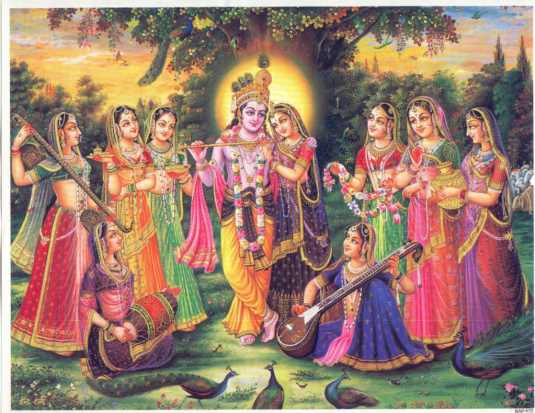
Click on image to enlarge
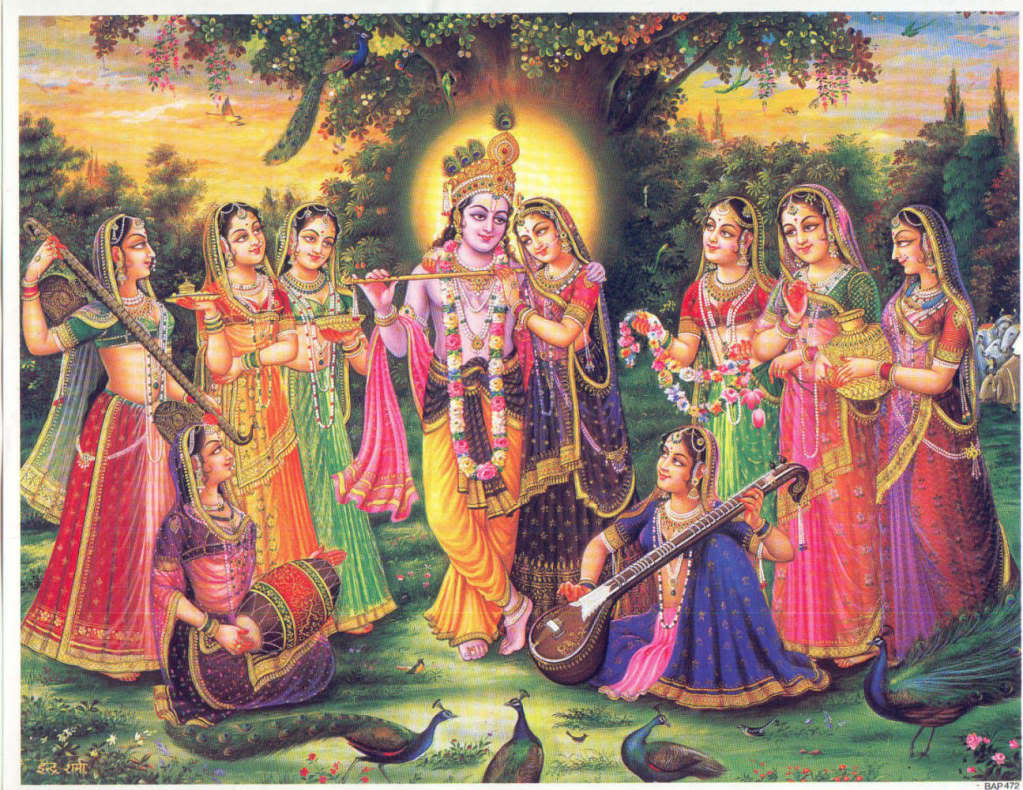
…Kṛṣṇa was very expert in playing the flute, and the gopīs were captivated by the sound vibration, which was not only attractive to them, but to all living creatures who heard it. One of the gopīs told her friends, ”The highest perfection of the eyes is to see Kṛṣṇa and Balarāma entering the forest and playing Their flutes and tending the cows with Their friends.“
Persons who are constantly engaged in the transcendental meditation of seeing Kṛṣṇa, internally and externally, by thinking of Him playing the flute and entering the Vṛndāvana forest, have really attained the perfection of samādhi.
Kṛṣṇa, the Supreme Personality of Godhead
By His Divine Grace A.C. Bhaktivedanta Swami Prabhupada
Chapter 21
The Gopīs Attracted by the Flute
Kṛṣṇa was very pleased with the atmosphere of the forest where flowers bloomed and bees and drones hummed very jubilantly. While the birds, trees and branches were all looking very happy, Kṛṣṇa, tending the cows, accompanied by Śrī Balarāma and the cowherd boys, began to vibrate His transcendental flute. After hearing the vibration of the flute of Kṛṣṇa, the gopīs in Vṛndāvana remembered Him and began to talk amongst themselves about how nicely Kṛṣṇa was playing His flute. When the gopīs were describing the sweet vibration of Kṛṣṇa’s flute, they also remembered their pastimes with Him; thus their minds became disturbed, and they were unable to describe completely the beautiful vibrations. While discussing the transcendental vibration, they remembered also how Kṛṣṇa dressed, decorated with a peacock feather on His head, just like a dancing actor, and with blue flowers pushed over His ear. His garment glowed yellow-gold, and He was garlanded with a vaijayantī necklace. Dressed in such an attractive way, Kṛṣṇa filled up the holes of His flute with the nectar emanating from His lips. So they remembered Him, entering the forest of Vṛndāvana, which is always glorified by the footprints of Kṛṣṇa and His companions.
More
16 May 2012
by The Hare Krishna Movement
in Karma
Tags: A.C. Bhaktivedanta Swami Prabhupada, action and reaction, as it is, bhagavad-gita, cause and effect, karma, law of karma, Urdhvaga das, yoga philosophy

This begins a new series on Karma (cause and effect) which was compiled by Urdhvaga Prabhu, based on the teachings of the Bhagavad-gita As It Is by His Divine Grace A.C. Bhaktivedanta Swami Prabhupada. Urdhvaga Prabhu has kindly allowed us to reprint it here.
The Law of Karma – cause and effect
Karma is the great law of “cause and effect”, of “action and reaction”, which controls the destiny of all living entities.
This great law functions on the principle, that any action performed produces an equal and opposite reaction, which directly influences our very existence.
Karma, like time and gravity, is a universal principle and every one is effected by its influence. While the law of physics applies to the interaction of material objects only, the law of karma however, applies to any action performed by living entities and governs the interrelations of all living beings. The state laws for example, are grossly observed; but the law of material nature [karma] being subtle to our gross understanding, cannot be experienced grossly or understood by mental speculation.
The law of karma states, that every action performed in life creates another reaction which in turn produces a new counter action. Thus an endless chain of actions and reactions is produced which binds the living entity to his good and bad deeds. This is the way how karma works. It creates an action and another reaction simultaneously and this increases the chain of material activities, keeping the performer in material bondage.
More
15 May 2012
by The Hare Krishna Movement
in Practicing Krishna Consciousness at Home, Sri Caitanya-Caritamrta, The Hare Krishna Movement
Tags: A.C. Bhaktivedanta Swami Prabhupada, brahmana Kurma, chanting Hare Krishna, devotional service at home, Krsnaa consciousness, materialistic way of life, preach the instructions of Krsna, Sri Caitanya Mahaprabhu

Not everyone who joins this Krishna Consciousness Movement need move into a temple or ashram, as the following lessons for the householders confirms.
The real purpose of human life is to attain the spiritual platform and return to Godhead. That is the summum bonum of spiritual realization. The Kṛṣṇa consciousness movement is trying to elevate human society to the perfection of life by pursuing the method described by Śrī Caitanya Mahāprabhu in His advice to the brāhmaṇa Kūrma. That is, one should stay at home, chant the Hare Kṛṣṇa mantra and preach the instructions of Kṛṣṇa as they are given in the Bhagavad-gītā and Śrīmad-Bhāgavatam.
If a devotee follows the instructions of Śrī Caitanya Mahāprabhu, he lives in the company of the Lord. Wherever he lives, he converts that place into Vṛndāvana and Navadvīpa. This means that materialism cannot touch him. This is the secret of success for one advancing in Kṛṣṇa consciousness.
Śrī Caitanya-caritāmṛta
By His Divine Grace A.C. Bhaktivedanta Swami Prabhupada
Madhya-līlā, Chapter 7, Text 128-129
“Instruct everyone to follow the orders of Lord Śrī Kṛṣṇa as they are given in the Bhagavad-gītā and Śrīmad-Bhāgavatam. In this way become a spiritual master and try to liberate everyone in this land.”
PURPORT
This is the sublime mission of the International Society for Krishna Consciousness. Many people come and inquire whether they have to give up family life to join the Society, but that is not our mission. One can remain comfortably in his residence. We simply request everyone to chant the mahā-mantra: Hare Kṛṣṇa, Hare Kṛṣṇa, Kṛṣṇa Kṛṣṇa, Hare Hare Hare Rāma, Hare Rāma, Rāma Rāma, Hare Hare. If one is a little literate and can read the Bhagavad-gītā As It Is and Śrīmad-Bhāgavatam, that is so much the better. These works are now available in an English translation and are done very authoritatively to appeal to all classes of men. Instead of living engrossed in material activities, people throughout the world should take advantage of this movement and chant the Hare Kṛṣṇa mahā-mantra at home with their families. One should also refrain from sinful activities-illicit sex, meat-eating, gambling and intoxication. Out of these four items, illicit sex is very sinful. Every person must get married. Every woman especially must get married. One can also produce many nice preparations to offer Kṛṣṇa-grain, fruit, flowers and milk. Why should one indulge in unnecessary meat-eating and maintain horrible slaughterhouses? What is the use of smoking and drinking tea and coffee? People are already intoxicated by material enjoyment, and if they indulge in further intoxication, what chance is there for self-realization? Similarly, one should not partake in gambling and unnecessarily agitate the mind. The real purpose of human life is to attain the spiritual platform and return to Godhead. That is the summum bonum of spiritual realization. The Kṛṣṇa consciousness movement is trying to elevate human society to the perfection of life by pursuing the method described by Śrī Caitanya Mahāprabhu in His advice to the brāhmaṇa Kūrma. That is, one should stay at home, chant the Hare Kṛṣṇa mantra and preach the instructions of Kṛṣṇa as they are given in the Bhagavad-gītā and Śrīmad-Bhāgavatam.
More
12 May 2012
by The Hare Krishna Movement
in Nectar of Devotion
Tags: A.C. Bhaktivedanta Swami Prabhupada, causeless mercy, conditioned soul, core of his heart, devotee, Hanuman, kingdom of God, liberated, material existence means suffering, Nectar of Devotion, offering You respectful obeisances, Rama, Srila Prabhupada, suffering the resultant actions of his past misdeeds, Techniques of Hearing and Remembering
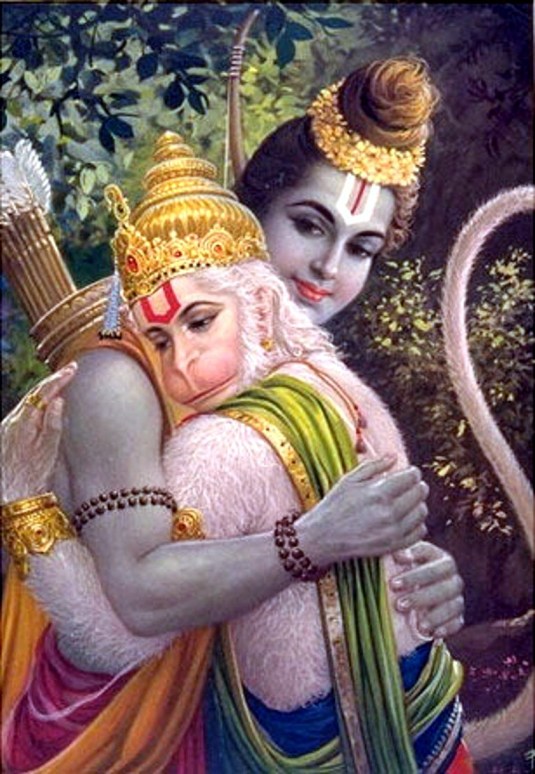
“In the Tenth Canto, Fourteenth Chapter, verse 8, it is said, “My dear Lord, any person who is constantly awaiting Your causeless mercy to be bestowed upon him, and who goes on suffering the resultant actions of his past misdeeds, offering You respectful obeisances from the core of his heart, is surely eligible to become liberated, for it has become his rightful claim.”
This statement of Srimad-Bhagavatam should be the guide of all devotees. A devotee should not expect immediate relief from the reactions of his past misdeeds. No conditioned soul is free from such reactionary experiences, because material existence means continued suffering or enjoying of past activities. If one has finished his material activities then there is no more birth. This is possible only when one begins Krsna conscious activities, because such activities do not produce reaction. Therefore, as soon as one becomes perfect in Krsna conscious activities, he is not going to take birth again in this material world. A devotee who is not perfectly freed from the resultant actions should therefore continue to act in Krsna consciousness seriously, even though there may be so many impediments. When such impediments arise he should simply think of Krsna and expect His mercy. That is the only solace. If the devotee passes his days in that spirit, it is certain that he is going to be promoted to the abode of the Lord. By such activities, he earns his claim to enter into the kingdom of God.”
Full Chapter More
11 May 2012
by The Hare Krishna Movement
in Meditation
Tags: A.C. Bhaktivedanta Swami Prabhupada, executing devotion service, krsna consciousness, meditation, meditation on devotional service, meditation on the form of Visnu, meditation on the transcendental quality of the Lord, Nectar of Devotion, Puranas, Supreme Personality of Godhead

Meditation means to engage the mind in thinking of the form of the Lord, of the qualities of the Lord, of the activities of the Lord and of the service of the Lord. Meditation does not mean anything impersonal or void. According to Vedic literature, meditation is always on the form of Viṣṇu.
The Nectar of Devotion 1970 Edition
By His Divine Grace A.C. Bhaktivedanta Swami Prabhupada
Chapter 10 “Techniques of Hearing and Memorizing”
In the Nṛsiṁha Purāṇa there is a statement about meditation on the form of the Lord. It is said there: “Meditation focusing on the lotus feet of the Supreme Personality of Godhead has been accepted as transcendental and beyond the experience of material pain and pleasure. By such meditation even one who is grossly miscreant can be delivered from the sinful reactions of his life.”
In the Viṣṇu-dharma there is a statement about meditation on the transcendental quality of the Lord. It is said, “Persons who are constantly engaged in Kṛṣṇa consciousness, and who remember the transcendental qualities of the Lord, become free from all reactions to sinful activities, and after being so cleansed they become fit to enter into the kingdom of God.” In other words, no one can enter into the kingdom of God without being freed from all sinful reactions. Sinful reactions can be avoided simply by remembering the form, qualities, pastimes, etc., of the Lord.
In the Padma Purāṇa there is a statement about remembering the activities of the Lord: “A person who is always engaged in meditation on the sweet pastimes and wonderful activities of the Lord surely becomes freed from all material contamination.”
Meditation on Executing Devotional Service More
09 May 2012
by The Hare Krishna Movement
in Narada-bhakti-sutra
Tags: A.C. Bhaktivedanta Swami Prabhupada, devotional service, Krsna, Narada, Narada-bhakti-sutra, regulative devotional service, religious rituals, renunciation, service to Krishna, social custom, transcendental loving service, Vedic injunction
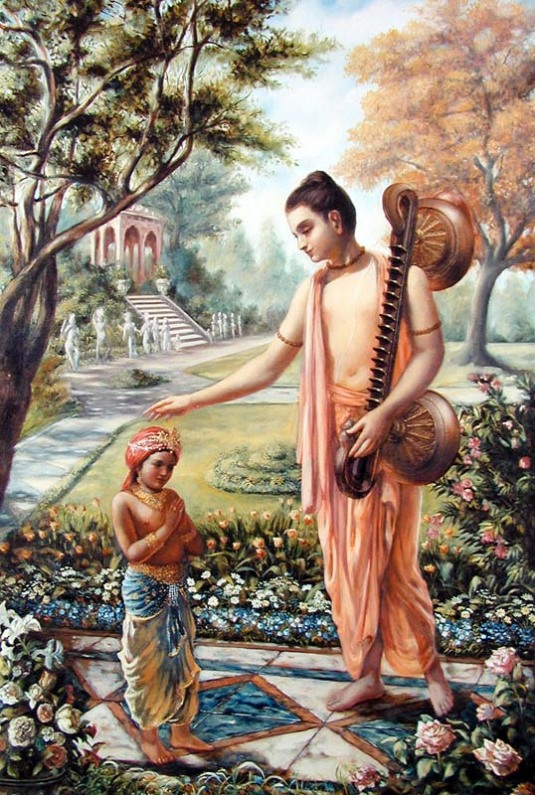
Narada-bhakti-sutra
By His Divine Grace A. C. Bhaktivedanta Swami Prabhupāda
TEXT 8
nirodhas tu loka-veda-vyāpāra-nyāsaḥ
nirodhaḥ—renunciation; tu—moreover; loka—of social custom; veda—and of the revealed scripture; vyāpāra—of the engagements; nyāsa—renunciation.
TRANSLATION
Such renunciation in devotional service means to give up all kinds of social customs and religious rituals governed by Vedic injunction.
PURPORT
In a verse in the Lalita-mādhava (5.2), Śrīla Rūpa Gosvāmī describes renunciation in devotional service:
ṛddhā siddhi-vraja-vijayitā satya-dharmā samādhir
brahmānando gurur api camatkārayaty eva tāvat
yāvat premṇāṁ madhu-ripu-vaśīkāra-siddhauṣadhīnāṁ
gandho ’py antaḥ-karaṇa-saraṇī-pānthatāṁ na prayāti
“Activities such as mystic trance, becoming one with the Supreme, and the religious principles of brahminism, such as speaking the truth and tolerance, have their own respective attractions, but when one becomes captivated by love of Kṛṣṇa, the Supreme Personality of Godhead, all attraction for mystic power, monistic pleasure, and mundane religious principles becomes insignificant.”
In other words, by discharging pure devotional service one attains the highest stage of love of Godhead and is freed from all other obligations, such as those mentioned in the karma-kāṇḍa, jñāna-kāṇḍa, and yoga-kāṇḍa sections of the Vedas. One who engages in pure devotional service has no desire to improve himself—except in the service of the Lord. In such devotional service there cannot be any worship of the impersonal or localized features of the Supreme Lord. The devotee simply performs activities that satisfy the Supreme Personality of Godhead and thus attains pure love for the Lord.
More
08 May 2012
by The Hare Krishna Movement
in Devotional Service
Tags: A.C. Bhaktivedanta Swami Prabhupada, Akura, arcanam, Arjuna, atma-nivedanam, Bali Maharaja, dasyam, goddess of fortune, Hanuman, kirtanam, Laxmi, pada-sevanam, Pariksit Maharaja, Prahlada Maharaja, Prthu Maharaja, sakhyam, SB 7.5.23-24, sravanam, Srimad Bhagavatam, Sukadeva Goswami, vandanam, visnu smaranam

“Parīkṣit Mahārāja attained salvation simply by hearing, and Śukadeva Gosvāmī attained salvation simply by chanting. Prahlāda Mahārāja attained salvation by remembering the Lord. The goddess of fortune, Lakṣmīdevī, attained perfection by worshiping the Lord’s lotus feet. Pṛthu Mahārāja attained salvation by worshiping the Deity of the Lord. Akrūra attained salvation by offering prayers, Hanumān by rendering service, Arjuna by establishing friendship with the Lord, and Bali Mahārāja by offering everything to the service of the Lord.”
The Nine Processes of Devotional Service
They are described by Prahlada Maharaja in the 7th Canto of the Srimad Bhagavatam as follows:
To hear about Sri Visnu’s transcendental name, His form, His characteristics, His possessions and His pastimes and to hear and chant about His pastimes, to remember them, to serve the lotus feet of the Lord, to respectfully offer service to the Lord, to offer prayers to the Lord, to become His servant, to consider the Lord one’s best friend and to offer Him everything-these nine processes are recognized as pure devotional service.
1. HEARING (sravanam) Maharaja Pariksit(the last seven days of his life, he constantly heard the Srimad Bhagavatam).
2. CHANTING (kirtanam) Sukadeva Goswami(spoke the Bhagavatam to Maharaja Pariksit)
More
04 May 2012
by The Hare Krishna Movement
in Devotee's, Jayananda Thakur, Letters by Srila Prabhupada
Tags: A.C. Bhaktivedanta Swami Prabhupada, disappearance day, jayanananda thakur, Jayananda, Letters by Srila Prabhupada, Lord Jagannatha, Ramesvara, Ratha-yatra, Srila Prabhupada
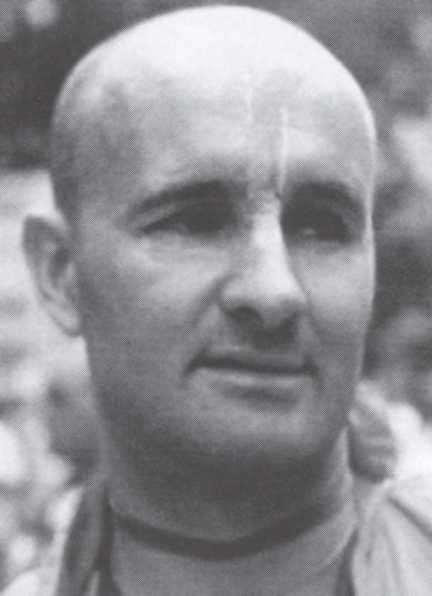
Jayananda’s death is glorious. It is very good that he had stated, what is the use of such a useless body, better to give it up. He has left his body very wonderfully, and he has been transferred to Vaikuntha. I have already sent a condolence letter for publication in Back To Godhead. Everyone should follow the example of Jayananda. I am very proud that I had such a nice disciple. If possible Jayananda’s picture should be hung in the ratha of Lord Jagannatha, and in all of our temples a day may be set aside for holding a festival in his honor, just as we do on the disappearance day of the other great Vaisnavas. (from Letter by Srila Prabhupada to Ramesvara)
Letter to: Ramesvara from Srila Prabhupada
New Delhi 11 May, 1977
For full letter More
03 May 2012
by The Hare Krishna Movement
in Krishna Consciousness, Lectures
Tags: A.C. Bhaktivedanta Swami Prabhupada, adhibhautic, adhidaivic, adhyatmic, happiness, Jaya Gopala, lecture by Prabhupada, Madhudvisa, material comforts, material conditional life, material world, miseries, prabhupada, relief from distress, Tamal Krishna, Visnujana
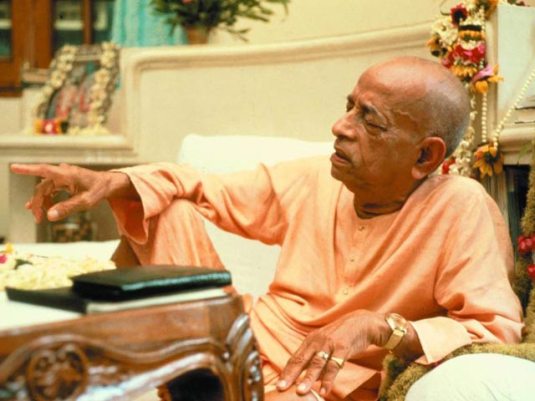
…So sufferings are always there. But we are trying to adjust by patchwork. Sufferings are always there. Everyone is trying to get out of sufferings, that is a fact. The whole struggle for existence is to get out of the suffering. But there are different kinds of prescription… But according to Krishna consciousness movement, you can get out of all sufferings if you simply change your consciousness, that’s all. That is Krishna consciousness.
In any case you are only servant
Lecture given by His Divine Grace A.C. Bhaktivedanta Swami Prabhupada
Seattle, September 27, 1968
So our program is to worship the original Supreme Personality of Godhead, Krishna. Govindam adi-purusam tam aham bhajami [Brahma-samhita: “I worship Govinda, the primeval Lord”]. In this material world everyone is trying to get happiness and to get relief from distress. Two things are going on, attempt. There are different processes. Material process is completely absurd. That is already proved. No amount of material comforts or happiness, so-called happiness, can give us the actual happiness that we are hankering. That is not possible. Then there are different other processes also.
There are three kinds of miseries due to our material conditional life: adhyatmic, adhibhautic, adhidaivic. Adhyatmic means pertaining to the body and to the mind. Just like when there is some disarrangement of the different functions of metabolism within this body, we get fever, we get some pain, headache—so many things—so these miseries are called adhyatmic, pertaining to the body. And another part of this adhyatmic misery is due to the mind.
More
02 May 2012
by The Hare Krishna Movement
in Journey of Self-Discovery, Lectures, Spiritual World
Tags: A.C. Bhaktivedanta Swami Prabhupada, journey of self-discovery, journey through life, Krishna, material world, Radha Krishna, self realization, Spiritual world

“Everything in the spiritual world is substantial and original. This material world is only an imitation…. It is just like a cinematographic picture, in which we see only the shadow of the real thing.” In this lecture, delivered in October 1966 in New York City, Śrīla Prabhupāda gives an amazing glimpse into the nature of the spiritual world and some positive instructions on how to arrive there at the end of life’s perilous journey.
The Journey of Self-Discovery
By His Divine Grace A.C. Bhaktivedanta Swami Prabhupada
paras tasmāt tu bhāvo ’nyo
’vyakto ’vyaktāt sanātanaḥ
yaḥ sa sarveṣu bhūteṣu
naśyatsu na vinaśyati
“Yet there is another unmanifest nature, which is eternal and is transcendental to this manifested and unmanifested matter. It is supreme and is never annihilated. When all in this world is annihilated, that part remains as it is.” [Bhagavad-gītā 8.20]
We cannot calculate the length and breadth of even this universe, yet there are millions and millions of universes like this one within the material sky. And above this material sky there is another sky, which is called the spiritual sky. In that sky all the planets are eternal, and life is eternal, also. We cannot know these things by our material calculations, so we must take this information from the Bhagavad-gītā.
More
01 May 2012
by The Hare Krishna Movement
in Spiritual World, Srimad Bhagavatam
Tags: A.C. Bhaktivedanta Swami Prabhupada, bhagavate, Brahma, Devaki, Krishna, Krsna, om namo bhagavate vasudevaya, Personality of Godhead, primeval Lord, SB 1.1.1, Sri Krsna, Srimad Bhagavatam, Vasudeva, Vyasadeva

Śrīmad-Bhāgavatam:
by His Divine Grace A. C. Bhaktivedanta Swami Prabhupāda
Canto 1: “Creation”, Chapter 1, Text 1
Questions by the Sages
oṁ namo bhagavate vāsudevāya
janmādy asya yato ’nvayād itarataś cārtheṣv abhijñaḥ svarāṭ
tene brahma hṛdā ya ādi-kavaye muhyanti yat sūrayaḥ
tejo-vāri-mṛdāṁ yathā vinimayo yatra tri-sargo ’mṛṣā
dhāmnā svena sadā nirasta-kuhakaṁ satyaṁ paraṁ dhīmahi
om—O my Lord; namaḥ—offering my obeisances; bhagavate—unto the Personality of Godhead; vāsudevāya—unto Vāsudeva (the son of Vasudeva), or Lord Śrī Kṛṣṇa, the primeval Lord; janma-ādi—creation, sustenance and destruction; asya—of the manifested universes; yataḥ—from whom; anvayāt—directly; itarataḥ—indirectly; ca—and; artheṣu—purposes; abhijñaḥ—fully cognizant; sva-rāṭ—fully independent; tene—imparted; brahma—the Vedic knowledge; hṛdā—consciousness of the heart; yaḥ—one who; ādi-kavaye—unto the original created being; muhyanti—are illusioned; yat—about whom; sūrayaḥ—great sages and demigods; tejaḥ—fire; vāri—water; mṛdām—earth; yathā—as much as; vinimayaḥ—action and reaction; yatra—whereupon; tri-sargaḥ—three modes of creation, creative faculties; amṛṣā—almost factual; dhāmnā—along with all transcendental paraphernalia; svena—self-sufficiently; sadā—always; nirasta—negation by absence; kuhakam—illusion; satyam—truth; param—absolute; dhīmahi—I do meditate upon.
TRANSLATION
O my Lord, Śrī Kṛṣṇa, son of Vasudeva, O all-pervading Personality of Godhead, I offer my respectful obeisances unto You. I meditate upon Lord Śrī Kṛṣṇa because He is the Absolute Truth and the primeval cause of all causes of the creation, sustenance and destruction of the manifested universes. He is directly and indirectly conscious of all manifestations, and He is independent because there is no other cause beyond Him. It is He only who first imparted the Vedic knowledge unto the heart of Brahmājī, the original living being. By Him even the great sages and demigods are placed into illusion, as one is bewildered by the illusory representations of water seen in fire, or land seen on water. Only because of Him do the material universes, temporarily manifested by the reactions of the three modes of nature, appear factual, although they are unreal. I therefore meditate upon Him, Lord Śrī Kṛṣṇa, who is eternally existent in the transcendental abode, which is forever free from the illusory representations of the material world. I meditate upon Him, for He is the Absolute Truth.
PURPORT
Obeisances unto the Personality of Godhead, Vāsudeva, directly indicate Lord Śrī Kṛṣṇa, who is the divine son of Vasudeva and Devakī. This fact will be more explicitly explained in the text of this work. Śrī Vyāsadeva asserts herein that Śrī Kṛṣṇa is the original Personality of Godhead, and all others are His direct or indirect plenary portions or portions of the portion. Śrīla Jīva Gosvāmī has even more explicitly explained the subject matter in his Kṛṣṇa-sandarbha. And Brahmā, the original living being, has explained the subject of Śrī Kṛṣṇa substantially in his treatise named Brahma-saṁhitā. In the Sāma-veda Upaniṣad, it is also stated that Lord Śrī Kṛṣṇa is the divine son of Devakī. Therefore, in this prayer, the first proposition holds that Lord Śrī Kṛṣṇa is the primeval Lord, and if any transcendental nomenclature is to be understood as belonging to the Absolute Personality of Godhead, it must be the name indicated by the word Kṛṣṇa, which means the all-attractive. In Bhagavad-gītā, in many places, the Lord asserts Himself to be the original Personality of Godhead, and this is confirmed by Arjuna, and also by great sages like Nārada, Vyāsa, and many others. In the Padma Purāṇa, it is also stated that out of the innumerable names of the Lord, the name of Kṛṣṇa is the principal one. Vāsudeva indicates the plenary portion of the Personality of Godhead, and all the different forms of the Lord, being identical with Vāsudeva, are indicated in this text. The name Vāsudeva particularly indicates the divine son of Vasudeva and Devakī. Śrī Kṛṣṇa is always meditated upon by the paramahaṁsas, who are the perfected ones among those in the renounced order of life.
More
Previous Older Entries Next Newer Entries











 The Hare Krishna Movement