14 Sep 2011
by The Hare Krishna Movement
in A.C. Bhaktivedanta Swami Prabhupada, Back to Godhead, Sankirtan, The Hare Krishna Movement
Tags: A.C. Bhaktivedanta Swami Prabhupada, Back to Godhead Magazine, Great Apostle of love of God, Lord Caitanya Mahaprabhu, Lord Sri Krishna Caitanya, Origin of the Hare Krishna Movement, sankirtan movement
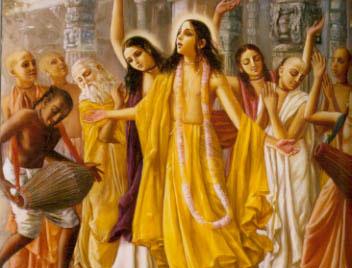
Lord Sri Krishna Caitanya's Sankirtan Movement
Origin of the Hare Krishna Movement
By His Divine Grace A.C. Bhaktivedanta Swami Prabhupada
Back to Godhead Magazine Volume 01, Number 20, 1968
Lord Sri Krishna Chaitanya Mahaprabhu, the Great Apostle of love of God and the Father of the Sankirtan Movement, advented Himself in the City of Nabadwipa in Bengal, India. This was in February, 1486, by Christian reckoning.
By the will of the Lord there was a lunar eclipse on that evening. It is the custom of the Hindu public to bathe in the Ganges of any other sacred river during the hours of eclispe, and to chant the Vedic mantras for purification. When Lord Chaitanya was born during the eclipse, then, the whole India was roaring with the holy sound of Hare Krishna, Hare Krishna, Krishna Krishna, Hare Hare/ Hare Rama, Hare Rama, Rama Rama, Hare Hare.
These sixteen Names of the Lord are mentioned in many Puranas and Upanishads, and they are described as “Tarak Brahman,” the Names for this age. It is stated in the “Shashtras,” the accepted Scriptures, that offenseless chanting of the Holy Names of the Lord can deliver a fallen soul from material bondage. There inumerable Names for the Lord both in India and elsewhere, and all of them are equally good because all of them indicate the Supreme Personality of Godhead. But because these sixteen Names are especially recommended for this Age, called Kali Yuga, it is better for people to take the path of the great Acharyas, the saintly teachers who attained success by practice of this system.
More
14 Sep 2011
by The Hare Krishna Movement
in Spiritual World, Srimati Tulasi Devi
Tags: Spiritual world, Srimad Bhagavatam, Srimati Tulasi Devi, Tulasi, tulasi garlands, tulasi leaves

Srimati Tulasi and Sri Sri Radha Vrindavan Chandra
The most important thing about the spiritual world is that there is no envy among the devotees there. This is true even among the flowers, which are all conscious of the greatness of tulasī.
Although flowering plants like the mandāra, kunda, kurabaka, utpala, campaka, arṇa, punnāga, nāgakeśara, bakula, lily and pārijāta are full of transcendental fragrance, they are still conscious of the austerities performed by tulasī, for tulasī is given special preference by the Lord, who garlands Himself with tulasī leaves.
Purport
The importance of tulasī leaves is very clearly mentioned here. Tulasī plants and their leaves are very important in devotional service. Devotees are recommended to water the tulasī tree every day and collect the leaves to worship the Lord. One time an atheistic svāmī remarked, “What is the use of watering the tulasī plant? It is better to water eggplant. By watering the eggplant one can get some fruits, but what is the use of watering the tulasī?” These foolish creatures, unacquainted with devotional service, sometimes play havoc with the education of people in general.
The most important thing about the spiritual world is that there is no envy among the devotees there. This is true even among the flowers, which are all conscious of the greatness of tulasī. In the Vaikuṇṭha world entered by the four Kumāras, even the birds and flowers are conscious of service to the Lord. (Srimad Bhagavatam)
14 Sep 2011
by The Hare Krishna Movement
in A.C. Bhaktivedanta Swami Prabhupada, Krishna Consciousness, Srimad Bhagavatam, Uncategorized, Yoga
Tags: devotee, krsna consciousness, mystic yogi, narayana-para, Srimad Bhagavatam, Surpreme Personality of Godhead, transcendental service of the Lord, yogi

…The real purpose of yogic performances is to control the mind and the senses. In other words, one cannot attain the mercy and benediction of the Supreme Lord until one is able to control the mind and the senses. This is actually possible when one fully engages in Kṛṣṇa consciousness…
Srimad-Bhagavatam
By His Divine Grace A.C. Bhaktivedanta Swami Prabhupada
Canto 3: “The Status Quo”
SB 3.15: Description of the Kingdom of God
There is no defeat in this material world for persons who control the mind and senses by controlling the breathing process and who are therefore experienced, mature mystics. This is because by such perfection in yoga they have attained your mercy.
Purport
The purpose of yogic performances is explained here. It is said that an experienced mystic attains full control of the senses and the mind by controlling the breathing process. Therefore, controlling the breathing process is not the ultimate aim of yoga. The real purpose of yogic performances is to control the mind and the senses. Anyone who has such control is to be understood to be an experienced, mature mystic yogī. It is indicated herein that a yogī who has control over the mind and senses has the actual benediction of the Lord, and he has no fear. In other words, one cannot attain the mercy and benediction of the Supreme Lord until one is able to control the mind and the senses. This is actually possible when one fully engages in Kṛṣṇa consciousness. A person whose senses and mind are always engaged in the transcendental service of the Lord has no possibility of engaging in material activities. The devotees of the Lord are not defeated anywhere in the universe. It is stated, nārāyaṇa-parāḥ sarve: one who is nārāyaṇa-para, or a devotee of the Supreme Personality of Godhead, is not afraid anywhere, whether he is sent to hell or promoted to heaven (Bhāg. 6.17.28).
Pasted from; PrabhupadaBooks.com
12 Sep 2011
by The Hare Krishna Movement
in Devotee's, Diksha, Iskcon Bangalore, Siksa
Tags: Bangalore devotees, GBC, ISKCON Bangalore, Iskcon Times, Madhu Pandit Das, Radhapran das, Srila Prabhupada

At this critical juncture of the tussle between ISKCON Mumbai and ISKCON Bangalore, I together with the devotees here in Malaysia, pledge support for His Grace Madhu Pandit Prabhu and the devotees of ISKCON Bangalore. Knowing only too well the many similar tribulations experienced in Malaysia over the last decade, it is obvious that the same demeaning tactics magnified manifold are at work to disrepute the good work accomplished by the devotees of ISKCON Bangalore.
Pledge of Support for ISKCON Bangalore
By: Radhapran Dasa, Malaysia
It gives me much grief to see what appears to be a concerted effort by the ISKCON GBC to smear the good name of His Grace Madhu Pandit Prabhu whom I have had the fortune to know personally since 1999. His association has been a stark contrast to that of the thuggish bogus gurus whom I have had the misfortune of encountering in my early association with ISKCON.
Having understood and accepted the authentic position of Srila Prabhupada as the sole diksha guru for ISKCON through contact with other like-minded devotees and evidence related to Srila Prabhupada’s books on Guru tattva and the principal documents pertaining to the process of initiation such as the May 28th conversation, July 9th letter and the Official Will, my team of devotees initially faced an uphill task of disengaging ourselves from the deviation-ridden GBC-led setup in Malaysia. We have faced both direct harassment and indirect plots to undermine our existence since 1999.
More
10 Sep 2011
by The Hare Krishna Movement
in Hansadutta das, Nam Hatta, Practicing Krishna Consciousness at Home, Srila Prabhupada His Movement & You
Tags: chanting Hare Krishna, guru, hansadutta das, ISKCON GBC, Lord Caitanya, Nam Hatta, Sri Caitanya-caritmrta, Srila Prabhupada

Devotees keep asking themselves, “How will the Krishna consciousness movement spread under the present circumstances?”
They observe the lame leadership and feel personally helpless to make any change or contribution toward rectifying the situation or themselves. The answer to this debilitating state of thought is to see one’s self in the correct spiritual perspective. The devotees who helped Prabhupada spread his movement ISKCON are the same ones who can and will spread Krishna consciousness now and in the future. All that is required is that each individual devotee see himself as the servant of Prabhupada, now exactly as he was then (when Prabhupada was present)…
“The temple center is started just to present an example to the neighboring residents, how they can make a small temple in each and every home. It is not necessary that hundreds and thousands of people will live in our temple, but if we can make effective propaganda, then the neighboring residents, householders, will be inclined to be initiated and follow the modes of temple life. So you can encourage the visitors, boys and girls, as well as married couples, to understand the value of life and how they can peacefully and happily live if they follow the routine worship method in the temple and establish this in their home to be happy in all respects.” (Srila Prabhupada, letter to Tamal Krishna, June 1, 1969)
Nam Hatta: The Onus is On You
By Sriman Hansadutta Prabhu
Because of the circumstances under which most of Prabhupada’s early disciples joined the movement, a widespread misunderstanding has become a great obstacle for people in general to accept and practice Krishna consciousness in a realistic and progressive way under all circumstances. That misunderstanding is that a serious candidate for accepting and advancing in Krishna consciousness must abandon his worldly environment and responsibilities to join a temple ashram and live a communal or communistic life style under the rigid authority of an ISKCON GBC or guru. Nothing could be further from the truth, as we can plainly understand from the following descriptions of Lord Chaitanya’s preaching method and Prabhupada’s purports, which clearly support and obviously encourage the process introduced by Lord Chaitanya in His dealing with the Kurma brahmana and everyone He encountered throughout His two years of traveling and preaching in South India.
More
10 Sep 2011
by The Hare Krishna Movement
in Iskcon Bangalore
Tags: battle over Iskcon Bangalore, GBC, ISKCON Bangalore, Iskcon temples, Madhu Pandit Das, Madhudvisa das, ritvik
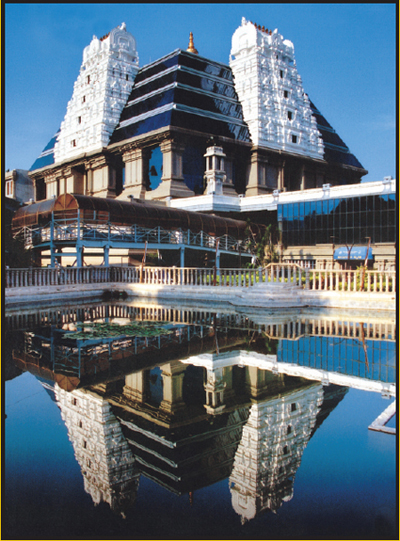
Madhu Pandit Prabhu and the devotees of ISKCON Bangalore are intelligent devotees and are dedicated to Srila Prabhupada. I think there is no one who would disagree with this. On any metric you want to take, the ISKCON Bangalore Group is very successful in following the instructions of Srila Prabhupada. They have huge book distribution, prasadam distribution, a wonderful standard of Deity worship, very dynamic preaching programs, very good management, sincere devotees completely dedicated to strictly following the four regulative principles, chanting at least 16 rounds of the Hare Krishna mantra daily, rising before four every morning to attend the Mangal Aroti and being fully engaged 24 hours a day in serving Srila Prabhupada and Krishna.
So why is it that ISKCON is so intent on getting control over the ISKCON Bangalore Group, even though they know it is not possible really, unless the temple devotees are on their side? And the temple devotees are not on their side — they are Prabhupada men and ISKCON says: “Prabhupada is dead — you need a living guru.” So there is no way they are going to agree with ISKCON/GBC.
It’s All About the Money
By Sriman Madhudvisa Prabhu
Sep 09, 2011 Austrailia (SUN)
ISKCON claims they are trying to eject Mahu Pandit Prabhu from ISKCON Bangalore because of a philosophical deviation, but we have examples in the past where ISKCON temples have separated themselves from ISKCON and have followed a path different from the one chalked out by the GBC.
More
10 Sep 2011
by The Hare Krishna Movement
in Chanting Hare Krishna, Sri Caitanya-Caritamrta
Tags: best of the brahmanas, chanting Hare Krishna, Haridas Thakur, His Divine Grace A., holy name of Krsna, Lord Caitanya's devotee, Nama Acharya, Sri Caitanya-caritamrta
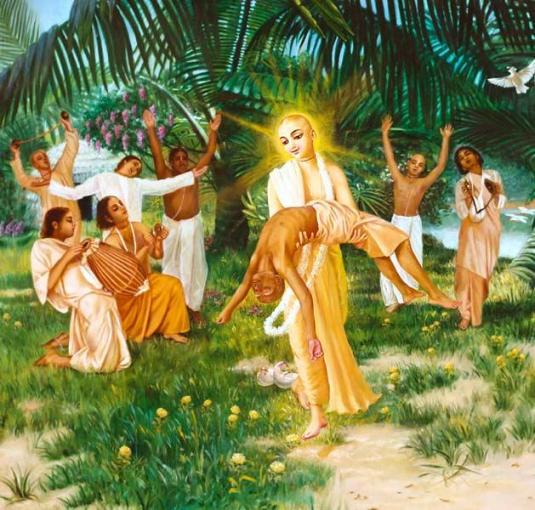
Haridas Thakur is considered to be the namacarya, the spiritual master in chanting the holy name of Krsna. Though he was born in a low class, Muslim family, Lord Caitanya’s devotees respected him as being better than the best of brahmanas. He would not eat or sleep until he finished his daily quota of chanting the name of Krsna 300,000 times. Along with Lord Nityananda, Haridas Thakur spread the chanting of Krsna’s name throughout Bengal. In Jagannatha Puri, where Haridas Thakur spent his later days, Lord Caitanya would regularly send him prasadam and discuss with him topics of Krsna. Haridas Thakur died chanting Krsna’s name in the presence of Sri Caitanya Mahaprabhu. After Haridas Thakur’s death, Lord Caitanya carried his body to the sea and with His own hands buried him in the sand.
Sri Caitanya-caritamrta – 1975 Edition
Antya-lila 3 Text49-
The Glories of Srila Haridasa Thakura
Śrī Caitanya Mahāprabhu derives great pleasure from glorifying His devotees, and among the devotees, Haridāsa Ṭhākura is the foremost.
The transcendental qualities of Haridāsa Ṭhākura are innumerable and unfathomable. One may describe a portion of them, but to count them all is impossible.
In Caitanya-maṅgala, Śrīla Vṛndāvana dāsa Ṭhākura has described the attributes of Haridāsa Ṭhākura to some extent.
No one can describe all the qualities of Haridāsa Ṭhākura. One may say something about them just to purify himself.
O devotees of Śrī Caitanya Mahāprabhu, please hear something about the qualities of Haridāsa Ṭhākura that Śrīla Vṛndāvana dāsa Ṭhākura has not described in detail.
After leaving his home, Haridāsa Ṭhākura stayed for some time in the forest of Benāpola.
Haridāsa Ṭhākura constructed a cottage in a solitary forest. There he planted a tulasī plant, and in front of the tulasī he would chant the holy name of the Lord 300,000 times daily. He chanted throughout the entire day and night.
Purport
The village of Benāpola is situated in the district of Yaśohara, which is now in Bangladesh. Benāpola is near the Banagāṅo station, which is at the border of Bangladesh and may be reached by the eastern railway from Shelda Station in Calcutta. Haridāsa Ṭhākura, being the ācārya of chanting the Hare Kṛṣṇa mahā-mantra, is called Nāmācārya Haridāsa Ṭhākura. From his personal Example we can understand that chanting the Hare Kṛṣṇa mantra and becoming highly elevated in Kṛṣṇa consciousness is very simple. Without difficulty one can sit down anywhere, especially on the bank of the Ganges, Yamunā or any sacred river, devise a sitting place or cottage, plant a tulasī, and before the tulasī chant the Hare Kṛṣṇa mahā-mantra undisturbed.
Haridāsa Ṭhākura used to chant the holy name on his beads 300,000 times daily. Throughout the entire day and night, he would chant the sixteen names of the Hare Kṛṣṇa mahā-mantra. One should not, however, imitate Haridāsa Ṭhākura, for no one else can chant the Hare Kṛṣṇa mahā-mantra 300,000 times a day. Such chanting is for the mukta-puruṣa, or liberated soul. We can follow his example, however, by chanting sixteen rounds of the Hare Kṛṣṇa mahā-mantra on beads every day and offering respect to the tulasī plant. This is not at all difficult for anyone, and the process of chanting the Hare Kṛṣṇa mahā-mantra with a vow before the tulasī plant has such great spiritual potency that simply by doing this one can become spiritually strong. Therefore we request the members of the Hare Kṛṣṇa movement to follow Haridāsa Ṭhākura’s example rigidly. Chanting sixteen rounds does not take much time, nor is offering respects to the tulasī plant difficult. The process has immense spiritual potency. One should not miss this opportunity.
Note: As Srila Prabhupada points out in his purport to Adi-lila 10, 43;
“Certainly the chanting of 300,000 holy names of the Lord is wonderful. No ordinary person can chant so many names, nor should one artificially imitate Haridāsa Ṭhākura’s behavior. It is essential, however, that everyone fulfill a specific vow to chant the Hare Kṛṣṇa mantra. Therefore we have prescribed in our Society that all our students must chant at least sixteen rounds daily. Such chanting must be offenseless in order to be of high quality. Mechanical chanting is not as powerful as chanting of the holy name without offenses.”
09 Sep 2011
by The Hare Krishna Movement
in Bhaktivinoda Thakura
Tags: A.C. Bhaktivedanta Swami Prabhupada, Bhaktisiddhanta Saraswati, bhaktivinoda, Lord Nityananda, Ray of Visnu, Sri Caitanya Mahaprabhu, Srila Bhaktivinoda Thakur

Today is the appearance day of Srila Bhaktivinoda Thakura
Brief Biography of Srila Bhaktivinoda Thakura
Srila Bhaktivinoda Thakura, then known as Kedarnatha Datta was born in 1838, in Birangara (Bengal). The youngest of seven sons, his father Raja Krisananda Datta was a great devotee of Lord Nityananda. The family lived in fairly wealthy circumstances, until Kedarnatha’s father passed away in 1849, when they were reduced to poverty. In 1850, Kedarnatha’s mother arranged a marriage with the five-year-old daughter of Madhusudana Mitra Mahasaya; a resident of Rana Ghata.
More
09 Sep 2011
by The Hare Krishna Movement
in Bhaktivinoda Thakura, Chanting Hare Krishna
Tags: bhaktivinoda, Hare Krishna Maha-mantra, Krishna's holy name, Rama, Srila Bhaktivinoda Thakura, Srimati Radharani
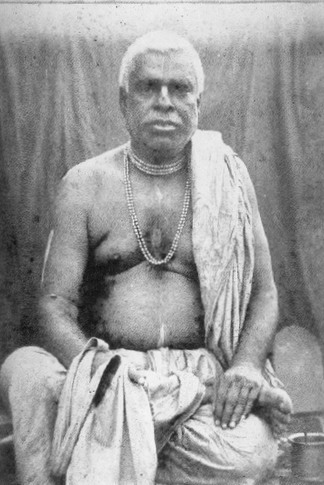
Hare Krsna Maha-mantra
Purport by Srila Bhaktivinoda Thakura
हरे कृष्ण हरे कृष्ण कृष्ण कृष्ण हरे हरे |
हरे राम हरे राम राम राम हरे हरे ||
hare kṛṣṇa hare kṛṣṇa kṛṣṇa kṛṣṇa hare hare
hare rāma hare rāma rāma rāma hare hare
The Hare Kṛṣṇa mantra is known as the mahāmantra, or the greatest of sound vibrations. The mahamantra is a thirty-two syllable mantra chanted requesting Harā (another name of His supreme pleasure energy, personified by Srimati Radharani), and the Supreme Lord (given by two of His names, Krsna, the All-Attractive One, and Rama, the Reservoir of Pleasure) an opportunity to serve Them.
There are four cosmic ages, namely, Satya Yuga, Treta Yuga, Dvapara Yuga, and Kali Yuga. Satya Yuga is known as the “Golden Age”, for values of truth and virtues were at the peak. In Treta Yuga (the age where Lord Sri Ramacandra appeared), vice was introduced. Then, Dvapara Yuga (the age when Sri Krsna appeared on Earth) took place, where vice and virtue was leveled off. Following Dvapara Yuga is the darkest age, known as Kali Yuga. It began approximately five thousand years ago, after Sri Krsna left the world. Throughout each age, the prescribed method of salvation changed. In Satya Yuga, strict penances and austerities was the path of salvation. Then, Treta Yuga introduced the concept of conducting sacrifices as mentioned in scriptures. Dvapara Yuga’s method of salvation comprised of developing personal relations with the Lord.
In Kali Yuga, however, lifespan, intelligence, and qualities are significantly lowered. Therefore, performing severe penance and austerities is impractical. Conducting sacrifices per scriptures is immensely difficult, for those scriptures are not easily accessible, and conductors of such sacrifices are not present on Earth. Receiving personal association and forming relations with the Lord was only fortunate for a few. Therefore, such methods are not practical and applicable for this age. Therefore, the Brhad Naradiya Purana has claimed:
harer nāma harer nāma harer nāmaiva kevalam
kalau nāsty eva nāsty eva nāsty eva gatir anyathā
“Only the Holy Name, Only the Holy Name, Only the Holy Name, is the only way. There is no other way, no other way, no other way in this Age of Kali”
Therefore, it is clearly indicated that in Kali Yuga, the only method of salvation is by chanting the holy name of God. However, the most powerful mantra for salvation was hidden in confidentiality until this age. It wasn’t until the late fifteenth century when the mahamantra was openly revealed by Lord Caitanya Mahaprabhu. Typically, the Lord does not incarnate on Earth during Kali Yuga, until the very end. However, this Kali Yuga was especially fortunate to have Lord Caitanya Mahaprabhu’s incarnation of gold appear on earth. Through His mission to spread the movement of devotional service in degraded age, He brought the Hare Krsna mahamantra openly for all to benefit.
Pasted from http://kksongs.org/mantra/hk_expl.html
08 Sep 2011
by The Hare Krishna Movement
in Six Goswamis
Tags: Jiva Goswami, six goswami's of Vrindavan, Sri Caitanya Mahaprabhu
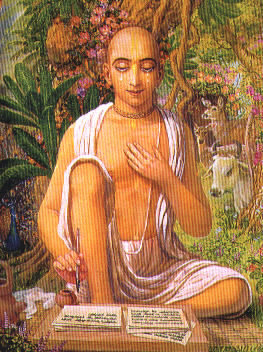
Today is the Appearance Day of Srila Jiva Goswami, one of the six Goswamis of Vrindavan, and direct disciples of Sri Caitanya Mahaprabhu.
Srila Jiva Goswami
Srila Jiva Goswami was the son of Sri Vallabha and nephew of Sri Sanatana, Sri Rupa, all of whom were employed in the service of the Badsha Hussein Shah. Having been rewarded richly by the Badsha for their devices, their household life was very opulent.
When Sri Chaitanya Mahaprabhu came to Ramakeli, Sri Jiva was blessed by having darshana of his worshipable Lord, though he was just a baby at that time. Mahaprabhu indicated him to be a great future scholar in the Gaudiya sampradaya. Though he was only a child, Sri Jiva would meditate on Sri Chaitanya constantly.
More
07 Sep 2011
by The Hare Krishna Movement
in Devotee's, Locanananda das, Tribhuvanath das
Tags: chanting Hare Krishna, devotee of Krishna, festival program, Locanananda das, sankirtan movement, Thibhuvannatha das
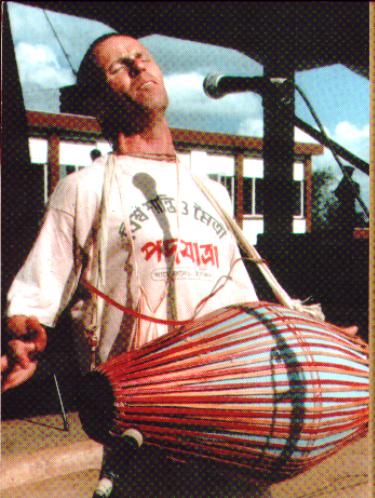
In Glorification of His Grace Tribhuvannatha Prabhu
by Locanananda dasa 2001
At the 1970 London Rathayatra, more than thirty years ago, I met a young bhakta who, like myself, was trying to absorb the transcendental gift of Krishna consciousness. He was bright-faced, innocent, full of energy and obviously very dedicated to pleasing his spiritual master. I knew him as Tom, and I thought that if I could do just as he was doing— always joyfully chanting the Hare Krishna Mantra and studying Srila Prabhupada’s books — then everything about my life would turn out all right.
We remained friends all of those years, but our service rarely brought us together. Still, I always felt a close connection with His Grace Tribhuvannatha Prabhu. In 1976, we spent some time associating in the holy land of Vrndavana Dhama and I can still recall the kirtana he led after Srila Prabhupada performed a fire yajna in the courtyard of the Krishna-Balarama Mandira. There was great potency in his chanting, the potency that comes from being totally surrendered to the will of a pure devotee of Krishna. Tribhuvannatha Prabhu’s chanting sounded like a call to every jiva soul to rise up and begin to serve the Supreme Personality of Godhead who resides in the hearts of all.
More
07 Sep 2011
by The Hare Krishna Movement
in Bhagavad-gita
Tags: Arjuna, Bhagavad-gita As It Is, His Divne Grace A.C. Bhaktivedanta Swami, Macmillian 1972 edition, Srila Prabhupada, Supreme Brahman, Supreme Lord Krsna

Kṛṣṇa is the Supreme Personality of Godhead, and one should always meditate upon Him and enjoy one’s transcendental relationship with Him. He is the supreme existence…He is the supreme origin; He has no cause, for He is the cause of all causes, and everything is emanating from Him. This perfect knowledge can be had by the grace of the Supreme Lord.
Bhagavad-gita As It Is – Macmillan 1972 Edition
By His Divine Grace A.C. Bhaktivedanta Swami Prabhupada
Chapter 10 The Opulence of the Absolute
Text 12-14
arjuna uvāca
paraṁ brahma paraṁ dhāma
pavitraṁ paramaṁ bhavān
puruṣaṁ śāśvataṁ divyam
ādi-devam ajaṁ vibhum
āhus tvām ṛṣayaḥ sarve
devarṣir nāradas tathā
asito devalo vyāsaḥ
svayaṁ caiva bravīṣi me
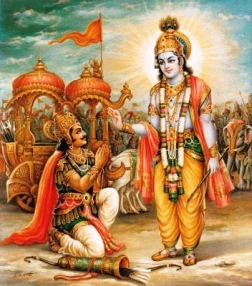
Arjuna said: You are the Supreme Brahman, the ultimate, the supreme abode and purifier, the Absolute Truth and the eternal divine person. You are the primal God, transcendental and original, and You are the unborn and all-pervading beauty. All the great sages such as Nārada, Asita, Devala, and Vyāsa proclaim this of You, and now You Yourself are declaring it to me.
PURPORT
In these two verses the Supreme Lord gives a chance to the modern philosopher, for here it is clear that the Supreme is different from the individual soul. Arjuna, after hearing the essential four verses of Bhagavad-gītā in this chapter, became completely free from all doubts and accepted Kṛṣṇa as the Supreme Personality of Godhead. He at once boldly declares, “You are Parambrahma, the Supreme Personality of Godhead.” And previously Kṛṣṇa states that He is the originator of everything and everyone. Every demigod and every human being is dependant on Him. Men and demigods, out of ignorance, think that they are absolute and independant of the Supreme Lord Kṛṣṇa. That ignorance is removed perfectly by the discharge of devotional service. This is already explained in the previous verse by the Lord. Now by His grace, Arjuna is accepting Him as the Supreme Truth, in concordance with the Vedic injunction. It is not because Kṛṣṇa is an intimate friend of Arjuna that he is flattering Him by calling Him the Supreme Personality of Godhead, the Absolute Truth. Whatever Arjuna says in these two verses is confirmed by Vedic truth. Vedic injunctions affirm that only one who takes to devotional service to the Supreme Lord can understand Him, whereas others cannot. Each and every word of this verse spoken by Arjuna is confirmed by Vedic injunction.
More
07 Sep 2011
by The Hare Krishna Movement
in Bhaktisiddhanta das, Devotee's, Diksha, Guru & Disciple, Siksa
Tags: Acharya, Bhaktisiddhanta dasa, guru, initiates, ritvik, Ritvik initiation, spiritual name, Srila Prabhupada

Nearly Everyone Is Ritvik
Bhaktisiddhanta Dasa – Vrndavan:
Has everyone forgotten what happened in the past? In the early ‘70’s Srila Prabhupada started his own ritvik system, surprise! At some point it became too much to chant on everyone’s beads and give the new spiritual names so what to do? He appointed some of his senior men to cover these details so he could go on with his writing and management of a world organization.
My wife and I were initiated in 1975 in Los Angeles, Srila Prabhupada had left the day before to go to San Francisco, by this time he deputed his personal secretary and Sanskrit scholar to look up the names; and then he would approve or disapprove.
During the fire sacrifice it was Hridayananda Maharaja that was standing next to the Vyasasana and handed out the beads and asked for the four regulative principles. Each time a new name was given there was a loud HARIBOL and everyone applauded.
More
05 Sep 2011
by The Hare Krishna Movement
in Devotee's, Mukunda das Goswami, Srila Prabhupada
Tags: A.C. Bhaktivedanta Swami Prabhupada, Hare Krishna, Indian Swami, Mukunda das, servant of God, Srila Prabhupada, The Science of Self Realization
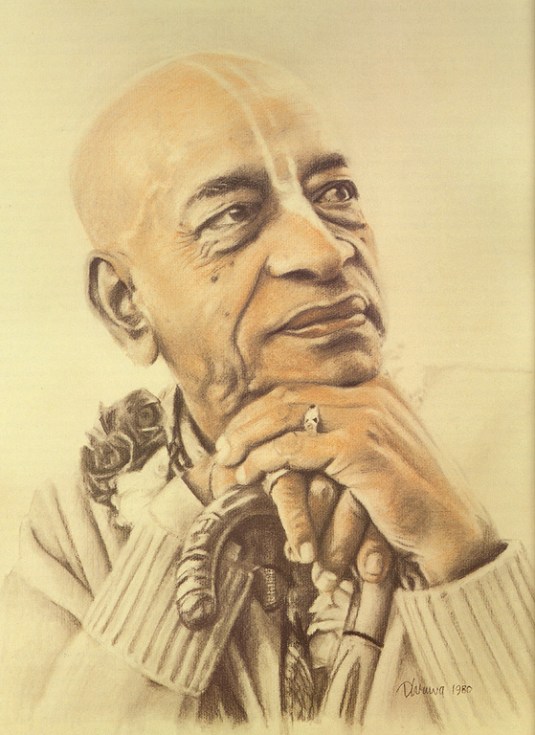
The Science of Self Realization
Foreword By Mukunda Das
From the very start, I knew that His Divine Grace A. C. Bhaktivedanta Swami Prabhupāda was the most extraordinary person I had ever met. The first meeting occurred in the summer of 1966, in New York City. A friend had invited me to hear a lecture by “an old Indian svāmī” on lower Manhattan’s Bowery. Overwhelmed with curiosity about a svāmī lecturing on skid row, I went there and felt my way up a pitch-black staircase. A bell-like, rhythmic sound got louder and clearer as I climbed higher. Finally I reached the fourth floor and opened the door, and there he was.
About fifty feet away from where I stood, at the other end of a long, dark room, he sat on a small dais, his face and saffron robes radiant under a small light. He was elderly, perhaps sixty or so, I thought, and he sat cross-legged in an erect, stately posture. His head was shaven, and his powerful face and reddish horn-rimmed glasses gave him the look of a monk who had spent most of his life absorbed in study. His eyes were closed, and he softly chanted a simple Sanskrit prayer while playing a hand drum. The small audience joined in at intervals, in call-and-response fashion. A few played hand cymbals, which accounted for the bell-like sounds I’d heard. Fascinated, I sat down quietly at the back, tried to participate in the chanting, and waited.
More
04 Sep 2011
by The Hare Krishna Movement
in Devotional Service, Science of Self Realization, Srimati Radharani
Tags: Devotees in Vrndavana, His Divine Grace A.C. Bhaktivedanta Swami Prabhupada, Krishna, Madana-mohana-mohani, Nectar of Devotion, Radharani, Srimati Radharani

From; The Nectar of Devotion – 1970 Edition
By His Divine Grace A.C. Bhaktivedanta Swami Prabhupada
Attracting Krsna
Śrīla Rūpa Gosvāmī has stated that devotional service attracts even Kṛṣṇa. Kṛṣṇa attracts everyone, but devotional service attracts Kṛṣṇa. The symbol of devotional service in the highest degree is Rādhārāṇī. Kṛṣṇa is called Madana-mohana, which means that He is so attractive that He can defeat the attraction of thousands of Cupids. But Rādhārāṇī is still more attractive, for She can even attract Kṛṣṇa. Therefore devotees call Her Madana-mohana-mohanī-the attractor of the attractor of Cupid.
To perform devotional service means to follow in the footsteps of Rādhārāṇī, and devotees in Vṛndāvana put themselves under the care of Rādhārāṇī in order to achieve perfection in their devotional service. In other words, devotional service is not an activity of the material world; it is directly under the control of Rādhārāṇī. In Bhagavad-gītā it is confirmed that the mahātmās, or great souls, are under the protection of daivī prakṛti, the internal energy-Rādhārāṇī. So, being directly under the control of the internal potency of Kṛṣṇa, devotional service attracts even Kṛṣṇa Himself.
This fact is corroborated by Kṛṣṇa in the Eleventh Canto of Śrīmad-Bhāgavatam, 12th Chapter, 1st verse, where He says, “My dear Uddhava, you may know it from Me that the attraction I feel for devotional service rendered by My devotees is not to be attained even by the performance of mystic yoga, philosophical speculation, ritualistic sacrifices, the study of Vedānta, the practice of severe austerities or the giving of everything in charity. These are, of course, very nice activities, but they are not as attractive to Me as the transcendental loving service rendered by My devotees.”(from Nectar of Devotion: Chapter One, Characteristics of Pure Devotional Service, Attracting Krsna)
03 Sep 2011
by The Hare Krishna Movement
in Festivals, Lectures, Srimati Radharani
Tags: Krishna, Radha, Radharani, Radhastami, Srila Prabhupada, Srimati Radharani, Srimati Radharani's Apperance Day
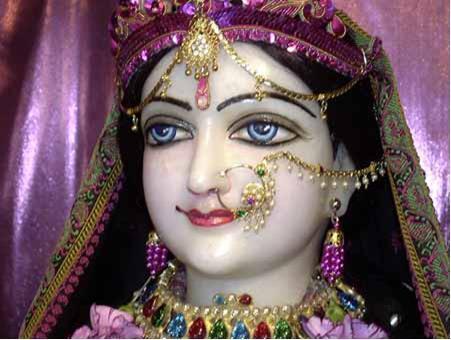
Rādhārāṇī is hari-priyā, very dear to Kṛṣṇa. So if we approach Kṛṣṇa through Rādhārāṇī, through the mercy of Rādhārāṇī, then it becomes very easy. If Rādhārāṇī recommends that “This devotee is very nice,” then Kṛṣṇa immediately accepts, however fool I may be. Because it is recommended by Rādhārāṇī, Kṛṣṇa accepts. Therefore in Vṛndāvana you’ll find all the devotees, they’re chanting more Rādhārāṇī’s name than Kṛṣṇa’s. Wherever you’ll go, you’ll find the devotees are addressing, “Jaya Rādhe.” You’ll find still in Vṛndāvana. They are glorifying Rādhārāṇī. They’re more interested, worshiping Rādhārāṇī. Because however fallen I may be, if some way or other I can please Rādhārāṇī, then it is very easy for me to understand Kṛṣṇa.
The devotees of the Lord in Vaikuntha want to see the Lord as most beautiful, but the devotees in Vrindavana want to see Radharani as even more beautiful than Krishna
Rādhāṣṭamī:
Śrīmatī Rādhārāṇī’s Appearance Day
Lecture given by His Divine Grace A. C. Bhaktivedanta Swami Prabhupada
London, August 29, 1971
Prabhupāda: (chants maṅgalācaraṇa prayers) Today is birth, appearance day of Śrīmatī Rādhārāṇī, Rādhāṣṭamī. Fifteen days after Kṛṣṇa’s birth, Rādhārāṇī appeared. (pause) Rādhārāṇī is Kṛṣṇa’s pleasure potency. Rādhā-kṛṣṇa-praṇaya-vikṛtir hlādinī-śaktiḥ. More
02 Sep 2011
by The Hare Krishna Movement
in Books by Srila Prabhupada, Krishna, Srimati Radharani
Tags: Bhaktivedanta Swami Prabhupada, Krsna The Supreme Personality of Godhead, Radha, Radha Krishna, Radhastmi, Srimati Radharani

Dear friends, just imagine how the dust of this place is transcendentally glorious. The dust of the lotus feet of Kṛṣṇa is worshiped even by Lord Brahmā and Lord Śiva, and the goddess of fortune, Lakṣmī. But at the same time, we are very sorry that this particular gopī has gone along with Kṛṣṇa, for She is sharing the nectar of Kṛṣṇa’s kisses and leaving us aside to lament. O friends, just see! At this particular spot we do not see the footprints of that gopī. It appears that because there were some pin-pricks from the dried grass, Kṛṣṇa took Rādhārāṇī on His shoulder. O, She is so dear to Him! Kṛṣṇa must have picked some flowers in this spot to satisfy Rādhārāṇī, because here, where He stood erect to get the flowers from the high branches of the tree, we find only half the impression of His feet. Dear friends, just see how Kṛṣṇa must have sat down here with Rādhārāṇī and tried to set flowers in Her hair. You can be certain that both of Them sat together here.”
KRSNA The Supreme Personality of Godhead
By His Divine Grace A.C. Bhaktivedanta Swami Prabhupada
Kṛṣṇa’s Hiding from the Gopīs
When Kṛṣṇa suddenly disappeared from the company of the gopīs, they began to search for Him in every place. After not finding Him anywhere, they became afraid and almost mad after Him. They were simply thinking of the pastimes of Kṛṣṇa in great love and affection. Being absorbed in thought, they experienced loss of memory, and with dampened eyes they began to see the very pastimes of Kṛṣṇa, His beautiful talks with them, His embracing, kissing, and other activities. Being so attracted to Kṛṣṇa, they began to imitate His dancing, His walking and smiling, as if they themselves were Kṛṣṇa. Due to Kṛṣṇa’s absence, they all became crazy; each one of them began to tell the others that she was Kṛṣṇa Himself. Soon they all began to assemble together and chant Kṛṣṇa’s name very loudly, and they moved from one part of the forest to another searching for Him. Actually, Kṛṣṇa is all-pervasive; He is in the sky, and He is in the forest; He is within the heart, and He is always everywhere.
More
02 Sep 2011
by The Hare Krishna Movement
in Devotee's, Rupanuga das, Srila Prabhupada
Tags: Bhaktivedanta Swami Prabhupada, Hare Krishna Movement, Kali-yuga, Rupanuga dasa, World Acarya, Yuga Dharma

Recent history has demonstrated Srila Prabhupada to be by far the greatest exponent of Lord Caitanya’s teachings, who freed them, carried them from the Indian sub-continent to the rest of the world. It is said that Nityananda Prabhu plundered the storehouse of love of God when preaching in Bengal by the order of Caitanya Mahaprabhu. 477 years later Srila Prabhupada again plundered that storehouse, only to return with the treasure to India to distribute it once again! These feats are impossible to duplicate. They have already changed the course of history.
The World Acarya
By: Rupanuga Dasa (ACBSP 66)
Aug 21, 2011 — FLORIDA, USA (SUN)
Even though Bhagavad-gita and Srimad Bhagavatam were spoken and recorded in 3,000 B.C., it wasn’t until 1965 A.D., 5,000 years later, that these original sastras containing the Yuga Dharma were released from India by His Divine Grace A.C. Bhaktivedanta Swami Prabhupada. Bhaktivinode Thakur had previously inaugurated the Hare Krsna Movement, the emblem of that Yuga Dharma, when he sent his Caitanya—His Life and Precepts to McGill University, Canada, in 1896. More copies of this sublime volume have been found in other countries, suggesting that the Thakur made an extensive mailing to the major English-speaking universities of his day.
More
02 Sep 2011
by The Hare Krishna Movement
in Diksha, Iskcon Bangalore, Siksa, The Struggle for Truth
Tags: Bangalore society registered in 1978, ISKCON Bangalore, ISKCON Law, ISKCON Mumbai, Madhu Pandit dasa
We are willing to settle and handover the control of ISKCON Bangalore society registered in 1978 if the above ISKCON Law (ISKCON Law 6.4.7.2) is rescinded and it is openly declared that Srila Prabhupada is the only Acharya of ISKCON and that no one else should accept disciples within ISKCON. Any further discussions on the peace proposal can be worked out provided these facts are first accepted by ISKCON Mumbai. Only based on this first step can any peace or settling of issues can make meaningful progress.
Press Note
ISKCON Mumbai is not serious about peace
By Madhu Pandit Dasa
Bangalore 1st September, 2011.
We got to know through media sources that ISKCON Mumbai’s Bureau members conducted a press conference today and claimed that they are willing to settle the dispute between ISKCON Bangalore and Mumbai as per the Supreme Courts’ desire. We are sending this clarificatory press release so as to present the actual facts of the matter.
We wish to place on record that ISKCON Bangalore was the first to offer a peace proposal, we had offered peace proposal as early as 4th of February 2009. This peace proposal was given just before City Civil Court pronounced its verdict that ISKCON Bangalore registered in 1978 is an independent society and that ISKCON Mumbai registered in 1971 should not interfere with Bangalore’s affairs. This proposal was categorically rejected by ISKCON Mumbai. The proposal was sent in writing you can view the same by going to the following link: http://www.iskconbangalore.org/sites/default/files/Krishna-Voice-July-2011.pdf (page 48).
More
01 Sep 2011
by The Hare Krishna Movement
in Books by Srila Prabhupada, Krishna, Krishna Consciousness, Spiritual World
Tags: gopis, Krishna, Krsna The Supreme Personality of Godhead, prabhupada, Radharani

KRSNA, The Supreme Personality of Godhead – 1970 Edition
By His Divine Grace A. C. Bhaktivedanta Swami Prabhupada
The Gopīs Attracted by the Flute
Kṛṣṇa was very pleased with the atmosphere of the forest where flowers bloomed and bees and drones hummed very jubilantly. While the birds, trees and branches were all looking very happy, Kṛṣṇa, tending the cows, accompanied by Śrī Balarāma and the cowherd boys, began to vibrate His transcendental flute. After hearing the vibration of the flute of Kṛṣṇa, the gopīs in Vṛndāvana remembered Him and began to talk amongst themselves about how nicely Kṛṣṇa was playing His flute. When the gopīs were describing the sweet vibration of Kṛṣṇa’s flute, they also remembered their pastimes with Him; thus their minds became disturbed, and they were unable to describe completely the beautiful vibrations. While discussing the transcendental vibration, they remembered also how Kṛṣṇa dressed, decorated with a peacock feather on His head, just like a dancing actor, and with blue flowers pushed over His ear. His garment glowed yellow-gold, and He was garlanded with a vaijayantī necklace. Dressed in such an attractive way, Kṛṣṇa filled up the holes of His flute with the nectar emanating from His lips. So they remembered Him, entering the forest of Vṛndāvana, which is always glorified by the footprints of Kṛṣṇa and His companions.
More
Previous Older Entries Next Newer Entries









 The Hare Krishna Movement