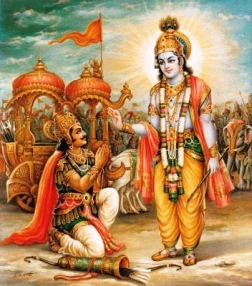
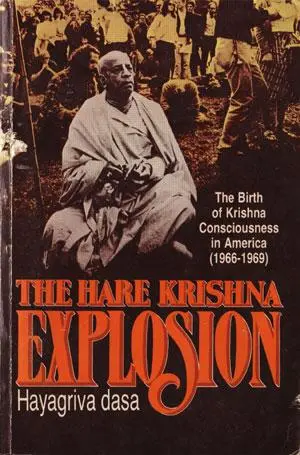
The First Stages of Devotion

Nectar of Devotion
by His Divine Grace A. C. Bhaktivedanta Swami Prabhupāda
Chapter Two

We should always try to mold the activities of our lives in such a way that we will constantly remember Viṣṇu, or Kṛṣṇa. That is Kṛṣṇa consciousness. Whether one concentrates his mind on the four-handed form of Viṣṇu or on the form of two-handed Kṛṣṇa, it is the same. The Padma Purāṇa recommends: somehow or other always think of Viṣṇu, without forgetting Him under any circumstances. Actually this is the most basic of all regulative principles. For, when there is an order from a superior about doing something, there is simultaneously a prohibition. When the order is that one should always remember Kṛṣṇa, the prohibition is that one should never forget Him. Within this simple order and prohibition, all regulative principles are found complete.

The First Stages of Devotion

The three categories of devotional service which Śrīla Rūpa Gosvāmī describes in Bhakti-rasāmṛta-sindhu are listed as devotional service in practice, devotional service in ecstasy and devotional service in pure love of Godhead. There are many subheadings in each of these categories. Generally it is understood that in the category of devotional service in practice there are two different qualities, devotional service in ecstasy has four qualities, and devotional service in pure love of Godhead has six qualities. These qualities will be explained by Śrīla Rūpa Gosvāmī later on.

In this connection, Śrīla Rūpa Gosvāmī suggests that the person eligible for Kṛṣṇa consciousness, or devotional service, can be classified by his particular taste. He says that devotional service is a continual process from one’s previous life. No one can take to devotional service unless he has had some previous connection with it. For example, suppose in this life I practice devotional service to some extent. Even though it is not one-hundred-percent perfectly performed, whatever I have done will not be lost. In my next life, from the very point where I stop in this life, I shall begin again. In this way there is always a continuity. But even if there is no continuity, if only by chance a person takes interest in a pure devotee’s instruction, he can be accepted and can advance in devotional service. Anyway, for persons who have a natural taste for understanding books like Bhagavad-gītā and Śrīmad-Bhāgavatam, devotional service is easier than for those who are simply accustomed to mental speculation and argumentative processes.

More

You Hear from the Authority, Krishna

You Hear from the Authority, Krishna

Excerpt from lecture on Bhagavad-gita 2.13
Pittsburgh, September 8, 1972
By His Divine Grace A. C. Bhaktivedanta Swami Prabhupada

So we request simply people that you accept this authoritative knowledge and try to assimilate it by your intelligence.

Our this Krishna consciousness movement is to propagate that “You hear from the authority, Krishna.” Krishna is the Supreme Personality of Godhead. It is accepted in the present age and in the past age. In the past age, great sages like Narada, Vyasa, Asita, Devala, very, very great stalwart scholars and sages, they accepted. In the Middle Age, say 1,500 years ago, all the acharyas like Shankaracharya, Ramanujacharya, Madhvacharya, Nimbarka… Practically, Indian Vedic civilization, it is still existing on the authority of these acharyas. And it is recommended in the Bhagavad-gita: acharyopasanam. If you want to learn factually things, then you should approach ahcarya. Acharyavan purusho veda, “One who has accepted acharya, he knows things as they are.” Acharyavan purusho veda. So we are receiving knowledge through the acharyas. Krishna spoke to Arjuna, Arjuna spoke to Vyasadeva. Arjuna actually did not speak to Vyasadeva, but Vyasadeva heard it, Krishna speaking, and he noted down in his book Mahabharata. This Bhagavad-gita is found in Mahabharata. So we accept the authorities of Vyasa. And from Vyasa, Madhvacharya; from Madhvacharya, so many disciplic succession, up to Madhavendra Puri. Then Madhavendra Puri to Ishvara Puri; from Ishvara Puri to Lord Chaitanyadeva; from Lord Chaitanyadeva to six Gosvamis; from six Gosvamis to Krishnadasa Kaviraja; from him, Shrinivasa Acharya; from him, Vishvanatha Chakravarti; from him, Jagannatha dasa Babaji; then Gaura Kishora dasa Babaji; Bhaktivinoda Thakura; my spiritual master [Srila Bhaktisiddhanta Sarasvati Thakur]. The same thing, we are preaching. That is Krishna consciousness movement. It is nothing new. It is coming down from the original speaker, Krishna, by disciplic succession. So we are reading this Bhagavad-gita. Not that I have manufactured some book and I am preaching. No. I am preaching Bhagavad-gita. The same Bhagavad-gita as it was first spoken forty millions of years ago to the sun-god and again it was repeated five thousand years ago to Arjuna. The same thing is coming down by disciplic succession, and the same thing is presented before you. There is no change.

More

Krishna Nectar

Krishna Nectar
From; KRSNA, The Supreme Personality of Godhead – 1970 Edition
By; His Divine Grace A. C. Bhaktivedanta Swami Prabhupada
Chapter23

Delivering the Wives of the Brahmanas Who Performed Sacrifices

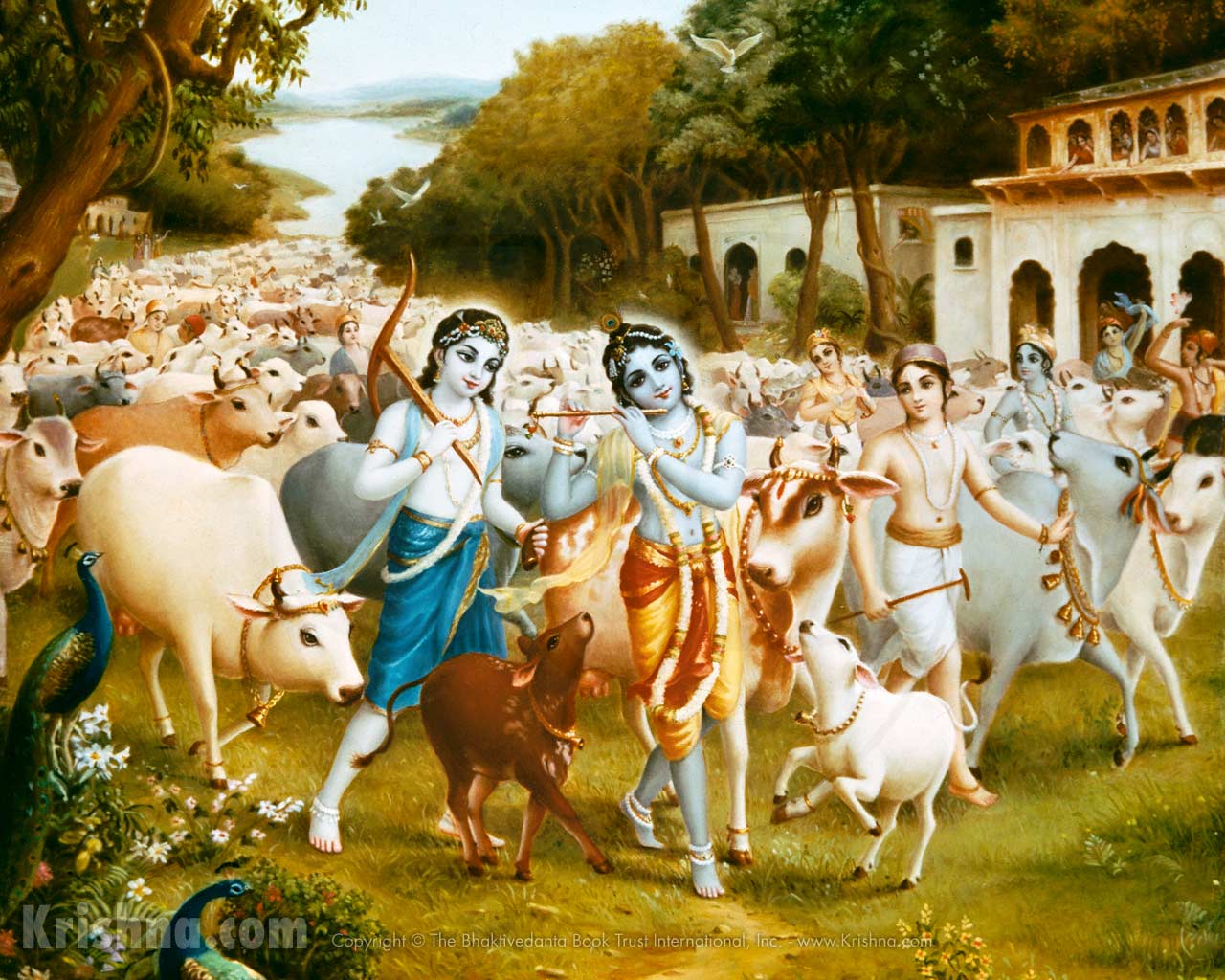
The brāhmaṇas’ wives saw Kṛṣṇa putting on a garment glittering like gold. He wore a nice garland of forest flowers and a peacock feather on His head. He was also painted with the minerals found in Vṛndāvana, and He looked exactly like a dancing actor on a theatrical stage. They saw Him keeping one hand on the shoulder of His friend, and in His other hand, He was holding a lotus flower. His ears were decorated with lilies, He wore marks of tilaka, and He was smiling charmingly. With their very eyes, the wives of the brāhmaṇas saw the Supreme Personality of Godhead, of whom they had heard so much, who was so dear to them, and in whom their minds were always absorbed. Now they saw Him eye to eye and face to face, and Kṛṣṇa entered within their hearts through their eyes.

…”For a long time the wives had been anxious to see Kṛṣṇa. However, when they were preparing to leave home to go see Him, their husbands, fathers, sons and relatives asked them not to go. But the wives did not comply. When a devotee is called by the attraction of Kṛṣṇa, he does not care for bodily ties. The women entered the forest of Vṛndāvana on the bank of the Yamunā, which was verdant with vegetation and newly grown vines and flowers. Within that forest, they saw Kṛṣṇa and Balarāma engaged in tending the cows, along with Their very affectionate boy friends.

More

Everyone Follows My Path in All Respects

In picture; At the top Krishna is dancing with His purest devotees as a lover. On the lotus petals the Lord is reciprocating with His devotees as a son, as a friend and as a master. Below left, a devotee in the material world is associating with Krishna personally by painting His transcendental form. Next, an impersonalist, by his meditation, is merging with the brahmajyoti, the spiritual effulgence emanating from the Lord’s body. On the right a mystic yogi is walking on the water. On the far right a fruitive worker is receiving the fruits of his labor. (Picture and description taken from the Original 1972 Bhagavad-gita As It Is)

Bhagavad-gītā As It Is
By: His Divine Grace A. C. Bhaktivedanta Swami Prabhupada
Chapter 4 Transcendental Knowledge

TEXT 11

ye yathā māṁ prapadyante
tāṁs tathaiva bhajāmy aham
mama vartmānuvartante
manuṣyāḥ pārtha sarvaśaḥ

ye—all of them; yathā—as; mām—unto Me; prapadyante—surrender; tān—unto them; tathā—so; eva—certainly; bhajāmi—do I reward; aham—I; mama—My; vartma—path; anuvartante—do follow; manuṣyāḥ—all men; pārtha—O son of Pṛthā; sarvaśaḥ—in all respects.

TRANSLATION

All of them—as they surrender unto Me—I reward accordingly. Everyone follows My path in all respects, O son of Pṛthā.
PURPORT

Eveyone is searching for Kṛṣṇa in the different aspects of His manifestations. Kṛṣṇa, the Supreme Personality of Godhead, is partially realized in His impersonal brahmajyoti effulgence and as the all-pervading Supersoul dwelling within everything, including the particles of atoms. But Kṛṣṇa is only fully realized by His pure devotees. Consequently, Kṛṣṇa is the object of everyone’s realization, and thus anyone and everyone is satisfied according to one’s desire to have Him. In the transcendental world also, Kṛṣṇa reciprocates with His pure devotees in the transcendental attitude, just as the devotee wants Him. One devotee may want Kṛṣṇa as supreme master, another as his personal friend, another as his son, and still another as his lover. Kṛṣṇa rewards all the devotees equally, according to their different intensities of love for Him. In the material world, the same reciprocations of feelings are there, and they are equally exchanged by the Lord with the different types of worshipers. The pure devotees both here and in the transcendental abode associate with Him in person and are able to render personal service to the Lord and thus derive transcendental bliss in His loving service. As for those who are impersonalists and who want to commit spiritual suicide by annihilating the individual existence of the living entity, Kṛṣṇa helps also by absorbing them into His effulgence. Such impersonalists do not agree to accept the eternal, blissful Personality of Godhead; consequently they cannot relish the bliss of transcendental personal service to the Lord, having extinguished their individuality. Some of them, who are not situated even in the impersonal existence, return to this material field to exhibit their dormant desires for activities. They are not admitted in the spiritual planets, but they are again given a chance to act on the material planets. For those who are fruitive workers, the Lord awards the desired results of their prescribed duties, as the yajñeśvara; and those who are yogīs seeking mystic powers are awarded such powers. In other words, everyone is dependant for success upon His mercy alone, and all kinds of spiritual processes are but different degrees of success on the same path. Unless, therefore, one comes to the highest perfection of Kṛṣṇa consciousness, all attempts remain imperfect, as is stated in the Śrīmad Bhāgavatam:

akāmaḥ sarva-kāmo vā mokṣa-kāma udāradhīḥ
tīvreṇa bhakti-yogena yajeta puruṣaṁ param

“Whether one is without desire [the condition of the devotees], or is desirous of all fruitive results, or is after liberation, one should with all efforts try to worship the Supreme Personality of Godhead for complete perfection, culminating in Kṛṣṇa consciousness.” (Bhāg. 2.3.10)

Prayer to the Lotus Feet of Krsna

Prayer to the Lotus Feet of Krsna
By: His Divine Grace A.C. Bhaktivedanta Swami Prabhupada
Founder-Acarya of the International Society for Krsna Consciousness

On September 13, 1965, Srila Prabhupada wrote the following prayer
on board the Jaladuta steamship bound for America.

I emphatically say to you, O brothers, you will obtain your good fortune from the Supreme Lord Krsna only when Srimati Radharani becomes pleased with you.

Sri Srimad Bhaktisiddhanta Sarasvati Thakur, who is very dear to Lord Gauranga, the son of mother Saci, is unparalleled in his service to the Supreme Lord Sri Krsna. He is that great saintly spiritual master who bestows intense devotion to Krsna at different places throughout the world.

By his strong desire, the holy name of Lord Gauranga will spread throughout all the countries of the Western world. In all the cities, towns and villages on the earth, from all the oceans, seas, rivers and streams, everyone will chant the holy name of Krsna.

As the vast mercy of Sri Caitanya Mahaprabhu conquers all directions, a flood of transcendental ecstacy will certainly cover the land. When all the sinful, miserable living entities become happy, the Vaisnava’s desire is then fulfilled.

Although my Guru Maharaja ordered me to accomplish this mission, I am not worthy or fit to do it. I am very fallen and insignificant. Therefore, O Lord, now I am begging for Your mercy so that I may become worthy, for You are the wisest and most experienced of all.

If You bestow Your power, by serving the spiritual master one attains the Absolute Truth — one’s life becomes successful. If that service is obtained, then one becomes happy and gets Your association due to good fortune.

evam janam nipatitam prabhavahikupe
kamabhikamam anu yah prapatan prasangat
krtvatmasat surarsina bhagavan grhitah
so ‘ham katham nu visrje tava bhrtya-sevam

“My dear Lord, O Supreme Personality of Godhead, because of my association with material desires, one after another, I was gradually falling into a blind well of snakes, following the general populace. But Your servant Narada Muni kindly accepted me as his disciple and instucted me how to achieve this transcendental position. Therefore, my first duty is to serve him. How could I leave his service?” (Prahlada Maharaja to Lord Nrsimhadeva, Srimad-Bhagavatam, 7.9.28)

O Lord Krsna, You are my eternal companion. Forgetting You, I have suffered the kicks of maya birth after birth. If today the chance to meet You occurs again, then I will surely be able to rejoin You.

O dear friend, in Your company I will experience great joy once again. In the early morning I will wander about the cowherd pastures and fields. Running and frolicking in the many forests of Vraja, I will roll on the ground in spiritual ecstacy. O when will that day be mine?

Today that remembrance of You came to me in a very nice way. Because I have a great longing I called to You. I am Your eternal servant and therefore I desire Your association so much. O Lord Krsna, except for You there is no other means of success.

Pasted from: The Prabhupada Connection

Srila Prabhupada, His Movement and You

Srila Prabhupada, His Movement and You
By Sriman Hansadutta Prabhu

The recent proliferation of gurus, both within and without ISKCON, appears to be like the proliferation of ambitious kings who were eventually annihilated by Krishna on the battlefield of Kurukshetra 5,000 years ago.

How to Recognize the Acharya

The pioneer in any field always gets the greatest credit, because it is he only who opens the door to a new world, a new thought, a new horizon-like Columbus, who innocently chanced upon America, the New World, while searching for India. Columbus opened the door for a whole migration of humanity from Europe and all the world to eventually form the New World, or the United States of America, the most powerful nation on Earth.

So everyone after Columbus, however great he may be, owes his regards to Columbus for opening the door to the New World, and Columbus is never obliged to any late-comers or new-comers. Like Columbus, Prabhupada set out from India and opened the door to the spiritual world for the whole world, and every transcendentalist thereafter is obliged to Prabhupada. Prabhupada is never obliged to those coming after him, however great they may appear as individuals. Neither is he obliged to his contemporaries. That is the unique position of Prabhupada as the acharya of the entire Gaudiya Vaishnava Sampradaya.

With this view in mind, everyone should see their way clear for uniting harmoniously under the lotus feet of Srila Prabhupada, the acharya of the Gaudiya Vaishnava Sampradaya, for preaching the great mission of Krishna consciousness all over the world as Srila Bhaktivinoda Thakura and Srila Bhaktisiddhanta Saraswati envisioned it. Any individual or group obstinately remaining stuck up in their petty, egocentric conception of preaching Krishna consciousness is surely doomed to fail.

Here we wish to present some shastric evidence in support of the afore-mentioned conclusions. The following excerpts courtesy of Atma Tattva dasa:

The Founder-acharya is distinguished from all other acharyas, and his qualities and activities are outlined in the shastras:

tabhyas sarvajana trata sarvasrestatamo dhruvan
dina abhaya pradanartham visadikritya bhutale

Among all acharyas, certainly he who is the deliverer of all people, who appears in this world for the purpose of removing the fears of the fallen souls (dina-abhaya ) is the most perfect.

gitacaryokta tatvartha caramartha prakasanam
rsiproktapramananam krtva vyakhyanamuttamam

He sheds light on the ultimate meaning of the philosophical conclusions spoken by Krishna, who is the speaker of Bhagavad-gita. He also gives perfect purports to the evidences given by the rishis.

divyaprabandhan lokebhya sarakopadibhi paryantam
arthopadesa yaryanta1n vardhayaitva ca sasvatah

He propagates everywhere the meanings and purports of the songs of the previous acharyas.

natharyadi gurunam ca satakopadi yoginam
ahrtya vyasa sutranam artham lokahitaya ca
sribhasyadi mahagrantham vidhaya karunarnaya
nirjitya sarvasamayan vadena sataso’subhan

He, the ocean of mercy, contributes great books for the welfare of the people that explain the meaning of Vedanta strictly in line with the previous Vaishnava acharyas and devotees. In this way he conquers all, defeating hundreds of different kinds of inauspicious philosophies by his arguments.

ityadibhir yatisresta karye lokahite rata
nathadidesike tebhya pradhano bhavati dhruvam

Because of engaging in the welfare of the people of the world, that perfect and topmost mendicant is certainly the most important Founder acharya (pradhana ). ( Prapannamrita Tarpana 62.47-53)

Just as Vyasadeva is recognized as acharya because he presented the Vedic literatures, so Prabhupada is recognized as acharya because of his making the Vedic literatures accessible to every man all over the world, and no one since has been able to contribute anything so significant. Rather, everyone is borrowing from him-his books are the standard.

Srila Prabhupada translated and wrote purports to the four essential Vaishnava literatures, namely to 18,000 verses of Srimad-Bhagavatam, 700 verses of Bhagavad-gita, 17 volumes of Chaitanya-charitamrita and the Bhakti-rasamrita-sindhu. He not only published these books and others; he also created a monthly magazine (Back to Godhead ). He also recruited thousands of young disciples in every country of the world, whom he engaged in distributing these literatures by the millions. Prabhupada wrote 7,000 letters (printed in five volumes) and gave lectures and personal darshans, a collection of which has been published recently by the Bhaktivedanta Archives, comprising another 42 volumes of books.

Srila Prabhupada initiated a whole new movement in the field of art, producing thousands of paintings, sculptures, music and dance performances.

Srila Prabhupada built temples in Bombay, Vrindaban and Mayapur, with comfortable and stylish hotel and guest houses for each place. His disciples opened and continue to maintain hundreds of temples worldwide.

Srila Prabhupada inspired the New Vrindaban-type farm communities all over the world. He started Gurukulas for teaching Krishna consciousness to children.

Srila Prabhupada taught a whole generation a new way of life from how to eat, how to dress, how to bathe and toilet, how to live as a gentleman in this world and how ultimately to leave this world for the next world, to go back to home, back to Godhead. NO OTHER PERSON ON THIS PLANET HAS PREACHED WORLDWIDE SO EXTENSIVELY. THEREFORE HE IS THE BRAHMA SAMPRADAYA ACHARYA. What Vyasadeva is to the Vedic age, Srila Prabhupada is to the modern age and for ages to come, because everyone is taking advantage of his books, temples and devotees to preach Krishna consciousness all over the world.

More
The Hare Krishna’s Go West

What Happened to the Hare Krishna’s
By Sriman Madhudvisa Prabhu

Lord Caitanya Mahaprabhu desired this chanting of Hare Krishna and dancing in ecstasy be spread all over the world, in fact he predicted that one day the whole world will dance in ecstasy to this chanting of Hare Krishna. Until His Divine Grace A.C. Bhaktivedanta Swami Prabhupada left India for the United States in 1965 no one in India could imagine how the prediction of Lord Caitanya could come true.

The following is a continuation of the fine booklet compiled by Sriman Madhudhvisa Prabhu which he has kindly allowed us to publish from this site.

The Hare Krishna’s Go West

At the age of sixty nine, Srila Prabhupada travelled to the United States with nothing but a few dollars and a stock of Srimad Bhagavatam volumes he had translated and printed in India, along with his most valuable asset, unflinching faith in Krishna and the order of his spiritual master.

In the United States Srila Prabhupada established the International Society for Krishna Consciousness(ISKCON) in accordance with instructions of His Divine Grace Srila Bhaktisiddhanta Sarasvati Thakur, his spiritual master. Srila Bhaktisiddhanta instructed Srila Prabhupada to present the philosophy of Krishna consciousness in English and to preach in the Western countries.

Although Srila Bhaktsiddhanta Sarasvati Thakura, my beloved eternal spiritual master, guide and friend, according to material vision passed away from this material world on the last day of December, 1936, I still consider His Divine Grace to be present with me by his vani, his words. there are two ways of association – by vani and vapu. Vani means words and vapu means physical presence. Physical presence is sometimes appreciable and sometimes not, but vani continues to exist eternally. Therefore we must take advantage of the vani, not the physical presence. Bhagavad-gita, for example, is the vani of Lord Krishna. Although Krishna was personally present five thousand years ago and is no longer physically present from the materialistic point of view, Bhagavad-gita continues. (CC Ant p319)

Srila Prabhupada, after studying the Americans and their way of life, moved to the Bowery, and later to the Lower East Side in New York. At this time the ‘Hippy’ movement was emerging and many dissatisfied young people had started moving to the area. These young Americans were unimpressed with the materialistic lifestyles of their parents, they were concerned about America’s involvement in the Vietnam war and the proliferation of nuclear weapons. They were looking for an answer. They wanted peace, love and happiness and with this vague notion they converged on the Lower East Side of New York in search of utopia. For many of these ‘flower children’ Srila Prabhupada provided just what they were looking for. A spiritual lifestyle, peace, happiness and a real purpose in life. Srila Prabhupada’s method was simple. He sat underneath a tree in the park and chanted the Hare Krishna mantra, spoke on Bhagavad-gita As It Is and distributed prasadam (food spiritualized by offering to Krishna). He saw no distinction between people, young or old, black or white, man or woman; to Prabhupada they were all spirit souls who were lost in the bewildering network of this material world. His only desire was to help these lost souls find their way back to Krishna, their eternal father. He knew that they were suffering because of forgetfulness of their eternal relationship with Krishna, and as a humble servant of Krishna he was just trying to give them the right direction so they could reestablish that lost relationship with Krishna. This simple program gradually attracted many sincere young boys and girls to Krishna consciousness.

More

His Divine Grace A.C. Bhaktivedanta Swami Prabhupada


By Krishna’smercy.org

A.C. Bhaktivedanta Swami, more affectionately known as Srila Prabhupada, is the founder of the International Society for Krishna Consciousness, ISKCON, or more popularly known as The Hare Krishna Movement. The movement was inaugurated in India by Lord Caitanya almost five hundred years ago. The age that we currently live in is full of quarrel and dissent and the only means of self-realization is through the constant chanting of the holy name of God.

Hare Krishna, Hare Krishna, Krishna Krishna, Hare Hare/Hare Rama, Hare Rama, Rama Rama, Hare Hare

More

Practicing Krishna Consciousness at Home


The Simple Method
by Sriman Padmapani Prabhu

Sometimes it appears very difficult to make advancement in Krsna consciousness, and we become impatient. If we expect immediate results and they aren’t forthcoming, we can easily become discouraged. For those of us who are unable to live in a temple (or even near a temple), this is especially true. So what’s the solution?

In November of 1969, while speaking in London’s Conway Hall, Srila Prabhupada stated the following:

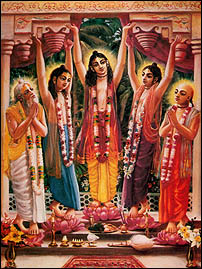
“The process is very simple. Just keep a picture of Lord Caitanya with His associates. Lord Caitanya is in the middle, accompanied by His principal associates — Nityananda, Advaita, Gadadhara, and Srivasa. One simply has to keep this picture. One can keep it anywhere. It is not that one has to come to us to see this picture. Anyone can have this picture in his home, chant this Hare Krsna mantra, and thus worship Lord Caitanya. That is the simple method. But who will capture this simple method? Those who have good brains. Without much bother, if one simply keeps a picture of Sri Caitanya Mahaprabhu at home and chants Hare Krsna, then one will realize God. Anyone can adopt this simple method. There is no expenditure, there is no tax, nor is there any need to build a very big church or temple. Anyone, anywhere, can sit down on the road or beneath a tree and chant the Hare Krsna mantra and worship God. Therefore it is a great opportunity.”

More

Forever Grateful to Srila Prabhupada


Forever Grateful to Srila Prabhupada
By Sriman Padmapani Prabhu

Thinking back to the late sixties and early seventies, I fondly remember how the Hare Krsna mantra had already infiltrated contemporary culture due to Srila Prabhupada’s extraordinary efforts to spread the holy names throughout the world. A number of famous musicians and artists had begun to discover the chanting and were promoting it in their records and books.

For example, the Broadway musical “Hair” was a big hit and the accompanying record — which included the chanting of Hare Krsna — became a popular staple on the radio. George Harrison recorded the song “My Sweet Lord” with the melodious chanting of Krsna’s names in the background, and prior to that, the words “Hare Krsna” could be found on one of the Beatles’ albums. Poet Allen Ginsberg, a self-styled leader of the new counterculture, had visited India and picked up the mantra there. He subsequently wrote about the chanting in at least one or more of his poetry books. After meeting Prabhupada at 26 Second Avenue in the Lower East Side of New York, Ginsberg increased his dedication to the holy names and often chanted them during “be-ins” and poetry readings. When John Lennon and Yoko Ono staged their famous “bed-in” at the Queen Elizabeth Hotel in Montreal in 1969, the devotees were there singing Hare Krsna during the recording of “Give Peace a Chance.” The “Radha Krsna Temple” album produced by George Harrison in 1970 in co-operation with the London devotees could be found in record stores throughout Europe and North America. Such was the widespread influence of Srila Prabhupada’s dynamic preaching efforts even though he had only been in the western world for a short period of time. Srila Prabhupada was already expertly fulfilling the order of his spiritual master, His Divine Grace Srila Bhaktisiddhanta Sarasvati Gosvami Maharaj.

More

Berkeley Lord Chaitanya Festival

Berkeley Lord Chaitanya Festival
BY: GADADHARA DAS

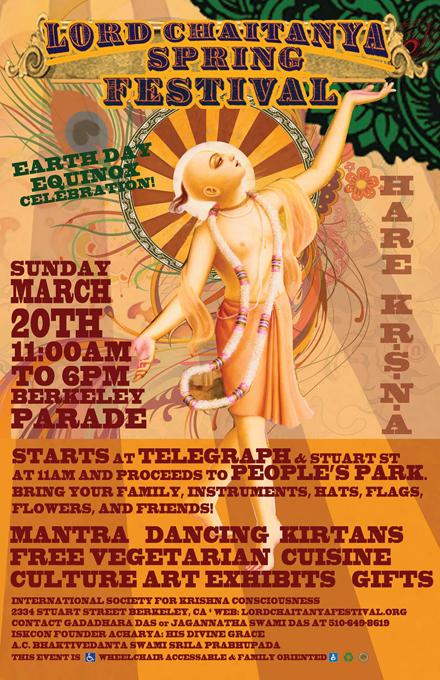
Mar 07, 2011 — BERKELEY, CALIFORNIA (SUN) — Dear Devotees, Please come to the Lord Chaitanya Spring Festival in Berkeley, CA. There will be a large parade with the Gaura Nitai floats down Telegraph Avenue, culminating at People’s Park with kirtan, exhibits and more!

ISKCON of the Bay Area Inc., a non-profit organization, presents the “Lord Chaitanya Spring Festival & Parade” on Sunday March 20th at 11:00a.m. in Berkeley, CA.

FREE ADMISSION!

The Lord Chaitanya Spring Festival and Parade will start at Stuart Street and Telegraph Ave in Berkeley, CA and proceed to People’s Park for MUSIC, FOOD, EXHIBITS, GIFTS, AND A FREE VEGETARIAN CUISINE and much more! The parade will feature large floats, dancing, and music. Bring your funky hats, instruments, and colorful attire!

We invite everyone to bring their family and friends to experience this extraordinary event, enjoy the sumptuous Vegetarian feast, and have fun in the parade. This festival is wheelchair accessible and family friendly. No drugs or alcohol will be permitted.

Information: http://www.lordchaitanyafestival.org
CONTACT:
Gadadhara das or Grantharaja das
ISKCON Bay Area Inc.
2334 Stuart Street
Berkeley, CA 94705
Phone: (510) 863-4711
email: lordchaitanyafestival@gmail.com

Krishna Consciousness in a Nutshell

Krishna Consciousness in a Nutshell
By Sriman Hansadutta Prabhu

Self-realization the Aim of Life

Krishna consciousness is the original consciousness of every living being, and it is explained in different Vedic literatures. One of these literatures is the Chaitanya-charitamrita. Chaitanya-charitamrita means “characteristic of the eternal living force”. Every living being is eternal by nature, and because he is eternal, he cannot be happy in this material world, which is a temporary arrangement, however wonderful it may be. It is the duty of every living entity to learn the science of Krishna, or the science of the self, and to make himself perfect. He will attain freedom from the temporary world of material creation by reviving his original love of Krishna. In this way, he will return home, back to Godhead, which is the aim of all human endeavors, be they scientific, economic, artistic or cultural.

No one lives forever

Every living creature is subjected to four basic miseries, beginning with birth, continuing into old age and disease, and ending in death. No one wants to be miserable—everyone wants to be happy—but material nature functions in such a way that no one can be happy.

Ignoring this basic truth, modern thinkers, politicians, scientists, educators and artists are all struggling against the stringent laws of nature. They think by material adjustments they will find the happiness they hanker for. In spite of all comforts and the advancement of science, economics and politics, no one is happy—if for no other reason than life is temporary.

More

Transcendental Teachings of Prahlāda Mahārāja

Transcendental Teachings of Prahlāda Mahārāja
by His Divine Grace A. C. Bhaktivedanta Swami Prabhupāda

The Dearmost Person

Today I shall speak to you of the history of a boy devotee named Prahlāda Mahārāja. He was born in a family that was stubbornly atheistic. There are two kinds of men in this world: the demons and the demigods. What is the difference between them? The main difference is that the demigods, or godly persons, are devoted to the Supreme Lord, whereas the demons are atheistic. They do not believe in God because they are materialists. These two classes of men always exist in this world. At the present moment, due to the Age of Kali (Age of Quarrel), the number of demons has increased, but the classification has existed since the beginning of creation. The incident I am narrating to you occurred very, very long ago, a few million years after the time of creation.

Prahlāda Mahārāja was the son of the most atheistic person and the most materially powerful as well. Because the society was materialistic, this boy had no opportunity to glorify the Supreme Lord. The characteristic of a great soul is that he is very eager to broadcast glorification of the Supreme Lord. Lord Jesus Christ, for example, was very eager to broadcast the glorification of God, but demoniac people misunderstood him and crucified him.

More

Practicing Krishna Consciousness at Home

Practicing Krishna Consciousness at Home
by Padmapani Prabhu

Since the vast majority of our readers are coming to Srila Prabhupada and Krishna Consciousness for the first time through Internet searches, and without access to devotee association or a nearby Hare Krishna temple, many people have inquired about how they can set up an altar in their homes and start practicing Krishna Consciousness at their own pace.

The first and foremost principle of Krishna Consciousness is chanting the Hare Krishna mantra:
“Hare Krishna, Hare Krishna, Krishna Krishna, Hare Hare/
Hare Rama, Hare Rama, Rama Rama, Hare Hare”

This mantra is a prayer to the Supreme Lord which means: “O energy of the Lord (Hare), O all-attractive Lord Krishna, O Supreme Enjoyer (Rama), please engage me in Your service.”

More

Premanjana “Seeing God”


Article written by Krishna’s Mercy . org

“Everyone is seeing God in His different aspects; the only difference is that the theist sees God as the Supreme Personality, the most beloved, Krishna, and the atheist sees the Absolute Truth as ultimate death.” (Shrila Prabhupada, Krishna, The Supreme Personality of Godhead, Vol 2, Ch 32)

“Have you seen God? Can you show Him to me?” These are some of the challenging questions often directed at those who are religiously inclined and those who are actively preaching the message of love and respect for the Lord found in India’s most famous religious text, the succinct and complete treatise on Vedic philosophy known as the Bhagavad-gita. Any time a preacher takes to kindly passing on information pertaining to spirituality, there will surely be skeptics, uninterested observers, and those who are not willing to listen. When engaged in ordinary conversation, wherein points and counterpoints are exchanged, generally no conclusion is reached in the end. Therefore in order to learn properly, one must take instruction from someone who has weight, a guru, or spiritual master, one who knows the truth as explained to them by previous authority figures. Yet even when hearing from a guru there is a natural urge to see proof, tangible evidence that God indeed exists. The devotees, those whose eyes have been anointed with transcendental love, see the influence of the Lord everywhere. Yet even the atheists, those who are staunchly against religious principles, are forced to see the influence of the same loveable Divine Entity at every turn, especially at the time that matters most: death.

More

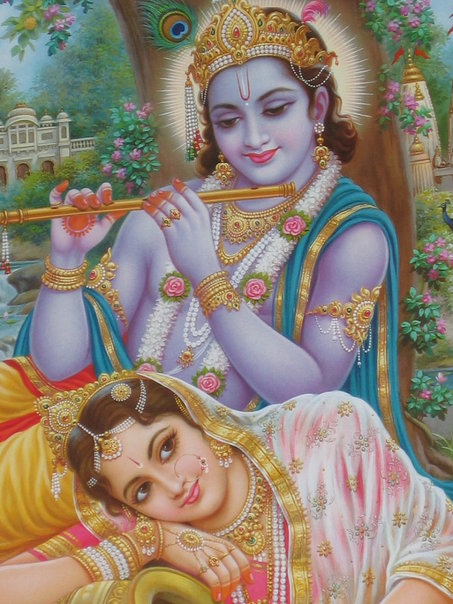
Radharani’s Dream

Once Srimati Radharani woke up with a start.

She was next to Sri Krishna on the flower bedecked pastimes bed – and looked
with deep questioning eyes into His eyes:

“O My beloved,” She asked, “I dreamt of someone extraordinarily – I am
ashamed to admit, He stole My heart. Could it be You, of whom I dreamt – but
in a different form? It must be!”

Krishna was smiling: “Tell Me more.”

More

Simple Living, High Thinking


Simple Living, High Thinking
by Jahnaya Das

If one is truly serious about achieving the ultimate goal of human life by perfecting his spiritual inquiry, he must adopt a life style that is conducive to the cultivation of self-realizing knowledge. This life style can be beautifully summarized in the phrase ‘simple living and high thinking’. Here simple living is in relation to maintenance of the body, and high thinking is in relation to the aim of one’s intellectual pursuits.

In order to exist in this world it is necessary to maintain one’s bodily existence, but as will be shown in later lessons, maintenance of the body is not progress towards the goal of life. Maintenance just allows one to perform the activity of existing in a particular body, which does not denote any accomplishment of a goal. This maintenance of the body involving mainly our activities of eating, sleeping, mating and defending is not in itself any great feat opr achievement. Even the animals are engaging in these activities of bodily maintenance. The cows also eat, the birds also mate, the hogs also sleep and the dogsalso defend. Simply engaging in theseactivities of maintenance does not actually make one human. For this reason, one who is interested in achieving the real, permanent goal of life does not focus solely on these activities of bodily maintenance, but he rather focuses primarily on the path of perfection. This is why he adopts the process of simple living.

More

Mantra Rock

Mantra Rock Concert

“Sunday, January 29, 1967 marked the major spiritual event of the San Francisco hippie era, and Srila Prabhupada, who was ready to go anywhere to spread Krishna Consciousness, was there.

The Grateful Dead, Moby Grape, Janis Joplin and Big Brother and the Holding Company, Jefferson Airplane, Quicksilver Messenger Service — all the new-wave San Francisco bands — had agreed to appear with Srila Prabhupada at the Avalon Ballroom’s Mantra-Rock Dance, proceeds from which would go to the local Hare Krishna temple.

Thousands of hippies, anticipating an exciting evening, packed the hall.

At about 10 p.m., Srila Prabhupada and a small entourage of devotees arrived amid uprorious applause and cheering by a crowd that had waited weeks in great anticipation for this moment. Srila Prabhupada was given a seat of honor onstage and was introduced by Allen Ginsberg, who explained his own realizations about the Hare Krishna maha-mantra and how it had spread from the small storefront in New York to San Francisco.

The chanting started slowly but ryhthmically, and little by little it spread throughout the ballroom, enveloping everyone. Hippies got to their feet, held hands, and began to dance as enormous, pulsing pictures of Krishna were projected around the walls of the ballroom in perfect sync with the beat of the mantra.

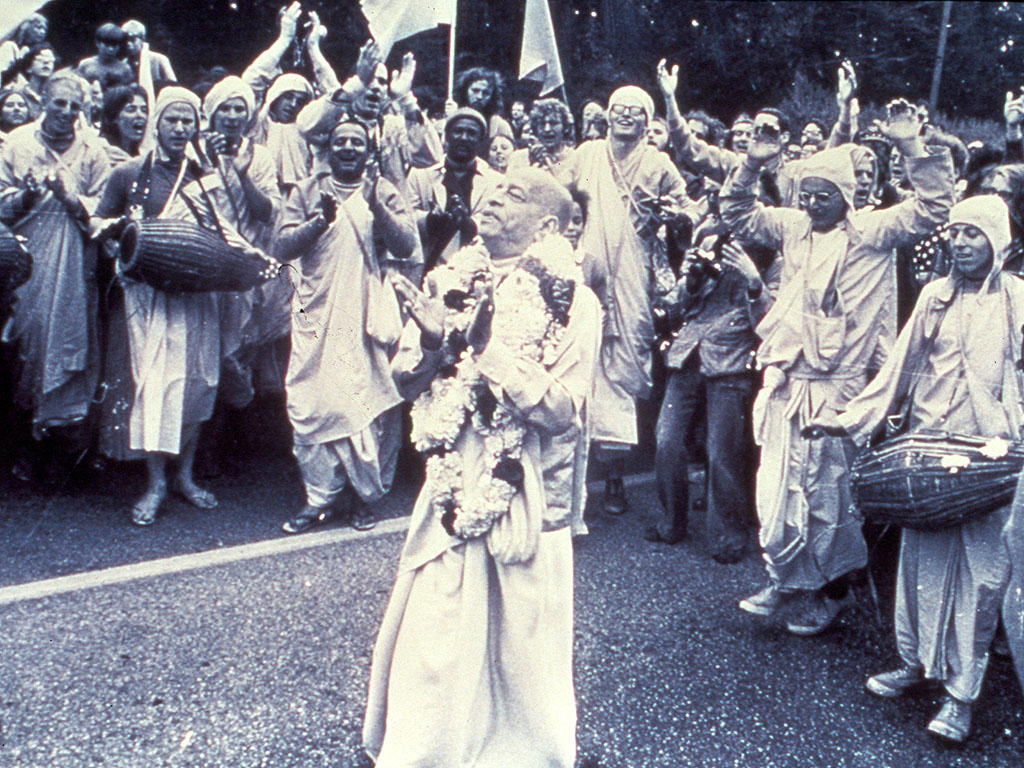
By the time Srila Prabhupada stood and began to dance with his arms raised, the crowd was completely absorbed in chanting, dancing and playing musical instruments they had brought for the occasion.

As the tempo speeded up, the chanting and dancing became more and more intense, spurred on by a stageful of top rock musicians, who were as charmed by the magic of the maha-mantra as the amateur musicians had been at the Tompkins Square kirtanas only a few weeks before.
The chant rose; it seemed to surge and swell without limit. When it seemed it could go no further, the chanting stopped. Srila Prabhupada offered prayers to his spiritual master into the microphone and ended-by saying three times, “All glories to the assembled devotees!” The Haight-Ashbury neighborhood buzzed with talk of the mantra-Rock Dance for weeks afterward.

Allen Ginsberg later recalled, “We sang Hare Krishna all evening. It was absolutely great — an open thing. It was the height of the Haight-Ashbury spiritual enthusiasm.”

Ecstasy

In the Bhagavad-gītā it is also said that such fallen devotees are given a chance to take birth in a family of highly qualified brāhmaṇas or in a rich mercantile family. A devotee in such a position is not as fortunate as one who is chastised by the Lord and put into a position seemingly of helplessness. The devotee who becomes helpless by the will of the Lord is more fortunate than those who are born in good families. The fallen devotees born in a good family may forget the lotus feet of the Lord because they are less fortunate, but the devotee who is put into a forlorn condition is more fortunate because he swiftly returns to the lotus feet of the Lord, thinking himself helpless all around.

Srimad-Bhagavatam [Canto 1, Ch.5, Text 20] 1977 Edition
By His Divine Grace A.C. Bhaktivedanta Swami Prabhupada

My dear Vyāsa, even though a devotee of Lord Kṛṣṇa sometimes falls down somehow or other, he certainly does not undergo material existence like others [fruitive workers, etc.] because a person who has once relished the taste of the lotus feet of the Lord can do nothing but remember that ecstasy again and again.

Purport
A devotee of the Lord automatically becomes uninterested in the enchantment of material existence because he is rasa-graha, or one who has tasted the sweetness of the lotus feet of Lord Kṛṣṇa. There are certainly many instances where devotees of the Lord have fallen down due to uncongenial association, just like fruitive workers, who are always prone to degradation. But even though he falls down, a devotee is never to be considered the same as a fallen karmī. A karmī suffers the result of his own fruitive reactions, whereas a devotee is reformed by chastisement directed by the Lord Himself. The sufferings of an orphan and the sufferings of a beloved child of a king are not one and the same. An orphan is really poor because he has no one to take care of him, but a beloved son of a rich man, although he appears to be on the same level as the orphan, is always under the vigilance of his capable father. A devotee of the Lord, due to wrong association, sometimes imitates the fruitive workers. The fruitive workers want to lord it over the material world. Similarly, a neophyte devotee foolishly thinks of accumulating some material power in exchange for devotional service. Such foolish devotees are sometimes put into difficulty by the Lord Himself. As a special favor, He may remove all material paraphernalia. By such action, the bewildered devotee is forsaken by all friends and relatives, and so he comes to his senses again by the mercy of the Lord and is set right to execute his devotional service.

More

Glories of Srimati Tulasi Devi

Glories of Srimati Tulasi Devi
By Bharath Singh

Srimati Tulasi devi is one of the most exalted devotees of Sri Krishna. All scriptures stress the importance of getting the mercy of Tulasi devi if one is to make progress on the path of devotion. In the Skanda Purana it is said:

“Tulasi is auspicious in all respects. Simply by seeing, simply by touching, simply by remembering, simply by praying to, simply by bowing before, simply by hearing about or simply by sowing this tree, there is always auspiciousness. Anyone who comes in touch with the Tulasi tree in the above-mentioned ways lives eternally in the Vaikuntha world.”

Above this material world is the eternal spiritual world comprised of millions of Vaikuntha planets. The topmost planet in Vaikuntha is Goloka, which is presided over by Sri Krishna in His original Form. Here resides Vrinda devi, an intimate associate of and an expansion of Srimati Radharani. Her partial expansion is Tulasi devi in the Vaikuntha planets and they are all considered non-different from Her. Five thousand years Ago, when Sri Krishna descended on Earth to perform His pastimes, Vrinda devi created the proper environment for His pastimes in Vrindavana.

More

Previous Older Entries Next Newer Entries

108 Imporant Slokas from the 1972 Bhagavad-gita As It Is

Click on image to go to Post

Click on image to go to Post

The Hare Krishna Cookbook

Songs of the Vaisnava Acaryas

Bhagavad-gita As It Is 1972 Edition “Online”

click on image

click on image to visit site

Srimad Bhagavatam Online

click on image

Raja-Vidya the King of Knowledge

click on image

click on image

Blog Stats

  • 4,636,975 hits

Enter your email address to subscribe to this blog and receive notifications of new posts by email.

Join 3,908 other subscribers

Important Slokas from the Brahma-samhita

click on image

click on image

Slokas from the Sri Isopanisad

click on image

click on image

Prayers By Queen Kunti (Slokas)

click on image

Gajendra’s Prayers of Surrender (Slokas)

click on image

A Short Statement of the Philosophy of Krishna Consciousness

click on image

click on image

July 9th Letter

click on image

click on image

The Hare Krishna Explosion

Reference Material/Study Guide

click on image

click on image

  • LINKS