Gajendra’s Prayers of Surrender

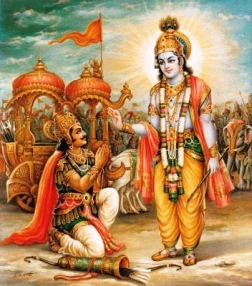
gajendra offers prayers

click on image to enlarge

The following are the prayers by Gajendra, the King of the elephants, offered to the Supreme Personality of Godhead, during his difficult struggle with the crocodile. It appears that the King of the elephants was formerly a human being known as Indradyumna and that he learned a prayer to the Supreme Lord. Fortunately he remembered that prayer and began to chant it. First he offered his respectful obeisances to the Supreme Personality of Godhead, and because of his awkward position in having been attacked by the crocodile, he expressed his inability to recite prayers nicely. Nonetheless, he tried to chant the mantra and expressed himself in the prayers that follow.

…It is imperative that all devotees in Kṛṣṇa consciousness practice chanting some mantra. Certainly one should chant the Hare Kṛṣṇa mantra, which is the mahā-mantra, or great mantra, and also one should practice chanting cintāmaṇi-prakara-sadmasu or the Nṛsiṁha strotra (ito nṛsiṁhaḥ parato nṛsiṁho yato yato yāmi tato nṛsiṁhaḥ). Every devotee should practice in order to chant some mantra perfectly so that even though he may be imperfect in spiritual consciousness in this life, in his next life he will not forget Kṛṣṇa consciousness, even if he becomes an animal. Of course, a devotee should try to perfect his Kṛṣṇa consciousness in this life, for simply by understanding Kṛṣṇa and His instructions, after giving up this body one can return home, back to Godhead. Even if there is some falldown, practice of Kṛṣṇa consciousness never goes in vain. For example, Ajāmila, in his boyhood, practiced chanting the name of Nārāyaṇa under the direction of his father, but later, in his youth, he fell down and became a drunkard, woman-hunter, rogue and thief. Nonetheless, because of chanting the name of Nārāyaṇa for the purpose of calling his son, whom he had named Nārāyaṇa, he became advanced, even though he was involved in sinful activities. Therefore, we should not forget the chanting of the Hare Kṛṣṇa mantra under any circumstances. It will help us in the greatest danger, as we find in the life of Gajendra. (From Purport to text 1)

Śrīmad-Bhāgavatam
By His Divine Grace A. C. Bhaktivedanta Swami Prabhupāda
Canto 8, Chapter Three, Text 1-29
More

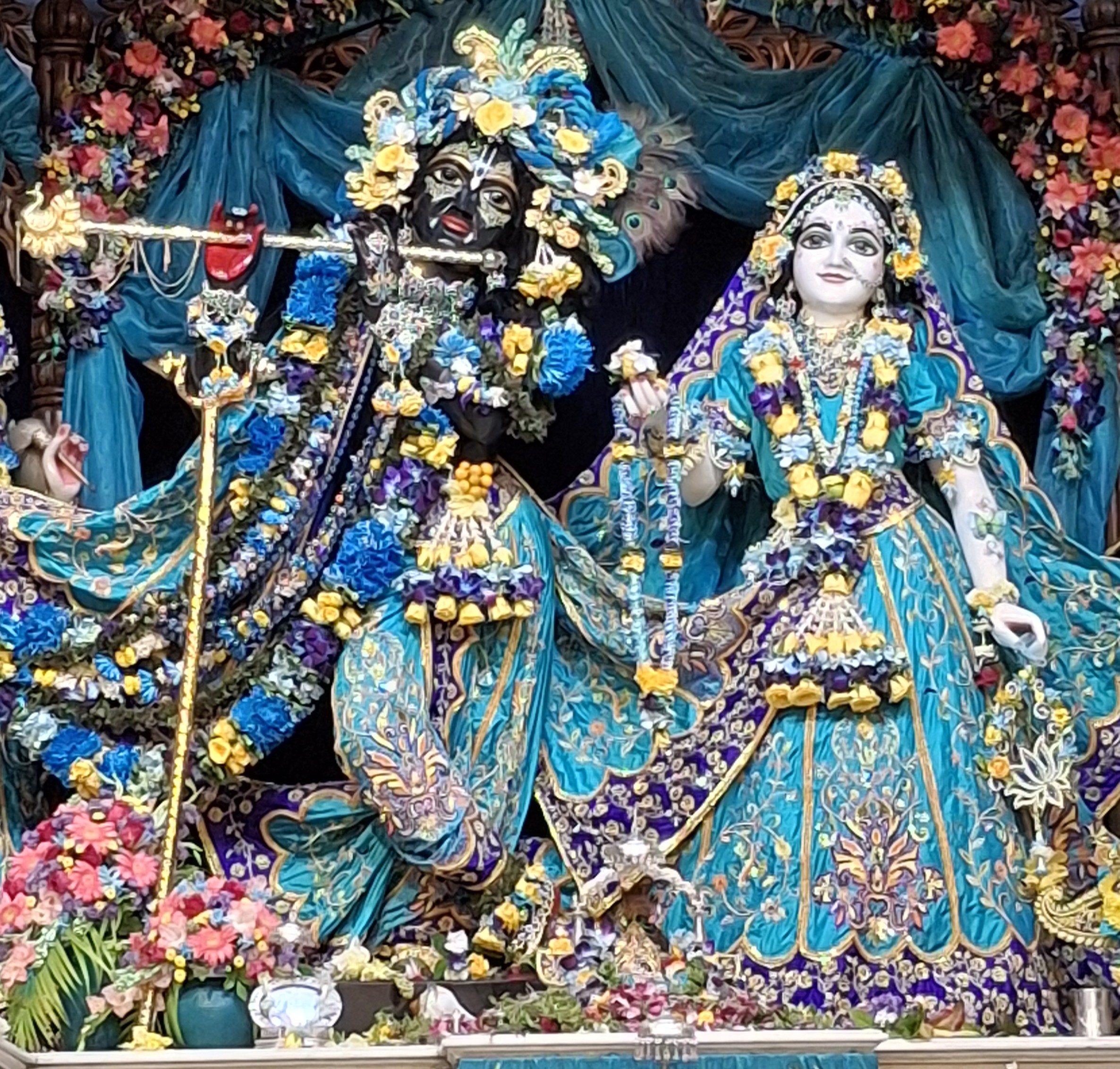
Jaya Radha Madhava

click on image to enlarge

Jaya Rādhā-Mādhava
by Srila Bhaktivinoda Thakura

jaya rādhā-mādhava kuñja-bihārī
gopī-jana-vallabha giri-vara-dhārī

jaya–all glories to: rādhā-mādhava–Rādhā and the Lord of sweetness; kuñja-bihārī–He who enjoys loving pastimes in the groves of Vṛndāvana; gopī-jana-vallabha–the lover of the cowherd maidens of Vraja; giri-vara-dhārī–the holder of the great hill named Govardhana;

Krsna is the lover of Radha. He displays many amorous pastimes in the groves of Vrndavana, He is the lover of the cowherd maidens of Vraja, and the holder of the great hill named Govardhana.

yaśodā-nandana braja-jana-rañjana
yāmuna-tīra-vana-cārī

yaśodā-nandana–the beloved son of mother Yaśodā; vraja-jana-rañjana–the delighter of the inhabitants of Vraja; yāmuna-tīra-vana-cārī–who wanders in the forests along the banks of the river Yamunā

He is the beloved son of mother Yasoda, the delighter of the inhabitants of Vraja, and He wanders in the forests along the banks of the River Yamuna!

Purport to Jaya Rādhā-Mādhava

More

Transcendental Affection-Servitude (Dasya-rasa)

So today we are exploring the Servitude stage of Love of God (Dasya-rasa) as explained in chapter 36 of “The Nectar of Devotion”.

Each soul, according to its constitutional nature, possesses a unique loving relationship with Krishna in one of five principal categories. When devotees return to the spiritual world, they engage in direct loving devotional service to Krishna in their particular rasa.

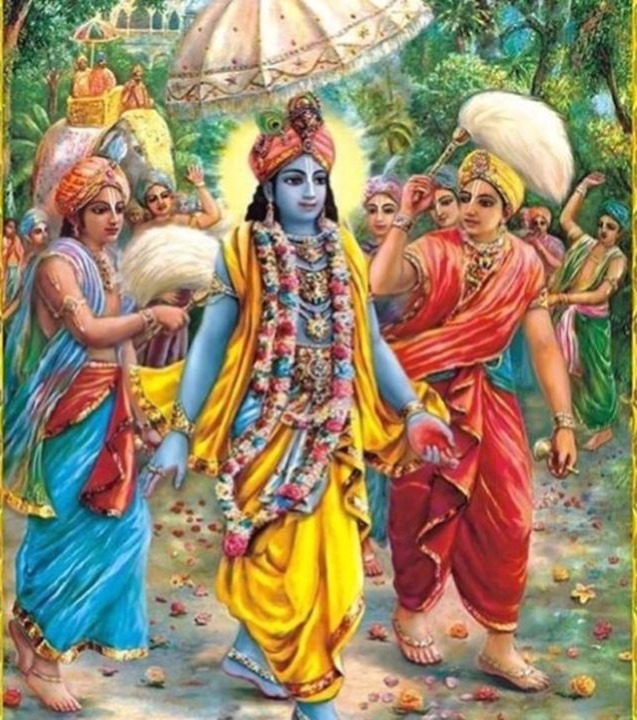
Devotees engaged in servitude are attached to Krishna in the affection of reverence. Some of the inhabitants of Gokula (Vrindavan) as exhibited on earth) are attached to Krishna on this platform of affection in reverence. The inhabitants of Vrindavan used to say, “Kṛṣṇa is always manifest before us with a complexion like a blackish cloud. He holds His wonderful flute in His lotus hands. He is dressed in yellow silks and bedecked with a peacock feather on His head. When Krishna walks near Govardhan Hill with these personal features, all the inhabitants of the heavenly planets, as well as the inhabitants of this earth, feel transcendental bliss and consider themselves the eternal servants of the Lord.”

More

The Process of Meditation

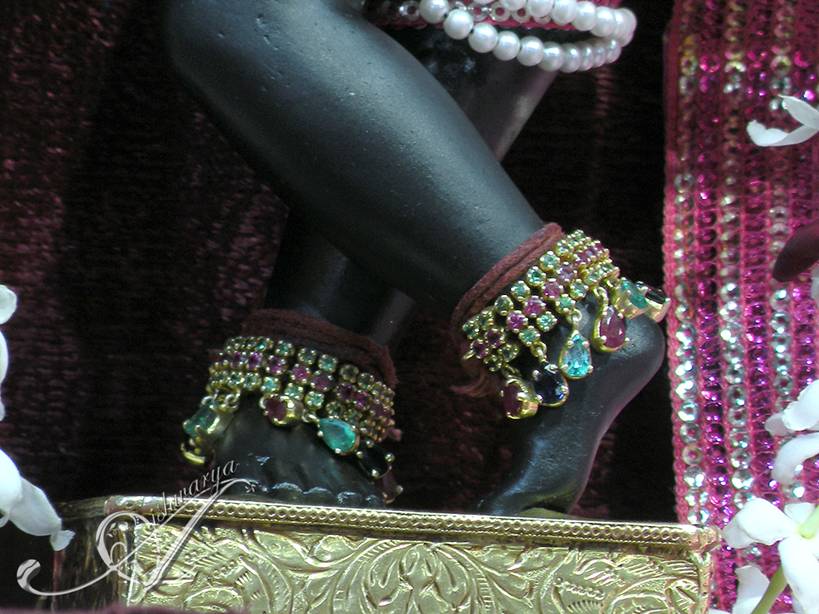
Radha Ramana Lotus feet

…The process of meditation recommended in the Śrīmad-Bhāgavatam is not to fix one’s attention on something impersonal or void.

The process of meditation should begin from the lotus feet of the Lord and progress to His smiling face. The meditation should be concentrated upon the lotus feet, then the calves, then the thighs, and in this way higher and higher. The more the mind becomes fixed upon the different parts of the limbs, one after another, the more the intelligence becomes purified. (SB 2.2.13)

Śrīmad-Bhāgavatam
By His Divine Grace A. C. Bhaktivedanta Swami Prabhupāda
Canto Two, Chapter 2, Text 13-14

More

108 Imporant Slokas from the 1972 Bhagavad-gita As It Is

Click on image to go to Post

Click on image to go to Post

The Hare Krishna Cookbook

Songs of the Vaisnava Acaryas

Bhagavad-gita As It Is 1972 Edition “Online”

click on image

click on image to visit site

Srimad Bhagavatam Online

click on image

Raja-Vidya the King of Knowledge

click on image

click on image

Blog Stats

  • 4,648,588 hits

Enter your email address to subscribe to this blog and receive notifications of new posts by email.

Join 3,893 other subscribers

Important Slokas from the Brahma-samhita

click on image

click on image

Slokas from the Sri Isopanisad

click on image

click on image

Prayers By Queen Kunti (Slokas)

click on image

Gajendra’s Prayers of Surrender (Slokas)

click on image

A Short Statement of the Philosophy of Krishna Consciousness

click on image

click on image

July 9th Letter

click on image

click on image

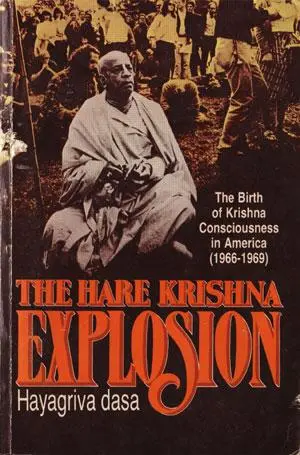
The Hare Krishna Explosion

Reference Material/Study Guide

click on image

click on image

  • LINKS