Continuning with our “Bhagavata Dharma Discourses” series given at New Vrindavan, 1972.
Śrīmad-Bhāgavatam Lecture
Given by His Divine Grace A. C. Bhaktivedanta Swami Prabhupada
Canto One, Chapter 2, Text 8
New Vrindaban, September 6, 1972
Every Town and Village
31 Dec 2014 Leave a comment
in A.C. Bhaktivedanta Swami Prabhupada, Bhagavata Dharma Discourses, New Vrindavan, Srimad Bhagavatam, Srimad Bhagavatam Tags: A. C. Bhakthvedanta Swami Prabhupada, A.C. Bhaktivedanta Swami Prabhupada New Vrindaban, atheist class, Bhagavata Dharma Discourses at New Vrindavan, Bible or Veda or Koran, dharmah svansthitah pumsam, God, grhamedhi, human society, information of the soul, Krsna, New Vrindavan, religious institution, SB 1.2.8
Continuning with our “Bhagavata Dharma Discourses” series given at New Vrindavan, 1972.
Śrīmad-Bhāgavatam Lecture
Given by His Divine Grace A. C. Bhaktivedanta Swami Prabhupada
Canto One, Chapter 2, Text 8
New Vrindaban, September 6, 1972
21 Dec 2014 Leave a comment
in A.C. Bhaktivedanta Swami Prabhupada, Ganges, India, Places of Pilgrimage Tags: A. C. Bhakthvedanta Swami Prabhupada, Bharatavarsa, dhama, holy river, India, Mathura, places of pilgrimage, Prayaga, River Ganges, Spiritual Life, Vrndavana
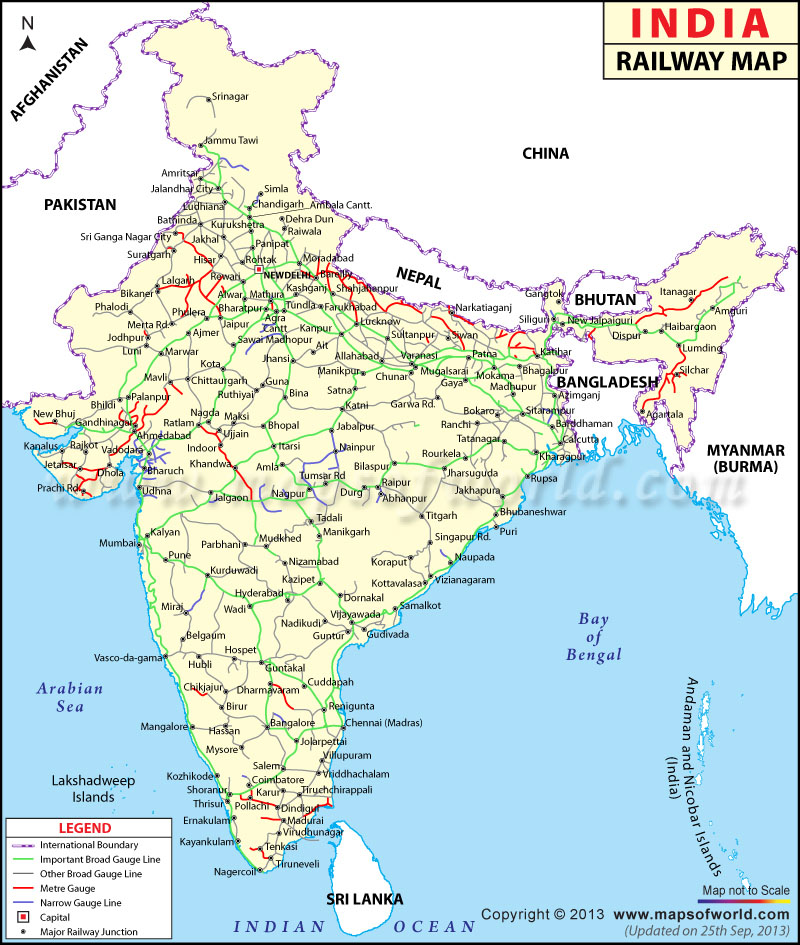
Whenever I plan a trip to India, it seems the first thing I do, is start looking at maps. I have always been a map person, as there is some romantic imagery for me, especially when I look at a map of India. The shape of this country has always invoked in me, a sense of spirituality and wonderment, as if the very shape of it is somehow what a spiritual holy land should look like.
There are so many ways to travel in India; on foot, by bicycle rickshaw, or the motorized “cockroach” rickshaws, by bus, by plane, or my favorite, by train.
Actually we are planing to go to Vrndavana, but will take in some other places of interest as well. The following are some selections from Srila Prabhupada’s books which describe India, Vrndavana, and the purpose of pilgrimage etc.
The purpose of pilgrimages is to remember the Lord constantly, and therefore the Lord is known as tīrtha-kīrti. The purpose of going to a place of pilgrimage is to get the chance to glorify the Lord. Even today, although times have changed, there are still pilgrimage sites in India. For example, in Mathurā and Vṛndāvana, where we had a chance to stay, people are awake from early in the morning at 4 A.M. up until nighttime and are constantly engaged, some way or other, in chanting the holy glories of the Lord. The beauty of such a pilgrimage site is that automatically one remembers the holy glories of the Lord. His name, fame, quality, form, pastimes and entourage are all identical to the Lord, and therefore chanting the glories of the Lord invokes the personal presence of the Lord. Any time or anywhere pure devotees meet and chant the glories of the Lord, the Lord is present without any doubt. It is said by the Lord Himself that He always stays where His pure devotees chant His glories. (from purport SB 3.1.45)
Places of pilgrimage yield a special advantage for a devotee in quickly advancing his spiritual life. Lord Kṛṣṇa lives everywhere, but still it is very easy to approach Him in holy places of pilgrimage because these places are inhabited by great sages. Lord Śrī Kṛṣṇa says that He lives wherever His devotees are chanting the glories of His transcendental activities. (from purport SB 4.8.42)
16 Dec 2014 Leave a comment
in A.C. Bhaktivedanta Swami Prabhupada, Evolution, Karma, Srimad Bhagavatam Tags: A. C. Bhakthvedanta Swami Prabhupada, birth and death, cycle of birth and death according to the laws of nature, Darwin’s theory of evolution, human beings, laws of nature, liberation, living entities, SB7.13.25, the evolutionary process, undesirable material sense gratification
In the course of the evolutionary process, which is caused by fruitive activities due to undesirable material sense gratification, I have received this human form of life, which can lead to the heavenly planets, to liberation, to the lower species, or to rebirth among human beings. (SB7.13.25)
…All living entities within this material world are undergoing the cycle of birth and death according to the laws of nature. This struggle of birth and death in different species may be called the evolutionary process, but in the Western world it has been wrongly explained. Darwin’s theory of evolution from animal to man is incomplete because the theory does not present the reverse condition, namely evolution from man to animal.
Human life, which is obtained in the course of the evolutionary process, is a chance for elevation (svargāpavarga) or for degradation (tiraścām punar asya ca). If one uses this human form of life properly, he can elevate himself to the higher planetary systems, where material happiness is many thousands of times better than on this planet, or one may cultivate knowledge by which to become free from the evolutionary process and be reinstated in one’s original spiritual life. This is called apavarga, or liberation. (from purport to SB 7.13.25)
Some years back I was reading from one book and the author was explaining how within each of us, we have the Keys to the gates of the Kingdom of Heaven, and we also have the Keys to the gates of Hell. It is our choice at every moment which we choose to use. Or as the saying goes “It is Rama, or it is Drama”.
Full text and purport More
13 Dec 2014 Leave a comment
in A.C. Bhaktivedanta Swami Prabhupada, Faith Tags: A. C. Bhakthvedanta Swami Prabhupada, conclusion of Bhagavad-gita, devotional activities, devotional service, faith, faithless, implicit faith in both the Lord and the spiritual master, imports of Vedic knowledge, krsna consciousness, love and faith, yasya deve
This morning I was reading from the Bhagavad-gita As It Is, and it seemed like it was all about “Faith”. That word just kept coming up again and again, and as I was reading, I had to ask myself, ‘how strong is my faith?’. I would like to think it is pretty strong, as it has sustained me, my entire adult life. Even as a child I always believed in God. Don’t know why, I just did.
I thought today, I will do a post on “Faith”
…faith is a most important factor for progress in Kṛṣṇa consciousness. In the Caitanya-caritāmṛta it is said that one should have complete conviction that simply by serving the Supreme Lord Śrī Kṛṣṇa he can achieve all perfection. That is called real faith. In the Śrīmad-Bhāgavatam (3.4.12) it is stated that by giving water to the root of a tree, its branches, twigs and leaves become satisfied, and by supplying food to the stomach all the senses of the body become satisfied, and, similarly, by engaging in the transcendental service of the Supreme Lord, all the demigods and all the living entities automatically become satisfied.
After reading Bhagavad-gītā one should promptly come to the conclusion of Bhagavad-gītā: one should give up all other engagements and adopt the service of the Supreme Lord, Kṛṣṇa, the Personality of Godhead. If one is convinced of this philosophy of life, that is faith. Now the development of that faith is the process of Kṛṣṇa consciousness. (from purport to Bg. 9.3)
yasya deve parā bhaktir
yathā deve tathā gurau
tasyaite kathitā hy arthāḥ
prakāśante mahātmanaḥ
“Only unto those great souls who have implicit faith in both the Lord and the spiritual master are all the imports of Vedic knowledge automatically revealed.” (ŚU 6.23)
09 Dec 2014 Leave a comment
in A.C. Bhaktivedanta Swami Prabhupada, Bhakti Yoga, Chanting Hare Krishna, Hare Krishna Maha Mantra, Maha-mantra, Meditation, Yoga Tags: A. C. Bhakthvedanta Swami Prabhupada, chanting Hare Krishna, Hare Hare, Hare Krishna, Hare Rama, illusory struggle against material nature, Krishna Krishna, Krsna, purport to chanting hare krishna, Rama Rama, Srila Prabhupada, transcendental vibration by chanting of Hare Krishna
click on image to enlarge
Chanting the Hare Krishna Mantra
By His Divine Grace A. C. Bhaktivedanta Swami Prabhupada
“This transcendental vibration by chanting of Hare Krishna, Hare Krishna, Krishna Krishna, Hare Hare/ Hare Rama, Hare Rama, Rama Rama, Hare Hare, is the sublime method for reviving our Krishna consciousness. As living spiritual soul, we are all originally Krishna conscious entities, but due to our association with matter from time immemorial, our consciousness is now polluted by material atmosphere. In this polluted concept of life we are all trying to exploit the resources of material nature, but actually we are becoming more and more entangled in our complexities. This illusion is called maya, or hard struggle for existence, for winning over the stringent laws of material nature. This illusory struggle against material nature can at once be stopped by revival of our Krishna consciousness.
23 Nov 2014 Leave a comment
in A.C. Bhaktivedanta Swami Prabhupada, Nine Processes of Devotional Service, Srimad Bhagavatam, Teachings of Pralada Maharaja, Yoga Tags: A. C. Bhakthvedanta Swami Prabhupada, Akura, Arjuna, Bali Maharaja, goddess of fortune, Hanuman, Krishna, Lamxi, Maharaja Pariksit, Maharaja Prthu, Prahlada Maharaja, Rama, sarvanam kirtanam visnoh, SB7.5.23-24, Sri Ramacandra, Sri Vamanadeva, Sukadeva Goswami, the science of God
The Nine Processes of Devotional Service
The Nine Processes of Devotional Service are described by Prahlada Maharaja in the 7th Canto of the Srimad Bhagavatam, chapter 5, text 24-25. The great personalities who attained perfection by practice of the nine processes are listed below, followed by the complete text and purport, describing in full these nine processes. If I am not mistaken, this purport to text 24-25 from the seventh canto, chapter five, is one of the longest in the entire Srimad Bhagavatam. Stressing the importance of the verse.
Prahlāda Mahārāja said: Hearing and chanting about the transcendental holy name, form, qualities, paraphernalia and pastimes of Lord Viṣṇu, remembering them, serving the lotus feet of the Lord, offering the Lord respectful worship with sixteen types of paraphernalia, offering prayers to the Lord, becoming His servant, considering the Lord one’s best friend, and surrendering everything unto Him (in other words, serving Him with the body, mind and words)—these nine processes are accepted as pure devotional service. One who has dedicated his life to the service of Kṛṣṇa through these nine methods should be understood to be the most learned person, for he has acquired complete knowledge. (SB 7.5.24-25)
1. HEARING (sravanam)
Maharaja Pariksit(the last seven days of his life, he constantly heard the Srimad Bhagavatam).
2. CHANTING (kirtanam)
Sukadeva Goswami(spoke the Bhagavatam to Maharaja Pariksit)
3. REMEMBERING (visnu smaranam)
Prahlada Maharaja(never forgot Krsna despite constant tortures from his father- Hiranyakashipu)
4. SERVING THE LORD’S LOTUS FEET (pada sevanam)
Laxmi, the Goddess of Fortune, is always engaged in serving the lotus feet of the Lord.
5. DEITY-WORSHIP (arcanam)
Maharaja Prthu used all of his royal possessions in order to offer them in pure devotion to the Lord.
6. PRAYING (vandanam)
Akura offered prayers to Krsna when he was traveling to Vrndavana in order to see Krsna.
7. EXECUTING ORDERS (dasyam)
Hanuman, the intimate servant of Ramacandra executed all of Sri Ramacandra’s orders despite all kinds of difficulties.
8. SERVING AS A FRIEND (sakhyam)
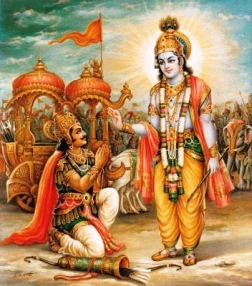
Arjuna was so close to Krsna, that the Lord offered Himself to become his chariot driver and serve Arjuna and his brothers in various ways.
9. COMPLETE SURRENDER (atma nivedanam)
Bali Maharaja gave Sri Vamanadeva his entire kingdom, his possessions as well as his own body, although his own spiritual master was against it.
All these great devotees served the Lord according to a particular process, but every one of them attained salvation and became eligible to return home, back to Godhead
Full Text and purport follows More
11 Nov 2014 Leave a comment
in A.C. Bhaktivedanta Swami Prabhupada, Back to Godhead, Rupa Goswami, The Hare Krishna Movement, Upadesamrta Tags: A. C. Bhakthvedanta Swami Prabhupada, Back to Godhead Magazine, devotional service, Obstacles on the Path of Eternity, problems of economic or political maladjustment and instability, spiritual community, Srila Rupa Gosvami, Srila Rupa Gosvami's Upadesamrta, the krsna consciousness movement, Upadesamrta
This morning while I was looking through some of the old issues of Back to Godhead Magazine, I stumbled upon the following article.
Obstacles on the Path of Eternity
An Excerpt from Srila Rupa Gosvami’s Upadesamrta
from Back to Godhead Magazine Vol. 1, No.88, 1973
[SRILA RUPA GOSVAMI was one of six exalted devotees especially chosen through the Krsna conscious chain of spiritual masters to teach the devotional service of the Supreme Lord in a scientific manner. Although all of these six great devotees were erudite scholars and prolific writers, Srila Rupa Gosvami is the most prominent, for he most greatly appreciated the nectar of Krsna consciousness. His Upadesamrta (Nectarean Instructions), a short work of only eleven verses, teaches the basic principles for arousing one’s dormant love of Krsna, the Supreme Lord. Written in Sanskrit some 400 years ago, it has now been translated into English, with an illuminating explanation of each verse, by His Divine Grace A.C. Bhaktivedanta Swami Prabhupada.]
06 Nov 2014 Leave a comment
in A.C. Bhaktivedanta Swami Prabhupada, Caaitanya-caritamrta, Caitanya Mahaprabhu Tags: A. C. Bhakthvedanta Swami Prabhupada, Adi4.1, age of kali, Caitanya, Caitanya Mahaprabhu, causeless mercy, devotional service, incarnation, Lord Krsna, Lord Sri Krsna, mellow of conjugal love, principles of religion, revealed scriptures, Sanskrit sloka, son of Srimati Cacidevi, Sri Caitanya Caritamrta
By the mercy of Lord Caitanya Mahāprabhu, even a foolish child can fully describe the real nature of Lord Kṛṣṇa, the enjoyer of the pastimes of Vraja, according to the vision of the revealed scriptures. (Ādi-līlā Chapter 4, Text 1)
This month as we explore the childhood pastimes of Lord Krsna in Vrndavan, it is important to keep in mind that, it is due to the mercy of the spiritual master and Lord Caitanya Mahaprabhu, that we are able to enter into the sublime understandings of the Lord. As is mentioned in the purport to the above sloka;
One can ascertain the meaning of this Sanskrit śloka only when one is endowed with the causeless mercy of Lord Caitanya. Lord Śrī Kṛṣṇa, being the absolute Personality of Godhead, cannot be exposed to the mundane instruments of vision. He reserves the right not to be exposed by the intellectual feats of nondevotees. Notwithstanding this truth, even a small child can easily understand Lord Śrī Kṛṣṇa and His transcendental pastimes in the land of Vṛndāvana by the grace of Lord Caitanya Mahāprabhu. (purport to Adi. 4.1)
but the real reason for this post is to remind out readers about the causeless mercy of Lord Caitanya
“May that Lord who is known as the son of Śrīmatī Śacīdevī be transcendentally situated in the innermost core of your heart. Resplendent with the radiance of molten gold, He has descended in the Age of Kali by His causeless mercy to bestow what no incarnation has ever offered before: the most elevated mellow of devotional service, the mellow of conjugal love.” (Ādi-līlā Chapter 3, Text 4)
PURPORT
This is a quotation from the Vidagdha-mādhava, a drama compiled and edited by Śrīla Rūpa Gosvāmī.
26 Oct 2014 Leave a comment
in A.C. Bhaktivedanta Swami Prabhupada, Bhagavata Dharma Discourses, Conversation with Srila Prabhupada, Jon Nordheimer, New Vrindavan Tags: A. C. Bhakthvedanta Swami Prabhupada, Bhagavata Dharma Discourses at New Vrindavan, chant the name of Lord Krsna, His Divine Grace A. C. Bhaktivedanta, janmastami celebration at new vrindavan, Jon Nordheimer, New Vrindavan farm community, New York Times reporter, open pavilion
This is the beginning of a new series of Lectures entitled “The Bhagavata Dharma Discourses” which were held at New Vrindavan Farm Community in 1972. It was the third annual Janmastami Celebration held at New Vrindavan, and devotees poured in from everywhere, and even a New York Times Reporter appeared. “On the crown of a lovely green hill in the West Virginia contryside,” his article read, “under the aluminum roof of an open pavilion, the faithful gathered to chant the name of Lord Krsna and kneel at the feet of their spiritual master…A.C. Bhaktivedanta Swami Prabhupada.”
An interview held during the Bhāgavata Dharma Discourses at New Vrindaban, September 2, 1972. Śrīla Prabhupāda is interviewed by John Nordheimer of the New York Times.