13 Oct 2012
by The Hare Krishna Movement
in A.C. Bhaktivedanta Swami Prabhupada, Guru & Disciple, Sri Caitanya-Caritamrta
Tags: A.C. Bhaktivedanta Swami Prabhupada, bona fide spiritual master, grace of krishna, guru and disciple, Krsna's Mercy, maya, mercy of the spiritual master, Sri Caitanya-caritamrta

…There are millions and trillions of living entities everywhere, and they are engaged by māyā in suffering and enjoying the results of their fruitive activity life after life. This is the position of the materially conditioned living entities. Out of many of these living entities, if one is actually fortunate (bhāgyavān), he comes in contact with a bona fide spiritual master by Kṛṣṇa’s mercy.
Śrī Caitanya-caritāmṛta
By His Divine Grace A. C. Bhaktivedanta Swami Prabhupāda
Madhya-līlā, Chapter 19, Text 151
brahmāṇḍa bhramite kona bhāgyavān jīva
guru-kṛṣṇa-prasāde pāya bhakti-latā-bīja
brahmāṇḍa bhramite—wandering in this universe; kona—some; bhāgyavān—most fortunate; jīva—living being; guru—of the spiritual master; kṛṣṇa—of Kṛṣṇa; prasāde—by the mercy; pāya—gets; bhakti-latā—of the creeper of devotional service; bīja—the seed.
“According to their karma, all living entities are wandering throughout the entire universe. Some of them are being elevated to the upper planetary systems, and some are going down into the lower planetary systems. Out of many millions of wandering living entities, one who is very fortunate gets an opportunity to associate with a bona fide spiritual master by the grace of Kṛṣṇa. By the mercy of both Kṛṣṇa and the spiritual master, such a person receives the seed of the creeper of devotional service.”
More
11 Oct 2012
by The Hare Krishna Movement
in Bhagavad-gita, Ganges
Tags: A.C. Bhaktivedanta Swami Prabhupada, Arjuna, as it is, bhagavad-gita, essence of the Vedas, Ganges River, ganges water, great sages, Lord Krsna, nectarean milk of the bhagavad-gita, pure devotees

One cleanses himself daily by taking a bath in water, but one who takes his bath only once in the sacred Ganges water of the Bhagavad-gītā cleanses away all the dirt of material life. Because Bhagavad-gītā is spoken by the Supreme Personality of Godhead, one need not read any other Vedic literature. One need only attentively and regularly hear and read Bhagavad-gītā. In the present age, mankind is so absorbed with mundane activities that it is not possible to read all of the Vedic literatures. But this is not necessary. This one book, Bhagavad-gītā, will suffice because it is the essence of all Vedic literatures and because it is spoken by the Supreme Personality of Godhead. It is said that one who drinks the water of the Ganges certainly gets salvation, but what to speak of one who drinks the waters of Bhagavad-gītā? Gītā is the very nectar of the Mahābhārata spoken by Viṣṇu Himself, for Lord Kṛṣṇa is the original Viṣṇu. It is nectar emanating from the mouth of the Supreme Personality of Godhead, and the Ganges is said to be emanating from the lotus feet of the Lord. Of course there is no difference between the mouth and the feet of the Supreme Lord, but in our position we can appreciate that the Bhagavad-gītā is even more important than the Ganges.
More
10 Oct 2012
by The Hare Krishna Movement
in A.C. Bhaktivedanta Swami Prabhupada, Chanting Hare Krishna, Nama Sankirtan, Narottama Dasa Thakura, Songs of the Vaisnava Acaryas
Tags: A.C. Bhaktivedanta Swami Prabhupada, haraye namah, kirtan, Krishna consciousness, Lord Caitanya, Mayapur, Navadvipa, sankirtana, sri nama kirtan, Srila Bhaktivinoda Thakur, yadavaya namah

…The Lord ordered all the citizens of Navadvīpa to chant the Hare Kṛṣṇa mantra, and in each and every home they began performing saṅkīrtana regularly.
[All the devotees sang this popular song along with the Hare Kṛṣṇa mahā-mantra.] “Haraye namaḥ, kṛṣṇa yādavāya namaḥ gopāla govinda rāma śrī-madhusūdana.”
When the saṅkīrtana movement thus started, no one in Navadvīpa could hear any sound other than the words “Hari! Hari!” and the beating of the mrdaṅga and clashing of hand bells.
Song lyrics and text More
08 Oct 2012
by The Hare Krishna Movement
in A.C. Bhaktivedanta Swami Prabhupada, Back to Godhead, Prahlada Maharaja, Srimad Bhagavatam
Tags: A.C. Bhaktivedanta Swami Prabhupada, Absolute Truth, Back to Godhead Magazine, Brahma, demigods, demon, devotee of God, great devotion, hiranyakasipu, king indra, Lord Nrsimhadeva, Narada, Pralada, pralhada maharaja, Queen Kayadhu
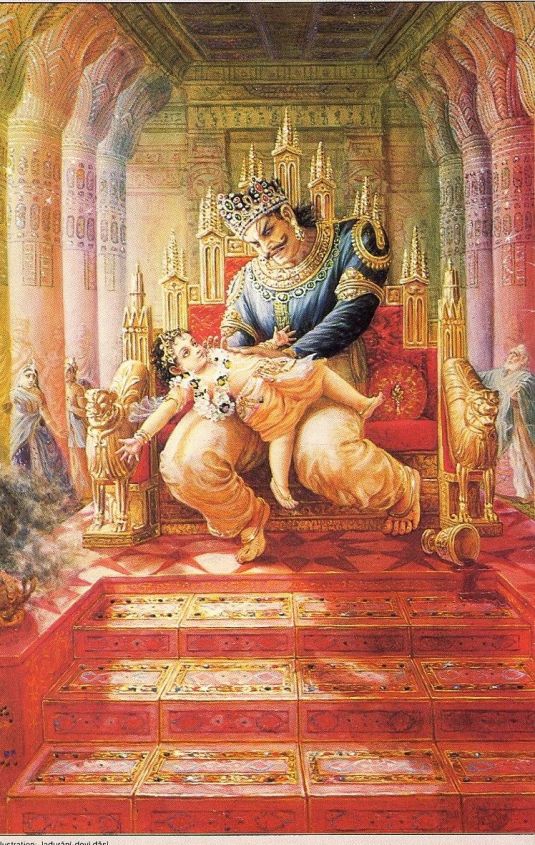
Sinister Father Saintly Son
“Like father like son,” the saying goes. So how was it that the most sinister personality ever to darken the universe fathered a great saint?
Adapted from Srimad-Bhagavatam, translation and commentary
By His Divine Grace A.C. Bhaktivedanta Swami Prabhupada.
A vicious storm raged through the darkness. Pierce winds hissed again and again and uprooted gigantic trees. Thick clouds covered the sky, and lightning flashed as though laughing. The ocean with its high waves wailed as if stricken with sorrow. Jackals and dogs howled ominously, and birds flew shrieking from their nests. The twin demons Hiranyakasipu and Hiranyaksa were being born.
Day by day, year after year, they grew more powerful, more evil, and more dominant over all the other demons, who made alliances with them. Then, under the direction of Hiranyaksa and Hiranyakasipu, the demons set out to conquer the demigods, their archenemies and the administrators of the universe. In their war for universal power, the demons enjoyed many victories, but at last Lord Visnu [Krsna] Himself killed Hiranyaksa. His brother’s death overwhelmed Hiranyakasipu with grief and rage. He bit his lips and gazed upward with eyes whose blazing anger filled the sky with smoke. He took up his trident, glanced around fiercely, bared his terrible teeth, and began to speak to his demon friends.
More
06 Oct 2012
by The Hare Krishna Movement
in A.C. Bhaktivedanta Swami Prabhupada, Krishna Consciousness, Sri Caitanya-Caritamrta
Tags: A.C. Bhaktivedanta Swami Prabhupada, cleanse the heart as the Lord cleansed the Gundica temple, devotee, devotional service, Gundica Temple, Krsna, krsna consciousness, Lord Caitanya, madhya-lila 12.135, Sri Caitanya-carimrta
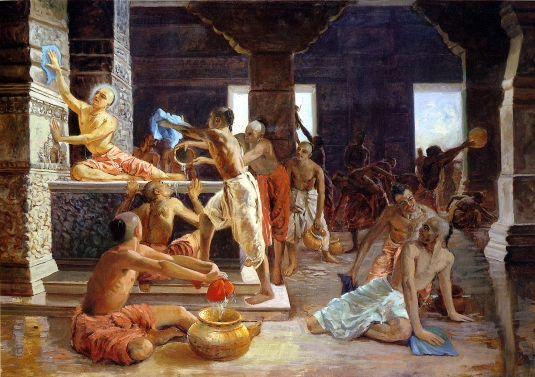
…If a devotee at all wants to cleanse his heart, he must chant and hear the glories of the Lord, Śrī Kṛṣṇa (śṛṇvatāṁ sva-kathāḥ kṛṣṇaḥ). This is a simple process. Kṛṣṇa Himself will help cleanse the heart because He is already seated there. Kṛṣṇa wants to continue living within the heart, and the Lord wants to give directions, but one has to keep his heart as clean as Lord Caitanya Mahāprabhu kept the Guṇḍicā temple. The devotee therefore has to cleanse his heart just as the Lord cleansed the Guṇḍicā temple. In this way one can be pacified and enriched in devotional service.
More
06 Oct 2012
by The Hare Krishna Movement
in A.C. Bhaktivedanta Swami Prabhupada, Book Distribution, Books by Srila Prabhupada, Devotee Business's, Free Downloads, Free eBooks, Madhudvisa das, Prabhupada Libary, Srila Prabhupada's Books
Tags: A.C. Bhaktivedanta Swami Prabhupada, Beyond Birth and Death, Bhagavad-gita As It Is, Easy Journey to Other Planets, Elevation to Krishna Consciousness, King of Knowledge, Krishna Store, Krsna The Reservoir of Pleasure, Krsna The Supreme Personality of Godhead, Madhuvisa das, Matchless Gift, Nectar of Devotion, Nectar of Instruction, On Chanting Hare Krishna, On the Way to Krishna, perfection of yoga, Science of Self Realization, Sri Isopanisad, Srila Prabhupada, Srimad-Bhagavatam 1.1, Teachings of Lord Caitanya

click on image to enlarge
Prabhupada Library
Reading Srila Prabhupada’s books is personal association with a pure devotee of Krishna. Prabhupada is living in his books and Krishna is also living in them.
“You may please me the most by reading my books and following the instructions therein…” (Srila Prabhupada)
A library of 16 essential books on Krishna consciousness by His Divine Grace A.C. Bhaktivedanta Swami Prabhupada, Founder-Acarya of the Hare Krishna Movement. Includes: Bhagavad-gita As It Is, Krsna–The Supreme Personality of Godhead, Srimad-Bhagavatam 1.1, Science of Self-Realization,Teachings of Lord Caitanya, Nectar of Devotion, Nectar of Instruction, Sri Isopanisad, Perfection of Yoga, Beyond Birth and Death, Matchless Gift, Elevation to Krishna Consciousness, King of Knowledge, Easy Journey to Other Planets, On the Way to Krishna, Krsna the Reservoir of Pleasure, On Chanting Hare Krishna.
More
05 Oct 2012
by The Hare Krishna Movement
in Qualities of a Devotee

Srila Prabhupada’s Trancendental Qualities
By Ajitananda dasa
His Divine Grace A.C. Bhaktivedanta Swami Prabhupada, who successfully distributed the message of Lord Krsna throughout the world, was not an ordinary conditioned soul, governed by the harsh laws of material nature. Although to the unenlightened he may have appeared to exhibit commonplace characteristics, it is evident through the careful study of his life and activities, that Srila Prabhupada perfectly displayed the twenty-six qualities of a pure devotee of Lord Krsna. We learn from Vedic literature that one who possesses these qualities is necessarily free from material bondage, and enjoys an eternal position in the intimate association of the Supreme Lord. Such a great soul is very rarely found within this material realm, and owing to his unparalleled purity and exalted status, he is worshipable by the entire world. Individually, and as a collective society of aspiring devotees, we must always strive to appreciate Srila Prabhupada’s divine qualities, teach this application to others, and perform all of our devotional activities for his satisfaction. This treatise is an imperfect but hopeful attempt to please Srila Prabhupada by illustrating, in a practical way, how he perfectly displayed the twenty-six qualities of a pure devotee of Lord Krsna.
More
03 Oct 2012
by The Hare Krishna Movement
in A.C. Bhaktivedanta Swami Prabhupada, Mohine-Murti, Srimad Bhagavatam
Tags: A.C. Bhaktivedanta Swami Prabhupada, ankle bells, blackis lotus, bumblebees, demigods, demons, incarnation as a woman, lusty desires, mallika flowers, Mohini-murti, Srila Prabhupada, The Supreme Personality of Godhead, Visnu

The following is from the Srimad Bhagavatam, Eight Canto, Chapter Nine, entitled “The Lord Incarnates as Mohinī-Mūrti”. The full chapter follows this beautiful verse from preceding chapter.
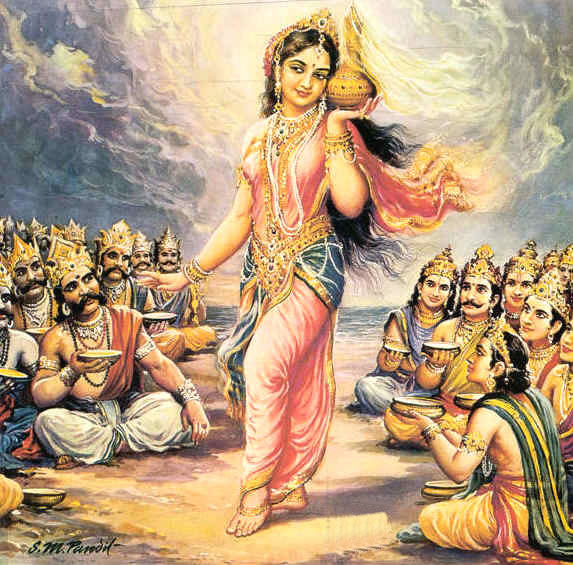
The Supreme Personality of Godhead, Viṣṇu, who can counteract any unfavorable situation, then assumed the form of an extremely beautiful woman. This incarnation as a woman, Mohinī-mūrti, was most pleasing to the mind. Her complexion resembled in color a newly grown blackish lotus, and every part of Her body was beautifully situated. Her ears were equally decorated with earrings, Her cheeks were very beautiful, Her nose was raised and Her face full of youthful luster. Her large breasts made Her waist seem very thin. Attracted by the aroma of Her face and body, bumblebees hummed around Her, and thus Her eyes were restless. Her hair, which was extremely beautiful, was garlanded with mallikā flowers. Her attractively constructed neck was decorated with a necklace and other ornaments, Her arms were decorated with bangles, Her body was covered with a clean sari, and Her breasts seemed like islands in an ocean of beauty. Her legs were decorated with ankle bells. Because of the movements of Her eyebrows as She smiled with shyness and glanced over the demons, all the demons were saturated with lusty desires, and every one of them desired to possess Her. (SB 8.8.41-48)
Because of the Supreme Lord’s assuming the form of a beautiful woman to arouse the lusty desires of the demons, a description of Her complete beauty is given here.
More
03 Oct 2012
by The Hare Krishna Movement
in A.C. Bhaktivedanta Swami Prabhupada, Bob Cohen, Perfect Answers Perfect Questions, Srila Prabhupada Conversations, Varnasrama Dharma
Tags: A.C. Bhaktivedanta Swami Prabhupada, Bob Cohen, marriage, material world, perfect questions perfect answers, sex life, varnasrama-dhama, Vedic culture
Continuing with our series of a True account entitled Perfect Questions, Perfect Answers… A search for meaning carries Bob Cohen, a young American Peace Corps worker halfway around the world, to an ancient village in the midst of West Bengal. There, in a small bamboo hut, he finds a teacher who is able to tell him everything he ever wanted to know.
Perfect Questions, Perfect Answers
By His Divine Grace A.C. Bhaktivedanta Swami Prabhupada
Chapter 2, Vedic Culture: Varṇāśrama-dharma
February 28, 1972
Bob: I’ve asked devotees about how they feel towards sex in their relations, and I see the way they feel, but I can’t see myself acting the same way. See, I’ll be getting married at the end of this summer.
Śrīla Prabhupāda: Hm-m?
Bob: I’ll be getting married at the end of this summer, in September or August when I return to America. And the devotees say that the householders only have sex to conceive a child, and I cannot picture myself at all in such a position, and—What kind of sex life can one lead, living in the material world?
More
02 Oct 2012
by The Hare Krishna Movement
in Guru & Disciple, Quotes by Srila Prabhupada
Tags: A.C. Bhaktivedanta Swami Prabhupada, association, association with guru, Godbrothers, guru, guru maharaj, service to the spiritual master, spiritual master, Srila Prabhupada, vani, vaphu

Follow the Instruction, not the Body.
Quotes by Srila Prabhupada from books, letters and lectures
“So far as personal association with Guru is concerned, I was only with Guru Maharaj 4 or 5 times, but I have never left his association, not even for a moment. Because I am following his instruction, I have never felt any separation. There are some of my Godbrothers here in India, who had constant personal association with Guru Maharaja, but who are neglecting his orders. This is just like the bug who is sitting on the lap of the king. He may be very puffed up by his position but all he can succeed in doing is biting the king. Personal association is not so important as association through serving.”
(SP Letter to Satyadhana, 20/2/72)
More
30 Sep 2012
by The Hare Krishna Movement
in A.C. Bhaktivedanta Swami Prabhupada, Back to Godhead, Caitanya Mahaprabhu
Tags: A.C. Bhaktivedanta Swami Prabhupada, Back to Godhead Magazine, BTG, Buddhist, Caitanya Mahaprabhu, Haridas Thakrua, holy names, Jagai and Madhai, Jharikhanda forest, jungle animals, Krsna! Krsna!, Lord Caitanya, love of God, Nityananda Prabhu, Sri Caitanya-caritamrta
click on image to enlarge
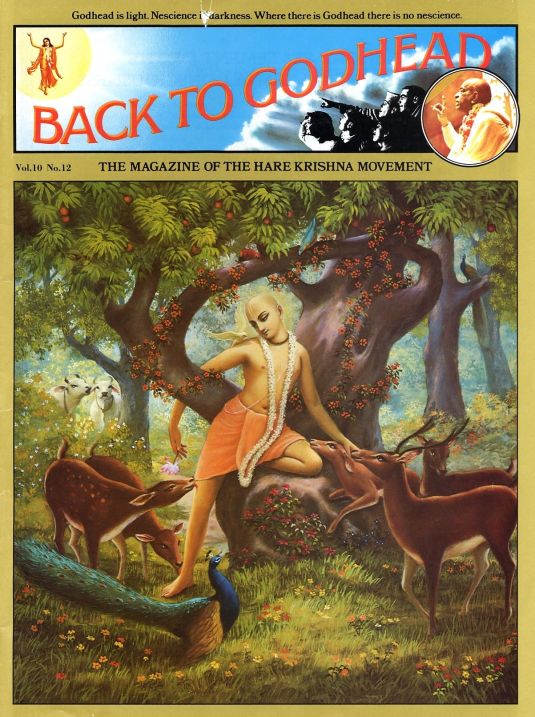
The Special Kindness of Lord Caitanya
Sri Caitanya Mahaprabhu, an incarnation of the Supreme Lord, appeared in India in the fifteenth century. His mission was to freely distribute pure love of God to everyone without considering who was qualified or unqualified. He predicted that the whole world would one day hear the chanting of the Lord’s holy names. The first of the following three narratives is excerpted from Srila Prabhupada’s introduction to Srimad-Bhagavatam. The final two are taken from his English translation of Sri Caitanya-caritamrta, an extensive account of Lord Caitanya’s life and teachings.
More
29 Sep 2012
by The Hare Krishna Movement
in A.C. Bhaktivedanta Swami Prabhupada, Sannyasa, Srila Prabhupada
Tags: Bhaktivedanta in 1947, Gaudiya Vaisnavas, Jaladuta Diary, renounced order, sannyasa 1959, Srila Prabhupada, Srila Prabhupada's acceptance of sannyasa 1959, vanaprastha 1950, Visvarupa Mahotsava

Today on Visvarupa Mahotsava we honor the day that Srila Prabhupada accepted the renounced order (sannyasa) of life, in 1959.
…Recognizing Śrīla Prabhupāda’s philosophical learning and devotion, the society of Gauḍīya Vaiṣṇavas honored him in 1947 with the title “Bhaktivedanta.” In 1950, at the age of fifty-four, Śrīla Prabhupāda retired from family life, adopting the vānaprastha (retired) order to devote more time to study, writing and preaching. Śrīla Prabhupāda moved to the holy city of Vṛndāvana, where he lived in humble circumstances in the historic medieval temple of Rādhā-Dāmodara. There he spent several years in deep study and writing. He accepted the renounced order of life (sannyāsa) in 1959. At Rādhā-Dāmodara, Śrīla Prabhupāda began work on his life’s masterpiece: a multivolume annotated translation of the eighteen-thousand-verse Srīmad-Bhāgavatam (Bhāgavata Purāṇa). He also wrote Easy Journey to Other Planets…
More
28 Sep 2012
by The Hare Krishna Movement
in A.C. Bhaktivedanta Swami Prabhupada, Chanting Hare Krishna, Haridasa Thakura
Tags: A.C. Bhaktivedanta Swami Prabhupada, appearance of haridasa thakur, freedom from reactions of sinful life, Haridasa Thakura, liberation, loving service to the Supreme Personality of Godhead, Madhya-lila 7.37, Sri Caitanya-caritamrta

Today we honor the Appearance Day of Srila Haridasa Thakura, an associate of Sri Caitanya Mahaprabhu, Haridāsa Ṭhākura daily chanted 300,000 names of the Lord. Certainly the chanting of 300,000 holy names of the Lord is wonderful. No ordinary person can chant so many names, nor should one artificially imitate Haridāsa Ṭhākura’s behavior. It is essential, however, that everyone fulfill a specific vow to chant the Hare Kṛṣṇa mantra.
Haridāsa Ṭhākura said that liberation and freedom from the reactions of sinful activities are only by-products of chanting the holy name of the Lord. If one chants the holy name of the Lord purely, he attains the platform of loving service to the Supreme Personality of Godhead. (SB 5.24.20)
More
28 Sep 2012
by The Hare Krishna Movement
in Chanting Hare Krishna, Japa, Practicing Krishna Consciousness at Home
Tags: chanting, chanting Hare Krishna, God, Hare, Hare Krishna, Holy Names of the Lord, japa, kirtana, Krishna, Maha Mantra, practicing krishna consciousness at home, Rama
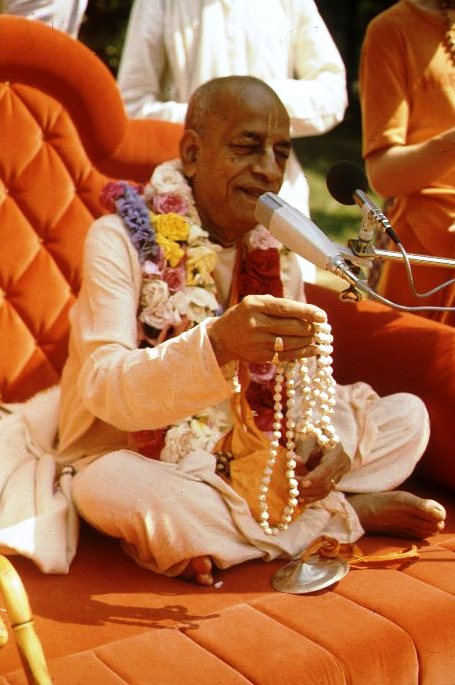
It has been requested that we do a post on Japa Meditation, so on this auspicious day of the appearance of Haridasa Thakura, we share with you some instructions on the chanting of Japa.
…Since God is all-powerful and all-merciful, He has kindly made it very easy for us to chant His names, and He has also invested all His powers in them. Therefore the names of God and God Himself are identical. This means that when we chant the holy names of Krishna and Rama we are directly associating with God and being purified. Therefore we should always try to chant with devotion and reverence. The Vedic literature states that Lord Krishna is personally dancing on your tongue when you chant His holy name.
More
27 Sep 2012
by The Hare Krishna Movement
in A.C. Bhaktivedanta Swami Prabhupada, Bhaktivinoda Thakura, Songs of the Vaisnava Acaryas
Tags: A.C. Bhaktivedanta Swami Prabhupada, appearance of bhaktivinoda thakura, gauracanda bole, jiv jago, Songs of the Vaisnava Acaryas, Srila Bhaktivinoda Thakura

Today we honor the Appearance Day of one of our great spiritual fathers; Srila Bhaktivinoda Thakura, with this famous song.
Jiv Jago Jiv Jago
Official Name: Arunodaya Kirtana Song 2
By Srila Bhaktivinoda Thakura
jīv jāgo, jīv jāgo, gauracānda bole
kota nidrā jāo māyā-piśācīra kole
1) Lord Gaurānga is calling, “Wake up, sleeping souls! Wake up, sleeping souls! How long will you sleep in the lap of the witch called Māyā?
bhajibo boliyā ese saḿsāra-bhitare
bhuliyā rohile tumi avidyāra bhare
2) You have forgotten the way of devotional service and are lost in the world of birth and death.
tomāre loite āmi hoinu avatāra
āmi binā bandhu āra ke āche tomāra
3) I have descended just to save you; other than Myself you have no friend in this world.
enechi auṣadhi māyā nāśibāro lāgi’
hari-nāma mahā-mantra lao tumi māgi’
4) I have brought the medicine that will wipe out the disease of illusion from which you are suffering. Take this mahā-mantra-Hare Kṛṣṇa, Hare Kṛṣṇa, Kṛṣṇa Kṛṣṇa, Hare Hare/Hare Rāma, Hare Rāma Rāma Rāma, Hare Hare.”
bhakativinoda prabhu-caraṇe pariyā
sei hari-nāma-mantra loilo māgiyā
5) Śrīla Bhaktivinoda Thākura says: “I fall at the Lord’s feet, having taken this mahā-mantra.”
Purport by His Divine Grace A.C. Bhaktivedanta Swami Prabhupada More
26 Sep 2012
by The Hare Krishna Movement
in A.C. Bhaktivedanta Swami Prabhupada, Srimad Bhagavatam
Tags: A.C. Bhaktivedanta Swami Prabhupada, chanting the holy name of the lord, devotee, devotee is called punya-sloka, instructions on the execution of devotional service, Jai Prabhupada, punya-sloka, pure devotee, SB 3.28.18

This is a very nice verse from Srila Prabhupada’s Srimad Bhagavatam. A good friend of mine is always quoting this verse and requested we include it in our daily postings. So without further ado, this one’s for you.
“…Another significant word in this verse is puṇya-śloka-yaśaskaram. The devotee is called puṇya-śloka. As one becomes purified by chanting the holy name of the Lord, so one can become purified simply by chanting the name of a holy devotee. The pure devotee of the Lord and the Lord Himself are nondifferent. It is sometimes feasible to chant the name of a holy devotee. This is a very sanctified process…” Jai Prabhupada!
Srimad-Bhagavatam
By His Divine Grace A.C. Bhaktivedanta Swami Prabhupada
Canto 3, Chapter 28, Text 18
Kapila’s Instructions on the Execution of Devotional Service
kīrtanya-tīrtha-yaśasaṁ
puṇya-śloka-yaśaskaram
dhyāyed devaṁ samagrāṅgaṁ
yāvan na cyavate manaḥ
kīrtanya—worth singing; tīrtha-yaśasam—the glories of the Lord; puṇya-śloka—of the devotees; yaśaḥ-karam—enhancing the glory; dhyāyet—one should meditate; devam—upon the Lord; samagra-aṅgam—all the limbs; yāvat—as much as; na—not; cyavate—deviates; manaḥ—the mind.
The glory of the Lord is always worth singing, for His glories enhance the glories of His devotees. One should therefore meditate upon the Supreme Personality of Godhead and upon His devotees. One should meditate on the eternal form of the Lord until the mind becomes fixed.
One has to fix his mind on the Supreme Personality of Godhead constantly. When one is accustomed to thinking of one of the innumerable forms of the Lord—Kṛṣṇa, Viṣṇu, Rāma, Nārāyaṇa, etc.—he has reached the perfection of yoga. This is confirmed in the Brahma-saṁhitā: a person who has developed pure love for the Lord, and whose eyes are smeared with the ointment of transcendental loving exchange, always sees within his heart the Supreme Personality of Godhead. The devotees especially see the Lord in the beautiful blackish form of Śyāmasundara. That is the perfection of yoga. This yoga system should be continued until the mind does not vacillate for a moment. Oṁ tad viṣṇoḥ paramaṁ padaṁ sadā paśyanti sūrayaḥ: the form of Viṣṇu is the highest individuality and is always visible to sages and saintly persons.
More
26 Sep 2012
by The Hare Krishna Movement
in Chanting Hare Krishna, The Hare Krishna Movement
Tags: A.C. Bhaktivedanta Swami Prabhupada, chanting Hare Krishna, Hare Krishna mahamantra, hare krishna tree, Hare Krsna, Lord Caitanya Mahaprabhu, plaque, sankirtan movement, Srila Prabhupada, The Hare Krishna Movement, Tompkins Square Park
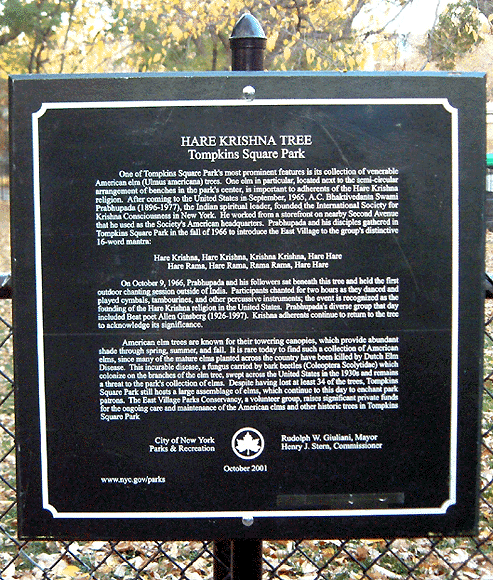
In 1966, Srila Prabhupada began chanting the Hare Krsna mahamantra under a tree in New York’s Tompkins Square Park, thereby inaugurating the western advance of Lord Caitanya Mahaprabhu’s glorious Sankirtana movement.
On November 18, 2001, Srila Prabhupada’s Disappearance Day, a plaque was placed in Tompkins Square Park in honor of His Divine Grace, who brought the Hare Krishna Movement to the west 35 years before.
Inscription on Plaque:
“One of Tompkins Square Park’s most prominent features is its collection of venerable American elm (Ulmus americana) trees. One elm in particular, located next to the semi-circular arrangement of benches in the park’s center, is important to adherents of the Hare Krishna religion. After coming to the United States in September, 1965, A.C. Bhaktivedanta Swami Prabhupada (1896-1977), the Indian spiritual leader, founded the International Society for Krishna Consciousness in New York. He worked from a storefront on nearby Second Avenue that he used as the Society’s American headquarters. Prabhupada and his disciples gathered in Tompkins Square Park in the fall of 1966 to introduce the East Village to the group’s distinctive 16-word mantra:
Hare Krishna, Hare Krishna, Krishna Krishna, Hare Hare
Hare Rama, Hare Rama, Rama Rama, Hare Hare
On October 9, 1966, Prabhupada and his followers sat beneath this tree and held the first outdoor chanting session outside of India. Participants chanted for two hours as they danced and played cymbals, tambourines, and other percussive instruments; the event is recognized as the founding of the Hare Krishna religion in the United States. Prabhupada’s diverse group that day included Beat poet Allen Ginsberg (1926-1997). Krishna adherents continue to return to the tree to acknowledge its significance.
American elm trees are known for their towering canopies, which provide abundant shade through spring, summer, and fall. It is rare today to find such a collection of American elms, since many of the mature elms planted across the country have been killed by Dutch Elm Disease. This incurable disease, a fungus carried by bark beetles ( Coleoptera Scolytidae) which colonize on the branches of the elm tree, swept across the United States in the 1930s and remains a threat to the park’s collection of elms. Despite having lost at least 34 of the trees, Tompkins Square Park still hosts a large assemblage of elms, which continue to this day to enchant park patrons. The East Village Parks Conservancy, a volunteer group, raises significant private funds for the ongoing care and maintenance of the American elms and other historic trees in Tompkins Square Park.
City Of New York
Parks and Recreation
Rudolph Giuliani, Mayor
Henry J. Stern, Commissioner
October 2001
pasted from; harekrsna.com
26 Sep 2012
by The Hare Krishna Movement
in A.C. Bhaktivedanta Swami Prabhupada, Srimad Bhagavatam, Vamanadeva
Tags: Aditi, Adityas, Bali Maharaja, bhagavatam, Lord Vamana, SB 2.7.17, Scheduled Incarnations with Specific Functions, Srila Prabhupada, Vamana, Vamanadeva

In honor of the appearance day of Lord Vāmana, we are posting a verse from Srila Prabhupada’s Bhagavatam, which describes the history of Bali Mahārāja and his charity to Vāmanadeva. This verse describes; that by giving everything to the cause of the Lord, one does not lose anything, but he gains everything that he could never otherwise expect.
Srimad-Bhagavatam
By His Divine Grace A.C. Bhaktivedanta Swami Prabhupada
Canto 2, Chapter 7, Text 17
Scheduled Incarnations with Specific Functions
Full text and purport More
25 Sep 2012
by The Hare Krishna Movement
in A.C. Bhaktivedanta Swami Prabhupada, Bob Cohen, Books by Srila Prabhupada, Perfect Answers Perfect Questions
Tags: A.C. Bhaktivedanta Swami Prabhupada, conversation with Srila Prabhupada, perfect questions perfect answers, science, Science of Self Realization, scientist

click on image to enlarge
Perfect Questions, Perfect Answers
By His Divine Grace A. C. Bhaktivedanta Swami Prabhupāda
February 27, 1972
Chapter One
Kṛṣṇa, the All-Attractive
Bob: What is a scientist?
Śrīla Prabhupāda: One who knows things as they are.
Bob: He thinks he knows things as they are.
Śrīla Prabhupāda: What?
Bob: He hopes he knows things as they are.
Śrīla Prabhupāda: No, he is supposed to know. We approach the scientist because he is supposed to know things correctly. A scientist means one who knows things as they are. Kṛṣṇa means “all-attractive.”
Bob: All-attractive.
Śrīla Prabhupāda: Yes. So unless God is all-attractive, how can He be God? A man is important when he is attractive. Is it not?
Bob: It is so.
Śrīla Prabhupāda: So, God must be attractive and attractive for all. Therefore, if God has any name, or if you want to give any name to God, only “Kṛṣṇa” can be given.
Bob: But why only the name Kṛṣṇa?
Śrīla Prabhupāda: Because He’s all-attractive. Kṛṣṇa means“all-attractive.”
Bob: Oh, I see.
More
24 Sep 2012
by The Hare Krishna Movement
in A.C. Bhaktivedanta Swami Prabhupada, Letters by Srila Prabhupada, Yosomatinandana das
Tags: A.C. Bhaktivedanta Swami Prabhupada, Back to Godhead Magazine, Krishna, Krishna philosophy, Letters by Srila Prabhupada, Supreme Personality of Godhead, Yasomatinandana

click to enlarge
Back to Godhead Magazine
Letters, Volume-01 Number-55, 1973
My dear Yasomatinandana,
Please accept my blessings. I am in due receipt of your letter, and I am so much pleased to read it. Your letter is so nice that I am advising that it be published in Back to Godhead. In the meantime you can immediately begin translating all our books into the Gujarati language. All these translations will be published in series in our Gujarati BTG, and if you are serious about it, you can be the Editor. So immediately begin translating and regularly produce books in Gujarati, and it will be a great service for you. The more you render service, the more you will be enlightened by the Supreme Personality of Godhead. Thank you once more for understanding our philosophy very nicely.
Hoping this will meet you in good health,
Your ever well-wisher, A.C. Bhaktivedanta Swami
Full letter by Yasomatinandana dasa More
Previous Older Entries Next Newer Entries











 The Hare Krishna Movement