26 Apr 2025
by The Hare Krishna Movement
in A. C. Bhaktivedanta Swami Prabhupada, Radha Krishna, Rasa's (relationships), Spiritual Life, Spiritual World, Uncategorized
Tags: A.C. Bhaktivedanta, conjugal love, devotional-service-in-conjugal-love, Krishna, Krsna, love, pure devotee, Radha, spirituality, Srimati Radharani, The Nectar of Devotion, travel
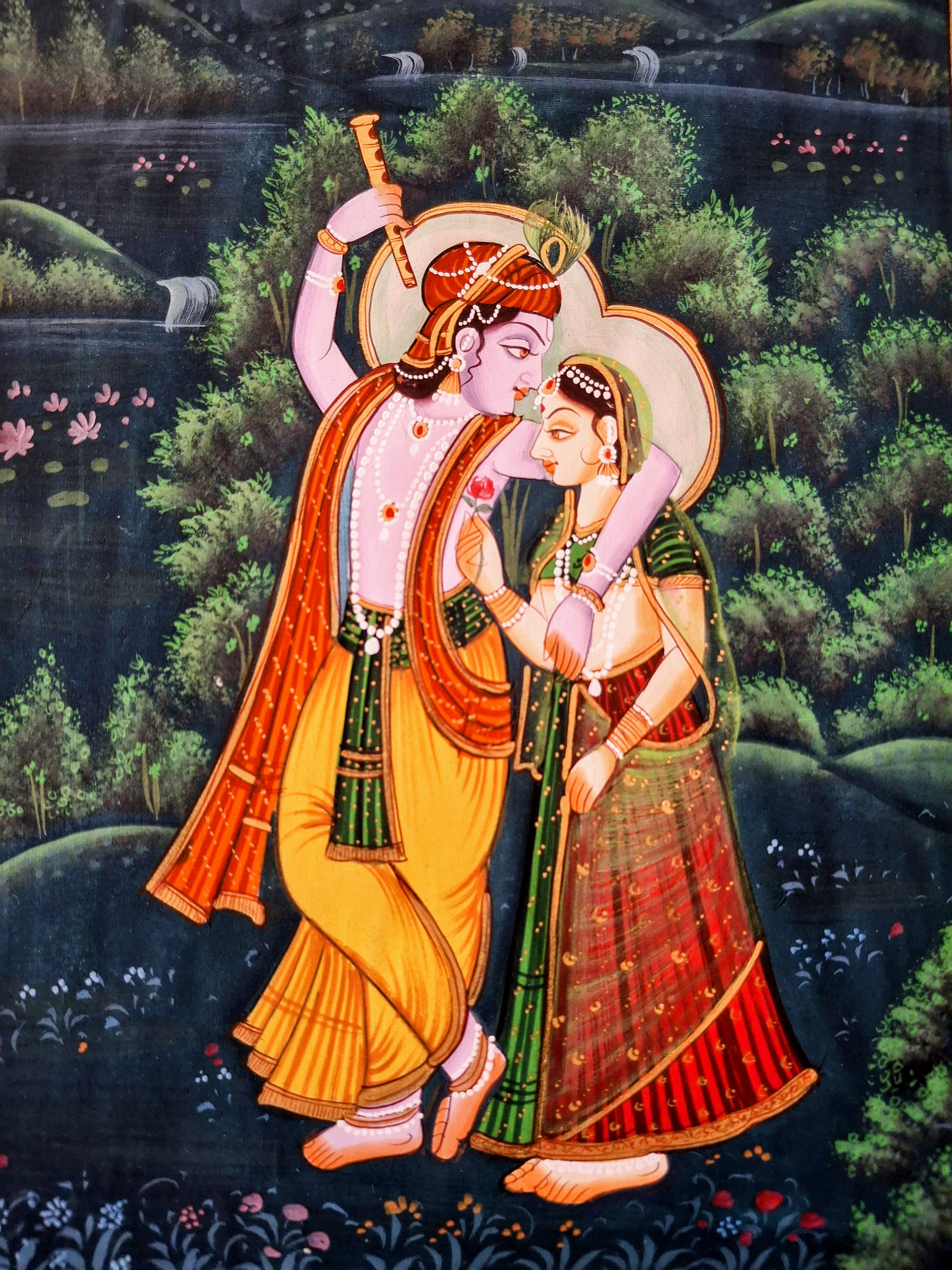
So we are finishing our series on the five types of relationships (rasa’s) with the Lord. Today we are exploring Devotional Service in Conjugal Love (Madhurya-rasa) as explained in chapter 44 of “The Nectar of Devotion”.
Because of the sensitive nature of this topic, we have posted the entire chapter from the the original 1970 edition of “The Nectar of Devotion”, by His Divine Grace A C Bhaktivedanta Swami Prabhupada.
A pure devotee’s attraction to Krsna in conjugal love is called devotional service in conjugal love. Although such conjugal feelings are not at all material, there is some similarity between this spiritual love and material activities. Therefore, persons who are interested only in material activities are unable to understand this spiritual conjugal love, and these devotional reciprocations appear very mysterious to them. Rupa Gosvāmī therefore describes conjugal love very briefly.
The impetuses of conjugal love are Krsna and His very dear consorts, such as Rādhārāṇī and Her immediate associates. Lord Krsnahas no rival: no one is equal to Him, and no one is greater than Him. His beauty is also without any rival, and because He excels all others in the pastimes of conjugal love, He is the original object of all conjugal love.
More
25 Apr 2025
by The Hare Krishna Movement
in Rasa's (relationships), Uncategorized
Tags: A.C. Bhaktivedanta, family, Krishna, Krsna, love, mental-health, Mother Yasoda, Nanda Maharaja, parenthood, relationships, spirituality, Srila Prabhupada, The Nectar of Devotion, vatsalya rasa
So we are continuing our series on the five types of relationships (rasa’s) with the Lord. Today we are exploring the Paternal Devotional stage of Love of God (Vatsalya-rasa) as explained in chapter 43 of “The Nectar of Devotion”.
When ecstatic love develops into the relationship of parenthood and becomes steadily established, the relationship is called vatsalya-rasa. The exhibition of this vatsalya-rasa standard of devotional service can be found in the dealings of Krishna with His devotees who represent themselves as superior personalities like father, mother, teacher, etc.
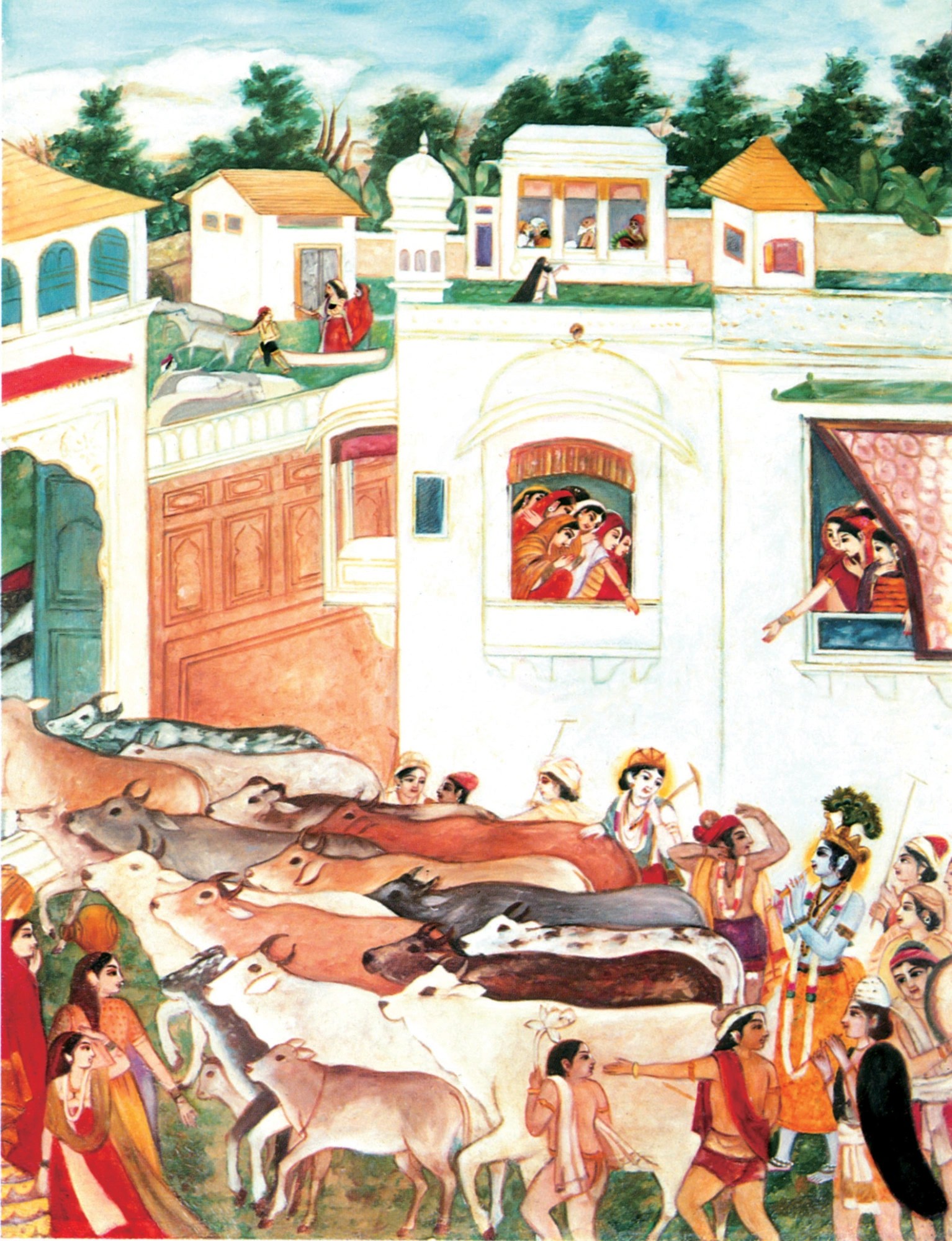
Learned scholars have described the impetuses of parental love for Krishna, existing in the elderly personalities who are in relation with Him, as follows: “The Supreme Personality of Godhead, whose bodily complexion is just like a bluish, new-grown lotus flower, whose body is very delicate and whose lotus eyes are surrounded by scattered hair as black as bees, was walking on the streets of Vrindavan when Mother Yasoda, the beloved wife of Nanda Mahārāj, saw Him. Immediately the milk began to flow from her breasts, soaking her body.” Some specific provocations for parental love of Krishna are listed as His blackish bodily hue, which is very attractive and pleasing to see, His all-auspicious bodily features, His mildness, His sweet words, His simplicity, His shyness, His humility, His constant readiness to offer respect to the elderly, and His charity. All of these qualities are considered ecstatic provocations for parental love.
More
24 Apr 2025
by The Hare Krishna Movement
in A. C. Bhaktivedanta Swami Prabhupada, Rasa's (relationships), Uncategorized
Tags: A.C. Bhaktivedanta Swami, Bhagavad-gita, devotion-in-friendship, fraternal-devotion, Krishna, religion, sakhya-rasa, spirituality, The Nectar of Devotion
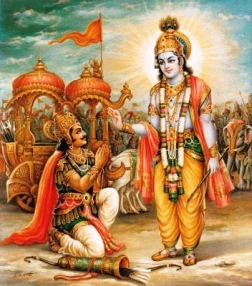
So we are continuing our series on the five types of relationships (rasa’s) with the Lord. Today we are exploring the Fraternal Devotional stage of Love of God (Sakhya-rasa) as explained in chapter 41 of “The Nectar of Devotion”. Also included in todays post are some select verses from the Bhagavad-gita describing Arjuna’s friendship with Krishna.
When a devotee is permanently situated in devotional service, and by different symptoms of ecstasy he has developed and matured a fraternal mellow or flavor in relationship with the Personality of Godhead, his feeling is called fraternal love of Godhead.
The impetus for such fraternal love of God is God Himself. When one is liberated and discovers his eternal relationship with the Supreme Lord, the Lord Himself becomes the impetus for increasing fraternal love. The eternal associates of the Lord in Vrindavan have described this as follows: “The Lord, Hari, whose bodily hue is like the indranīla jewel, whose smiling is as beautiful as the kunda flower, whose silk dress is as yellow as golden autumn foliage, whose chest is beautified with garlands of flowers and who is always playing upon His flute-this enemy of the Agha demon is always attracting our hearts by wandering about Vrindavan.”
There are similar statements of fraternal love expressed outside the jurisdiction of Vrindavan. When the sons of Pandu, headed by Mahārāj Yudhisthira, saw Krishna in His four handed form on the battlefield of Kuruksetra, holding His conchshell, disc, club and lotus flower, they completely forgot themselves and became merged in the ocean of nectarean happiness. This shows how the sons of Pandu-King Yudhisthira, Bhima, Arjuna, Nakula and Sahadeva-were all caught up in fraternal love for Krishna.
From the Bhagavad-gita we are reminded of Arjuna’s friendship with Krishna.
More
23 Apr 2025
by The Hare Krishna Movement
in A. C. Bhaktivedanta Swami Prabhupada, Nectar of Devotion, Rasa's (relationships), Uncategorized
Tags: A.C. Bhaktivedanta Swami, Devotional Service, hinduism, India, Krishna, Krsna, Nectar of Devotion, religion, servitude, spirituality, Srila Prabhupada
So today we are exploring the Servitude stage of Love of God (Dasya-rasa) as explained in chapter 36 of “The Nectar of Devotion”.
Each soul, according to its constitutional nature, possesses a unique loving relationship with Krishna in one of five principal categories. When devotees return to the spiritual world, they engage in direct loving devotional service to Krishna in their particular rasa.
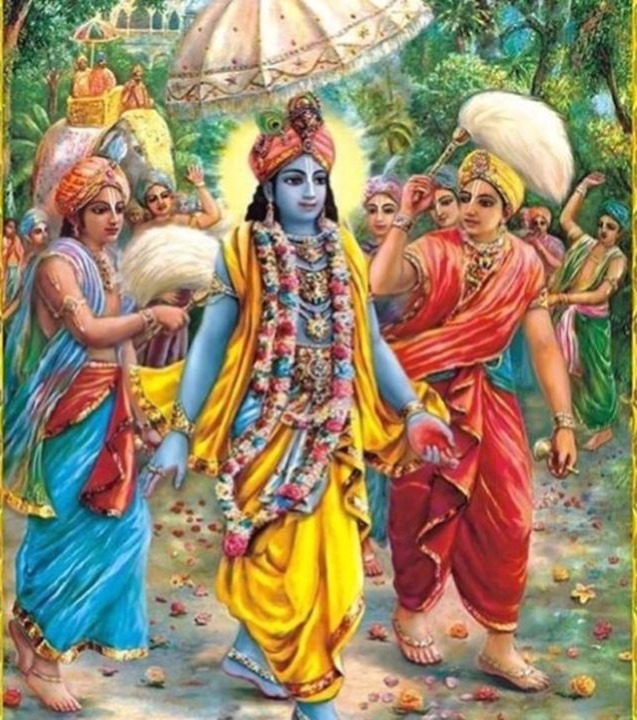
Devotees engaged in servitude are attached to Krishna in the affection of reverence. Some of the inhabitants of Gokula (Vrindavan) as exhibited on earth) are attached to Krishna on this platform of affection in reverence. The inhabitants of Vrindavan used to say, “Kṛṣṇa is always manifest before us with a complexion like a blackish cloud. He holds His wonderful flute in His lotus hands. He is dressed in yellow silks and bedecked with a peacock feather on His head. When Krishna walks near Govardhan Hill with these personal features, all the inhabitants of the heavenly planets, as well as the inhabitants of this earth, feel transcendental bliss and consider themselves the eternal servants of the Lord.”
More
22 Apr 2025
by The Hare Krishna Movement
in A. C. Bhaktivedanta Swami Prabhupada, Nectar of Devotion, Rasa's (relationships), Uncategorized
Tags: A.C. Bhaktivedanta, Bhagavad-gita, bhakti yoga, God, Krishna, Krsna, Nectar of Devotion, neutral-love-of-god, religion, santa-rasa, spirituality, yogis
Today we are exploring the Neutral stage of Love of God, (santa-rasa), as explained in chapter 35 of “The Nectar of Devotion”.
“When the yogi sees the eternal form of Visnu and appreciates the Lord’s beauty in awe and veneration, he is situated in the neutral stage of love of God.”
…Some great sages have attained this neutral position by practicing austerity, penance and meditation to control the senses. Such sages are generally called mystic yogīs, and in most cases they are inclined to appreciate the spiritual pleasure of the impersonal feature of the absolute truth. They are practically unaware of the transcendental pleasure derived from personal contact with the Supreme Godhead.
When some great saintly persons who had undergone penances and austerities saw the four-handed transcendental form of Visnu, they began to remark as follows: “This four-handed form of the Lord, manifested in a bluish color, is the reservoir of all pleasure and the center of our living force. Actually, when we see this eternal form of Visnu, we, along with many other paramahaṁsas, become immediately captivated by the beauty of the Lord.” This appreciation of Lord Visnu by saintly persons is an instance of situation in santa-rasa, or the neutral stage of devotional service. In the beginning, those who are aspiring for salvation try to get out of the material entanglement by performing painful austerities and penances, and ultimately they come to the impersonal status of spiritual realization. At this brahma-bhuta [SB 4.30.20] stage of liberation from the material entanglement, the symptoms, as explained in the Bhagavad-gita, are that one becomes joyous beyond any hankering or lamentation and gains a universal vision. When the devotee is situated in the santa-rasa, or neutral stage of devotional service, he appreciates the Visnu form of the Lord.
More
21 Apr 2025
by The Hare Krishna Movement
in A. C. Bhaktivedanta Swami Prabhupada, Bhagavad-gita, Bhagavad-gita As It Is 1972 Edition, Devotional Service, Dharma, Rasa's (relationships), Uncategorized
Tags: ac-bhaktivedanta-swami, bg-8-14, India, Krishna, Krishna Consciousness, prabhupada, religion, spirituality
This morning I was thinking about the different relationships one can have with the Lord. In “The Nectar of Devotion”, Srila Prabhupada describes the five primary kinds of devotional service-namely, neutrality, servitude, fraternity, parenthood and conjugal love. Over the course of the next five posts, I want to explore these five primary relationships.
But for today, I want to start with this nice verse from the Bhagavad-gita, where these five types of relationships are mentioned in purport.
For one who remembers Me without deviation, I am easy to obtain, O son of Pṛthā, because of his constant engagement in devotional service. (Bg 8.14)
…Bhakti-yoga is very simple and pure and easy to perform. One can begin by simply chanting Hare Kṛṣṇa. Kṛṣṇa is very merciful to those who engage in His service, and He helps in various ways that devotee who is fully surrendered to Him so he can understand Him as He is. The Lord gives such a devotee sufficient intelligence so that ultimately the devotee can attain Him in His spiritual kingdom.
…Generally, the bhakti-yogīs are engaged in five different ways: 1) śānta-bhakta, engaged in devotional service in neutrality; 2) dāsya-bhakta, engaged in devotional service as servant; 3) sākhya-bhakta, engaged as friend; 4) vātsalya-bhakta, engaged as parent; and 5) mādhurya-bhakta, engaged as conjugal lover of the Supreme Lord. (from purport)
Full text and purport
More






 The Hare Krishna Movement