05 Jan 2025
by The Hare Krishna Movement
in chanting, Chanting Hare Krishna, Free Downloads, Mantra Meditation
Tags: Chanting Hare Krishna, Hare Krishna, India, Krishna, Krsna, spirituality, sri-namamrta, Srila Prabhupada, the-nectar-of-the-holy-name, travel
This morning I was looking through my bookshelf and I saw a book I didn’t recognize. But when I opened it, I saw my name was written on the first page. I must have purchased it on one of our trips. I had completely forgotten about it, and it was still brand new. I love a new book, so I was overjoyed to discover what was inside. Thousands of quotes from Srila Prabhupada’s many books on the Nectar of the Holy Name. So today I am posting just a few of them that jumped out at me, but I am also including the entire book as a free PDF at bottom of post.
‘kanhara smarana jiva karibe anuksana?’
‘krsna−nama−guna−lila−pradhana smarana’
Sri Caitanya Mahaprabhu asked, “What should all living entities constantly remember?”
Ramananda Raya replied, “The chief object of remembrance is always the holy name of the
Lord, His qualities and pastimes.”
(Sri Caitanya−caritamrta Madhya−lila 8.252)
krte yad dhyayato visnum
tretayam yajato makhaih
dvapare paricaryayam
kalau tad dhari−kirtanat
[Sukadeva Gosvami to Maharaja Pariksit]:
“Whatever result was obtained in Satya−yuga by meditating on Visnu, in Treta−yuga by
performing sacrifices and in Dvapara−yuga by serving the Lord’s lotus feet can also be
obtained in Kali−yuga simply by chanting the Hare Krsna maha−mantra.”
(Srimad−Bhagavatam 12.3.52)
The Holy Name Is the Universal and Supreme Religion for this Age
harer nama harer nama
harer namaiva kevalam
kalau nasty eva nasty eva
nasty eva gatir anyatha
(Sri Caitanya−caritamrta Adi 17.21)
“In this age of Kali there is no alternative, there is no alternative, there is no alternative for
spiritual progress than the holy name, the holy name, the holy name of the Lord.”
krsna−varnam tvisakrsnam
sangopangastra−parsadam
yajnaih sankirtana−prayair
yajanti hi su−medhasah
“The pious results derived from chanting the thousand holy names of Visnu three times can
be attained by only one repetition of the holy name of Krsna.”
( Sri Caitanya−caritamrta Madhya−lila 9.33)
trnad api sunicena
taror api sahisnuna
amanina manadena
kirtaniyah sada harih
“One should chant the holy name of the Lord in a humble state of mind, thinking oneself
lower than the straw in the street. One should be more tolerant than a tree, devoid of all
sense of false prestige and ready to offer all respects to others. In such a state of mind one
can chant the holy name of the Lord constantly.”
More
04 Dec 2024
by The Hare Krishna Movement
in A. C. Bhaktivedanta Swami Prabhupada, chanting, Chanting Hare Krishna, Mantra Meditation
Tags: A.C. Bhaktivedanta Swami Prabhupada, chanting Hare Krishna, chanting Hare Krsna, chanting of the holy name, japa, Krishna, Krsna, Srila Prabhupada
“The Holy Name is so powerful, that even by chanting with offense, gradually one becomes pure. Therefore we should not give up chanting under any circumstances.” -Srila Prabhupada
15 Aug 2023
by The Hare Krishna Movement
in A. C. Bhaktivedanta Swami Prabhupada, chanting, Chanting Hare Krishna, Letters by Srila Prabhupada, Sankirtan
Tags: A.C. Bhaktivedanta Swami Prabhupada, jadurani dd, Krishna, krishna kirtan, Srila Prabhupada
Nowadays, we find there are so many devotees getting paid to perform bhajana/kirtan like professional singers, I guess that is nice for them, but real Kirtan is explained by Srila Prabhupada in this 1967 letter to Jadurani dd.
Krishna Kirtan is not for earning livelihood. Krishna Kirtana is not meant for entertaining the public for demonstration of arts. It is dynamic service to the Lord. We do not therefore mind so much about the artistic presentation of Krishna Kirtan but we want to see how much a devotee is satisfying the Supreme Will. (Prabhupada letter to Jadurani 12th December, 1967)
Full letter
More
28 Jun 2023
by The Hare Krishna Movement
in A. C. Bhaktivedanta Swami Prabhupada, Bhagavad-gita, chanting, Chanting Hare Krishna, Krsna Consciousness, Letters by Srila Prabhupada, Maha-mantra, Mantra Meditation, Uncategorized
Tags: chanting, chanting Hare Krishna, Hare Krishna, Letters by Srila Prabhupada, Maha Mantra, mantra meditation
The nice thing about mantra meditation or chanting the maha mantra:
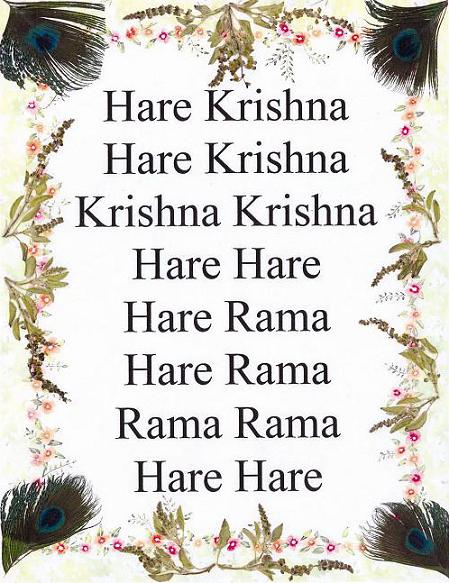
Hare Krishna, Hare Krishna, Krishna Krishna, Hare Hare, Hare Rama, Hare Rama , Rama Rama, Hare Hare
is that one can do it anywhere, any time. In a plane, train or automobile, sitting, walking, or standing on one’s head. I find myself chanting when I am working in my shop, cutting the lawn, taking a shower, working in the garden. Chanting always makes me feel better.
“…one should learn the art of chanting the Holy name of Krishna 24 hours a day and that alone is the remedy for all problems of material existence.” (from letter to Susan Beckman August 29th 1973)
Prabhupada: The chanting is a process of purification. Just like we use soap to cleanse the body, this is material, but the chanting is spiritual cleansing. The three stages of cleansing are first
(1) To clean the mirror of the mind. In the Bhagavad Gita it is said:
“The mind is the best friend and the worst enemy, for one who has learned to control the mind it is the best of friends but for one who has failed to do so it is the worst enemy.”
Due to long term association, the mind absorbed in material things has become contaminated, or dirty, the chanting process purifies the mind.
(2) Then the next stage, when the mind is cleansed one becomes free from the symptoms of material existence. Material existence means to be always hankering and lamenting. I must have a new automobile, I must have more money, I must have good wife, I must have this I must have that. Then when I have the thing, I lament, I have lost my wife, I have lost my money, I have lost my car, simply lamenting. So the second stage is to be free from this anxiety.
(3) The third stage is “He never laments nor desires to have anything; he is equally disposed to every living entity. In that state he attains pure devotional service unto me.”
“One who is thus transcendentally situated at once realizes the Supreme Brahman and becomes fully joyful. He never laments or desires to have anything. He is equally disposed toward every living entity. In that state he attains pure devotional service unto Me.”
Full Letter
More
01 Mar 2023
by The Hare Krishna Movement
in A. C. Bhaktivedanta Swami Prabhupada, chanting, Chanting Hare Krishna, Happening Album, Hare Krishna Maha Mantra, Satsvarupa das Goswami
Tags: A.C. Bhaktivedanta Swami Prabhupada, chanting Hare Krishna, happing album, kirtan, Krishna, krsna consciousness, Srila Prabhupada
Srila Prabhupada Cuts a Record
(from ‘Broadcasting Krsna’s Glories’ by Satsvarupa dasa Gosvami)
“At the studio, everyone accepted the devotees as a regular music group. One of the rock musicians asked them what the name of their group was, and Hayagriva laughed and replied, “The Hare Krsna Chanters.” Of course most of the devotees weren’t actually musicians, and yet the instruments they brought with them — a tamboura, a large harmonium (loaned by Allen Ginsberg), and rhythm instruments — were ones they had played during kirtanas for months.
So as they entered the studio they felt confident that they could produce their own sound. They just followed their Swami. He knew how to play, and they knew how to follow him. They weren’t just another music group. It was music, but it was also chanting, meditation, worship.
More
04 Dec 2022
by The Hare Krishna Movement
in A. C. Bhaktivedanta Swami Prabhupada, chanting, Chanting Hare Krishna, Maha-mantra
Tags: A.C. Bhaktivedanta Swami Prabhupada, chanting Hare Krishna, Krishna, Krsna, Srila Prabhupada
The Meaning of the Hare Krishna Mantra
Lecture on Maha-mantra New York, September 8, 1966
By His Divine Grace A.C.Bhaktivedanta Swami Prabhupada
Prabhupada: Now, some of you members have asked me to explain the meaning of this chanting, Hare Krishna, Hare Krsna, Krsna Krsna, Hare Hare. Hare Rama, Hare Rama, Rama Rama, Hare Hare. Now, this sound is transcendental sound, transcendental sound, incarnation, sound incarnation of the Absolute Truth…
So this sound, this Hare Krsna, Hare Krsna, Krsna Krsna, Hare Hare. Hare Rama, Hare Rama, Rama Rama, Hare Hare, is the sound representation of the Supreme Lord. The sarvam khalv idam brahma. The whole thing, either material or spiritual, whatever we have got experience, nothing is separated from the Supreme Absolute Truth. Nothing is separated. Everything has emanated from the Absolute Truth.
More
10 Jul 2022
by The Hare Krishna Movement
in A. C. Bhaktivedanta Swami Prabhupada, chanting, Chanting Hare Krishna, Sankirtan
Tags: A.C. Bhaktivedanta Swami Prabhupada, chanting Hare Krishna, Krishna, krsna consciousness, sankirtan, sankirtan movement, spiritual master, Srila Prabhupada
October 1966, Tomkins Sq. Park, Srila Prabhupada begins His Sankirtan Movement, sitting among the ‘hippies’ with no microphone, no harmonium, karatals, and mridungas, only a small ‘bongo’ drum and pure devotion……….
More
29 Jun 2022
by The Hare Krishna Movement
in A. C. Bhaktivedanta Swami Prabhupada, chanting, Chanting Hare Krishna, Lectures
Tags: A.C. Bhaktivedanta Swami Prabhupada, chant Hare Krishna, Hare Hare, Hare Krishna, Hare Rama, Krishna, Maha Mantra, mantra meditation, Srila Prabhupada
The Meaning of the Hare Krishna Mantra
Lecture on Maha-mantra New York, September 8, 1966
By His Divine Grace A.C.Bhaktivedanta Swami Prabhupada
Prabhupada: Now, some of you members have asked me to explain the meaning of this chanting, Hare Krishna, Hare Krsna, Krsna Krsna, Hare Hare. Hare Rama, Hare Rama, Rama Rama, Hare Hare. Now, this sound is transcendental sound, transcendental sound, incarnation, sound incarnation of the Absolute Truth. Just try to understand what is incarnation. Incarnation means…
More
27 Jan 2022
by The Hare Krishna Movement
in chanting, Chanting Hare Krishna, Maha-mantra
Tags: chanting, chanting Hare Krishna, Hare Krishna Mantra, krsna consciousness, mantra meditation, meditation
I ran across this article this morning, and although I don’t know who authored it, I thought it worthy of posting. -V
10 Affirmations for Chanting the Hare Krishna Maha-mantra
Sound has the ability to affect our consciousness to a large extent. The quality of sound vibration that goes into our ears determines the quality of our consciousness. Sound has the highest capturing potency; our ideas, conceptions and visions all come to us from sound. We can transform our lives depending on the sound vibration that we hear. The Yoga texts recommend the Hare Krishna Maha-mantra as the prime sound vibration for this age which is full of anxiety and distress. The Hare Krishna Maha-mantra, Hare Krishna Hare Krishna Krishna Krishna Hare Hare Hare Rama Hare Rama Rama Rama Hare Hare, is a spiritual sound vibration which brings us out of bodily consciousness and attaches our consciousness to the Supreme consciousness.
Chanting of the Hare Krishna Maha-mantra:
(1) helps to revive awareness of your spiritual identity;
(2) helps to revive awareness of your connection with the Supreme being; and
(3) gives awareness of the love Supreme and the dynamics of the reciprocal relationship between your spiritual self and the Supreme spiritual self.
Thus, it is important that we spend time working on our internal attitude and motivation for chanting the Hare Krishna Maha-mantra. In this article, we will explore the practice of affirmations to help improve and increase our presence while chanting. Saying affirmations out loud and meditating on their core meanings before chanting the Hare Krishna Maha-mantra may allow us to further enhance our chanting experience.
More
19 Jul 2020
by The Hare Krishna Movement
in A.C. Bhaktivedanta Swami Prabhupada, A.C. Bhaktivedanta Swami Prabhupada, Allen Ginsberg, chanting, George Harrison, peace
Tags: Allen Ginsberg, counterculture, Hare Krishna Mantra, Mantra Rock, peace, peace movement, peaceful protest, spiritual movement, spiritula revolution, Srila Prabhupada

Whatever Happened to the Revolution?
by Padmapani das
For many of us who came of age in the sixties and seventies, the counterculture and its promise of an alternative society based on love and peace was an important part of our lives. Art, music, poetry, philosophy, ecology and human rights were just a few of the buzzwords floating through the collective psyche of the sixties generation. Revolution was in the air. “The establishment” was doomed and soon to be replaced with a kinder society. Peace would reign supreme, and all peoples of the world would unite and be free from the chains of oppression. Or so we thought.
At the time, it appeared that massive cultural changes were about to sweep away the capitalist system (or the “military industrial complex,” as we liked to call it). Every day there was a new victory for change. Underground newspapers proliferated, broadcasting the latest progress reports: the sit-ins, the love-ins, the be-ins, the antiwar and civil rights demonstrations, the Democratic National Convention of 1968, the Chicago Seven Trial, Woodstock, etc. Something was happening here, and it was big.
More
13 Apr 2020
by The Hare Krishna Movement
in A.C. Bhaktivedanta Swami Prabhupada, chanting, Hansadutta das
Tags: chanting, chanting Hare Krishna, hansadutta das, inhaling and exhaling, krsnaworld, Srila Prabhupada
I have been going through my older files of late, and ran across this fine article posted by Hansadutta Prabhu some years ago on his site Krsna World.
Although Srila Prabhupada wrote many books, he one day asked me, “So why did I write all these books?” I said, “So we can know the philosophy, learn the philosophy.” He said, “No, the purpose of all these books is to convince you to chant the holy name of Krishna.”
The Holy Name Is All There Is
by Hansadutta das
Chanting is exactly like the simple method of inhaling and exhaling. Although it seems like a very simple act, it is nevertheless the essence of the whole thing. Without that inhaling and exhaling, none of the other activities can take place. We also understand that no one simply inhales and exhales, but all the other activities are supportive of the inhaling and exhaling.
More
24 Feb 2020
by The Hare Krishna Movement
in A.C. Bhaktivedanta Swami Prabhupada, chanting, Chanting Hare Krishna, Japa, Mantra Meditation
Tags: chanting Hare Krishna, Chanting the holy name, japa, mantra meditation

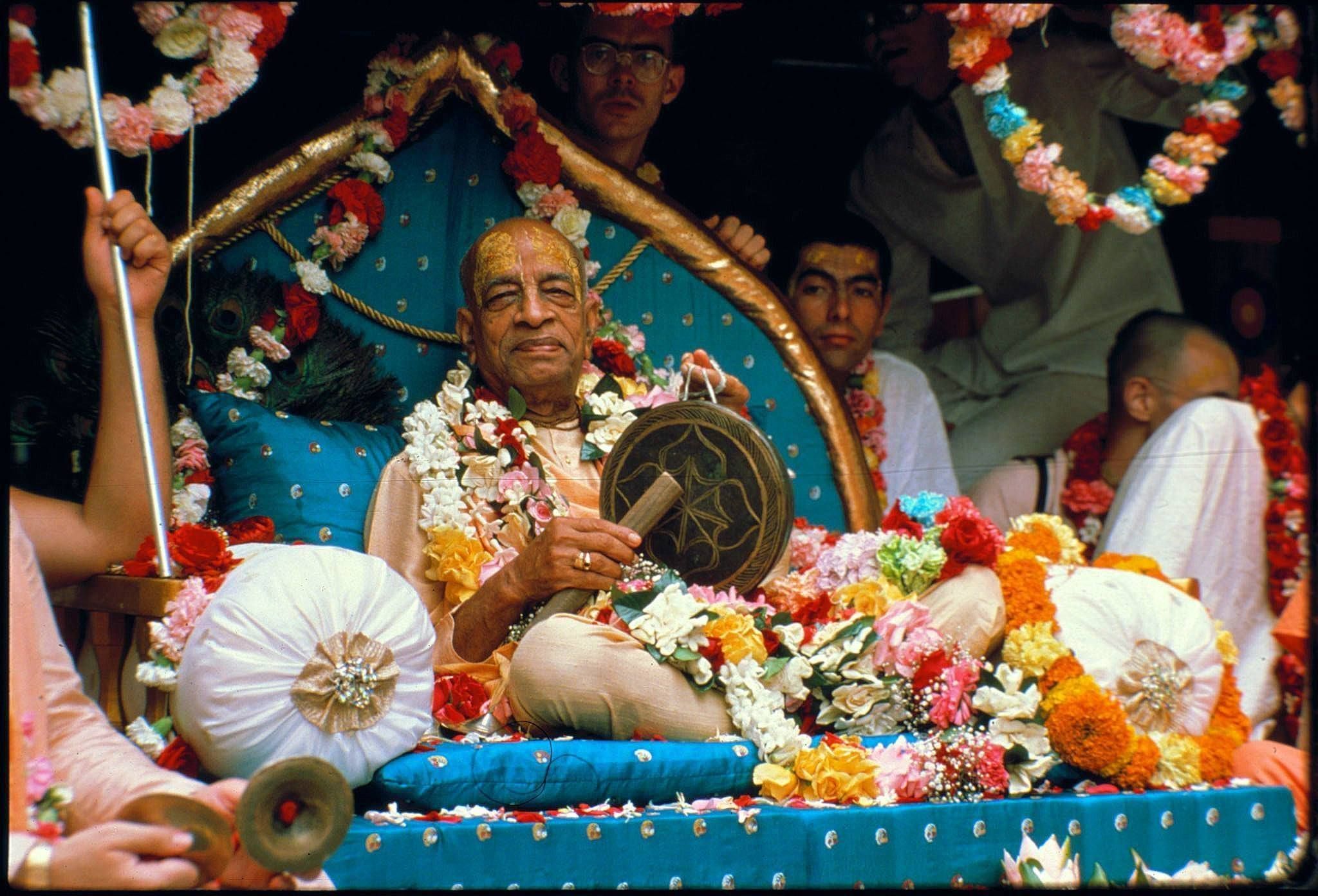
This is such a beautiful picture of Srila Prabhupada with his japa bag, that we thought we would do a short post on ‘japa’.
When a mantra or hymn is chanted softly and slowly, that is called japa. The same mantra, when chanted loudly, is called kīrtana. For example, the mahā-mantra (Hare Kṛṣṇa, Hare Kṛṣṇa, Kṛṣṇa Kṛṣṇa, Hare Hare/ Hare Rāma, Hare Rāma, Rāma Rāma, Hare Hare) when uttered very softly only for one’s own hearing is called japa. The same mantra, when chanted loudly for being heard by all others, is called kīrtana. The mahā-mantra can be used for japa and kīrtana also. When japa is practiced it is for the personal benefit of the chanter, but when kīrtana is performed it is for the benefit of all others who may hear.
In the Padma Purāṇa there is a statement: “For any person who is chanting the holy name either softly or loudly, the paths to liberation and even heavenly happiness are at once open.” (Nectar of Devotion Chapter 9)
Of all the sacrifices, the chanting of Hare Kṛṣṇa, Hare Kṛṣṇa, Kṛṣṇa Kṛṣṇa, Hare Hare/ Hare Rāma, Hare Rāma, Rāma Rāma, Hare Hare is the purest representation of Kṛṣṇa. (from purport; Bhagavad-gita 10.25)
More
06 Aug 2017
by The Hare Krishna Movement
in A.C. Bhaktivedanta Swami Prabhupada, chanting, Chanting Hare Krishna, Hare Krishna Maha Mantra, Kali Yuga, Sankirtan
Tags: A. C. Bhaktivedanta Swami Pabhupada, chant Hare Krishna, chanting Hare Krishna, hare krishna maha mantra, kirtanad eva krsnasya, Srila Prabhupada, Srimad Bhagavatam
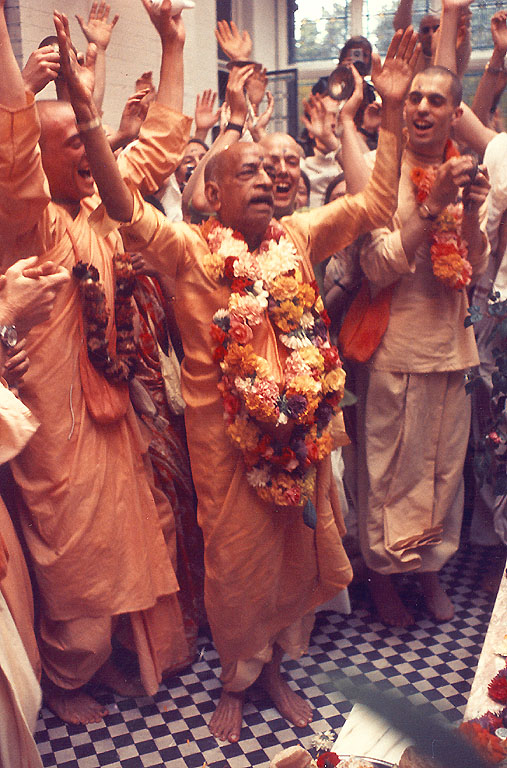
We all have our favorite quotes and slokas from the pages of Srila Prabhupada’s books. One of mine is the following:
“My dear King, although Kali-yuga is full of faults, there is still one good quality about this age. It is that simply by chanting the Hare Kṛṣṇa mahā-mantra, one can become free from material bondage and be promoted to the transcendental kingdom.” (Bhāg. 12.3.51)
Srila Prabhupada quotes this partictular verse from the Bhagavatam many times in his lectures, conversations, books etc., for instance:
“In the sastra it is said this Kali-yuga is full of faults, so many faults. It is the ocean of faults. But there is a very nice thing, asti hy eko mahan gunah, a very great quality. What is that? Kirtanad eva krsnasya mukta-sangah param vrajet [SB 12.3.51]. If you simply chant Hare Krishna mantra, then you become perfect. Is it very difficult? Chant Hare Krishna and you become perfect. But we are so unfortunate, we are not even prepared to chant. This is our position. So you have to make little determination that ‘I shall chant henceforward Hare Krishna mantra.’ Then everything is all right.”
More
23 Jan 2017
by The Hare Krishna Movement
in A.C. Bhaktivedanta Swami Prabhupada, chanting, Chanting Hare Krishna, Maha-mantra, Music
Tags: A.C. Bhaktivedanta Swami Prabhupada, chanting Hare Krishna, chanting of Hare Krishna, Happening Album, illusion is called maya, illusory struggle, Krishna consciousness, material nature, stringent laws of material nature, struggle for existence, transcendental plane

click on image to enlarge
Hare Krishna Address
Click Here to listen to Srila Prabhupada’s address in mp3 format
As explained on the cover of the record album, this transcendental vibration — by chanting of Hare Krishna, Hare Krishna, Krishna Krishna, Hare Hare/ Hare Rama, Hare Rama, Rama Rama, Hare Hare — is the sublime method for reviving our Krishna consciousness. As living spiritual souls we are all originally Krishna conscious entities, but due to our association with matter since time immemorial, our consciousness is now polluted by material atmosphere. In this polluted concept of life, we are all trying to exploit the resources of material nature, but actually we are becoming more and more entangled in her complexities.
This illusion is called Maya, or hard struggle for existence over the stringent laws of material nature. This illusory struggle against the material nature can at once be stopped by revival of our Krishna consciousness.
More
07 Nov 2016
by The Hare Krishna Movement
in A.C. Bhaktivedanta Swami Prabhupada, Caitanya Mahaprabhu, chanting, Chanting Hare Krishna, Sri Siksastakam
Tags: Caitanya, ceto-darpana-marjanam, chanting Hare Krishna, cleanse the heart, eight verses, Lord Sri Caitanya Mahaprabhu, mantra mediation, mercy of Sri Caitanya Mahaprabhu, morning meditation, Spiritual Life, Sri Siksastakam

click on image to enlarge
This morning we are posting the Siksastakam prayers by Sri Caitanya Mahaprabhu and commentary by our Srila Prabhupada. This is a very nice morning meditation
Sri Siksastakam
The Eight Instructions of Sri Chaitanya Mahaprabhu
From: “Teachings of Lord Chaitanya” Original version 1968
by His Divine Grace A. C. Bhaktivedanta Swami Prabhupada
Lord Sri Krishna Chaitanya Mahaprabhu appeared 500 years ago in Navadvip, West-Bengal and is considered the most recent incarnation of the Supreme Personality of Godhead Sri Krishna.
He left us only eight verses, called Siksastakam, in which His mission and precepts are revealed.
Lord Chaitanya Mahaprabhu (1486-1535) started His worldwide Sankirtan mission of propagating the chanting of the holy name of the Lord (the process of self-realization for this age – to meditate upon the sound of the maha-mantra: Hare Krishna Hare Krishna, Krishna Krishna Hare Hare, Hare Rama Hare Rama, Rama Rama Hare Hare).
Text 1
ceto-darpana-marjanam bhava-maha–davagni-nirvapanam
shreyah-kairava-chandrika-vitaranam vidya-vadhu-jivanam
anandambudhi-vardhanam prati-padam purnamritaswadanam
sarvatma-snapanam param vijayate sri-krishna-sankirtanam
Glory to the Sri Krishna Sankirtana, which cleanses the heart of all the dust accumulated for years and extinguishes the fire of conditional life, of repeated birth and death. This sankirtana movement is the prime benediction for humanity at large because it spreads the rays of the benediction moon. It is the life of all transcendental knowledge. It increases the ocean of transcendental bliss, and it enables us to fully taste the nectar for which we are always anxious.
More
28 Oct 2016
by The Hare Krishna Movement
in A.C. Bhaktivedanta Swami Prabhupada, chanting, Chanting Hare Krishna, Maha-mantra, Mantra Meditation
Tags: Adi 7.72, chanting Hare Krishna, essence of all mantras, holy name of Krsna, japa, Lord Visnu, Madhya22.113, Maha Mantra, mantra meditation, spiritual master, success in spiritual life, Vedic hymns, Vedānta philosophy
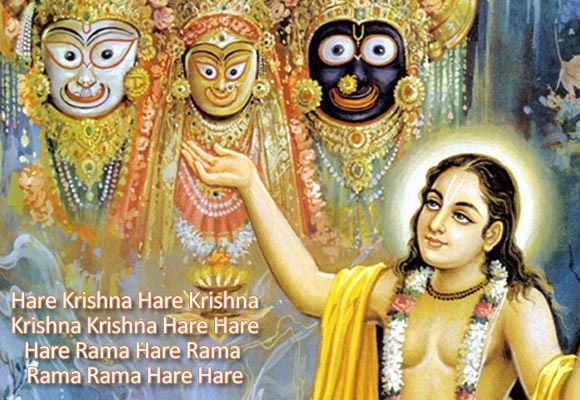
This morning I was reminded of the importance of chanting sixteen rounds. Sometimes I think my work or service is more important than my chanting…but in the following verses and purports Srila Prabhupa makes it very clear; “One may have other duties to perform under the direction of the spiritual master, but he must first abide by the spiritual master’s order to chant a certain number of rounds.”, and I thank the devotee who reminded me of this important instruction.
…There are many regulative principles in the śāstras and directions given by the spiritual master. These regulative principles should act as servants of the basic principle-that is, one should always remember Kṛṣṇa and never forget Him. This is possible when one chants the Hare Kṛṣṇa mantra. Therefore one must strictly chant the Hare Kṛṣṇa mahā-mantra twenty-four hours daily. One may have other duties to perform under the direction of the spiritual master, but he must first abide by the spiritual master’s order to chant a certain number of rounds. In our Kṛṣṇa consciousness movement, we have recommended that the neophyte chant at least sixteen rounds. This chanting of sixteen rounds is absolutely necessary if one wants to remember Kṛṣṇa and not forget Him. Of all the regulative principles, the spiritual master’s order to chant at least sixteen rounds is most essential. (from purport Madhya-lila 22.113)
…Of all the sacrifices, the chanting of Hare Kṛṣṇa, Hare Kṛṣṇa, Kṛṣṇa Kṛṣṇa, Hare Hare/ Hare Rāma, Hare Rāma, Rāma Rāma, Hare Hare is the purest representation of Kṛṣṇa. (from purport Bg 10.25)
…Śrī Bhaktisiddhānta Sarasvatī Gosvāmī Mahārāja comments in this connection, “One can become perfectly successful in the mission of his life if he acts exactly according to the words he hears from the mouth of his spiritual master.” This acceptance of the words of the spiritual master is called śrauta-vākya, which indicates that the disciple must carry out the spiritual master’s instructions without deviation. Śrīla Viśvanātha Cakravartī Ṭhākura remarks in this connection that a disciple must accept the words of his spiritual master as his life and soul. Śrī Caitanya Mahāprabhu here confirms this by saying that since His spiritual master ordered Him only to chant the holy name of Kṛṣṇa, He always chanted the Hare Kṛṣṇa mahā-mantra according to this direction (‘kṛṣṇa-mantra’ japa sadā,-ei mantra-sāra). (from purport to Adi-lila 7.72)
More
15 Sep 2016
by The Hare Krishna Movement
in A.C. Bhaktivedanta Swami Prabhupada, chanting, Chanting Hare Krishna, Haridasa Thakura, Harinama Sankirtan, Sri Caitanya-Caritamrta, Yogi
Tags: A. c. Bhaktivedanta Swami Prabhupada, chanting Hare Krishna, Chanting the holy name, dissaapearance of haridasa thakur, funeral ceremony, Haridasa Thakur, holy name, Jesus Christ, Namacharya, pradada, Sri Caitanya Mahaprabhu, Srila Prabhupada, yogi

Today we honor Srila Haridasa Thakura’s Disappearance Day. We are posting the entire chapter from the Sri Caitanya-caritamrta entitled “The Passing of Haridasa Takura”
“After the passing away of Haridasa Ṭhakura, the Lord Himself took his body on His lap and danced with it in great ecstasy.” (Caitanya-caritamrta Adi 10.46)
“The transcendental qualities of Haridasa Ṭhakura are innumerable and unfathomable. One may describe a portion of them, but to count them all is impossible.” (Caitanya-caritamrta Antya 3.95)
Śrī Caitanya-caritāmṛta
By His Divine Grace A. C. Bhaktivedanta Swami Prabhupāda
Antya-līlā, Chapter 11
The Passing of Haridāsa Ṭhākura
The summary of the chapter is given by Śrīla Bhaktivinoda Ṭhākura in his Amṛta-pravāha-bhāṣya as follows. In this chapter, Brahma Haridāsa Ṭhākura gave up his body with the consent of Śrī Caitanya Mahāprabhu, and the Lord Himself personally performed the funeral ceremony and carried the body to the sea. He personally entombed the body, covered it with sand, and erected a platform on the site. After taking bath in the sea, He personally begged prasāda of Jagannātha from shopkeepers and distributed prasāda to the assembled devotees.
Full Chapter More







 The Hare Krishna Movement