Neutral Love of God (Santa-rasa)

Today we are exploring the Neutral stage of Love of God, (santa-rasa), as explained in chapter 35 of “The Nectar of Devotion”.

“When the yogi sees the eternal form of Visnu and appreciates the Lord’s beauty in awe and veneration, he is situated in the neutral stage of love of God.”

…Some great sages have attained this neutral position by practicing austerity, penance and meditation to control the senses. Such sages are generally called mystic yogīs, and in most cases they are inclined to appreciate the spiritual pleasure of the impersonal feature of the absolute truth. They are practically unaware of the transcendental pleasure derived from personal contact with the Supreme Godhead.

When some great saintly persons who had undergone penances and austerities saw the four-handed transcendental form of Visnu, they began to remark as follows: “This four-handed form of the Lord, manifested in a bluish color, is the reservoir of all pleasure and the center of our living force. Actually, when we see this eternal form of Visnu, we, along with many other paramahaṁsas, become immediately captivated by the beauty of the Lord.” This appreciation of Lord Visnu by saintly persons is an instance of situation in santa-rasa, or the neutral stage of devotional service. In the beginning, those who are aspiring for salvation try to get out of the material entanglement by performing painful austerities and penances, and ultimately they come to the impersonal status of spiritual realization. At this brahma-bhuta [SB 4.30.20] stage of liberation from the material entanglement, the symptoms, as explained in the Bhagavad-gita, are that one becomes joyous beyond any hankering or lamentation and gains a universal vision. When the devotee is situated in the santa-rasa, or neutral stage of devotional service, he appreciates the Visnu form of the Lord.

More
Friendly Relationship with the Lord (Dāsya)

O Krsna O Yadava

There are five basic relationships a devotee might have with the Lord; namely in the neutral stage (sānta-rasa), which is the stage of awe and reverence. Knowing that God is Great. Then there are four transcendental mellows (rasas); servitude (dāsya), friendship (sakhya), parental affection (vātsalya) and conjugal love (śṛṅgāra).

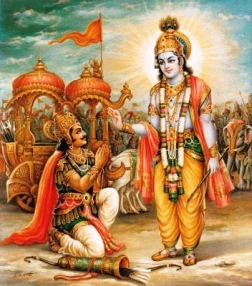
Kṛṣṇa and Arjuna are related in friendship.

Arjuna was in a relationship with the Lord as friend. Of course there is a gulf of difference between this friendship and the friendship found in the material world. This is transcendental friendship which cannot be had by everyone. Of course everyone has a particular relationship with the Lord, and that relationship is evoked by the perfection of devotional service. But in the present status of our life, we have not only forgotten the Supreme Lord, but we have forgotten our eternal relationship with the Lord. Every living being, out of many, many billions and trillions of living beings, has a particular relationship with the Lord eternally. That is called svarūpa. By the process of devotional service, one can revive that svarūpa, and that stage is called svarūpa-siddhi-perfection of one’s constitutional position. So Arjuna was a devotee, and he was in touch with the Supreme Lord in friendship. (from Introduction to Bhagavad-gita As It Is)

The following verse is one of my most favorite from the Bhagavad-gita As It Is.

I have in the past addressed You as “O Kṛṣṇa,” “O Yādava,” “O my friend,” without knowing Your glories. Please forgive whatever I may have done in madness or in love. I have dishonored You many times while relaxing or while lying on the same bed or eating together, sometimes alone and sometimes in front of many friends. Please excuse me for all my offenses.

I find this verse to be a beautiful expression of what is Bhakti Yoga. It is a personal loving exchange with the Lord. There are two ways to approach the Lord. One can approach the Lord with awe and reverence (sānta-rasa), or with a more personal approach; love and affection.

Kṛṣṇa’s devotees relate to Kṛṣṇa in various relationships.. Kṛṣṇa and Arjuna are related in friendship. As the father tolerates, or the husband or master tolerates, so Kṛṣṇa tolerates. Very Beautiful!

Bhagavad-gita As It Is Texts 40-45 More

108 Imporant Slokas from the 1972 Bhagavad-gita As It Is

Click on image to go to Post

Click on image to go to Post

The Hare Krishna Cookbook

Songs of the Vaisnava Acaryas

Bhagavad-gita As It Is 1972 Edition “Online”

click on image

click on image to visit site

Srimad Bhagavatam Online

click on image

Raja-Vidya the King of Knowledge

click on image

click on image

Blog Stats

  • 4,571,952 hits

Enter your email address to subscribe to this blog and receive notifications of new posts by email.

Join 3,906 other subscribers

Important Slokas from the Brahma-samhita

click on image

click on image

Slokas from the Sri Isopanisad

click on image

click on image

Prayers By Queen Kunti (Slokas)

click on image

Gajendra’s Prayers of Surrender (Slokas)

click on image

A Short Statement of the Philosophy of Krishna Consciousness

click on image

click on image

July 9th Letter

click on image

click on image

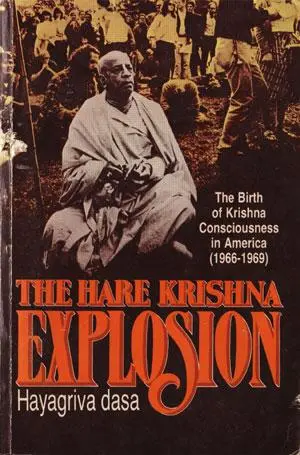
The Hare Krishna Explosion

Reference Material/Study Guide

click on image

click on image

  • LINKS