Prayers Offered to Lord Nrsimhadeva

nrsimha

Today we honor the Appearance day of Lord Nṛsiṁhadeva, with a fast till sunset and the following text from the Śrīmad-Bhāgavatam. So shortly after the Lord killed Hiraṇyakaśipu, and his armies, the Lord sat Himself on the throne of Hiraṇyakaśipu, and was offered prayers by all the assembled saintly persons and demigods.

…The Lord not only killed Hiraṇyakaśipu, the King of the demons, but also killed many of his followers. When there was no one else to fight, the Lord, roaring with anger, sat down on Hiraṇyakaśipu’s throne.

The entire universe was thus relieved of the rule of Hiraṇyakaśipu, and everyone was jubilant in transcendental bliss. Then all the demigods, headed by Lord Brahmā, approached the Lord. These included the great saintly persons, the Pitās, the Siddhas, the Vidyādharas, the Nāgas, the Manus, the prajāpatis, the Gandharvas, the Cāraṇas, the Yakṣas, the Kimpuruṣas, the Vaitālikas, the Kinnaras and also many other varieties of beings in human form. All of them stood not far from the Supreme Personality of Godhead and began offering their prayers unto the Lord, whose spiritual effulgence was brilliant as He sat on the throne. (from the chapter summary)

More

Śrīla Prabhupāda Stotram

Srila-Prabhupada-Sun

Śrīla Prabhupāda Stotram
(Composed by Ananta Dasa Sastri)

Ananta Dasa Sastri was a disciple of Srila Prabhupāda. He used to travel with Srila Prabhupāda in India and he was in the Sanskrit department assisting Srila Prabhupāda in translation work. He compiled five slokas which describe much of Srila Prabhupāda’s divine character and his divine mission also.Prabhupāda very much liked these five slokas. We used to sing them every morning before Guru Puja by his vyasasana, so some of you may remember them.

More

The Perfectional Stage of Spiritual Life

His Divine Grace A.C. Bhaktivedanta Swami Prabhupada

As devotees, or rather as practitioners of bhakti-yoga, we should be aspiring to act in such a way that all of our actions and words will be an inspiration to others. We are representatives of our spiritual master and Krishna. And as such should try to act according to the instructions given in the Bhagavad-gita.

The perfectional stage of spiritual life which one can experience even while being in the material world is described in the Twelfth Chapter of Bhagavad-gītā as follows:

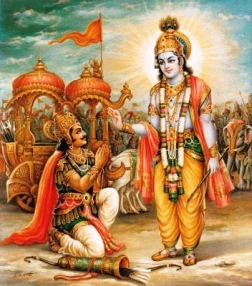
“One who is not envious but who is a kind friend to all living entities, who does not think himself a proprietor, who is free from false ego and equal both in happiness and distress, who is always satisfied and engaged in devotional service with determination and whose mind and intelligence are in agreement with Me-he is very dear to Me. He for whom no one is put into difficulty and who is not disturbed by anxiety, who is steady in happiness and distress, is very dear to Me. A devotee who is not dependent on the ordinary course of activities, who is pure, expert, without cares, free from all pains, and who does not strive for some result, is very dear to Me. One who grasps neither pleasure or grief who neither laments nor desires, and who renounces both auspicious and inauspicious things, is very dear to Me. One who is equal to friends and enemies, who is equipoised in honor and dishonor, heat and cold, happiness and distress, fame and infamy, who is always free from contamination, always silent and satisfied with anything, who doesn’t care for any residence, who is fixed in knowledge and engaged in devotional service, is very dear to Me. He who follows this imperishable path of devotional service and who completely engages himself with faith, making Me the supreme goal, is very, very dear to Me.” (Bg. 12.13-20)

More

Govardhana Pūjā

Krsna lifting govardhan hill1

On November 3rd the festival known as Govardhana Pūjā is celebrated.

The sacrifice known as Govardhana Pūjā is observed in the Kṛṣṇa consciousness movement. Lord Caitanya has recommended that since Kṛṣṇa is worshipable, so His land, Vṛndāvana and Govardhana Hill, are also worshipable. To confirm this statement, Lord Kṛṣṇa said that Govardhana Pūjā is as good as worship of Him. From that day, the Govardhana Pūjā has been still going on and is known as Annakūṭa. In all the temples of Vṛndāvana or outside of Vṛndāvana, huge quantities of food are prepared in this ceremony and are very sumptuously distributed to the general population. Sometimes the food is thrown to the crowds, and they enjoy collecting it off the ground. From these instances, we can understand that prasādam offered to Kṛṣṇa never becomes polluted or contaminated, even if it is thrown on the ground. The people, therefore, collect it and eat with great satisfaction. (Kṛṣṇa, The Supreme Personality of Godhead, chapter 24)

…Formerly, at the end of Dvāpara-yuga, all the cowherd men of Vṛndāvana had arranged to worship King Indra, but they gave this worship up, following the advice of Kṛṣṇa. Instead, they performed a ceremony whereby they worshiped the cows, brāhmaṇas and Govardhana Hill. At that time Kṛṣṇa expanded Himself and declared, “I am Govardhana Hill.” In this way He accepted all the paraphernalia and food offered to Govardhana Hill. (from purport of Sri Caitanya-caritamrta, Madhya-lila 4.86)

More

Honey, which is Transcendentally Relished by the Devotees

honey1

This last week we harvested some of the honey from our bee hives, and as we extracted it I was in awe of its beautiful golden color. After we offered some of it to the Lord, we sampled its taste and it was amazing, not of this world. They must be devotee bees’s gathering the nectar from the lotus flowers and rose gardens at Srila Prabhupada’s Palace of Gold, here at New Vrindavan. The taste and texture was other-worldly, and remarkable. So I thought I would take a moment to to find some references on honey from Srila Prabhupada’s Books.

The pure devotees are always hankering after the lotus feet of the Lord. The lotus has a kind of honey which is transcendentally relished by the devotees. They are like the bees who are always after the honey. Śrīla Rūpa Gosvāmī, the great devotee ācārya of the Gauḍīya-Vaiṣṇava-sampradāya, has sung a song about this lotus honey, comparing himself to the bee:

“O my Lord Kṛṣṇa, I beg to offer my prayers unto You. My mind is like the bee, and it is after some honey. Kindly, therefore, give my bee-mind a place at Your lotus feet, which are the resources for all transcendental honey.” (SB 1.11.26)

When the Lord entered the forest of Vṛndāvana, all the inhabitants of the forest, both animate and inanimate, were eager to receive Him. He saw that the flowers of the forest, all fully blossoming, were weeping in ecstasy, honey flowing down their petals. The waterfalls on the hilly rocks were gladly flowing, and one could hear sweet sounds from the caves nearby. (Light of the Bhagavata text 24)

More

Who is My Disciple?

Śrīla Prabhupāda vāṇī
Submitted by Vidura das

Srila Prabhupada: Who is my disciple? First of all let him follow strictly the disciplined rules.

Disciple: As long as they are following, then he is…

Srila Prabhupada: Then he is all right.

(Morning Walk — June 13, 1976, Detroit)

Next Newer Entries

108 Imporant Slokas from the 1972 Bhagavad-gita As It Is

Click on image to go to Post

Click on image to go to Post

The Hare Krishna Cookbook

Songs of the Vaisnava Acaryas

Bhagavad-gita As It Is 1972 Edition “Online”

click on image

click on image to visit site

Srimad Bhagavatam Online

click on image

Raja-Vidya the King of Knowledge

click on image

click on image

Blog Stats

  • 4,551,611 hits

Enter your email address to subscribe to this blog and receive notifications of new posts by email.

Join 3,909 other subscribers

Important Slokas from the Brahma-samhita

click on image

click on image

Slokas from the Sri Isopanisad

click on image

click on image

Prayers By Queen Kunti (Slokas)

click on image

Gajendra’s Prayers of Surrender (Slokas)

click on image

A Short Statement of the Philosophy of Krishna Consciousness

click on image

click on image

July 9th Letter

click on image

click on image

The Hare Krishna Explosion

Reference Material/Study Guide

click on image

click on image

  • LINKS