16 Jan 2012
by The Hare Krishna Movement
in Books by Srila Prabhupada, Free Downloads, Free eBooks, Prahlada-Nrsimha das
Tags: books by His Divine Grace A.C. Bhaktivedanta Swami Prabhupada, books online, free download, free eBooks, Krishna Path, Srila Prabhupada, the philosophy of devotion

The other day I was asked “Where can I find Srila Prabhupada’s Original Books online to download to my laptop?” I thought for a moment and remembered this fine web site to reccomend; Krishna Path This is a very nice site! And we encourage all our readers to visit it, and download one of Srila Prabhupada’s Original books to their home or laptop computer.
http://www.krishnapath.org/
14 Jan 2012
by The Hare Krishna Movement
in Guru & Disciple, Srila Prabhupada
Tags: devotional sentiments, guru and disciple, Guru Maharaja, mercy of Krishna, Niragadeva das, spiritual master is present, spiritual masters instructions, Srila Prabhupada

“The Spiritual Master is present wherever his sincere disciple is trying to serve his instructions. This is possible by the mercy of Krishna. In your attempts to serve me, and in all your sincere devotional sentiments I am with you, as my Guru Maharaja is with me. Remember this always…I shall never leave you. You are my disciple and I am your Sriritual Master, so there is no question, as long as you follow my instructions, than I shall never leave you” -Srila Prabhupada
13 Jan 2012
by The Hare Krishna Movement
in Devotee's, Guru & Disciple, Prahlada-Nrsimha das, Srila Prabhupada
Tags: GBC, Iskcon, Prabhavisnu das, prabhupada, Prahlada-Nrsimbha, Rupanuga das, Sannyasi, Srila Prabhupada

His Divine Grace A.C. Bhaktivedanta Swami Prabhupada Founder Acarya of the International Society for Krishna Consciousness
This is an older post that appeared sometime back on the Sampradaya Sun, but in light of all the discussion on the plight of the ex-GBC/sannyasi/guru; Prabhavisnu Prabhu, we thought it important to remind our readers again of the unique position of Srila Prabhupada. As Prahlada-Nrsimbha reminds us in the following article…”Let us — members of ISKCON, friends of ISKCON, “fringes”, haters of ISKCON, whoever, everyone, just love Srila Prabhupada and fly the one flag of Srila Prabhupada over our heads, and all of us be united under Srila Prabhupada’s lotus feet!”
Fly the One Flag of Srila Prabhupada
By Prahlada-Nrsimha Prabhu
Aug 23, 2011 — USA (SUN)
Dear Rupanuga Prabhu I respect and admire you greatly! I just read your recent article, entitled “The World Acarya”. It is so inspiring to me how you honor Srila Prabhupada very nicely, concluding by saying: “…in due time, people will understand the true meaning of “Prabhupada” – the Master (Prabhu) at whose lotus feet (pada) all others pay their obeisances. All glories to Srila Prabhupada…”
It gives my heart great happiness to see others recognize the unique position of Srila Prabhupada and acknowledge that we (at best) sit at his feet in his shadow as a speck of insignificant dust in comparison to Srila Prabhupada.
I feel now (and since 1977) in ISKCON, Srila Prabhupada is greatly minimized. I have seen that devotees initiated since 1977, the devotee that gives the name and chants on the beads of the newly initiated disciple is given more importance then Srila Prabhupada.
I more often than not meet devotees that have been initiated by devotees in ISKCON and they know the mood and standpoint on various subjects of the devotee that has preformed their initiation ceremony (and/or their local GBC or temple president) and they can even quote him on so many subjects. But when I quote Srila Prabhupada on these subjects they have no idea that Srila Prabhupada said this. They only know what their own GBC or initiator or temple president said.
More
13 Jan 2012
by The Hare Krishna Movement
in A.C. Bhaktivedanta Swami Prabhupada, Devotee's, Lectures, Srimad Bhagavatam
Tags: Ajamila, devotees, Lectures by Srila Prabhupada, Narayana, SB 6.1.28-29, sinful persons, Srila Prabhupada, Srimad Bhagavatam, Visnudutas, Yamaduta, Yamaraja

“At the time of his death the sinful Ajamila saw three awkward persons with deformed bodily features, fierce, twisted faces, and hair standing erect on their bodies. With ropes in their hands, they had come to take him away to the abode of Yamaraja. When he saw them he was extremely bewildered, and because of attachment to his child, Narayana, who was playing a short distance away, Ajamila began to cal him loudly by his name. Thus with tears in his eyes he somehow or other chanted the holy name of Narayana. the order carriers of Visnu, the Visnudutas, immediately arrived when when they heard the holy name of their master from the mouth of the dying Ajamila. The order carriers of Yamaraja were snatching the soul from the core of the heart of Ajamila, the husband of the prostitute, but with resounding voices the messengers of Lord Visnu, the Visnudutas, forbade them to do so” (from Srimad Bhagavatam 6.1.27-29)
Srimad Bhagavatam Lectures
By His Divine Grace A.C. Bhaktivedanta Swami Prabhupada
SB 6.1.28-29 May 28, 1975 Honolulu
Pradyumna: Translation: “Ajāmila then saw three awkward persons with deformed bodily features, fierce, twisted faces, and hair standing erect on their bodies. With ropes in their hands they had come to take him away to the abode of Yamarāja. When he saw them he was extremely bewildered, and because of attachment to his child, who was playing a short distance away, Ajāmila began to call him loudly by his name. Thus, with tears in his eyes, he somehow or other chanted the holy name of Nārāyaṇa.” [SB 6.1.28-29]
Prabhupāda: Sa pāśa-hastāṁs trīn dṛṣṭvā puruṣān ati-dāruṇān. So, at the time of death there are so many disturbance. We have got experience, but you have forgot because bhūtvā bhūtvā pralīyate [Bg. 8.19]. But these things are observed by the sinful person. The Yamadūta, they come to take to the sinful, sinful person, not devotees. Just like the whole population of the city, they are not all subjected to the prison laws. Some criminals. Similarly, this Yamadūta goes to such sinful persons. They are not all. But it is the question of Ajāmila… He was so sinful that automatically the Yamadūtas came, and they wanted to take him.
full lecture More
12 Jan 2012
by The Hare Krishna Movement
in Krishna, Teachings of Queen Kunti
Tags: A.C. Bhaktivedanta Swami Prabhupada, Krsna, kunty uvaca, Srimad Bhagavatam, Srimati Kuntidevi, Teachings of Queen Kunti, The Original Person
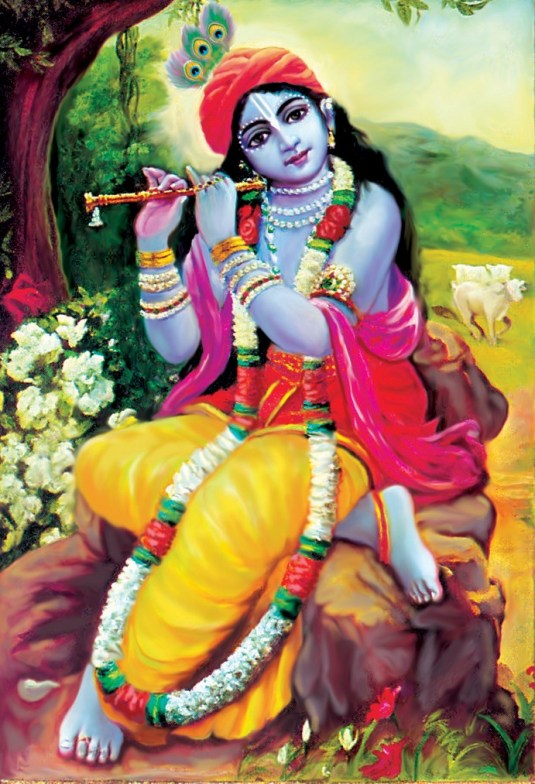
Teachings of Queen Kunti
By His Divine Grace A.C. Bhaktivedanta Swami Prabhupada
Chapter 1, The Original Person
kunty uvāca
namasye puruṣaṁ tvādyam
īśvaraṁ prakṛteḥ param
alakṣyaṁ sarva-bhūtānām
antar bahir avasthitam
Śrīmatī Kuntī said: O Kṛṣṇa, I offer my obeisances unto You because You are the original personality and are unaffected by the qualities of the material world. You are existing both within and without everything, yet You are invisible to all. —Śrīmad-Bhāgavatam 1.8.18
Śrīmatī Kuntīdevī was quite aware that Kṛṣṇa is the original Personality of Godhead, although He was playing the part of her nephew. Such an enlightened lady could not commit a mistake by offering obeisances unto her nephew. Therefore, she addressed Him as the original puruṣa beyond the material cosmos. Although all living entities are also transcendental, they are neither original nor infallible. The living entities are apt to fall down under the clutches of material nature, but the Lord is never like that. In the Vedas, therefore, He is described as the chief among all living entities (nityo nityānāṁ cetanaś cetanānām). Then again He is addressed as īśvara, or the controller. The living entities or the demigods like Candra and Sūrya are also to some extent īśvara, but none of them is the supreme īśvara, or the ultimate controller. Kṛṣṇa is the parameśvara, or the Supersoul. He is both within and without. Although He was present before Śrīmatī Kuntī as her nephew, He was also within her and everyone else. In the Bhagavad-gītā (15.15) the Lord says, “I am situated in everyone’s heart, and only due to Me one remembers, forgets, and is cognizant, etc. Through all the Vedas I am to be known because I am the compiler of the Vedas, and I am the teacher of the Vedānta.” Queen Kuntī affirms that the Lord, although both within and without all living beings, is still invisible. The Lord is, so to speak, a puzzle for the common man. Queen Kuntī experienced personally that Lord Kṛṣṇa was present before her, yet He entered within the womb of Uttarā to save her embryo from the attack of Aśvatthāmā’s brahmāstra. Kuntī herself was puzzled about whether Śrī Kṛṣṇa is all-pervasive or localized. In fact, He is both, but He reserves the right of not being exposed to persons who are not surrendered souls. This checking curtain is called the māyā energy of the Supreme Lord, and it controls the limited vision of the rebellious soul. It is explained as follows.
11 Jan 2012
by The Hare Krishna Movement
in Books by Srila Prabhupada, Krishna, Raja-Vidya
Tags: A.C. Bhaktivedanta Swami Prabhupada, Banyan tree, jivas, Krsna, material energy, Narada Muni and cobbler, prakrti, Raja-Vidya, spiritual energy, the king of knowledge

Banyan Tree by Herb Kawainui Kane
Click to enlarge
It is not very difficult to see God everywhere in the creation, for He is everywhere present…those who are conversant with the science of Kṛṣṇa can see Him in every atom of the creation.
…You can see that there is this banyan tree, and you can see that so many fruits are falling daily, and in each fruit there are so many seeds, and in every seed there is a banyan tree like this one. If, within a small seed there can be a big tree like this, is it difficult to accept that the Lord is in every atom of creation…
So this is called faith. It is not a question of blindly believing. There is reason behind the belief. If Kṛṣṇa can put a large tree within so many little seeds, is it so astounding that He is keeping all the planetary systems floating in space through His energy?
Raja-Vidya: The King of Knowledge
By His Divine Grace A.C. Bhaktivedanta Swami Prabhupada
Chapter 3
Knowledge of Kṛṣṇa’s Energies
It may be noted at this point that the Ninth Chapter of Bhagavad-gītā is especially meant for those who have already accepted Śrī Kṛṣṇa as the Supreme Personality of Godhead. In other words, it is meant for His devotees. If one does not accept Śrī Kṛṣṇa as the Supreme, this Ninth Chapter will appear as something different from what it actually is. As stated in the beginning, the subject matter of the Ninth Chapter is the most confidential material in the entire Bhagavad-gītā. If one doesn’t accept Kṛṣṇa as the Supreme, he will think the chapter to be a mere exaggeration. This is especially the case with the verses dealing with Kṛṣṇa’s relationship with His creation.
More
10 Jan 2012
by The Hare Krishna Movement
in Diksha, Guru & Disciple, Iskcon Bangalore, Siksa
Tags: guru and disciple, His Divine Grace A.C. Bhaktivedanta Swami Prabhupada, ISKCON Bangalore, ISKCON Mumbi, Madhu Pandit Das, News from Iskcon Bangalore, officiating Acarya, rittvik, Srila Prabhupada Founder Acharya of ISKCON
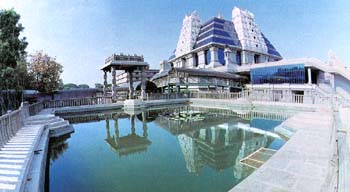
Iskcon Bangalore Temple
Apex Court Dismisses ISKCON Mumbai’s Appeal
By: Bharatarshabha Dasa, Bangalore.
Jan 9, 2012, Monday
The Supreme Court of India today dismissed an appeal filed by ISKCON Mumbai, seeking to initiate contempt of court proceedings against Sri Madhu Pandit Dasa, President of ISKCON Bangalore. The Supreme Court Bench consisting of Honorable Justice HL Dattu and Honorable Justice Chandramouli KR Prasad today gave this judgment on the appeal filed by ISKCON Mumbai challenging the verdict of the High Court which had opined that no contempt was committed by Sri Madhu Pandit Dasa. While pronouncing the verdict one of the Honorable Judges said that Supreme Court is not a forum meant of settling scores and ISKCON Mumbai’s petition attempts to settle some scores with Madhu Pandit Dasa.
More
09 Jan 2012
by The Hare Krishna Movement
in Back to Godhead, Braja Sevaki devi, Festivals, Panca-Tattva, Sri Prahlada das
Tags: Back to Godhead Magazine, Braja-sevaki devi dasi, deity installation, Hare Krishna Devotees, His Divine Grace A.C. Bhaktivedanta Swami Prabhupada, Iskcon, Panca-tattva, Special Panca-Tattva Edition. Mayapur, Sri Prahlada dasa

The following is an Excerpted article from ‘Back To Godhead’ magazine, one of my favorite issues in recent memory. The “Special Panca-Tattva Edition” This issue was dedicated to the momentous event in the history of the International Society for Krishna Consciousness (ISKCON): the inauguration of the worship of life-sized deities of Sri Panca-tattva (Caitanya Mahaprabhu and His four principal associates) in Mayapur, West Bengal. Ten thousand Hare Krsna devotees from around the world attended the March festival, the culmination of years of preparation and the fulfillment of the vision of His Divine Grace A. C. Bhaktivedanta Swami Prabhupada, ISKCON’s founder-acarya.
From Back to Godhead Magazine Vol 38, No. 4, 2004
Matter to Spirit
The Anatomy of a Deity Installation
by Sri Prahlada Dasa and Braja Sevaki Devi Dasi
Vedic rites and mantras mark the appearance of Sri Panca-tattva in their deity forms.
As the festivities and formalities unfolded in the temple, thousands were drawn into the whirl of color and sound emanating from the main altar as Sri Panca-tattva were unveiled for the first time. Amongst the activities, one stood out in its beauty and intensity: the yajna, or fire sacrifice, being carried out center-stage. Huge flames licked the forty-foot-high ceiling, urged on by great wooden spoonfuls of ghee (clarified butter) and accompanied by a chorus of strong voices chanting Vedic mantras and prayers. This is tattva homa, one of the six rites of the deity installation process—a magical, spiritual, esoteric journey for the senses, mind, and spirit.
The Vedic scriptures teach that the Lord’s name, form, qualities, and pastimes are identical to Him. Thus the deity, as the Lord’s form, and the Lord Himself are identical. Then why the need for an installation? Essentially, the installation process formalizes the Lord’s manifestation. It is a conscious acknowledgment, a contract, so to speak, between the devotee and the Lord, whom the devotee requests to be formally present and to reciprocate with a certain standard of worship. Krsna says in the Bhagavad-gita (4.11), ye yatha mam prapadyante: “As all surrender unto Me, I reward them accordingly.”
More
09 Jan 2012
by The Hare Krishna Movement
in Devotee's, Kanhaiya das, Srila Prabhupada
Tags: devotee, Kanhaiya das, poem to Srila Prabhupada, spiritual master, Srila Prabhupada, Srila Prabhupada's Lotus feet
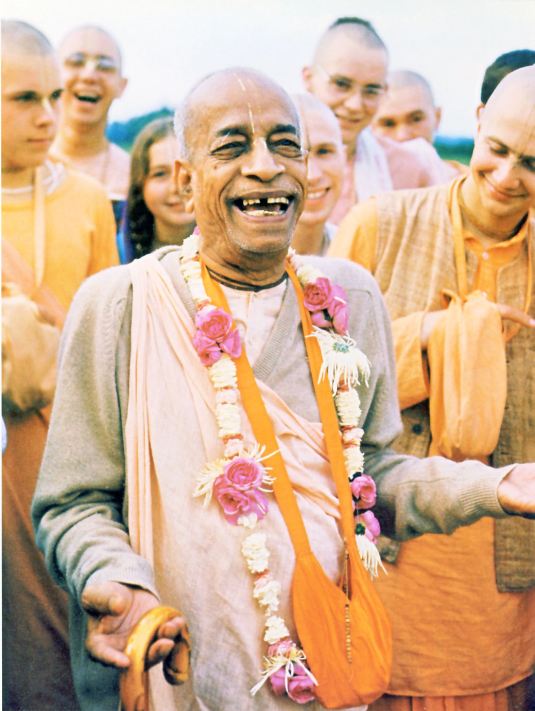
Click photo to enlarge
What else do I want other than Srila Prabhupada’s Lotus feet?
By Kanhaiya Das
“What else do I want other than Srila Prabhupada’s Lotus feet?
In this age of hypocrisy and hatredness that’s my only treat
Who else will remind me of my eternal relationship that I have forgotten,
Just due to the same reason – many million life times, here I have rotten,
When there was so darkness and the path in front I couldn’t see….
When everyone else has given up hopes and abandoned me,
What else do I need other than His Lotus Feet,
Which promise me the world –
The world of love and not hatred,
The world of care and not enviousness
The world of light and not darkness…
The world of association and not isolation…”
More
07 Jan 2012
by The Hare Krishna Movement
in Interview with Srila Prabhupada, Krishna Consciousness, Science of Self Realization, Srila Prabhupada Conversations
Tags: caste system, Christ consciousness, fake gurus, God consciousness, Hare Krsna mantra, Interviews with Srila Prabhupada, krsna consciousness, Sandy Nixon, spiritual master God, Srila Prabhupada
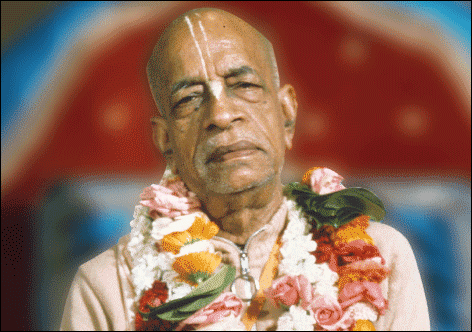
The following interview with freelance reporter Sandy Nixon took place in July 1975, in Śrīla Prabhupāda’s quarters at the Kṛṣṇa center in Philadelphia. This discussion serves as a superb introduction to Kṛṣṇa consciousness and covers such basic topics as the Hare Kṛṣṇa mantra, the relationship between the spiritual master and God, the difference between genuine and fake gurus, the role of women in Kṛṣṇa consciousness, the Indian caste system, and the relationship between Christ consciousness and Kṛṣṇa consciousness.
What is Krsna Consciousness?
Ms. Nixon: My first question is very basic. What is Kṛṣṇa consciousness?
Śrīla Prabhupāda: Kṛṣṇa means God. We are all intimately connected with Him because He is our original father. But we have forgotten this connection. When we become interested in knowing, “What is my connection with God? What is the aim of life?” then we are called Kṛṣṇa conscious.
Ms. Nixon: How does Kṛṣṇa consciousness develop in the practitioner?
Śrīla Prabhupāda: Kṛṣṇa consciousness is already there in the core of everyone’s heart. But because of our materially conditioned life, we have forgotten it. The process of chanting the Hare Kṛṣṇa mahā-mantra—Hare Kṛṣṇa, Hare Kṛṣṇa, Kṛṣṇa Kṛṣṇa, Hare Hare/ Hare Rāma, Hare Rāma, Rāma Rāma, Hare Hare—revives the Kṛṣṇa consciousness we already have. For example, a few months ago these American and European boys andgirls did not know about Kṛṣṇa, but just yesterday we saw how they were chanting Hare Kṛṣṇa and dancing in ecstasy throughout the whole Ratha-yātrā procession [an annual festival sponsored by the Kṛṣṇa consciousness movement in cities around the world]. Do you think that was artificial? No. Artificially, nobody can chant and dance for hours together. They have actually awakened their Kṛṣṇa consciousness by following a bona fide process. This is explained in the Caitanya-caritāmṛta (Madhya 22. 107)
More
06 Jan 2012
by The Hare Krishna Movement
in Krishna Consciousness, Lectures, Srimad Bhagavatam
Tags: constant devotional remembrance. spiritual sky, Damaghosa, His Divine Grace A.C. Bhaktivedanta Swami Prabhupada, krsna consciousness, Lord Krsna, Pradyamuna das, pure consciousness, SB 1.15.47-48, Srila Prabhupada Lecture Srimad Bhagavatam
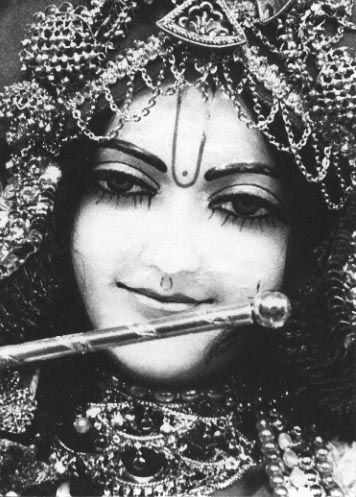
Photo by Damaghosa Prabhu
“If you become devotee of Krsna, then you can live with Krsna, even in this life. Even in this life. Because Krsna is omnipotent, if you are really devotee of Krsna, He will talk with you, He will dance with you, He will eat with you, everything.”
Lecture by His Divine Grace A.C. Bhaktivedanta Swami Prabhupada
December 25, 1973, Los Angeles
Srimad-Bhagavatam 1.15.47-48
Pradyumna: “Thus by pure consciousness due to constant devotional remembrance, they attained the spiritual sky, which is ruled by the Supreme Nārāyaṇa, Lord Kṛṣṇa. This is attained only by those who meditate upon the one Supreme Lord without deviation. This abode of the Lord Śrī Kṛṣṇa, known as Goloka Vṛndāvana, cannot be attained by persons who are absorbed in the material conception of life. But the Pāṇḍavas, being completely washed of all material contamination, attained that abode in their very same bodies.” [SB 1.15.47-48]
Prabhupāda: Tad-dhyāna udriktayā. Dhyāna means meditation. So the Pāṇḍavas, always they were thinking of Kṛṣṇa. While they were eating, they were sitting, they were sleeping, they were talking, they were fighting-Kṛṣṇa. This is Kṛṣṇa consciousness. When Arjuna was fighting, so there was also Kṛṣṇa. When they were dealing in politics with Duryodhana, there was Kṛṣṇa. Kṛṣṇa is his friend, always talking with him, staying with him, sleeping with him, eating with him.
More
05 Jan 2012
by The Hare Krishna Movement
in A.C. Bhaktivedanta Swami Prabhupada, Bhagavad-gita, Krishna Consciousness, Yoga
Tags: bhagavad-gita, bhajete, His Divine Grace A.C. Bhaktivedanta Swami Prabhupada, Krishna, Krishna consciousness, prabhupada, yoga, yogi, yoginam api sarvesam

It is by great fortune that one comes to Kṛṣṇa consciousness on the path of bhakti-yoga to become well situated according to the Vedic direction. The ideal yogī concentrates his attention on Kṛṣṇa, who is called Śyāmasundara, who is as beautifully colored as a cloud, whose lotus-like face is as effulgent as the sun, whose dress is brilliant with jewels and whose body is flower garlanded. Illuminating all sides is His gorgeous luster, which is called the brahmajyoti. He incarnates in different forms such as Rāma, Nṛsiṁha, Varāha and Kṛṣṇa, the Supreme Personality of Godhead, and He descends like a human being, as the son of Mother Yaśodā, and He is known as Kṛṣṇa, Govinda and Vāsudeva. He is the perfect child, husband, friend and master, and He is full with all opulences and transcendental qualities. If one remains fully conscious of these features of the Lord, he is called the highest yogī.
Bhagavad-gita As It Is – Macmillan 1972 Edition
By His Divine Grace A.C. Bhaktivedanta Swami Prabhupada
Chapter 6, Text 47
yoginām api sarveṣāṁ
mad-gatenāntar-ātmanā
śraddhāvān bhajate yo māṁ
sa me yuktatamo mataḥ
yoginām—of all yogīs; api—also; sarveṣām—all types of; mat-gatena—abiding in Me; antaḥ-ātmanā—always thinking of Me within; śraddhāvān—in full faith; bhajate—renders transcendental loving service; yaḥ—one who; mām—Me (the Supreme Lord); saḥ—he; me—Mine; yuktatamaḥ—the greatest yogī; mataḥ—is considered.
Translation
And of all yogīs, he who always abides in Me with great faith, worshiping Me in transcendental loving service, is most intimately united with Me in yoga and is the highest of all.
More
03 Jan 2012
by The Hare Krishna Movement
in Srila Prabhupada, The Hare Krishna Movement
Tags: Bhagavad=gita, Founder Acarya of the International Society for Krishna Consciousness, His Divine Grace A.C. Bhaktivedanta Swami Prabhupada, Krishna, Sri Caitanya, Srila Prabhupada, Srimad Bhagavatam, The Hare Krishna Movement

…Krishna says in the Bhagavad-gita, “one who teaches this most confidential knowledge to others is very dear to Me.” Through his translations of Vedic texts such as the Bhagavad-gita, Srimad Bhagavatam, and the Sri Chaitanya-caritamrita, Srila Prabhupada taught others the instructions of Lord Krishna in a way that was understandable to all…
Srila Prabhupada is a Friend to All
Author unknown
His Divine Grace A.C. Bhaktivedanta Swami, more affectionately known as Srila Prabhupada, is the Founder Acarya of the International Society for Krishna Consciousness, ISKCON, or more popularly known as The Hare Krishna Movement. The movement was inaugurated in India by Lord Caitanya almost five hundred years ago. The age that we currently live in is full of quarrel and dissent and the only means of self-realization is through the constant chanting of the holy name of God.
The Hare Krishna mantra, “Hare Krishna, Hare Krishna, Krishna Krishna, Hare Hare, Hare Rama, Hare Rama, Rama Rama, Hare Hare”, is found in the ancient scriptures of India, and is the most powerful of mantras in this age since it directly addresses God and His energy in a loving way. Lord Chaitanya freely distributed this mantra to all of India through congregational chanting. Srila Prabhupada, a spiritual master in the disciplic succession descending from Lord Chaitanya, preached this same movement in the mid 1960s beginning in America and eventually spreading throughout the world.
More
02 Jan 2012
by The Hare Krishna Movement
in Cow Protection
Tags: Care For Cows, Care for Cows newsletter, cow protection, Kalyan Kalpataru, Kurma Rupa dasa, Vrindavan
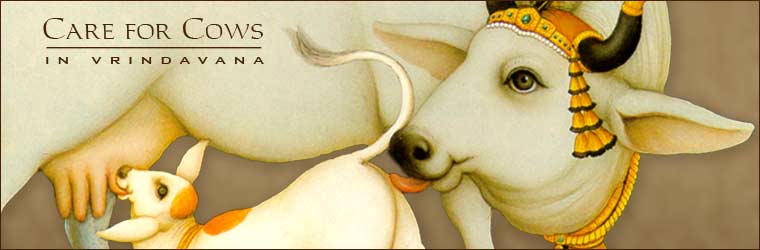
Care For Cows
By Kurma Rupa dasa
Jan 01, 2012 — VRINDAVAN, INDIA (SUN)
Dear Friends, Jai Govinda!
Our January 2012 Care for Cows Newsletter has been posted. Please review it http://careforcows.org/downloads/newsletters_0 at your earliest convenience. In this edition of 22 pages (2.2 MB), we present reports on:
1. Basu Ghosh’s visit to the Bansi Gir Goshalla in Amedhabad, Gujarat.
2. The four new residents admitted this month.
3. A study which demonstrates that cows select best friends.
4. The practical ways to determine if and when your cow is in heat.
5. An excerpt from the famous Kalyana Kalpataru Volume IX February 1945.
Thanks for your participation and support. I hope this finds you experiencing the happiness and inner satisfaction that accompanies cow protection.
Jaya Sri Gopal!
Your friend and servant,
Kurma Rupa dasa
careforcows.org
Pasted from http://www.harekrsna.com/sun/news/01-12/news4112.htm
02 Jan 2012
by The Hare Krishna Movement
in Back to Godhead, Caitanya Mahaprabhu, Chanting Hare Krishna, Hare Krishna Maha Mantra, Sri Siksastakam, Subaldasa Swami, The Hare Krishna Movement
Tags: His Divine Grace A.C. Bhaktivedanta Swami Prabhupada, Krsna consciousness movement, Lord Caitanya, Lord Krsna Caitanya Mahaprabhu, Madhva-Gaudiya-Sampradaya, Sri Siksastakam, Subaldasa Swami

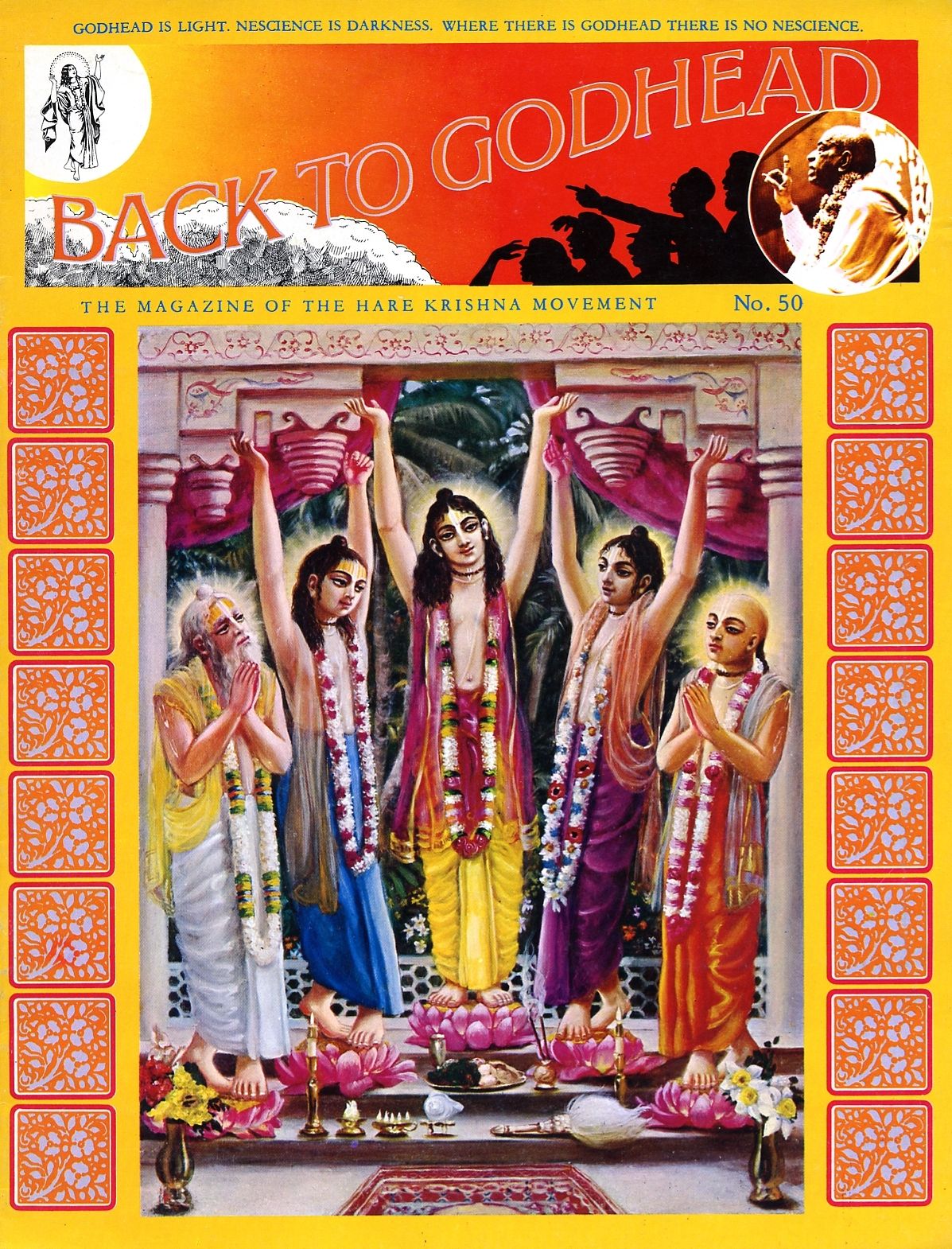
Click on image to enlarge
Lord Caitanya’s Mission and Precepts
Excerpted from ‘Back To Godhead’ magazine, 1973 Vol. 1, No. 49 & 50
As foretold in Vedic scriptures, the Supreme Personality of Godhead appeared on earth 500 years ago in the form of Lord Caitanya, who is God Himself playing the role of a devotee of Godhead. The eight verses entitled Sri Sri Siksastakam, which were the only written instructions of Lord Caitanya, reveal the essence of the Krsna consciousness movement.
Sri Sri Siksastakam
by Sri Krsna Caitanya Mahaprabhu
translated by His Divine Grace A.C. Bhaktivedanta Swami Prabhupada
with purports by His Holiness Subaldasa Svami
1.
ceto-darpana-marjanam bhava-mahadavagni-nirvapanam
sreyah kairava-candrikavitaranam vidyavadhujivanam
anandambudhi-vardhanam pratipadam purnamrtasvadanam
sarvatma-snapanam param vijayate sri-krsna-sankirtanam
Translation
Glory to the Sri Krsna sankirtana, which cleanses the heart of all the dust accumulated for years and extinguishes the fire of conditional life, of repeated birth and death. This sankirtana movement is the prime benediction for humanity at large because it spreads the rays of the benediction moon. It is the life of all transcendental knowledge. It increases the ocean of transcendental bliss, and it enables us to fully taste the nectar for which we are always anxious.
More
01 Jan 2012
by The Hare Krishna Movement
in Bhagavad-gita, Time
Tags: Arjuna, As It Is 1972 Edition, bhagavad-gita, His Divine Grace A.C. Bhaktivedanta Swami Prabhupada, Krishna, past present and future, Srila Prabhupada, supersoul, supreme soul

…Anyone with a material body cannot remember his past life, nor can he foretell his future life, nor can he predict the outcome of his present life; therefore he cannot know what is happening in past, present and future. Unless one is liberated from material contamination, he cannot know past, present and future.
…out of millions and millions of men, some try to become perfect in this human form of life, and out of thousands and thousands of such perfected men, hardly one can understand what Lord Kṛṣṇa is. Even if one is perfected by realization of impersonal Brahman or localized Paramātmā, he cannot possibly understand the Supreme Personality of Godhead, Śrī Kṛṣṇa, without being in Kṛṣṇa consciousness.
Bhagavad-gita As It Is 1972 Edition
By His Divine Grace A.C. Bhaktivedanta Swami Prabhupada
Chapter 7, Text 26
vedāhaṁ samatītāni
vartamānāni cārjuna
bhaviṣyāṇi ca bhūtāni
māṁ tu veda na kaścana
veda—know; aham—I; sama—equally; atītāni—past; vartamānāni—present; ca—and; arjuna—O Arjuna; bhaviṣyāṇi—future; ca—also; bhūtāni—living entities; mām—Me; tu—but; veda—knows; na—not; kaścana—anyone.
Translation
O Arjuna, as the Supreme Personality of Godhead, I know everything that has happened in the past, all that is happening in the present, and all things that are yet to come. I also know all living entities; but Me no one knows.
Purport
Here the question of personality and impersonality is clearly stated. If Kṛṣṇa, the form of the Supreme Personality of Godhead, is considered by the impersonalists to be māyā, to be material, then He would, like the living entity, change His body and forget everything in His past life. Anyone with a material body cannot remember his past life, nor can he foretell his future life, nor can he predict the outcome of his present life; therefore he cannot know what is happening in past, present and future. Unless one is liberated from material contamination, he cannot know past, present and future.
More
31 Dec 2011
by The Hare Krishna Movement
in Bhagavad-gita, Time
Tags: Bg 10.33, Bg. 10.30, Bg. 11.32, bhagavad-gita, Bhaktivedanta Swami Prabhupada, His Divine Grace A.C, I am time, inexhaustable time, Krishna is Time, New Years Eve, Time, Time I Am

Happy New Year to all of our readers. Krishna has this to say about Time…
More
29 Dec 2011
by The Hare Krishna Movement
in Srimad Bhagavatam, Teachings of Queen Kunti
Tags: ancient India, BBT, His Divine Grace A.C. Bhaktivedanta Swami Prabhupada, Indias's grand epic poem, King Pandu, Kunti, Kuruksetra War, Mahabharata, Pandavas, Srimad Bhagavatam, Teachings of Queen Kunti

We begin a new series by offering the Teachings of Queen Kunti in weekly installments. We begin today with the Introduction to this wounderful book.
As they appear in the First Canto of the Bhāgavatam, Queen Kuntī’s celebrated prayers consist of only twenty-six couplets (verses 18 through 43 of the Eighth Chapter), yet they are considered a philosophical, theological, and literary masterpiece. The present book (Teachings of Queen Kuntī) includes those inspired verses and illuminating commentary by His Divine Grace A. C. Bhaktivedanta Swami Prabhupāda, Founder-Ācārya of the International Society for Krishna Consciousness and the most renowned Vedic scholar and spiritual leader of our time. In addition to this commentary (originally written in 1962), Teachings of Queen Kuntī contains further explanations that Śrīla Prabhupāda gave more recently in an absorbing series of lectures. In those memorable talks, delivered in the spring of 1973 at ISKCON’s Western world headquarters in Los Angeles, he analyzed the verses in significantly greater detail and shed even more light upon them.
Teachings of Queen Kuntī By His Divine Grace A.C. Bhaktivedanta Swami Prabhupada
Introduction
The tragic and heroic figure of Queen Kuntī emerges from an explosive era in the history of ancient India. As related in theMahābhārata, India’s grand epic poem of 110,000 couplets, Kuntī was the wife of King Pāṇḍu and the mother of five illustrious sons known as the Pāṇḍavas. As such, she was one of the central figures in a complex political drama that culminated fifty centuries ago in the Kurukṣetra War, a devastating war of ascendancy that changed the course of world events. The Mahābhārata describes the prelude to the holocaust as follows:
More
28 Dec 2011
by The Hare Krishna Movement
in Krishna Consciousness, KRSNA The Supreme Personality of Godhead, Srimad Bhagavatam
Tags: gopis, His Divine Grace A.C. Bhaktivedanta Swami Prabhupada, Krishna, Krsna The Supreme Personality of Godhead, rasa dance, remembering Krishna, Syamarani, Vrindavan

In the previous article, Srila Prabhupada is describing the nine types of devotional service recommended ….(hearing, chanting, remembering, worshiping, praying, serving, engaging as a servitor of the Lord, establishing friendly relations with the Lord, offering everything to the Lord). These are all easy to practice and should be joyfully performed. So with this in mind we are posting one of Krishna’s unlimited pastimes, to help us in remembering the Lord.
Both the gopīs and Kṛṣṇa entered the water of the Yamunā just to relieve their fatigue from the rāsa dance. The lily flower garlands around the necks of the gopīs were strewn to pieces due to their embracing the body of Kṛṣṇa, and the flowers were reddish from being smeared with the kuṅkuma on their breasts. The bumblebees were humming about in order to get honey from the flowers. Kṛṣṇa and the gopīs entered the water of Yamunā just as an elephant enters a water tank with his many female companions. Both the gopīs and Kṛṣṇa forgot their real identity, playing in the water, enjoying each others’ company and relieving the fatigue of rāsa dancing. The gopīs began to splash water on the body of Kṛṣṇa, all the while smiling, and Kṛṣṇa enjoyed this. As Kṛṣṇa was taking pleasure in the joking words and splashing water, the demigods in the heavenly planets began to shower flowers. The demigods thus praised the superexcellent rāsa dance of Kṛṣṇa, the supreme enjoyer, and His pastimes with the gopīs in the water of Yamunā. (Krsna The Supreme Personality of Godhead Chapter 32)
Image courtsy of Syamarani devi http://www.bhaktiart.net
28 Dec 2011
by The Hare Krishna Movement
in Krishna Consciousness, Raja-Vidya
Tags: Arjuna, His Divine Grace A.C. Bhaktivedanta Swami Prabhupada, Krishna, krsna consciousness, Raja-Vidya, samsara, susukham, the king of knowledge, Yudhisthira Maharaja

When Yudhiṣṭhira Mahārāja was asked, “What is the most wonderful thing in the world?” he replied, “The most wonderful thing is that every day, every moment, people are dying, and yet everyone thinks that death will not come for him.”
Raja – Vidya: The King of Knowledge
By His Divine Grace A.C. Bhaktivedanta Swami Prabhupada
Chapter 2
Knowledge Beyond Saṁsāra
Kṛṣṇa specifically states that this process of Kṛṣṇa consciousness is susukham, very pleasant and easy to practice. Indeed, the devotional process is very pleasant; we melodiously sing with instruments, and someone will listen and also join (śravaṇaṁ kīrtanam). Of course the music should be in relation with the Supreme Lord, in glorification of Him. Hearing Bhagavad-gītā is also part of devotional service, and in addition to hearing it one should be eager to apply it in his life. Kṛṣṇa consciousness is a science and should not be accepted blindly. There are nine processes of devotional service recommended (hearing, chanting, remembering, worshiping, praying, serving, engaging as a servitor of the Lord, establishing friendly relations with the Lord, offering everything to the Lord). These are all easy to practice and should be joyfully performed.
Of course if one thinks that Bhagavad-gītā and the Hare Kṛṣṇa mantra are part of the Hindu system and doesn’t want to accept them because of this, he can nonetheless attend the Christian church and sing there. There is no difference between this process and that process; the point is whatever process one follows, he must become God conscious. God is neither Moslem nor Hindu nor Christian—He is God. Nor are we to be considered Hindu, Moslem or Christian. These are bodily designations. We are all pure spirit, part and parcel of the Supreme. God is pavitram, pure, and we are also pure. Somehow or other, however, we have fallen into this material ocean, and as the waves toss, we suffer. Actually we have nothing to do with the tossing waves of material miseries. We must simply pray, “Kṛṣṇa, please pick me up.” As soon as we forget Kṛṣṇa, the ocean of illusion is there, and it at once captures us. The chanting of Hare Kṛṣṇa is most important in order to escape from this ocean. Hare Kṛṣṇa, Hare Kṛṣṇa, Kṛṣṇa Kṛṣṇa, Hare Hare/ Hare Rāma, Hare Rāma, Rāma Rāma, Hare Hare is a sound (śabda) that is non-different from Kṛṣṇa. The sound Kṛṣṇa and the original Kṛṣṇa are the same. When we chant Hare Kṛṣṇa and dance, Kṛṣṇa is also dancing with us. Of course we may say, “Well, I do not see Him,” but why do we put so much stress on seeing? Why not hearing? Seeing, tasting, smelling, touching, and hearing are all instruments for experience and knowledge. Why do we put such exclusive stress on seeing? A devotee does not wish to see Kṛṣṇa; he is satisfied by simply hearing of Kṛṣṇa. Seeing may eventually be there, but hearing should not be considered any less important. There are things which we hear but do not see—the wind may be whistling past our ears, and we can hear it, but there is no possibility of seeing the wind. Since hearing is no less an important experience or valid one than seeing, we can hear Kṛṣṇa and realize His presence through sound. Śrī Kṛṣṇa Himself says, “I am not there in My abode, or in the heart of the meditating yogī but where my pure devotees are singing.” We can feel the presence of Kṛṣṇa as we actually make progress.
More
Previous Older Entries Next Newer Entries









 The Hare Krishna Movement