29 May 2012
by The Hare Krishna Movement
in Bhagavad-gita, Srimad Bhagavatam, Varnasrama Dharma
Tags: A.C. Bhaktivedanta Swami Prabhupada, Bg. 4.13, caste divisions, four orders of life, occupation according to caste, Personality of Godhead, prescribed duties, Sb 1.2.13, varnasrama institution, varnasrama-dharma
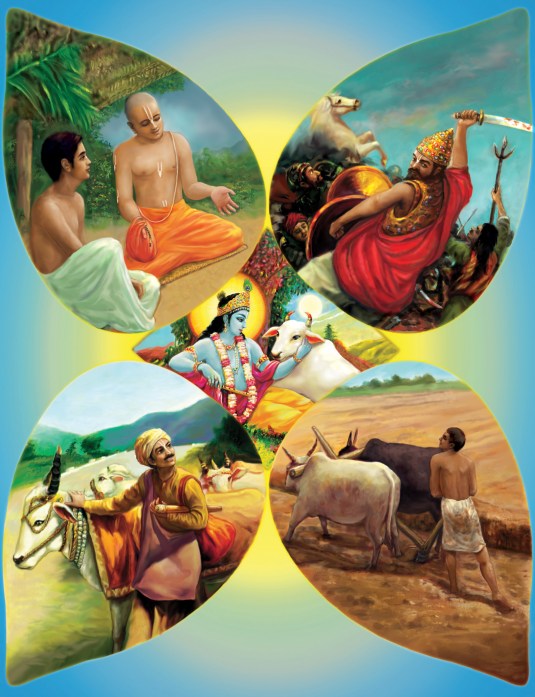
Here are two verses (one from the Srimad Bhagavatam; 1.2.13, and one from the Bhagavad-gita; 4.13) describing the importance of the varṇāśrama institution.
…the highest aim of life or the highest perfection of the institution of the varṇāśrama-dharma is to cooperate jointly for the satisfaction of the Supreme Lord.
Srimad Bhagavatam
By is Divine Grace A.C. Bhaktivedanta Swami PRabhupada
Canto One, Chapter 2, Text 13
ataḥ pumbhir dvija-śreṣṭhā
varṇāśrama-vibhāgaśaḥ
svanuṣṭhitasya dharmasya
saṁsiddhir hari-toṣaṇam
O best among the twice-born, it is therefore concluded that the highest perfection one can achieve by discharging the duties prescribed for one’s own occupation according to caste divisions and orders of life is to please the Personality of Godhead.
Human society all over the world is divided into four castes and four orders of life. The four castes are the intelligent caste, the martial caste, the productive caste and the laborer caste. These castes are classified in terms of one’s work and qualification and not by birth. Then again there are four orders of life, namely the student life, the householder’s life, the retired and the devotional life. In the best interest of human society there must be such divisions of life, otherwise no social institution can grow in a healthy state. And in each and every one of the abovementioned divisions of life, the aim must be to please the supreme authority of the Personality of Godhead. This institutional function of human society is known as the system of varṇāśrama-dharma, which is quite natural for the civilized life. The varṇāśrama institution is constructed to enable one to realize the Absolute Truth. It is not for artificial domination of one division over another. When the aim of life, i.e., realization of the Absolute Truth, is missed by too much attachment for indriya-prīti, or sense gratification, as already discussed hereinbefore, the institution of the varṇāśrama is utilized by selfish men to pose an artificial predominance over the weaker section. In the Kali-yuga, or in the age of quarrel, this artificial predominance is already current, but the saner section of the people know it well that the divisions of castes and orders of life are meant for smooth social intercourse and high-thinking self-realization and not for any other purpose.
More
24 May 2012
by The Hare Krishna Movement
in Srimad Bhagavatam, Sukadeva Goswami
Tags: A.C. Bhaktivedanta Swami Prabhupada, householder, material contamination, material distinctions, spiritual vision, Srila Prabhupada, Srila Sukadeva Gosvami, Srila Vyasadeva, Srimad Bhagavatam, Sukadeva Goswami, Vyasadeva

When Vyasadeva was following his son, Srila Sukadeva Gosvami, they came upon some damsels bathing in a pond, Sukadeva was also naked, yet the maidens did not cover themselves when he passed by. However, they did cover themselves when the fully-clad Vyasadeva approached. Astonished at the apparently inconsistent behavior of the young girls, Vyasadeva asked them to explain. “Your son is purified of all material contamination,” they said, “so when he looks at us he makes no distinction between male and female. But as a householder, you do make such distinctions. Therefore, while we feel no shame before your son, we must cover ourselves before you.
More
13 May 2012
by The Hare Krishna Movement
in Srimad Bhagavatam
Tags: Mothers Day, Seven Mothers, Srila Prabhupada, Srimad Bhagavatam, sva-matrbhih, the cow, the earth, the nurse, the real mother, the wife of a brahmana, the wife of the king, the wife of the spiritual master

Here in the West Mothers Day is being celebrated; a day to honor our Mothers.
…According to scriptures also, there are seven mothers: (1) the real mother, (2) the wife of the spiritual master, (3) the wife of a brāhmaṇa, (4) the wife of the king, (5) the cow, (6) the nurse, and (7) the earth. All of them are mothers.
Srimad Bhagavatam
By His Divine Grace A.C. Bhaktivedanta Swaim Prabhupada
from Canto 1, Chapter 11, Text 28-
Seven Mothers
praviṣṭas tu gṛhaṁ pitroḥ
pariṣvaktaḥ sva-mātṛbhiḥ
vavande śirasā sapta
devakī-pramukhā mudā
praviṣṭaḥ—after entering; tu—but; gṛham—houses; pitroḥ—of the father; pariṣvaktaḥ—embraced; sva-mātṛbhiḥ—by His own mothers; vavande—offered obeisances; śirasā—His head; sapta—seven; devakī—Devakī; pramukhā—headed by; mudā—gladly.
After entering the house of His father, He was embraced by the mothers present, and the Lord offered His obeisances unto them by placing His head at their feet. The mothers were headed by Devakī [His real mother].
It appears that Vasudeva, the father of Lord Kṛṣṇa, had completely separate residential quarters where he lived with his eighteen wives, out of whom Śrīmatī Devakī is the real mother of Lord Kṛṣṇa. But in spite of this, all other stepmothers were equally affectionate to Him, as will be evident from the following verse. Lord Kṛṣṇa also did not distinguish His real mother from His stepmothers, and He equally offered His obeisances unto all the wives of Vasudeva present on the occasion. According to scriptures also, there are seven mothers: (1) the real mother, (2) the wife of the spiritual master, (3) the wife of a brāhmaṇa, (4) the wife of the king, (5) the cow, (6) the nurse, and (7) the earth. All of them are mothers. Even by this injunction of the śāstras, the stepmother, who is the wife of the father, is also as good as the mother because the father is also one of the spiritual masters. Lord Kṛṣṇa, the Lord of the universe, plays the part of an ideal son just to teach others how to treat their stepmothers.
More
05 May 2012
by The Hare Krishna Movement
in Srimad Bhagavatam
Tags: A.C. Bhaktivedanta Swami, Absolute Truth, Bhaktivedanta purports, Krishna, Srila Prabhupada, Srimad Bhagavatam, The Supreme Personality of Godhead

…Forgetting Kṛṣṇa, we have created so many objects of questions and answers, but none of them are able to give us complete satisfaction. All things—but Kṛṣṇa—give temporary satisfaction only, so if we are to have complete satisfaction we must take to the questions and answers about Kṛṣṇa. We cannot live for a moment without being questioned or without giving answers. Because the Śrīmad-Bhāgavatam deals with questions and answers that are related to Kṛṣṇa, we can derive the highest satisfaction only by reading and hearing this transcendental literature.
Srimad Bhagavatam
By His Divine Grace A.C. Bhaktivedanta
Canto 1, Chapter 2, Text 5
munayaḥ sādhu pṛṣṭo ’haṁ
bhavadbhir loka-maṅgalam
yat kṛtaḥ kṛṣṇa-sampraśno
yenātmā suprasīdati
munayaḥ—O sages; sādhu—this is relevant; pṛṣṭaḥ—questioned; aham—myself; bhavadbhiḥ—by all of you; loka—the world; maṅgalam—welfare; yat—because; kṛtaḥ—made; kṛṣṇa—the Personality of Godhead; sampraśnaḥ—relevant question; yena—by which; ātmā—self; suprasīdati—completely pleased.
TRANSLATION
O sages, I have been justly questioned by you. Your questions are worthy because they relate to Lord Kṛṣṇa and so are of relevance to the world’s welfare. Only questions of this sort are capable of completely satisfying the self.
PURPORT
Since it has been stated hereinbefore that in the Bhāgavatam the Absolute Truth is to be known, the questions of the sages of Naimiṣāraṇya are proper and just, because they pertain to Kṛṣṇa, who is the Supreme Personality of Godhead, the Absolute Truth. In Bhagavad-gītā (15.15) the Personality of Godhead says that in all the Vedas there is nothing but the urge for searching after Him, Lord Kṛṣṇa. Thus the questions that pertain to Kṛṣṇa are the sum and substance of all the Vedic inquiries.
The whole world is full of questions and answers. The birds, beasts and men are all busy in the matter of perpetual questions and answers. In the morning the birds in the nest become busy with questions and answers, and in the evening also the same birds come back and again become busy with questions and answers. The human being, unless he is fast asleep at night, is busy with questions and answers. The businessmen in the market are busy with questions and answers, and so also the lawyers in the court and the students in the schools and colleges. The legislators in the parliament are also busy with questions and answers, and the politicians and the press representatives are all busy with questions and answers. Although they go on making such questions and answers for their whole lives, they are not at all satisfied. Satisfaction of the soul can only be obtained by questions and answers on the subject of Kṛṣṇa.
More
01 May 2012
by The Hare Krishna Movement
in Spiritual World, Srimad Bhagavatam
Tags: A.C. Bhaktivedanta Swami Prabhupada, bhagavate, Brahma, Devaki, Krishna, Krsna, om namo bhagavate vasudevaya, Personality of Godhead, primeval Lord, SB 1.1.1, Sri Krsna, Srimad Bhagavatam, Vasudeva, Vyasadeva

Śrīmad-Bhāgavatam:
by His Divine Grace A. C. Bhaktivedanta Swami Prabhupāda
Canto 1: “Creation”, Chapter 1, Text 1
Questions by the Sages
oṁ namo bhagavate vāsudevāya
janmādy asya yato ’nvayād itarataś cārtheṣv abhijñaḥ svarāṭ
tene brahma hṛdā ya ādi-kavaye muhyanti yat sūrayaḥ
tejo-vāri-mṛdāṁ yathā vinimayo yatra tri-sargo ’mṛṣā
dhāmnā svena sadā nirasta-kuhakaṁ satyaṁ paraṁ dhīmahi
om—O my Lord; namaḥ—offering my obeisances; bhagavate—unto the Personality of Godhead; vāsudevāya—unto Vāsudeva (the son of Vasudeva), or Lord Śrī Kṛṣṇa, the primeval Lord; janma-ādi—creation, sustenance and destruction; asya—of the manifested universes; yataḥ—from whom; anvayāt—directly; itarataḥ—indirectly; ca—and; artheṣu—purposes; abhijñaḥ—fully cognizant; sva-rāṭ—fully independent; tene—imparted; brahma—the Vedic knowledge; hṛdā—consciousness of the heart; yaḥ—one who; ādi-kavaye—unto the original created being; muhyanti—are illusioned; yat—about whom; sūrayaḥ—great sages and demigods; tejaḥ—fire; vāri—water; mṛdām—earth; yathā—as much as; vinimayaḥ—action and reaction; yatra—whereupon; tri-sargaḥ—three modes of creation, creative faculties; amṛṣā—almost factual; dhāmnā—along with all transcendental paraphernalia; svena—self-sufficiently; sadā—always; nirasta—negation by absence; kuhakam—illusion; satyam—truth; param—absolute; dhīmahi—I do meditate upon.
TRANSLATION
O my Lord, Śrī Kṛṣṇa, son of Vasudeva, O all-pervading Personality of Godhead, I offer my respectful obeisances unto You. I meditate upon Lord Śrī Kṛṣṇa because He is the Absolute Truth and the primeval cause of all causes of the creation, sustenance and destruction of the manifested universes. He is directly and indirectly conscious of all manifestations, and He is independent because there is no other cause beyond Him. It is He only who first imparted the Vedic knowledge unto the heart of Brahmājī, the original living being. By Him even the great sages and demigods are placed into illusion, as one is bewildered by the illusory representations of water seen in fire, or land seen on water. Only because of Him do the material universes, temporarily manifested by the reactions of the three modes of nature, appear factual, although they are unreal. I therefore meditate upon Him, Lord Śrī Kṛṣṇa, who is eternally existent in the transcendental abode, which is forever free from the illusory representations of the material world. I meditate upon Him, for He is the Absolute Truth.
PURPORT
Obeisances unto the Personality of Godhead, Vāsudeva, directly indicate Lord Śrī Kṛṣṇa, who is the divine son of Vasudeva and Devakī. This fact will be more explicitly explained in the text of this work. Śrī Vyāsadeva asserts herein that Śrī Kṛṣṇa is the original Personality of Godhead, and all others are His direct or indirect plenary portions or portions of the portion. Śrīla Jīva Gosvāmī has even more explicitly explained the subject matter in his Kṛṣṇa-sandarbha. And Brahmā, the original living being, has explained the subject of Śrī Kṛṣṇa substantially in his treatise named Brahma-saṁhitā. In the Sāma-veda Upaniṣad, it is also stated that Lord Śrī Kṛṣṇa is the divine son of Devakī. Therefore, in this prayer, the first proposition holds that Lord Śrī Kṛṣṇa is the primeval Lord, and if any transcendental nomenclature is to be understood as belonging to the Absolute Personality of Godhead, it must be the name indicated by the word Kṛṣṇa, which means the all-attractive. In Bhagavad-gītā, in many places, the Lord asserts Himself to be the original Personality of Godhead, and this is confirmed by Arjuna, and also by great sages like Nārada, Vyāsa, and many others. In the Padma Purāṇa, it is also stated that out of the innumerable names of the Lord, the name of Kṛṣṇa is the principal one. Vāsudeva indicates the plenary portion of the Personality of Godhead, and all the different forms of the Lord, being identical with Vāsudeva, are indicated in this text. The name Vāsudeva particularly indicates the divine son of Vasudeva and Devakī. Śrī Kṛṣṇa is always meditated upon by the paramahaṁsas, who are the perfected ones among those in the renounced order of life.
More
30 Apr 2012
by The Hare Krishna Movement
in Ganges, Holy Places of Pilgrimage, Srimad Bhagavatam
Tags: cleansed of all dirty things, Ganges, Ganges River, holy ganges river, krsna consciousness, Maharaja Prthu, SB . 4. 21. 31, spiritual progress, Srila Prabhupada, Srimad Bhagavatam

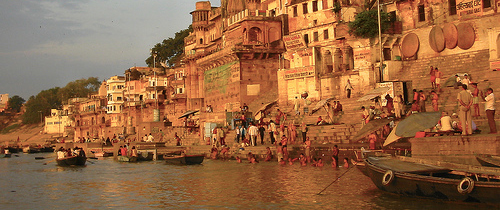
Ganges River at Varanasi India
Srimad-Bhagavatam
By His Divine Grace A.C. Bhaktivedanta Swami Prabhupada
Canto 4, Chapter 21, Text 31
Instructions by Maharaja Prthu
yat-pāda-sevābhirucis tapasvinām
aśeṣa-janmopacitaṁ malaṁ dhiyaḥ
sadyaḥ kṣiṇoty anvaham edhatī satī
yathā padāṅguṣṭha-viniḥsṛtā sarit
yat-pāda—whose lotus feet; sevā—service; abhiruciḥ—inclination; tapasvinām—persons undergoing severe penances; aśeṣa—innumerable; janma—birth; upacitam—acquire; malam—dirtiness; dhiyaḥ—mind; sadyaḥ—immediately; kṣiṇoti—destroys; anvaham—day after day; edhatī—increasing; satī—being; yathā—as; pada-aṅguṣṭha—the toes of His lotus feet; viniḥsṛtā—emanating from; sarit—water.
By the inclination to serve the lotus feet of the Supreme Personality of Godhead, suffering humanity can immediately cleanse the dirt which has accumulated in their minds during innumerable births. Like the Ganges water, which emanates from the toes of the lotus feet of the Lord, such a process immediately cleanses the mind, and thus spiritual or Kṛṣṇa consciousness gradually increases.
In India, one can actually see that a person who takes a bath in the Ganges waters daily is almost free from all kinds of diseases. A very respectable brāhmaṇa in Calcutta never took a doctor’s medicine. Even though he sometimes felt sick, he would not accept medicine from the physician but would simply drink Ganges water, and he was always cured within a very short time. The glories of Ganges water are known to Indians and to ourselves also.
More
19 Mar 2012
by The Hare Krishna Movement
in Devotional Service, Sri Caitanya-Caritamrta, Srimad Bhagavatam
Tags: A.C. Bhaktivedanta Swami Prabhupada, affection, love and affection, Mad. 10. 139, SB 10.11.11, Sri Caitanya-caritamrta, Srimad Bhagavatam, veneration, worship God with love

“Kṛṣṇa, You have come to me to take some fruit in exchange for grains. All the grains have fallen, but still You may take whatever You like.” Thus she filled Kṛṣṇa’s palms with whatever fruits He could carry. In exchange, Kṛṣṇa filled her whole basket with jewels and gold.
Srimad Bhagavatam
By His Divine Grace. A.C. Bhaktivedanta Swami Prabhupada
Canto Ten, Chapter 11, Text 11
phala-vikrayiṇī tasya
cyuta-dhānya-kara-dvayam
phalair apūrayad ratnaiḥ
phala-bhāṇḍam apūri ca
While Kṛṣṇa was going to the fruit vendor very hastily, most of the grains He was holding fell. Nonetheless, the fruit vendor filled Kṛṣṇa’s hands with fruits, and her fruit basket was immediately filled with jewels and gold.
In Bhagavad-gītā (9.26) Kṛṣṇa says:
patraṁ puṣpaṁ phalaṁ toyaṁ
yo me bhaktyā prayacchati
tad ahaṁ bhakty-upahṛtam
aśnāmi prayatātmanaḥ
Kṛṣṇa is so kind that if anyone offers Him a leaf, a fruit, a flower or some water, He will immediately accept it. The only condition is that these things should be offered with bhakti (yo me bhaktyā prayacchati). Otherwise, if one is puffed up with false prestige, thinking, “I have so much opulence, and I am giving something to Kṛṣṇa,” one’s offering will not be accepted by Kṛṣṇa. The fruit vendor, although a woman belonging to the poor aborigine class, dealt with Kṛṣṇa with great affection, saying, “Kṛṣṇa, You have come to me to take some fruit in exchange for grains. All the grains have fallen, but still You may take whatever You like.” Thus she filled Kṛṣṇa’s palms with whatever fruits He could carry. In exchange, Kṛṣṇa filled her whole basket with jewels and gold.
From this incident one should learn that for anything offered to Kṛṣṇa with love and affection, Kṛṣṇa can reciprocate many millions of times over, both materially and spiritually. The basic principle involved is an exchange of love. Therefore Kṛṣṇa teaches in Bhagavad-gītā (9.27):
More
26 Feb 2012
by The Hare Krishna Movement
in Kali Yuga, People, Srimad Bhagavatam
Tags: A.C. Bhaktivedanta Swami Prabhupada, kingdom of God, life on earth, living entities, material creation, nature of the Lord, overpopulation, SB 3.3.14, Srimad Bhagavatam

…The earth is never overburdened. The heaviest mountains and oceans on the face of the earth hold more living entities than there are human beings, and they are not overburdened. If a census were taken of all the living beings on the surface of the earth, certainly it would be found that the number of humans is not even five percent of the total number of living beings.
…The material creation is meant for fulfilling the desire of the Lord, and His desire is that the conditioned souls who are unfit to enter into the kingdom of God have a chance to improve their conditions for entering. The entire process of cosmic arrangement is intended just to give a chance to the conditioned souls to enter the kingdom of God, and there is an adequate arrangement for their maintenance by the nature of the Lord…
Srimad Bhagavatam
By His Divine Grace A.C. Bhaktivedanta Swami Prabhupada
Third Canto, Chapter 3, Text 14
kiyān bhuvo ’yaṁ kṣapitoru-bhāro
yad droṇa-bhīṣmārjuna-bhīma-mūlaiḥ
ṣṭādaśākṣauhiṇiko mad-aṁśair
āste balaṁ durviṣahaṁ yadūnām
kiyān—what is this; bhuvaḥ—of the earth; ayam—this; kṣapita—abated; uru—very great; bhāraḥ—burden; yat—which; droṇa—Droṇa; bhīṣma—Bhīṣma; arjuna—Arjuna; bhīma—Bhīma; mūlaiḥ—with the help; aṣṭādaśa—eighteen; akṣauhiṇikaḥ—phalanxes of military strength (vide Bhāg. 1.16.34); mat-aṁśaiḥ—with My descendants; āste—are still there; balam—great strength; durviṣaham—unbearable; yadūnām—of the Yadu dynasty.
[After the end of the Battle of Kurukṣetra, the Lord said:] The abatement of the earth’s great burden, eighteen akṣauhiṇīs, has now been effected with the help of Droṇa, Bhīṣma, Arjuna and Bhīma. But what is this? There is still the great strength of the Yadu dynasty, born of Myself, which may be a more unbearable burden.
Purport
It is a wrong theory that due to an increase in population the world becomes overburdened and therefore there are wars and other annihilating processes. The earth is never overburdened. The heaviest mountains and oceans on the face of the earth hold more living entities than there are human beings, and they are not overburdened. If a census were taken of all the living beings on the surface of the earth, certainly it would be found that the number of humans is not even five percent of the total number of living beings. If the birthrate of human beings is increasing, then the birthrate of other living beings is increasing proportionately. The birthrate of lower animals—beasts, aquatics, birds, etc.—is far greater than that of human beings. There is an adequate arrangement for food for all the living beings all over the earth by the order of the Supreme Lord, and He can arrange more and more if there is actually a disproportionate increase of living beings.
More
20 Feb 2012
by The Hare Krishna Movement
in Shiva, Srimad Bhagavatam
Tags: A.C. Bhaktivedanta Swami Prabhupada, Lord Siva, Maha Shivaratri, SB 4.4.14, Shiva, Sivaratri, Srimad Bhagavatam
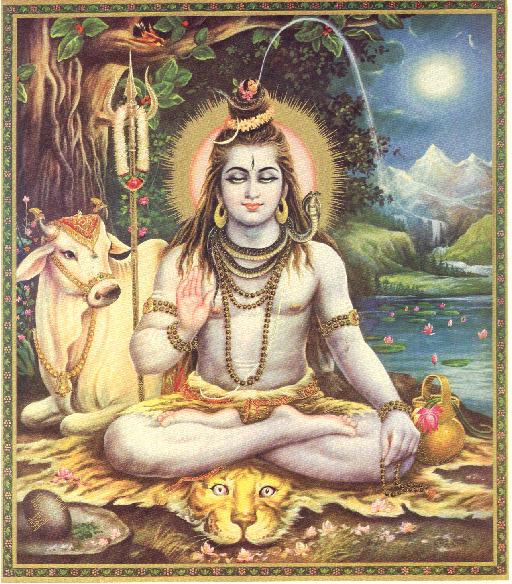
Today is Maha Shivaratri or Shivaratri, so we are posting one nice verse from the Srimad Bhagavatam in glorification of Lord Siva.
Śrīmad-Bhāgavatam: Canto 4: “The Creation of the Fourth Order”
By His Divine Grace A. C. Bhaktivedanta Swami Prabhupāda
Chapter Four, Text 14
yad dvy-akṣaraṁ nāma gireritaṁ nṛṇāṁ
sakṛt prasaṅgād agham āśu hanti tat
pavitra-kīrtiṁ tam alaṅghya-śāsanaṁ
bhavān aho dveṣṭi śivaṁ śivetaraḥ
yat—which; dvi-akṣaram—consisting of two letters; nāma—named; girā īritam—merely being pronounced by the tongue; nṛṇām—persons; sakṛt—once; prasaṅgāt—from the heart; agham—sinful activities; āśu—immediately; hanti—destroys; tat—that; pavitra-kīrtim—whose fame is pure; tam—him; alaṅghya-śāsanam—whose order is never neglected; bhavān—you; aho—oh; dveṣṭi—envy; śivam—Lord Śiva; śiva-itaraḥ—who are inauspicious.
TRANSLATION
Satī continued: My dear father, you are committing the greatest offense by envying Lord Śiva, whose very name, consisting of two syllables, śi and va, purifies one of all sinful activities. His order is never neglected. Lord Śiva is always pure, and no one but you envies him.
PURPORT
Since Lord Śiva is the greatest soul among the living entities within this material world, his name, Śiva, is very auspicious for persons who identify the body with the soul. If such persons take shelter of Lord Śiva, gradually they will understand that they are not the material body but are spirit soul. Śiva means maṅgala, or auspicious. Within the body the soul is auspicious. Ahaṁ brahmāsmi: “I am Brahman.” This realization is auspicious. As long as one does not realize his identity as the soul, whatever he does is inauspicious. Śiva means “auspicious,” and devotees of Lord Śiva gradually come to the platform of spiritual identification, but that is not all. Auspicious life begins from the point of spiritual identification. But there are still more duties—one has to understand one’s relationship with the Supreme Soul.
More
13 Feb 2012
by The Hare Krishna Movement
in Srimad Bhagavatam
Tags: A.C. Bhaktivedanta Swami Prabhupada, bhagavatam, Krishna, Personality of Godhead, SB 1.2.17, SB 1.2.18, SB 1.2.4, Srimad Bhagavatam
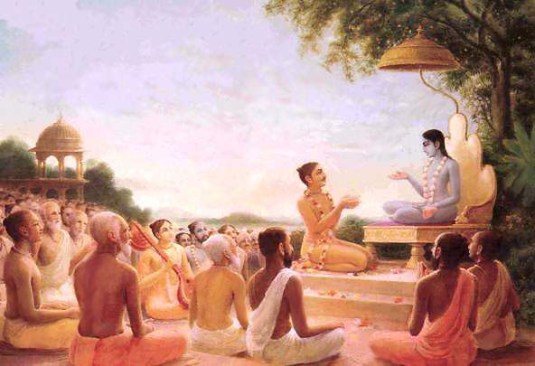
Verses Recited Before Śrīmad-Bhāgavatam Class
nārāyaṇaṁ namaskṛtya
naraṁ caiva narottamam
devīṁ sarasvatīṁ vyāsaṁ
tato jayam udīrayet
Before reciting this Śrīmad-Bhāgavatam, which is the very means of conquest, one should offer respectful obeisances unto the Personality of Godhead, Nārāyaṇa, unto Nara-nārāyaṇa Ṛṣi, the supermost human being, unto mother Sarasvatī, the goddess of learning, and unto Śrīla Vyāsadeva, the author. [SB 1.2.4]
śṛṇvatāṁ sva-kathāḥ kṛṣṇaḥ
puṇya-śravaṇa-kīrtanaḥ
hṛdy antaḥ stho hy abhadrāṇi
vidhunoti suhṛt satām
Śrī Kṛṣṇa, the Personality of Godhead, who is the Paramātmā [Supersoul] in everyone’s heart and the benefactor of the truthful devotee, cleanses desire for material enjoyment from the heart of the devotee who has developed the urge to hear His messages, which are in themselves virtuous when properly heard and chanted. [SB 1.2.17]
naṣṭa-prāyeṣv abhadreṣu
nityaṁ bhāgavata-sevayā
bhagavaty uttama-śloke
bhaktir bhavati naiṣṭhikī
By regular attendance in classes on the Bhāgavatam and by rendering of service to the pure devotee, all that is troublesome to the heart is almost completely destroyed, and loving service unto the Personality of Godhead, who is praised with transcendental songs, is established as an irrevocable fact. [SB 1.2.18]
Pasted from; http://causelessmercy.com/?P=TMG#1
01 Feb 2012
by The Hare Krishna Movement
in Books by Srila Prabhupada, Srimad Bhagavatam, The Hare Krishna Movement
Tags: A.C. Bhaktivedanta Swami Prabhupada, books by Srila Prabhupada, Kali, Kali-yuga, literary incarnation, Lord Sri Krsna, Srimad Bhagavatam
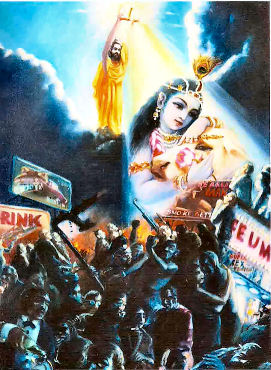
…Śrīmad-Bhāgavatam is the literary incarnation of Lord Śrī Kṛṣṇa and is therefore nondifferent from Him. Śrīmad-Bhāgavatam should be worshiped as respectfully as we worship the Lord. Thereby we can derive the ultimate blessings of the Lord through its careful and patient study…
The Srimad Bhagavatam
By His Divine Grace A.C. Bhaktivedanta Swami Prabhupada
Canto 1, Chapter 3, Text 40
idaṁ bhāgavataṁ nāma
purāṇaṁ brahma-sammitam
uttama-śloka-caritaṁ
cakāra bhagavān ṛṣiḥ
niḥśreyasāya lokasya
dhanyaṁ svasty-ayanaṁ mahat
idam—this; bhāgavatam—book containing the narration of the Personality of Godhead and His pure devotees; nāma—of the name; purāṇam—supplementary to the Vedas; brahma-sammitam—incarnation of Lord Śrī Kṛṣṇa; uttama-śloka—of the Personality of Godhead; caritam—activities; cakāra—compiled; bhagavān—incarnation of the Personality of Godhead; ṛṣiḥ—Śrī Vyāsadeva; niḥśreyasāya—for the ultimate good; lokasya—of all people; dhanyam—fully successful; svasti-ayanam—all-blissful; mahat—all-perfect.
This Śrīmad-Bhāgavatam is the literary incarnation of God, and it is compiled by Śrīla Vyāsadeva, the incarnation of God. It is meant for the ultimate good of all people, and it is all-successful, all-blissful and all-perfect.
Lord Śrī Caitanya Mahāprabhu declared that Śrīmad-Bhāgavatam is the spotless sound representation of all Vedic knowledge and history. There are selected histories of great devotees who are in direct contact with the Personality of Godhead. Śrīmad-Bhāgavatam is the literary incarnation of Lord Śrī Kṛṣṇa and is therefore nondifferent from Him. Śrīmad-Bhāgavatam should be worshiped as respectfully as we worship the Lord. Thereby we can derive the ultimate blessings of the Lord through its careful and patient study. As God is all light, all bliss and all perfection, so also is Śrīmad-Bhāgavatam. We can have all the transcendental light of the Supreme Brahman, Śrī Kṛṣṇa, from the recitation of Śrīmad-Bhāgavatam, provided it is received through the medium of the transparent spiritual master. Lord Caitanya’s private secretary Śrīla Svarūpa Dāmodara Gosvāmī advised all intending visitors who came to see the Lord at Purī to make a study of the Bhāgavatam from the person Bhāgavatam Person Bhāgavatam is the self-realized bona fide spiritual master, and through him only can one understand the lessons of Bhāgavatam in order to receive the desired result. One can derive from the study of the Bhāgavatam all benefits that are possible to be derived from the personal presence of the Lord. It carries with it all the transcendental blessings of Lord Śrī Kṛṣṇa that we can expect from His personal contact.
To purchase a complete set of original 1977 edition Srimad Bhagavatam’s go to;
More
30 Jan 2012
by The Hare Krishna Movement
in Bhismadeva, Krishna Consciousness, Srimad Bhagavatam
Tags: A.C. Bhaktivedanta Swami Prabhupada, Bhismadeva, Bhismastami, Dhisma's Passing Away, mystics, SB 1.9.29, Srimad Bhagavatam, yogis
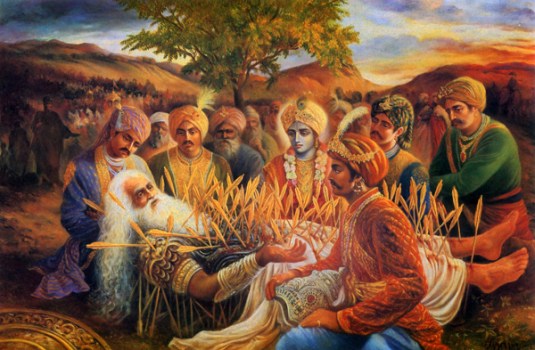
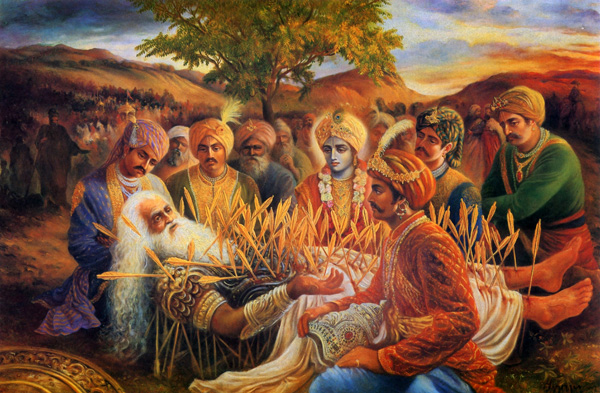
Today we observe the Disappearance of Bhismadeva or “Bhismastami” with these verses from the Srimad Bhagavatam describing this monumental event.
The perfect yogīs or mystics can leave the material body at their own sweet will…
In the momentous hour of leaving his material body, Bhīṣmadeva set the glorious example concerning the important function of the human form of life. The subject matter which attracts the dying man becomes the beginning of his next life. Therefore, if one is absorbed in thoughts of the Supreme Lord Śrī Kṛṣṇa, he is sure to go back to Godhead without any doubt. This is confirmed in the Bhagavad-gītā (8.5-15):
Srimad Bhagavatam
By His Divine Grace A.C. Bhaktivedanta Swami Prabhupada
Canto 1, Chapter 9, Text 29-30
Bhisma’s Passing Away
dharmaṁ pravadatas tasya
sa kālaḥ pratyupasthitaḥ
yo yoginaś chanda-mṛtyor
vāñchitas tūttarāyaṇaḥ
dharmam—occupational duties; pravadataḥ—while describing; tasya—his; saḥ—that; kālaḥ—time; pratyupasthitaḥ—exactly appeared; yaḥ—that is; yoginaḥ—for the mystics; chanda-mṛtyoḥ—of one who dies according to one’s own selection of time; vāñchitaḥ—is desired by; tu—but; uttarāyaṇaḥ—the period when the sun runs on the northern horizon.
While Bhīṣmadeva was describing occupational duties, the sun’s course ran into the northern hemisphere. This period is desired by mystics who die at their will.
The perfect yogīs or mystics can leave the material body at their own sweet will at a suitable time and go to a suitable planet desired by them. In the Bhagavad-gītā (8.24) it is said that self-realized souls who have exactly identified themselves with the interest of the Supreme Lord can generally leave the material body during the time of the fire-god’s effulgence and when the sun is in the northern horizon, and thus achieve the transcendental sky. In the Vedas these times are considered auspicious for quitting the body, and they are taken advantage of by the expert mystics who have perfected the system. Perfection of yoga means attainment of such supermental states as to be able to leave the material body as desired. Yogīs can also reach any planet within no time without a material vehicle. The yogīs can reach the highest planetary system within a very short time, and this is impossible for the materialist. Even attempting to reach the highest planet will take millions of years at a speed of millions of miles per hour. This is a different science, and Bhīṣmadeva knew well how to utilize it. He was just waiting for the suitable moment to quit his material body, and the golden opportunity arrived when he was instructing his noble grandsons, the Pāṇḍavas. He thus prepared himself to quit his body before the exalted Lord Śrī Kṛṣṇa, the pious Pāṇḍavas and the great sages headed by Bhagavān Vyāsa, etc., all great souls.
More
29 Jan 2012
by The Hare Krishna Movement
in Kali Yuga, Srimad Bhagavatam
Tags: A.C. Bhaktivedanta Swami Prabhupada, age of quarrel, devotees, Kali, Kali-yuga, Naimisaranya, SB 1.1.10, spiritual master, Srimad Bhagavatam

One day after finishing their morning duties by burning a sacrificial fire and respectfully offering a seat to Srila Suta Goswami. the great sages, headed by Saunaka Rsi, earnestly addressed him: “Respected Suta Goswami, you are completely free from all vice. You are well versed in all the scriptures famous for religious life, and in the Puranas and the histories as well, for you have gone through them under proper guidance and have also explained them. Being the eldest learned Vedantist, O Suta Goswami, you are acquainted with the knowledge of Vyasadeva, who is the incarnation of Godhead, and you also know other sages who are fully versed in all kinds of physical and metaphysical knowledge. And because you are submissive, your spiritual masters have endowed you with all the favors estowed upon a gentle disciple. Therefore you can tell us all that you have scientifically learned from them”
Srimad Bhagavatam
By His Divine Grace A.C. Bhaktivedanta Swami Prabhupada
Canto 1, Chapter 1, Text 10
prāyeṇālpāyuṣaḥ sabhya
kalāv asmin yuge janāḥ
mandāḥ sumanda-matayo
manda-bhāgyā hy upadrutāḥ
prāyeṇa—almost always; alpa—meager; āyuṣaḥ—duration of life; sabhya—member of a learned society; kalau—in this age of Kali (quarrel); asmin—herein; yuge—age; janāḥ—the public; mandāḥ—lazy; sumanda-matayaḥ—misguided; manda-bhāgyāḥ—unlucky; hi—and above all; upadrutāḥ—disturbed.
O learned one, in this iron age of Kali men have but short lives. They are quarrelsome, lazy, misguided, unlucky and, above all, always disturbed.
The devotees of the Lord are always anxious for the spiritual improvement of the general public. When the sages of Naimiṣāraṇya analyzed the state of affairs of the people in this age of Kali, they foresaw that men would live short lives. In Kali-yuga, the duration of life is shortened not so much because of insufficient food but because of irregular habits. By keeping regular habits and eating simple food, any man can maintain his health. Overeating, over-sense gratification, overdependence on another’s mercy, and artificial standards of living sap the very vitality of human energy. Therefore the duration of life is shortened.
The people of this age are also very lazy, not only materially but in the matter of self-realization. The human life is especially meant for self-realization. That is to say, man should come to know what he is, what the world is, and what the supreme truth is. Human life is a means by which the living entity can end all the miseries of the hard struggle for life in material existence and by which he can return to Godhead, his eternal home. But, due to a bad system of education, men have no desire for self-realization. Even if they come to know about it, they unfortunately become victims of misguided teachers.
More
17 Jan 2012
by The Hare Krishna Movement
in Krishna, Krishna Consciousness, Spiritual World, Srimad Bhagavatam
Tags: A.C. Bhaktivedanta Swami Prabhupada, brahmanas, chariots, conchshells, elephants, Krishna, Krsna enters Dwaraka, Lord Krishna, lotus flowers, Srimad Bhagavatam, The Supreme Personality of Godhead, unbroken seeds, Vedic hymns
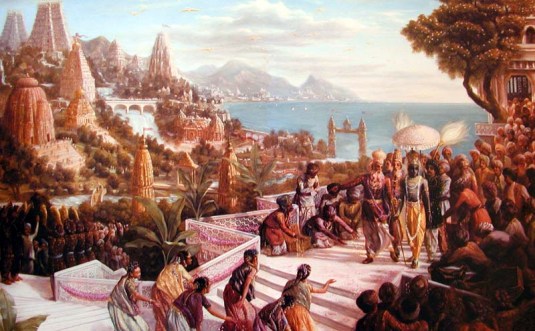
Srimad Bhagavatam
By His Divine Grace A.C. Bhaktivedanta Swami Prabhupada
Canto 1, Chapter 11
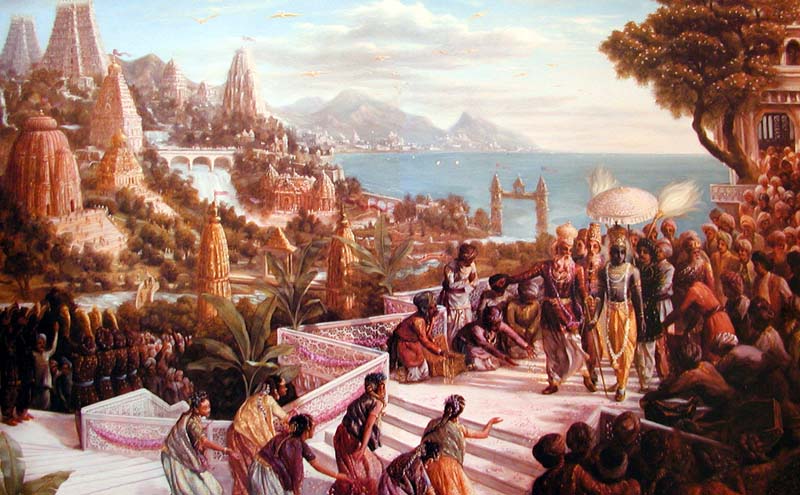
Lord Kṛṣṇa’s Entrance into Dvārakā
While entering the city of Dvaraka, Lord Krishna acknowledged all the inhabitants’ by casting His transcendental glance over them. The city was filled with the opulences of all seasons. There were hermitages, orchards, flower gardens, parks and reservoirs of water filled with lotus flowers. The highways, subways, lanes, markets and public meeting places were all thoroughly cleansed and then moistened with scented water, And to welcome the Lord, the residents of Dvaraka strew flowers, fruits and unbroken seeds everywhere. The residents hastened toward the Lord on chariots, upon which rode brahmanas bearing flowers, In front of the chariots were elephants, which are emblems of good fortune. Conchshells and bugles were sounded, and Vedic hymns were chanted. Thus, the residents offered their respects, which were saturated with affection, In return, Lord Krishna, the Personality of Godhead, approached them and offered due honor and respect to each and every one of the friends, relatives, citizens and others who came to receive and welcome Him. As the Lord passed along the public road of Dvaraka, His head was protected from sunshine by a white umbrella. White feathered fans moved in semicircles, and showers of flowers fell upon the road. His yellow garments and garlands of flowers made it appear as if a dark cloud were surrounded simultaneously by the sun, the moon, lighting and rainbows.
Lord Kṛṣṇa’s attraction is so powerful that once being attracted by Him one cannot tolerate separation from Him. Why is this so? Because we are all eternally related with Him as the sun rays are eternally related with the sun disc. The sun rays are molecular parts of the solar radiation. Thus the sun rays and the sun cannot be separated. The separation by the cloud is temporary and artificial, and as soon as the cloud is cleared, the sun rays again display their natural effulgence in the presence of the sun. Similarly, the living entities, who are molecular parts of the whole spirit, are separated from the Lord by the artificial covering of māyā, illusory energy. This illusory energy, or the curtain of māyā, has to be removed, and when it is so done, the living entity can see the Lord face to face, and all his miseries are at once removed. Every one of us wants to remove the miseries of life, but we do not know how to do it. The solution is given here, and it rests on us to assimilate it or not. (Srimad Bhagavatam 1.11.10 Purport)
Painting by-Ramadasa Abhirama dasa
13 Jan 2012
by The Hare Krishna Movement
in A.C. Bhaktivedanta Swami Prabhupada, Devotee's, Lectures, Srimad Bhagavatam
Tags: Ajamila, devotees, Lectures by Srila Prabhupada, Narayana, SB 6.1.28-29, sinful persons, Srila Prabhupada, Srimad Bhagavatam, Visnudutas, Yamaduta, Yamaraja

“At the time of his death the sinful Ajamila saw three awkward persons with deformed bodily features, fierce, twisted faces, and hair standing erect on their bodies. With ropes in their hands, they had come to take him away to the abode of Yamaraja. When he saw them he was extremely bewildered, and because of attachment to his child, Narayana, who was playing a short distance away, Ajamila began to cal him loudly by his name. Thus with tears in his eyes he somehow or other chanted the holy name of Narayana. the order carriers of Visnu, the Visnudutas, immediately arrived when when they heard the holy name of their master from the mouth of the dying Ajamila. The order carriers of Yamaraja were snatching the soul from the core of the heart of Ajamila, the husband of the prostitute, but with resounding voices the messengers of Lord Visnu, the Visnudutas, forbade them to do so” (from Srimad Bhagavatam 6.1.27-29)
Srimad Bhagavatam Lectures
By His Divine Grace A.C. Bhaktivedanta Swami Prabhupada
SB 6.1.28-29 May 28, 1975 Honolulu
Pradyumna: Translation: “Ajāmila then saw three awkward persons with deformed bodily features, fierce, twisted faces, and hair standing erect on their bodies. With ropes in their hands they had come to take him away to the abode of Yamarāja. When he saw them he was extremely bewildered, and because of attachment to his child, who was playing a short distance away, Ajāmila began to call him loudly by his name. Thus, with tears in his eyes, he somehow or other chanted the holy name of Nārāyaṇa.” [SB 6.1.28-29]
Prabhupāda: Sa pāśa-hastāṁs trīn dṛṣṭvā puruṣān ati-dāruṇān. So, at the time of death there are so many disturbance. We have got experience, but you have forgot because bhūtvā bhūtvā pralīyate [Bg. 8.19]. But these things are observed by the sinful person. The Yamadūta, they come to take to the sinful, sinful person, not devotees. Just like the whole population of the city, they are not all subjected to the prison laws. Some criminals. Similarly, this Yamadūta goes to such sinful persons. They are not all. But it is the question of Ajāmila… He was so sinful that automatically the Yamadūtas came, and they wanted to take him.
full lecture More
06 Jan 2012
by The Hare Krishna Movement
in Krishna Consciousness, Lectures, Srimad Bhagavatam
Tags: constant devotional remembrance. spiritual sky, Damaghosa, His Divine Grace A.C. Bhaktivedanta Swami Prabhupada, krsna consciousness, Lord Krsna, Pradyamuna das, pure consciousness, SB 1.15.47-48, Srila Prabhupada Lecture Srimad Bhagavatam
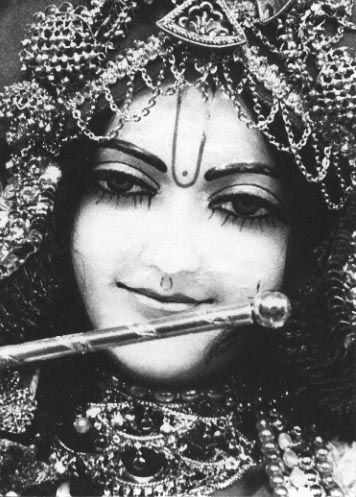
Photo by Damaghosa Prabhu
“If you become devotee of Krsna, then you can live with Krsna, even in this life. Even in this life. Because Krsna is omnipotent, if you are really devotee of Krsna, He will talk with you, He will dance with you, He will eat with you, everything.”
Lecture by His Divine Grace A.C. Bhaktivedanta Swami Prabhupada
December 25, 1973, Los Angeles
Srimad-Bhagavatam 1.15.47-48
Pradyumna: “Thus by pure consciousness due to constant devotional remembrance, they attained the spiritual sky, which is ruled by the Supreme Nārāyaṇa, Lord Kṛṣṇa. This is attained only by those who meditate upon the one Supreme Lord without deviation. This abode of the Lord Śrī Kṛṣṇa, known as Goloka Vṛndāvana, cannot be attained by persons who are absorbed in the material conception of life. But the Pāṇḍavas, being completely washed of all material contamination, attained that abode in their very same bodies.” [SB 1.15.47-48]
Prabhupāda: Tad-dhyāna udriktayā. Dhyāna means meditation. So the Pāṇḍavas, always they were thinking of Kṛṣṇa. While they were eating, they were sitting, they were sleeping, they were talking, they were fighting-Kṛṣṇa. This is Kṛṣṇa consciousness. When Arjuna was fighting, so there was also Kṛṣṇa. When they were dealing in politics with Duryodhana, there was Kṛṣṇa. Kṛṣṇa is his friend, always talking with him, staying with him, sleeping with him, eating with him.
More
29 Dec 2011
by The Hare Krishna Movement
in Srimad Bhagavatam, Teachings of Queen Kunti
Tags: ancient India, BBT, His Divine Grace A.C. Bhaktivedanta Swami Prabhupada, Indias's grand epic poem, King Pandu, Kunti, Kuruksetra War, Mahabharata, Pandavas, Srimad Bhagavatam, Teachings of Queen Kunti

We begin a new series by offering the Teachings of Queen Kunti in weekly installments. We begin today with the Introduction to this wounderful book.
As they appear in the First Canto of the Bhāgavatam, Queen Kuntī’s celebrated prayers consist of only twenty-six couplets (verses 18 through 43 of the Eighth Chapter), yet they are considered a philosophical, theological, and literary masterpiece. The present book (Teachings of Queen Kuntī) includes those inspired verses and illuminating commentary by His Divine Grace A. C. Bhaktivedanta Swami Prabhupāda, Founder-Ācārya of the International Society for Krishna Consciousness and the most renowned Vedic scholar and spiritual leader of our time. In addition to this commentary (originally written in 1962), Teachings of Queen Kuntī contains further explanations that Śrīla Prabhupāda gave more recently in an absorbing series of lectures. In those memorable talks, delivered in the spring of 1973 at ISKCON’s Western world headquarters in Los Angeles, he analyzed the verses in significantly greater detail and shed even more light upon them.
Teachings of Queen Kuntī By His Divine Grace A.C. Bhaktivedanta Swami Prabhupada
Introduction
The tragic and heroic figure of Queen Kuntī emerges from an explosive era in the history of ancient India. As related in theMahābhārata, India’s grand epic poem of 110,000 couplets, Kuntī was the wife of King Pāṇḍu and the mother of five illustrious sons known as the Pāṇḍavas. As such, she was one of the central figures in a complex political drama that culminated fifty centuries ago in the Kurukṣetra War, a devastating war of ascendancy that changed the course of world events. The Mahābhārata describes the prelude to the holocaust as follows:
More
28 Dec 2011
by The Hare Krishna Movement
in Krishna Consciousness, KRSNA The Supreme Personality of Godhead, Srimad Bhagavatam
Tags: gopis, His Divine Grace A.C. Bhaktivedanta Swami Prabhupada, Krishna, Krsna The Supreme Personality of Godhead, rasa dance, remembering Krishna, Syamarani, Vrindavan

In the previous article, Srila Prabhupada is describing the nine types of devotional service recommended ….(hearing, chanting, remembering, worshiping, praying, serving, engaging as a servitor of the Lord, establishing friendly relations with the Lord, offering everything to the Lord). These are all easy to practice and should be joyfully performed. So with this in mind we are posting one of Krishna’s unlimited pastimes, to help us in remembering the Lord.
Both the gopīs and Kṛṣṇa entered the water of the Yamunā just to relieve their fatigue from the rāsa dance. The lily flower garlands around the necks of the gopīs were strewn to pieces due to their embracing the body of Kṛṣṇa, and the flowers were reddish from being smeared with the kuṅkuma on their breasts. The bumblebees were humming about in order to get honey from the flowers. Kṛṣṇa and the gopīs entered the water of Yamunā just as an elephant enters a water tank with his many female companions. Both the gopīs and Kṛṣṇa forgot their real identity, playing in the water, enjoying each others’ company and relieving the fatigue of rāsa dancing. The gopīs began to splash water on the body of Kṛṣṇa, all the while smiling, and Kṛṣṇa enjoyed this. As Kṛṣṇa was taking pleasure in the joking words and splashing water, the demigods in the heavenly planets began to shower flowers. The demigods thus praised the superexcellent rāsa dance of Kṛṣṇa, the supreme enjoyer, and His pastimes with the gopīs in the water of Yamunā. (Krsna The Supreme Personality of Godhead Chapter 32)
Image courtsy of Syamarani devi http://www.bhaktiart.net
14 Nov 2011
by The Hare Krishna Movement
in Srimad Bhagavatam
Tags: dharma, Divinty and Divine Service, His Divine Grace A.C. Bhaktivedanta Swami Prabhupada, SB 1.2.6, Srimad Bhagavatam, supreme occupation

…the root meaning of the word dharma is “that which sustains one’s existence.” A living being’s sustenance of existence is to coordinate his activities with his eternal relation with the Supreme Lord Kṛṣṇa
Srimad Bhagavatam
By His Divine Grace A. C. Bhaktivedanta Swami Prabhupada
Canto 1, Chapter 2, Text 6
sa vai puṁsāṁ paro dharmo
yato bhaktir adhokṣaje
ahaituky apratihatā
yayātmā suprasīdati
saḥ—that; vai—certainly; puṁsām—for mankind; paraḥ—sublime; dharmaḥ—occupation; yataḥ—by which; bhaktiḥ—devotional service; adhokṣaje—unto the Transcendence; ahaitukī—causeless; apratihatā—unbroken; yayā—by which; ātmā—the self; suprasīdati—completely satisfied.
The supreme occupation [dharma] for all humanity is that by which men can attain to loving devotional service unto the transcendent Lord. Such devotional service must be unmotivated and uninterrupted to completely satisfy the self.
Purport
In this statement, Śrī Sūta Gosvāmī answers the first question of the sages of Naimiṣāraṇya. The sages asked him to summarize the whole range of revealed scriptures and present the most essential part so that fallen people or the people in general might easily take it up. The Vedas prescribe two different types of occupation for the human being. One is called the pravṛtti-mārga, or the path of sense enjoyment, and the other is called the nivṛtti-mārga, or the path of renunciation. The path of enjoyment is inferior, and the path of sacrifice for the supreme cause is superior. The material existence of the living being is a diseased condition of actual life. Actual life is spiritual existence, or brahma-bhūta [SB 4.30.20] existence, where life is eternal, blissful and full of knowledge. Material existence is temporary, illusory and full of miseries. There is no happiness at all. There is just the futile attempt to get rid of the miseries, and temporary cessation of misery is falsely called happiness. Therefore, the path of progressive material enjoyment, which is temporary, miserable and illusory, is inferior. But devotional service to the Supreme Lord, which leads one to eternal, blissful and all-cognizant life, is called the superior quality of occupation. This is sometimes polluted when mixed with the inferior quality. For example, adoption of devotional service for material gain is certainly an obstruction to the progressive path of renunciation. Renunciation or abnegation for ultimate good is certainly a better occupation than enjoyment in the diseased condition of life. Such enjoyment only aggravates the symptoms of disease and increases its duration. Therefore devotional service to the Lord must be pure in quality, i.e., without the least desire for material enjoyment. One should, therefore, accept the superior quality of occupation in the form of the devotional service of the Lord without any tinge of unnecessary desire, fruitive action and philosophical speculation. This alone can lead one to perpetual solace in His service.
More
08 Nov 2011
by The Hare Krishna Movement
in Srila Prabhupada, Srimad Bhagavatam
Tags: as uttamasloka, great devotees, His Divine Grace A.C. Bhaktivedanta Swami Prabhupada, lotus feet, praised by selected verse, Srimad Bhagavatam
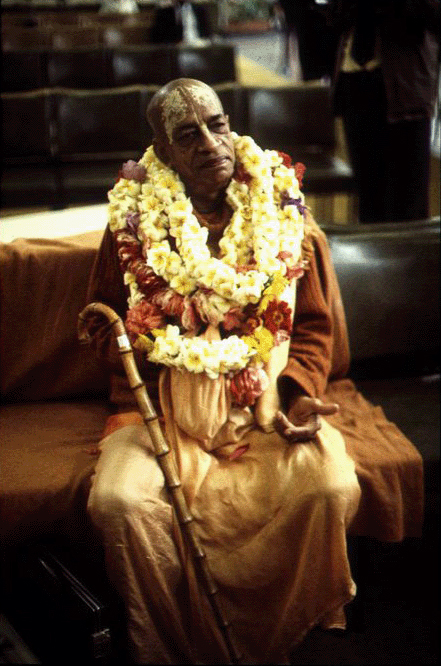
A pure devotee always engages in the service of the Lord, taking shelter of His lotus feet, and therefore he has a direct connection with the saffron mercy-particles that are strewn over the lotus feet of the Lord. Although when a pure devotee speaks the articulation of his voice may resemble the sound of this material sky, the voice is spiritually very powerful because it touches the particles of saffron dust on the lotus feet of the Lord. As soon as a sleeping living entity hears the powerful voice emanating from the mouth of a pure devotee, he immediately remembers his eternal relationship with the Lord, although up until that moment he had forgotten everything.
Srimad Bhagavatam
By His Divine Grace A.C. Bhaktivedanta Swami Prabhupada
Canto 4, Chapter 20, Text 25
sa uttamaśloka mahan-mukha-cyuto
bhavat-padāmbhoja-sudhā kaṇānilaḥ
smṛtiṁ punar vismṛta-tattva-vartmanāṁ
kuyogināṁ no vitaraty alaṁ varaiḥ
saḥ—that; uttama-śloka—O Lord, who are praised by selected verses; mahat—of great devotees; mukha-cyutaḥ—delivered from the mouths; bhavat—Your; pada-ambhoja—from the lotus feet; sudhā—of nectar; kaṇa—particles; anilaḥ—soothing breeze; smṛtim—remembrance; punaḥ—again; vismṛta—forgotten; tattva—to the truth; vartmanām—of persons whose path; ku-yoginām—of persons not in the line of devotional service; naḥ—of us; vitarati—restores; alam—unnecessary; varaiḥ—other benedictions.
My dear Lord, You are glorified by the selected verses uttered by great personalities. Such glorification of Your lotus feet is just like saffron particles. When the transcendental vibration from the mouths of great devotees carries the aroma of the saffron dust of Your lotus feet, the forgetful living entity gradually remembers his eternal relationship with You. Devotees thus gradually come to the right conclusion about the value of life. My dear Lord, I therefore do not need any other benediction but the opportunity to hear from the mouth of Your pure devotee.
It is explained in the previous verse that one has to hear glorification of the Lord from the mouth of a pure devotee. This is further explained here. The transcendental vibration from the mouth of a pure devotee is so powerful that it can revive the living entity’s memory of his eternal relationship with the Supreme Personality of Godhead. In our material existence, under the influence of illusory māyā, we have almost forgotten our eternal relationship with the Lord, exactly like a man sleeping very deeply who forgets his duties. In the Vedas it is said that every one of us is sleeping under the influence of māyā. We must get up from this slumber and engage in the right service, for thus we can properly utilize the facility of this human form of life. As expressed in a song by Ṭhākura Bhaktivinoda, Lord Caitanya says, jīva jāga, jīva jāga. The Lord asks every sleeping living entity to get up and engage in devotional service so that his mission in this human form of life may be fulfilled. This awakening voice comes through the mouth of a pure devotee.
More
Previous Older Entries Next Newer Entries










 The Hare Krishna Movement