Appreciating the Beauty of the Lord

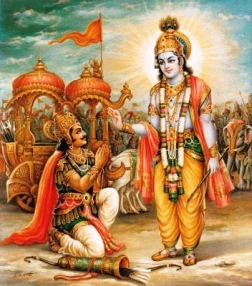
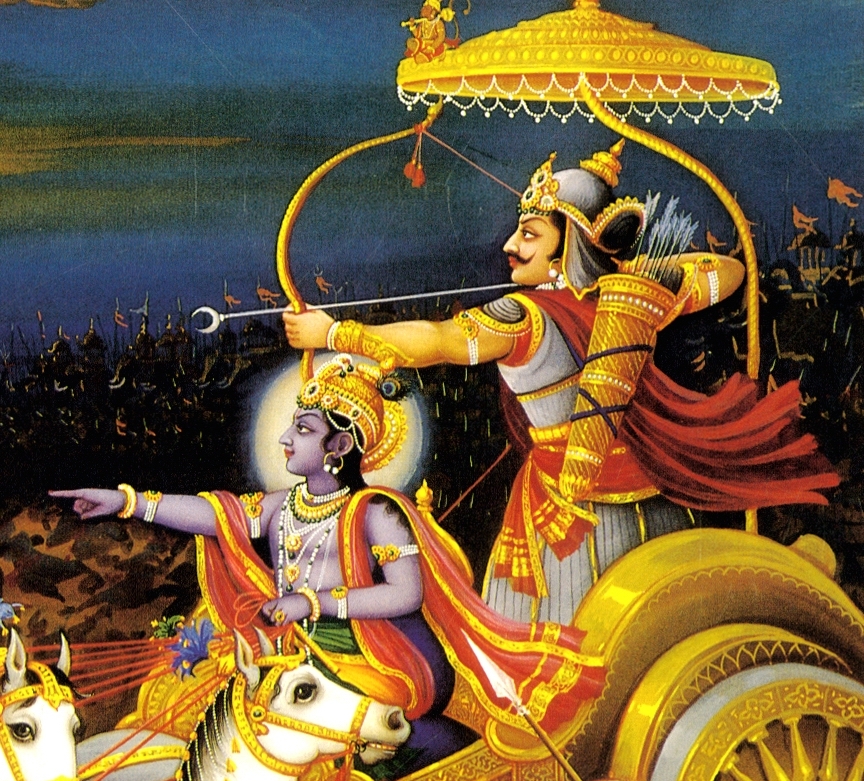
Krsna and Arjuna

Certainly others who were fighters on the Battlefield of Kurukṣetra were purified by the onslaught of Arjuna’s arrows, and while seeing the lotuslike face of Kṛṣṇa, so pleasing to the eyes, they achieved the abode of the Lord. (SB 3.2.20)

This morning as I was reading from the Srimad-Bhagavatam, the words “pleasing to the eyes of the seer” jumped out at me. And I was reminded again how just by appreciating the beauty of the Lord, one can attain success in life, as the following purport explains.

“…All the warriors who fought against Arjuna but who were able to see the lotuslike face of the Lord on the battlefront achieved the abode of the Lord, exactly as the devotees of the Lord do. The words “pleasing to the eyes of the seer” are very significant. When the warriors from the other side of the battlefield saw Lord Kṛṣṇa at the front, they appreciated His beauty, and their dormant instinct of love of God was awakened.

This love of God is awakened by the association of pure devotees of the Lord… Those who saw the beautiful face of the Lord on the Battlefield of Kurukṣetra were purified first by Arjuna when he made his onslaught with arrows… All the activities of a pure devotee are executed on behalf of the Lord because a pure devotee of the Lord has nothing to do for his personal interest. Arjuna’s killing was as good as killing by the Lord Himself. As soon as Arjuna shot an arrow at an enemy, that enemy became purified of all material contaminations and became eligible to be transferred to the spiritual sky… those who awakened to love of God were transferred to the planets of the transcendental sky.

Those whose love of God is awakened to the fullest extent go back to the Goloka Vṛndāvana planet in the spiritual sky, whereas persons who have just awakened to love of Godhead by accident or association are transferred to the Vaikuṇṭha planets. Essentially there is no material difference between Goloka and Vaikuṇṭha, but in the Vaikuṇṭhas the Lord is served in unlimited opulence, whereas in Goloka the Lord is served in natural affection.” (from purport to SB 3.2.20)

Full Text and Purport More

The Beauty of Krsna

Shyamasundara

The Lord’s beauty resembles a dark cloud during the rainy season. As the rainfall glistens, His bodily features also glisten. Indeed, He is the sum total of all beauty. The Lord has four arms and an exquisitely beautiful face with eyes like lotus petals, a beautiful highly raised nose, a mind-attracting smile, a beautiful forehead and equally beautiful and fully decorated ears. (Srimad Bhagavatam 4.24.45-46)

The Lord’s beauty is compared to rainfall because when the rain falls in the rainy season, it becomes more and more pleasing to the people. After the scorching heat of the summer season, the people enjoy the rainy season very much. Indeed, they even come out of their doors in the villages and enjoy the rainfall directly. Thus the Lord’s bodily features are compared to the clouds of the rainy season. The devotees enjoy the Lord’s beauty because it is a collection of all kinds of beauties. Therefore the word sarva-saundarya-saṅgraham is used. No one can say that the body of the Lord is wanting in beautiful parts. It is completely pūrṇam. Everything is complete: God’s creation, God’s beauty and God’s bodily features. All these are so complete that all one’s desires can become fully satisfied when one sees the beauty of the Lord. The word sarva-saundarya indicates that there are different types of beauties in the material and spiritual worlds and that the Lord contains all of them. Both materialists and spiritualists can enjoy the beauty of the Lord. Because the Supreme Lord attracts everyone, including demons and devotees, materialists and spiritualists, He is called Kṛṣṇa. (from purport)

Full text and purport More

Friends of Krsna

Krsna and the cowherd boys

click on image to enlarge

When Kṛṣṇa and His devotees meet, the meeting is technically called yoga, or linking up with the Lord. (Nectar of Devotion Chapter 39)

Durning the month of Damadora (Kartika) I like to focus my attention on the childhood pastimes of Krsna in Vrndavan. So with this in mind we decided to post a chapter from the Nectar of Devotion which focus’s on the Lords relationships with His devotees in the fraternal mellow or better known as friendship.

When a devotee is permanently situated in devotional service, and by different symptoms of ecstasy he has developed and matured a fraternal mellow or flavor in relationship with the Personality of Godhead, his feeling is called fraternal love of Godhead.

The impetus for such fraternal love of God is God Himself. When one is liberated and discovers his eternal relationship with the Supreme Lord, the Lord Himself becomes the impetus for increasing fraternal love. The eternal associates of the Lord in Vṛndāvana have described this as follows: “The Lord, Hari, whose bodily hue is like the indranīla jewel, whose smiling is as beautiful as the kunda flower, whose silk dress is as yellow as golden autumn foliage, whose chest is beautified with garlands of flowers and who is always playing upon His flute—this enemy of the Agha demon is always attracting our hearts by wandering about Vṛndāvana.” (Nectar of Devotion Chapter 41)

More

The Culmination of Yoga Practices

Syamasundara

“Of all yogis, he who abides in Me with great faith is the highest of all.”

It is by great fortune that one comes to Kṛṣṇa consciousness on the path of bhakti-yoga to become well situated according to the Vedic direction. The ideal yogī concentrates his attention on Kṛṣṇa, who is called Śyāmasundara, who is as beautifully colored as a cloud, whose lotus-like face is as effulgent as the sun, whose dress is brilliant with jewels and whose body is flower garlanded. Illuminating all sides is His gorgeous luster, which is called the brahmajyoti. He incarnates in different forms such as Rāma, Nṛsiṁha, Varāha and Kṛṣṇa, the Supreme Personality of Godhead, and He descends like a human being, as the son of Mother Yaśodā, and He is known as Kṛṣṇa, Govinda and Vāsudeva. He is the perfect child, husband, friend and master, and He is full with all opulences and transcendental qualities. If one remains fully conscious of these features of the Lord, he is called the highest yogī. (from purport to Bg. 6.47)

This is more or less a continuation of yesterdays post Freedom From All Miseries as it is the last verse in the Chapter 6, entitled; “Sankhya-yoga”. This is one of the very best verses and purports in the Bhagavad-gita for study if one is an aspiring yogi…

…The culmination of all kinds of yoga practices lies in bhakti-yoga. All other yogas are but means to come to the point of bhakti in bhakti-yoga. Yoga actually means bhakti-yoga; all other yogas are progressions toward the destination of bhakti-yoga. From the beginning of karma-yoga to the end of bhakti-yoga is a long way to self-realization. Karma-yoga, without fruitive results, is the beginning of this path. When karma-yoga increases in knowledge and renunciation, the stage is called jñāna-yoga. When jñāna-yoga increases in meditation on the Supersoul by different physical processes, and the mind is on Him, it is called aṣṭāṅga-yoga. And, when one surpasses the aṣṭāṅga-yoga and comes to the point of the Supreme Personality of Godhead Kṛṣṇa, it is called bhakti-yoga, the culmination. Factually, bhakti-yoga is the ultimate goal, but to analyze bhakti-yoga minutely one has to understand these other yogas. The yogī who is progressive is therefore on the true path of eternal good fortune. (from purport to Bg. 6.47)

More

Next Newer Entries

108 Imporant Slokas from the 1972 Bhagavad-gita As It Is

Click on image to go to Post

Click on image to go to Post

The Hare Krishna Cookbook

Songs of the Vaisnava Acaryas

Bhagavad-gita As It Is 1972 Edition “Online”

click on image

click on image to visit site

Srimad Bhagavatam Online

click on image

Raja-Vidya the King of Knowledge

click on image

click on image

Blog Stats

  • 4,551,387 hits

Enter your email address to subscribe to this blog and receive notifications of new posts by email.

Join 3,909 other subscribers

Important Slokas from the Brahma-samhita

click on image

click on image

Slokas from the Sri Isopanisad

click on image

click on image

Prayers By Queen Kunti (Slokas)

click on image

Gajendra’s Prayers of Surrender (Slokas)

click on image

A Short Statement of the Philosophy of Krishna Consciousness

click on image

click on image

July 9th Letter

click on image

click on image

The Hare Krishna Explosion

Reference Material/Study Guide

click on image

click on image

  • LINKS