Cow Protection is Essential For Peace

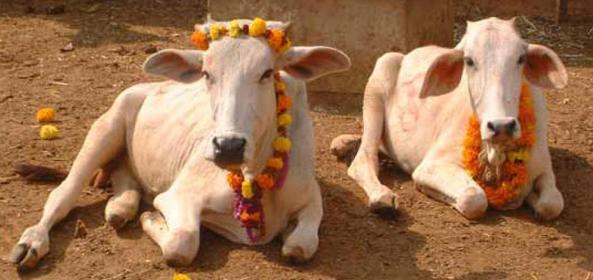
Govinda with cows

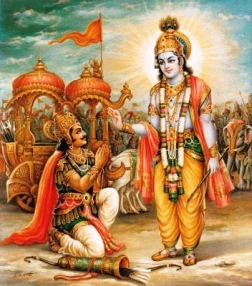
O Kṛṣṇa, O friend of Arjuna, O chief among the descendants of Vṛṣṇi, You are the destroyer of those political parties which are disturbing elements on this earth. Your prowess never deteriorates. You are the proprietor of the transcendental abode, and You descend to relieve the distresses of the cows, the brāhmaṇas, and the devotees, You possess all mystic powers, and You are the preceptor of the entire universe. You are the almighty God, and I offer You my respectful obeisances.
(Prayers by Queen Kunti—Śrīmad-Bhāgavatam 1.8.43)

…When Kuntī prays, go-dvija-surārti-harāvatāra, she indicates that Govinda, Kṛṣṇa, descends to this world especially to protect the cows, the brāhmaṇas, and the devotees. The demoniac in this world are the greatest enemies of the cows, for they maintain hundreds and thousands of slaughterhouses. Although the innocent cows give milk, the most important food, and although even after death the cows give their skin for shoes, people are such rascals that they kill the cows, but still they want to be happy in this world. How sinful they are.

…Why is cow protection so much advocated? Because the cow is the most important animal….Nonetheless, the present human society is so ungrateful that they needlessly kill these innocent cows.

Kṛṣṇa is worshiped with this prayer:

namo brahmaṇya-devāya
go-brāhmaṇa-hitāya ca
jagad-dhitāya kṛṣṇāya
govindāya namo namaḥ

“My Lord, You are the well-wisher of the cows and the brāhmaṇas, and You are the well-wisher of the entire human society and world.” For perfect human society there must be protection of go-dvija—the cows and the brāhmaṇas.

More

Care for Cows

Care for Cows

Care for Cows Kartika Festivals

The following Links will take you to one of our favorite sites: “Care for Cows”. Sriman Kurma Rupa Prabhu has devoted his life to the care and protection of the cows in Vrndavan, and has helped advanced the cause for cow protection Internationally. You can click on following images to visit the sites (Web, Facebook, Newsletter, Contact). Our obeisances to this fine organization.

More

Milk; the Miracle Food

cow mayapur

click on image to enlarge

We compiled a few select quotes from Srila Prabhupada stressing the importance of the miracle food milk, and cow protection which is real advancement of civilization, and will help save humanity from the greatest danger.

…cow protection is essential. There is a miracle in milk, for it contains all the necessary vitamins to sustain human physiological conditions for higher achievements. (Srimad Bhagavatam 1.16.4 Purport)

…The cow is the most important animal for developing the human body to perfection. The body can be maintained by any kind of foodstuff, but cow’s milk is particularly essential for developing the finer tissues of the human brain so that one can understand the intricacies of transcendental knowledge. A civilized man is expected to live on foodstuffs comprising fruits, vegetables, grains, sugar and milk. The bull helps in the agricultural process of producing grain, etc., and thus in one sense the bull is the father of humankind, whereas the cow is the mother, for she supplies milk to human society. A civilized man is therefore expected to give all protection to the bulls and cows. (Srimad Bhagavatam 3.5.7 Purport)

…Milk is compared to nectar, which one can drink to become immortal. Of course, simply drinking milk will not make one immortal, but it can increase the duration of one’s life. In modern civilization, men do not think milk to be important, and therefore they do not live very long. Although in this age men can live up to one hundred years, their duration of life is reduced because they do not drink large quantities of milk. This is a sign of Kali-yuga. In Kali-yuga, instead of drinking milk, people prefer to slaughter an animal and eat its flesh. The Supreme Personality of Godhead, in His instructions of Bhagavad-gītā, advises go-rakṣya, which means cow protection. The cow should be protected, milk should be drawn from the cows, and this milk should be prepared in various ways. One should take ample milk, and thus one can prolong one’s life, develop his brain, execute devotional service, and ultimately attain the favor of the Supreme Personality of Godhead. (Srimad Bhagavatam 8.6.12 Purport)

More

The Case Against Animal Slaughter


The Case Against Animal Slaughter
Back to Godhead Magazine 1976, Vol 11, No. 1

From the standpoints of health, economics and ethics, animal slaughter and meat-eating are detrimental to human society.

Health

Although meat is certainly a source of concentrated protein it is a very poor source of other food elements like minerals, vitamins and carbohydrates. In addition, eating flesh from the cow or any other animal is detrimental to the health of human beings for many reasons. For example, if a human, who has a much longer colon than the carnivorous animals, eats flesh, the following problems will ensue:

1. Intestinal bacteria in the long bowel will change from fermentative to putrefactive, thus causing poisons to be absorbed into the bloodstream. These poisons need to be eliminated, so energy is diverted from other essential bodily functions, including thinking.

2. The natural synthesis of vitamin B12 will be inhibited, possibly leading to anemia.

3. Animal toxins will tend to disrupt the proper metabolism of carbohydrates. This can cause diabetes.

4. Nonnutritive substances resulting from the digestion of animal flesh tend to be carcinogenic (cancer-inducing) irritants.

The minimum daily requirement of protein, which nutritional experts calculate to be between seventy and ninety grams, is easily achieved with dairy products and foods from the vegetable kingdom. Protein, is found in ample quantity in milk, cheese, yogurt, whole wheat, corn, many varieties of nuts and beans, and some vegetables. Thus vegetables, fruits, grains and dairy products provide a perfectly balanced diet. Consuming animal flesh, on the other hand, results in excess protein, which produces liver ailments, high blood pressure, and hardening of the arteries.

More

Care for Cows

Care for Cows
By Kurma Rupa Dasa
Apr 01, 2012 — VRINDAVAN, INDIA (SUN) —

Dear Friends, Jai Govinda! Our April 2012 Care for Cows Newsletter has been posted. Please review it at your earliest convenience. In this edition of 32 pages (2.5 MB), we present reports on:

1. The arrival of a beautiful one-year-old dwarf cow.

2. A daring and heroic rescue of an abandoned bull calf.

3. The surprising transformation of a bull fighter.

4. The three-month attempt to save an injured bull calf.

5. The sixteen calves decorating our goshalla.

Thanks for your participation and support. I hope this finds you experiencing the happiness and inner satisfaction that accompanies cow protection. Jaya Sri Gopal!

Your friend and servant,
Kurma Rupa dasa
careforcows.org

May cows stay in front of me; may cows stay behind me; may cows stay on both sides of me. May I always reside in the midst of cows.
(Hari Bhakti-vilas 16.252)

Care for Cows

Care For Cows
By Kurma Rupa dasa
Jan 01, 2012 — VRINDAVAN, INDIA (SUN)

Dear Friends, Jai Govinda!

Our January 2012 Care for Cows Newsletter has been posted. Please review it http://careforcows.org/downloads/newsletters_0 at your earliest convenience. In this edition of 22 pages (2.2 MB), we present reports on:

1. Basu Ghosh’s visit to the Bansi Gir Goshalla in Amedhabad, Gujarat. 

2. The four new residents admitted this month. 

3. A study which demonstrates that cows select best friends. 

4. The practical ways to determine if and when your cow is in heat. 

5. An excerpt from the famous Kalyana Kalpataru Volume IX February 1945.

Thanks for your participation and support. I hope this finds you experiencing the happiness and inner satisfaction that accompanies cow protection.

Jaya Sri Gopal!

Your friend and servant,
Kurma Rupa dasa

careforcows.org

Pasted from http://www.harekrsna.com/sun/news/01-12/news4112.htm

Sustainable Cow Protection

SUSTAINABLE COW PROTECTION
By Kurma Rupa Prabhu

If a family keeps a cow and calf and has a few acres of land, a vegetarian diet is easily sustainable. I know a family in Colorado whose cow gives nine gallons of milk a day and she lactates for four to five years. They have enough land for the cow and her offspring to graze on and even with several months of winter they can easily maintain their cow. (see CFC News July 2010).

If you mean to ask will protecting a family cow produce enough income to maintain herself and provide for a family of five people with urban habits, then no, it won’t.
In an agrarian setting cows actually give more than they take.

However, when one tries to produce milk for commercial purposes and requires expensive farming equipment (tractors, bailers, combines, silos etc.) has to pay outrageous prices for veterinary aid, purchase homogenization and pasteurization equipment, conveyances to transport the milk to urban areas and so on, sustainability becomes a problem. In short, what makes cow protection unsustainable today is urbanization and consumerism.

Remove these two from the picture and you have the formula for a peaceful existence.
A large herd is sustainable in an agrarian community with common pasturing grounds and bordering forests, not otherwise.

I have visited village communities in India which still resemble the ancient Vedic model where every household hosts a few cows and a few cowherd men or women take the collective herd out to pasture daily leaving the calves behind. At the end of each day there is a celebration when the cows return with their stomachs full and many with udders full as well. The only investment is the time it takes for a few people to accompany the cows in their daily wanderings.

The cows are milked; the calves are fed; the milk boiled on a cow dung fire; hot milk is served; the remainder left overnight to become yoghurt; which is later churned to make butter; and the nourishing buttermilk is offered to unexpected guests and whoever else. I have never witnessed a more joyous existence. But the villagers I have examined pay their bills by farming, not selling dairy products.

“Excess males and unproductive females” are terms used by commercial dairy farmers that have nothing to do with cow protection but everything to do with cow exploitation. Urbanization and mechanization have rendered bulls unemployed whereas in the Vedic model the bull calves are valued more than the females as there is always ploughing and draught work to be done.

Since their dung and urine have numerous practical uses in agrarian life, and since Vedantists consider tending cows and pleasing them to be an activity which pleases God, real cow protectors always consider cows and bulls productive even when dry, retired or diseased.

We do not encourage commercial dairy farming or any type of attempt to make living from selling cow products. A profit orientation invariably leads to decisions which sell the cow short.

The term “humane culling” is an oxymoron at best or a euphemism at worst. If you are humane, how can you take the life of a creature who has not agreed to give it up?
Why not call it what it is?- – killing to increase profit. People who coin such terms do so to minimize the guilt resulting from acting against their conscience.

Other examples are “terminating the pregnancy” instead of saying “killing the child in the womb”; or “pacifying the enemy” instead of bombing the hell out of them; and so on. When the sinister want to manipulate others to perform horrible and unbeneficial acts which may disturb their conscience, they employ such devices to facilitate the phenomenon of self-deception.

Creation and employment of such devices indicates malignant narcissism.
In an agrarian society cows have a wonderful effect on the ecology. Their dung is known to be the best fertilizer and their hooves and horns have a nourishing effect on the earth.
You may find Rudolf Steiner’s (the founder of biodynamics) work interesting. A Google search will yield much on his work. Since in the Vedic formula, ahimsa is the first principle, I think a vegan diet is better than one including commercial dairy products obtained by violence. But the best and most wholesome diet is one which includes milk obtained from a loving cow who is treated like one’s own mother.

More

Cow Protection; Lord Krishna’s Example

<Lord Krishna’s Example
To teach by example, the Supreme Lord Sri Krishna and Lord Balaram show us when They descend into this world, how important is to protect, love and serve Cows and Bulls. Krishna is known as Gopala (protector of the Cows) or Govinda (one who gives pleasure to the Cows). Lord Balaram represents plowing the land for agriculture and therefore always carries a plow in His hand, whereas Krishna tends Cows and therefore carries a flute in His hand. Thus the two brothers represent krisi-raksha (protecting Bulls by engaging them in farming) and go-raksha (protecting the Cows). 10.5.20 Purport
“Offering respect to the Cows will help the devotee to diminish the reactions to his past sinful activities” (Skanda Purana)

Vrindavan’s Cows are constant remainders of Krishna’s ecstatic Cow herding lilas (pastimes). By serving the Cows one receives tremendous spiritual benefit. Feeding grains to the Cows, offering puja, or simply a scratch under the neck will please these peaceful personalities and attracts the attention of Supreme Personality of Godhead Sri Govinda. The Gautamiya Tantra says, “One should gently scratch the body of a Cow, offer her a mouthful of green grass and reverentially circumambulate her. If Cows are maintained nicely and comfortably, Lord Gopal will be pleased.”

More

Next Newer Entries

108 Imporant Slokas from the 1972 Bhagavad-gita As It Is

Click on image to go to Post

Click on image to go to Post

The Hare Krishna Cookbook

Songs of the Vaisnava Acaryas

Bhagavad-gita As It Is 1972 Edition “Online”

click on image

click on image to visit site

Srimad Bhagavatam Online

click on image

Raja-Vidya the King of Knowledge

click on image

click on image

Blog Stats

  • 4,572,090 hits

Enter your email address to subscribe to this blog and receive notifications of new posts by email.

Join 3,906 other subscribers

Important Slokas from the Brahma-samhita

click on image

click on image

Slokas from the Sri Isopanisad

click on image

click on image

Prayers By Queen Kunti (Slokas)

click on image

Gajendra’s Prayers of Surrender (Slokas)

click on image

A Short Statement of the Philosophy of Krishna Consciousness

click on image

click on image

July 9th Letter

click on image

click on image

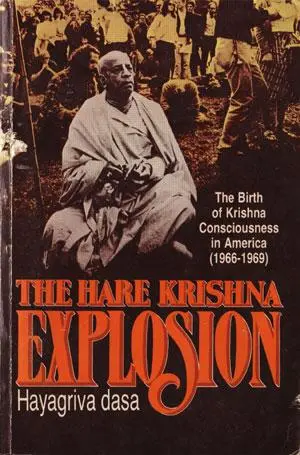
The Hare Krishna Explosion

Reference Material/Study Guide

click on image

click on image

  • LINKS