The Highest Yogi

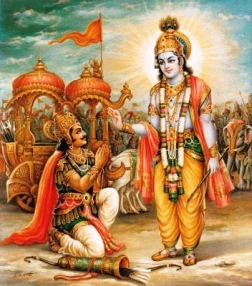
It is by great fortune that one comes to Kṛṣṇa consciousness on the path of bhakti-yoga to become well situated according to the Vedic direction. The ideal yogī concentrates his attention on Kṛṣṇa, who is called Śyāmasundara, who is as beautifully colored as a cloud, whose lotus-like face is as effulgent as the sun, whose dress is brilliant with jewels and whose body is flower garlanded. Illuminating all sides is His gorgeous luster, which is called the brahmajyoti. He incarnates in different forms such as Rāma, Nṛsiṁha, Varāha and Kṛṣṇa, the Supreme Personality of Godhead, and He descends like a human being, as the son of Mother Yaśodā, and He is known as Kṛṣṇa, Govinda and Vāsudeva. He is the perfect child, husband, friend and master, and He is full with all opulences and transcendental qualities. If one remains fully conscious of these features of the Lord, he is called the highest yogī.

Bhagavad-gita As It Is – Macmillan 1972 Edition
By His Divine Grace A.C. Bhaktivedanta Swami Prabhupada
Chapter 6, Text 47

yoginām api sarveṣāṁ
mad-gatenāntar-ātmanā
śraddhāvān bhajate yo māṁ
sa me yuktatamo mataḥ

yoginām—of all yogīs; api—also; sarveṣām—all types of; mat-gatena—abiding in Me; antaḥ-ātmanā—always thinking of Me within; śraddhāvān—in full faith; bhajate—renders transcendental loving service; yaḥ—one who; mām—Me (the Supreme Lord); saḥ—he; me—Mine; yuktatamaḥ—the greatest yogī; mataḥ—is considered.

Translation
And of all yogīs, he who always abides in Me with great faith, worshiping Me in transcendental loving service, is most intimately united with Me in yoga and is the highest of all.

More

Freedom in Krsna

Freedom in Krsna
By His Divine Grace A.C. Bhaktivedanta Swami Prabhupada
Re-printed from Back to Godhead Magazine 1973, Vol. 1, No. 48

vande rupa-sanatanau raghuyugau sri-jiva-gopalakau.

We are following in the footsteps of Lord Caitanya Mahaprabhu in order to understand Krsna consciousness. Krsna, the Supreme Personality of Godhead, is said in Sri Isopanisad to be very far away from us yet at the same time to be very near. Isvara, the supreme controller, is situated in everyone’s heart, not only in the hearts of human beings, but also within the beasts, birds, aquatics, and even within the atoms themselves. We simply have not realized Him. Actually anyone, however, can find Krsna within his heart.

The process of finding Krsna is called yoga. There are many types of yoga. In the Western countries people are generally familiar with the process of hatha-yoga. This is an approved method and is described in the Sixth Chapter of Bhagavad-gita. At the present moment, however, people are short-lived, they are not very fortunate, and they are always disturbed by many external affairs, and therefore it is not possible to properly execute this hatha-yoga. Even five thousand years ago when Krsna advised His friend Arjuna to accept the hatha-yoga process, Arjuna said, “Krsna, this practice is impossible.” He further said that to control the mind is as difficult as to control the wind. The mind flickers from one engagement to another and changes so swiftly that it is very difficult to control it in this age. Therefore Arjuna said that for him this process of hatha-yoga was not possible.

More

The Mystic Yogī


…The real purpose of yogic performances is to control the mind and the senses. In other words, one cannot attain the mercy and benediction of the Supreme Lord until one is able to control the mind and the senses. This is actually possible when one fully engages in Kṛṣṇa consciousness…

Srimad-Bhagavatam
By His Divine Grace A.C. Bhaktivedanta Swami Prabhupada
Canto 3: “The Status Quo”
SB 3.15: Description of the Kingdom of God

There is no defeat in this material world for persons who control the mind and senses by controlling the breathing process and who are therefore experienced, mature mystics. This is because by such perfection in yoga they have attained your mercy.

Purport

The purpose of yogic performances is explained here. It is said that an experienced mystic attains full control of the senses and the mind by controlling the breathing process. Therefore, controlling the breathing process is not the ultimate aim of yoga. The real purpose of yogic performances is to control the mind and the senses. Anyone who has such control is to be understood to be an experienced, mature mystic yogī. It is indicated herein that a yogī who has control over the mind and senses has the actual benediction of the Lord, and he has no fear. In other words, one cannot attain the mercy and benediction of the Supreme Lord until one is able to control the mind and the senses. This is actually possible when one fully engages in Kṛṣṇa consciousness. A person whose senses and mind are always engaged in the transcendental service of the Lord has no possibility of engaging in material activities. The devotees of the Lord are not defeated anywhere in the universe. It is stated, nārāyaṇa-parāḥ sarve: one who is nārāyaṇa-para, or a devotee of the Supreme Personality of Godhead, is not afraid anywhere, whether he is sent to hell or promoted to heaven (Bhāg. 6.17.28).

Pasted from; PrabhupadaBooks.com

Next Newer Entries

108 Imporant Slokas from the 1972 Bhagavad-gita As It Is

Click on image to go to Post

Click on image to go to Post

The Hare Krishna Cookbook

Songs of the Vaisnava Acaryas

Bhagavad-gita As It Is 1972 Edition “Online”

click on image

click on image to visit site

Srimad Bhagavatam Online

click on image

Raja-Vidya the King of Knowledge

click on image

click on image

Blog Stats

  • 4,626,439 hits

Enter your email address to subscribe to this blog and receive notifications of new posts by email.

Join 3,908 other subscribers

Important Slokas from the Brahma-samhita

click on image

click on image

Slokas from the Sri Isopanisad

click on image

click on image

Prayers By Queen Kunti (Slokas)

click on image

Gajendra’s Prayers of Surrender (Slokas)

click on image

A Short Statement of the Philosophy of Krishna Consciousness

click on image

click on image

July 9th Letter

click on image

click on image

The Hare Krishna Explosion

Reference Material/Study Guide

click on image

click on image

  • LINKS