Earliest Recording of Srila Prabhupada in the Bhaktivedanta Archives

Earliest Recording of Srila Prabhupada in the Bhaktivedanta Archives

Its interesting to note that this lecture also became the Introduction to Bhagavad-gita As It Is

Prabhupāda:

om ajnana-timirandhasya jnananjana-salakaya
caksur unmilitam yena tasmai sri-gurave namah

sri-caitanya-mano-‘bhistam sthapitum yena bhtu-tale
svayam rupah kada mahyam dadati sva-padantikam

vande ‘ham sri-guroh sri-yuta-pada-kamalam sri-gurun vaisnavams’ ca
sri-rupam sagrajatam saha-gana-raghunathanvitam tam sa jivam
sadvaitam savadhutam parijana-sahitam krsna-caitanya-devam
sri-radha-krsna-padan saha-gana-lalita-sri-visakhanvitams’ ca

he krsna karuna-sindho dina-bandho jagat-pate
gopesa gopika kanta radha-kanta namo ‘stu te

tapta-kancana-gaurangi radhe vrndavanesvari
vrsabhanu-sute devi pranamami hari-priye

(jaya) sri-krsna-caitanya prabhu nityananda
sri-advaita gadadhara srivasadi-gaura-bhakta-vrnda

Hare Krishna, Hare Krishna
Krishna Krishna, Hare Hare
Hare Rama, Hare Rama
Rama Rama, Hare Hare

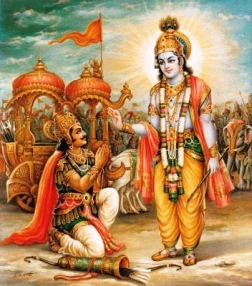
Bhagavad-gītā is known also Gītopaniṣad, the essence of Vedic knowledge, and one of the most important of the various Upaniṣads in Vedic literature. This Bhagavad-gītā, there are many commentations in English, and what is the necessity of another English commentation of the Bhagavad-gītā can be explained in the following way. One . . .

(break) One American lady, Mrs. Charlotte Leblanc, asked me to recommend an English edition of Bhagavad-gītā which she can read.

Of course, in America there are so many editions of English Bhagavad-gītā, but so far I have seen them, not only in America but also India, none of them can be said strictly as authoritative, because almost every one of them have expressed their own opinion through the commentation of the Bhagavad-gītā without touching the spirit of Bhagavad-gītā As It Is.

The spirit of Bhagavad-gītā is mentioned in the Bhagavad-gītā itself. It is just like this—if we want to take a particular medicine, then we have to follow the particular direction mentioned on the label of the medicine. We cannot take the particular medicine according to our own direction or by the direction of a friend, but we have to take the medicine under the direction given on the label of the bottle and as directed by the physician. Similarly, the Bhagavad-gītā also should be taken or accepted as it is directed by the speaker Himself.

More
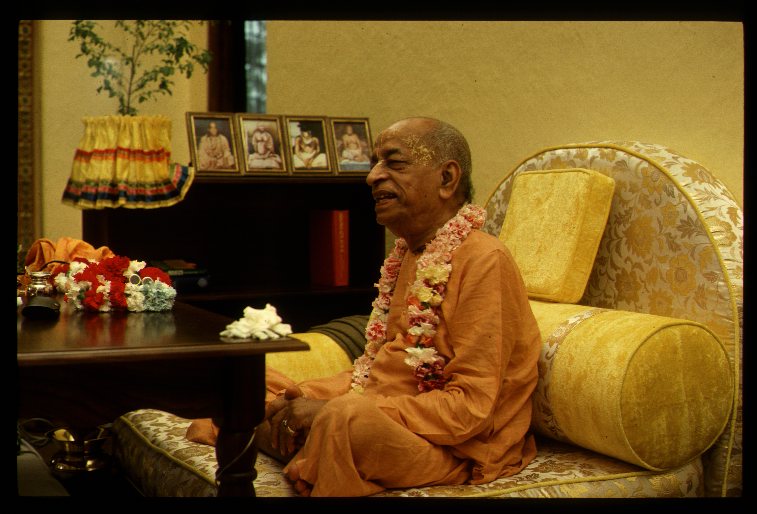
“A Month in the Life of Srila Prabhupada”

Srila Prabhupada

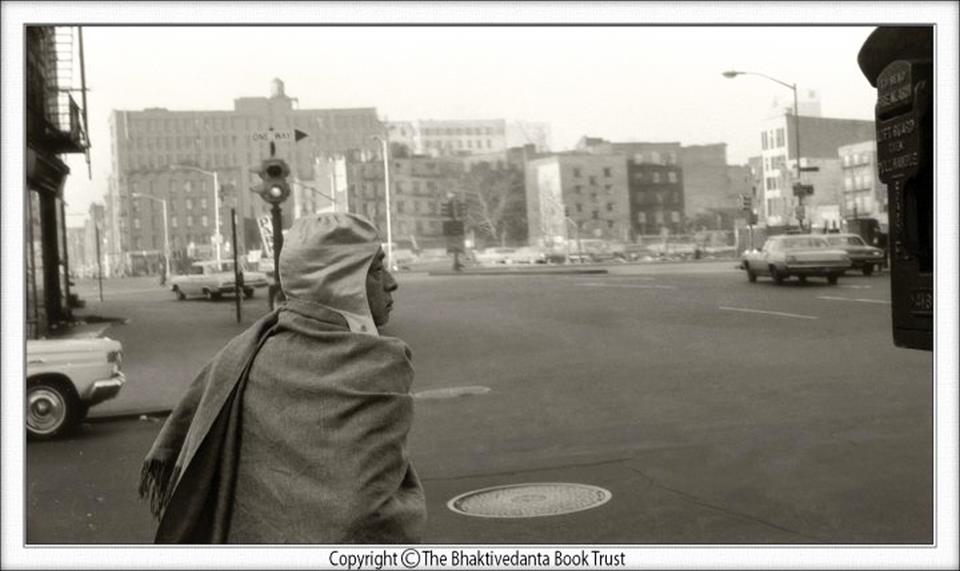
Recently this following letter appeared in my mailbox with a wonderful link from Vanipedia.org A month in the life of Srila Prabhupada is generated from the Timeline of Srila Prabhupada’s life and from A Day in the Life of Srila Prabhupada

Dear Devotees,

Please accept my humble obeisances. All glories to Srila Prabhupada.

Thanks to Visnu Murti Prabhu and the Vanipedia team, we can now easily
follow Srila Prabhupada’s life from 1966 all the way to 1977 here:

http://vanipedia.org/wiki/A_Month_in_the_Life_of_Srila_Prabhupada

Please visit this link and share widely.

More

Definitions of Vāṇī

Srila Prabhupada Vani

By chance I happened upon the Vanipedia About Page this morning while researching a post for Srila Bhaktisiddhanta’s appearance day, and found this most fascinating definition of the word Vani. We can see from studying Srila Prabhupada’s books just how vast the Sanskrit language is just from the example of this one word; vāṇī. In one letter written to Tribhuvanatha in June of 1972, Srila Prabhupada writes:

“I am very much stressing nowadays that my students shall increase their reading of my books and try to understand them from different angles of vision. Each sloka can be seen from many, many angles of vision, so become practiced in seeing things like this.

So here is a word for your Vaisnava Vocabulary with its many meanings.

“Although according to material vision His Divine Grace Śrīla Bhaktisiddhānta Sarasvatī Ṭhākura Prabhupāda passed away from this material world on the last day of December, 1936, I still consider His Divine Grace to be always present with me by his vāṇī, his words. There are two ways of association-by vāṇī and by vapuḥ. Vāṇī means words, and vapuḥ means physical presence. Physical presence is sometimes appreciable and sometimes not, but vāṇī continues to exist eternally. Therefore we must take advantage of the vāṇī, not the physical presence. The Bhagavad-gītā, for example, is the vāṇī of Lord Kṛṣṇa. Although Kṛṣṇa was personally present five thousand years ago and is no longer physically present from the materialistic point of view, the Bhagavad-gītā continues.”

Definitions of Vani
Śrīla Prabhupāda has translated vāṇī in the following ways;

vāṇī—a voice
vāṇī—injunction
vāṇī—message
vāṇī—talking
vāṇī—teachings
vāṇī—the organ of speech
vāṇī—transcendental words
vāṇī—vibration
vāṇī—words
vāṇī—words, the power of speech

and here we see the meaning when connected to other words; More

108 Imporant Slokas from the 1972 Bhagavad-gita As It Is

Click on image to go to Post

Click on image to go to Post

The Hare Krishna Cookbook

Songs of the Vaisnava Acaryas

Bhagavad-gita As It Is 1972 Edition “Online”

click on image

click on image to visit site

Srimad Bhagavatam Online

click on image

Raja-Vidya the King of Knowledge

click on image

click on image

Blog Stats

  • 4,573,071 hits

Enter your email address to subscribe to this blog and receive notifications of new posts by email.

Join 3,906 other subscribers

Important Slokas from the Brahma-samhita

click on image

click on image

Slokas from the Sri Isopanisad

click on image

click on image

Prayers By Queen Kunti (Slokas)

click on image

Gajendra’s Prayers of Surrender (Slokas)

click on image

A Short Statement of the Philosophy of Krishna Consciousness

click on image

click on image

July 9th Letter

click on image

click on image

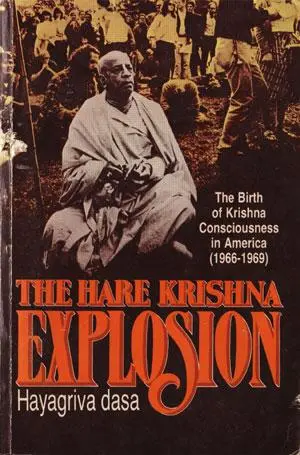
The Hare Krishna Explosion

Reference Material/Study Guide

click on image

click on image

  • LINKS