Phishalni-shila: Krishna’s Slide

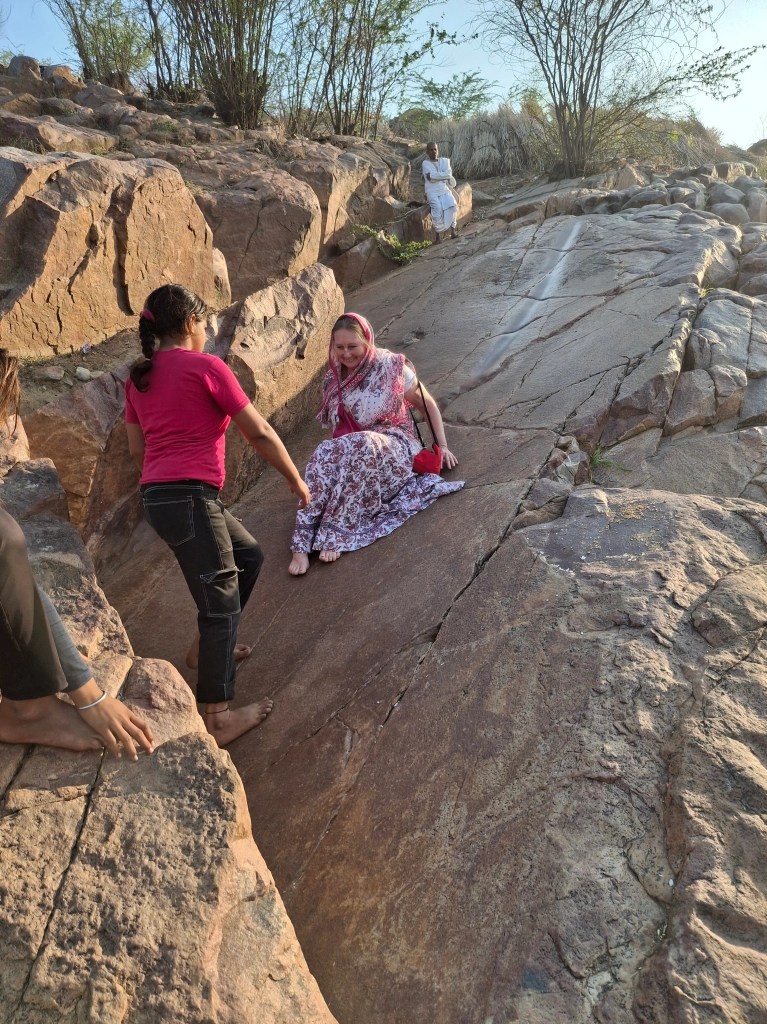
I have many happy memories of our last trip to India, but this day, our visit to Phishalina-shila (Krishna’s slide) was one of the most enjoyable. Hard to imagine that 5,000 years ago, Krishna and his friends slid down this very same rock, and that countless sages and saints, pilgrims and devotees, have slid down it since. Truly a remarkable site, and sacred place of pilgrimage. -V

Phishalni-shila

This is the stone slide known as Phishalni-shila where the sakhis used to enjoy sliding pastimes in their childhood. The word ‘phisalni-shila means ‘rock-slide’ One can also see the marks of alta or red lac, left behind from the footsteps of the sakhis, as they engaged in their various pastimes. Some locals call this place as Phishalini, as well as Shikalini, which are corrupted forms of Phishalni.

Kamyavan – Pichalini-shila (kalavati)

“The Bhakti-ratnakara says. “On Chandrasena-parvata is Pichalni-shila. At this place
Krishna plays along with His friends. Sitting in a bending form they slid down the rock again and again.” Situated on the side of a hill is this natural rock slide that is used even today by the local children. Krishna and His friends used to come here for herding the cows and would enjoy many long hours playing on this slide. The word ‘pichalni’ means ‘sliding stone’ and ‘shila’ means a ‘stone’ or ‘rock’. The hill on which the Pichalni-shila is found is known as Chandrasena Parvata, but is known locally as Pichal Pihari. The word ‘pihari’ means a ‘hill’. Locals also refer to this rock slide as Khisasini-shila or Pishalini-shila, which are both corruptions of the word Pichalni-shila.

The village of Kalavati is the place where the Pichalni-shila is located. The word ‘kalavati’ means the ‘place of the dance’ and it was here where the gopis assembled and engaged in singing songs glorifying Krishna and dancing in circles with one-another. When Krishna heard the rhythmic jingling of the gopi’s ankle bells and the sweet sound of their singing, He came here to witness the wonderful dance performance of the cowherd girls.”

The Appearance of Śukadeva Gosvāmī

Srila Sukadeva Gosvami and Maharaja Pariksit

Some time ago I started to re-read the Srimad Bhagavatam from the beginning. This morning I finished the first canto. It is with great pleasure I post the final chapter in the First Canto entitled “The Appearance of Śukadeva Gosvāmī”

Śrīmad-Bhāgavatam
By His Divine Grace A. C. Bhaktivedanta Swami Prabhupāda
Canto 1,Chapter Nineteen

More

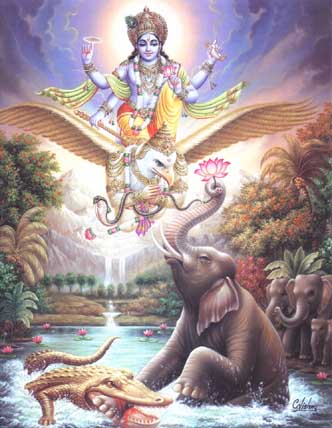
Gajendra Returns to the Spiritual World

The Fourth Chapter of the Eight Canto of Srimad Bhagavatam describes the previous birth of Gajendra and the crocodile. It tells how the crocodile became a Gandharva and how Gajendra became an associate of the Supreme Personality of Godhead.

…in his birth as an elephant, when he was dangerously attacked by the crocodile, he remembered his past life in devotional service and remembered a prayer he had learned in that life. Because of this prayer, he again received the mercy of the Lord.

Śukadeva Gosvāmī ends this chapter by describing the good fortune of the elephant. Śukadeva Gosvāmī says that by hearing the narration of Gajendra’s deliverance, one can also get the opportunity to be delivered.

“One who seeks Your compassion and thus tolerates all kinds of adverse conditions due to the karma of his past deeds, who engages always in Your devotional service with his mind, words and body, and who always offers obeisances unto You, is certainly a bona fide candidate for liberation.”

A devotee who tolerates everything in this material world and patiently executes his devotional service can become mukti-pade sa dāya-bhāk, a bona fide candidate for liberation. The word dāya-bhāk refers to a hereditary right to the Lord’s mercy. A devotee must simply engage in devotional service, not caring about material situations. Then he automatically becomes a rightful candidate for promotion to Vaikuṇṭhaloka. The devotee who renders unalloyed service to the Lord gets the right to be promoted to Vaikuṇṭhaloka, just as a son inherits the property of his father.

Full Text & Purports More

108 Imporant Slokas from the 1972 Bhagavad-gita As It Is

Click on image to go to Post

Click on image to go to Post

The Hare Krishna Cookbook

Songs of the Vaisnava Acaryas

Bhagavad-gita As It Is 1972 Edition “Online”

click on image

click on image to visit site

Srimad Bhagavatam Online

click on image

Raja-Vidya the King of Knowledge

click on image

click on image

Blog Stats

  • 4,591,507 hits

Enter your email address to subscribe to this blog and receive notifications of new posts by email.

Join 3,908 other subscribers

Important Slokas from the Brahma-samhita

click on image

click on image

Slokas from the Sri Isopanisad

click on image

click on image

Prayers By Queen Kunti (Slokas)

click on image

Gajendra’s Prayers of Surrender (Slokas)

click on image

A Short Statement of the Philosophy of Krishna Consciousness

click on image

click on image

July 9th Letter

click on image

click on image

The Hare Krishna Explosion

Reference Material/Study Guide

click on image

click on image

  • LINKS