Hare Kṛṣṇa Mahā-mantra

The Appearance of Lord Caitanya

The Appearance of Lord Caitanya

Lord Sri Caitanya Mahaprabhu is Krishna Himself, and He is teaching how to develop love of God by a very simple method…chanting the names of the Lord. Only five hundred years ago Lord Caitanya Mahāprabhu, prophesied that the Hare Kṛṣṇa mantra would resound throughout every town and village in the world. At a time when Western man was directing his exploratory spirit toward studying the physical universe and circumnavigating the globe, in India Śrī Caitanya was inaugurating and masterminding a revolution directed inward. His movement swept the subcontinent, gained millions of followers, and profoundly influenced the future of religious and philosophical thinking, both in India and the West. In the following talk, presented in November 1969 at London’s Conway Hall, Śrīla Prabhupāda describes the divine appearance of Śrī Caitanya.

Śrī Caitanya Mahāprabhu, the golden avatāra, appeared in India nearly five hundred years ago. It is the custom in India that when a child is born, an astrologer is called for. When Lord Kṛṣṇa, the Supreme Personality of Godhead, appeared five thousand years ago, Gargamuni was called by His father, and he said, “This child formerly incarnated in three complexions, such as red and golden, and now He has appeared in blackish color.” Kṛṣṇa’s color is described in the scriptures as blackish, just like the color of a cloud. Lord Caitanya is understood to be Kṛṣṇa appearing in golden complexion.

There is much evidence in Vedic literature that Caitanya Mahāprabhu is an incarnation of Kṛṣṇa, and this is confirmed by scholars and devotees. In the Śrīmad-Bhāgavatam it is confirmed that the incarnation of Kṛṣṇa, or God, in this present age, Kali-yuga, will always engage in describing Kṛṣṇa. He is Kṛṣṇa, but as a devotee of Kṛṣṇa He describes Himself. And in this age His bodily complexion will not be blackish. This means that it may be white, it may be red, or it may be yellow, because these four colors—white, red, yellow, and black—are the colors assumed by the incarnations for the different ages. Therefore, since the red, white, and blackish colors were already taken by former incarnations, the remaining color, golden, is assumed by Caitanya Mahāprabhu. His complexion is not blackish, but He is Kṛṣṇa.

More

Wonderful Fruit of Love of Godhead

Lord Caitanya Mahaprabhu Chanting and Dancing


Sri Caitanya-caritamrta – 1975 Edition
By His Divine Grace A.C. Bhaktivedanta Swami Prabhupada
Adi-lila 9.48

The Tree of Devotional Service

yei yāhāṅ tāhāṅ dāna kare prema-phala
phalāsvāde matta loka ha-ila sakala

yei—anyone; yāhāṅ—wherever; tāhāṅ—anywhere; dāna—charity; kare—gives in; prema-phala—the fruit of love of Godhead; phala—fruit; āsvāde—by tasting; matta—intoxicated; loka—people; ha-ila—become; sakala—all.

The fruit of love of God is so relishable that wherever a devotee distributes it, those who taste the fruit, anywhere in the world, immediately become intoxicated.

Here the wonderful fruit of love of Godhead distributed by Lord Caitanya Mahāprabhu is described. We have practical experience that anyone who accepts this fruit and sincerely tastes it immediately becomes mad after it and gives up all his bad habits, being intoxicated by Caitanya Mahāprabhu’s gift, the Hare Kṛṣṇa mahā-mantra. The statements of Śrī Caitanya-caritāmṛta are so practical that anyone can test them. As far as we are concerned, we are most confident of the success of the distribution of the great fruit of love of Godhead through the medium of chanting the mahā-mantra-Hare Kṛṣṇa, Hare Kṛṣṇa, Kṛṣṇa Kṛṣṇa, Hare Hare Hare Rāma, Hare Rāma, Rāma Rāma, Hare Hare.

Chanting HareKrishna

The holy name of Lord Krishna is an attractive feature for many saintly, liberal people. It is the annihilator of all sinful reactions and is so powerful that save for the dumb who cannot chant it, it is readily available to everyone, including the lowest type of man, the candala. The holy name of Krishna is the controller of the opulence of liberation, and it is identical with Krishna.

Simply by touching the holy name with one’s tongue, immediate effects are produced. Chanting the holy name does not depend on initiation, pious activities or the purascarya regulative principles generally observed before initiation. The holy name does not wait for all these activities. It is self-sufficient. (Caitanya-caritmrta Mad.15.110)

Hare Krishna, Hare Krishna, Krishna Krishna, Hare Hare,
Hare Rama, Hare Rama, Rama Rama, Hare Hare…

Hare Krishna Mantra


What is the meaning of Hare Krishna?

It is the short form of the maha-mantra, the great spiritual sound of final liberation:
 
Hare Krishna Hare Krishna Krishna Krishna Hare Hare
Hare Rama Hare Rama Rama Rama Hare Hare

“By vibrating this transcendental sound, the meaning of everything, both material and spiritual, is revealed. This Hare Krishna is nondifferent from the Personality of Godhead.” (from Bhaktivedanta Prabhupada Commentary, Srimad Bhagavatam 4.24.40)

What is the deeper meaning of the Hare Krishna mantra?

Caitanya Mahaprabhu teaches us that we should only beg God for His service life after life. This is the actual meaning of the Hare Krsna maha-mantra. When we are chanting Hare Krsna, Hare Krsna, Krsna Krsna, Hare Hare. Hare Rama, Hare Rama, Rama, Rama, Hare Hare, we are actually addressing God and His energy, Hara. Hara is Krsna’s internal potency, Srimati Radharani or Laksmi. Jaya radhe! This is daivi prakrti, and the devotees take shelter of the daivi prakrti, Srimati Radharani. Thus the Vaisnavas worship Radha-Krsna, Laksmi-Narayana and Sita-Rama. In the beginning of the Hare Krsna maha-mantra we first address the internal energy of Krsna, Hare. Thus we say, “O Radharani! O Hare! O energy of the Lord!” When we address someone in this way, he usually says, “Yes, what do you want?” The answer is, “Please engage me in Your service.” This should be our prayer. We should not say, “O energy of the Lord, O Krsna, please give me money. Please give me a beautiful wife. Please give me many followers. Please give me some prestigious position. Please give me the presidency.” These are all material hankerings, which should be avoided. Lord Buddha advocated that we give up all material desires. It is not possible to become desireless, but it is possible to give up material desires. It is the nature of the living entity to desire; it is not possible to be desireless. If one is desireless, he is dead. Desirelessness means purifying one’s desire, and desire is purified when we only desire the service of Krsna. (from “Teachings of Lord Kapila”)

Why is the Hare Krishna mantra so special?

Lord Krsna says in Bhagavad-gita (7.8), pranavah sarva-vedesu: ‘In all the Vedic mantras, I am represented by pranava, or omkara.’ Thus chanting of the Vedic mantras beginning with omkara is directly chanting of Krsna’s name. There is no difference. Whether one chants omkara or addresses the Lord as ‘Krsna’, the meaning is the same, but Sri Caitanya Mahaprabhu has recommended that in this age one chant the Hare Krsna mantra (harer nama eva kevalam). Although there is no difference between Hare Krsna and the Vedic mantras beginning with omkara, Sri Caitanya Mahaprabhu, the leader of the spiritual movement for this age, has recommended that one chant Hare Krsna, Hare Krsna, Krsna Krsna, Hare Hare. Hare Rama, Hare Rama, Rama Rama, Hare Hare. (from Bhaktivedanta Prabhupada Commentary, Srimad Bhagavatam 6.5.26) 

Pasted from; http://www.harekrsna.de/artikel/faq.htm

Arsha-Prayoga Part III – The Case Against Changing Prabhupada’s Books


EDITORIAL
BY LOCANANANDA DAS – 11-01-04

While planning to print the unabridged version of the Bhagavad-gita, Srila Prabhupada often referred to it as the revised and enlarged edition. When the BBT published its unauthorized adulterated Gita years later, they would henceforward refer to the 1972 printing as the original edition while calling theirs the revised and enlarged edition. This appears to be a subtle act of deception meant to validate the irreverent practice of changing Srila Prabhupada’s Books.

The remainder of this article will focus mainly on the Bhagavad-gita As It Is, which contains the essence of Vaishnava philosophy. Srila Prabhupada said that the Krishna consciousness movement is genuine, historically authorized, natural and transcendental due to its being based on the Bhagavad-gita As It Is. It was his conviction that the entire human society could embrace one God, Krishna, and live harmoniously by practicing one religion, devotional service to God, by chanting one mantra, the Hare Krishna Maha Mantra, and by following one scripture, the Bhagavad-gita As It Is. Because the Bhagavad-gita is so vitally important to the spreading of Krishna consciousness, the adverse effect of changing its original wording without the approval of the Acharya can hardly be estimated.

More

Next Newer Entries

108 Imporant Slokas from the 1972 Bhagavad-gita As It Is

Click on image to go to Post

Click on image to go to Post

The Hare Krishna Cookbook

Songs of the Vaisnava Acaryas

Bhagavad-gita As It Is 1972 Edition “Online”

click on image

click on image to visit site

Srimad Bhagavatam Online

click on image

Raja-Vidya the King of Knowledge

click on image

click on image

Blog Stats

  • 4,551,964 hits

Enter your email address to subscribe to this blog and receive notifications of new posts by email.

Join 3,910 other subscribers

Important Slokas from the Brahma-samhita

click on image

click on image

Slokas from the Sri Isopanisad

click on image

click on image

Prayers By Queen Kunti (Slokas)

click on image

Gajendra’s Prayers of Surrender (Slokas)

click on image

A Short Statement of the Philosophy of Krishna Consciousness

click on image

click on image

July 9th Letter

click on image

click on image

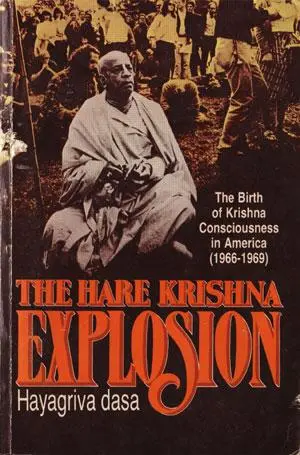
The Hare Krishna Explosion

Reference Material/Study Guide

click on image

click on image

  • LINKS