“In the sastra it is said this Kali-yuga is full of faults, so many faults. It is the ocean of faults. But there is a very nice thing, asti hy eko mahan gunah, a very great quality. What is that? Kirtanad eva krsnasya mukta-sangah param vrajet [SB 12.3.51]. If you simply chant Hare Krishna mantra, then you become perfect. Is it very difficult? Chant Hare Krishna and you become perfect. But we are so unfortunate, we are not even prepared to chant. This is our position. So you have to make little determination that ‘I shall chant henceforward Hare Krishna mantra.’ Then everything is all right.”
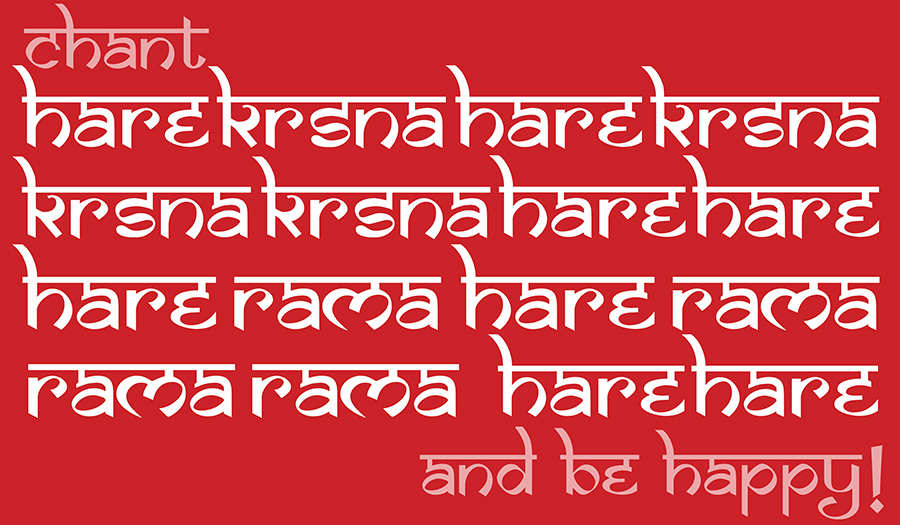
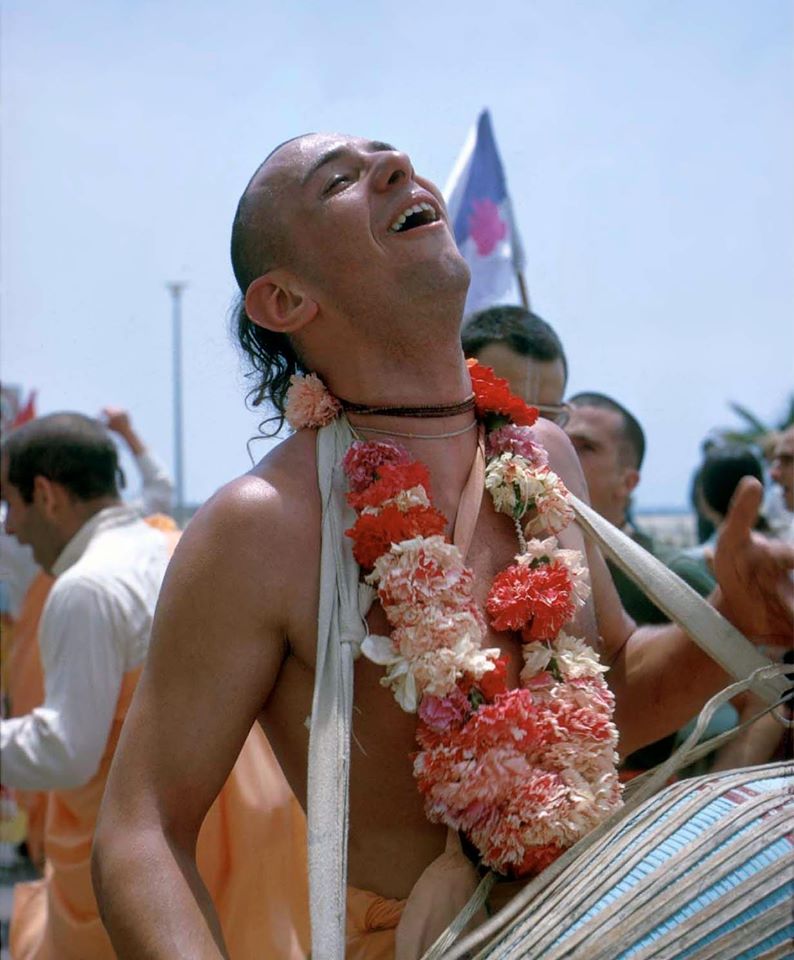
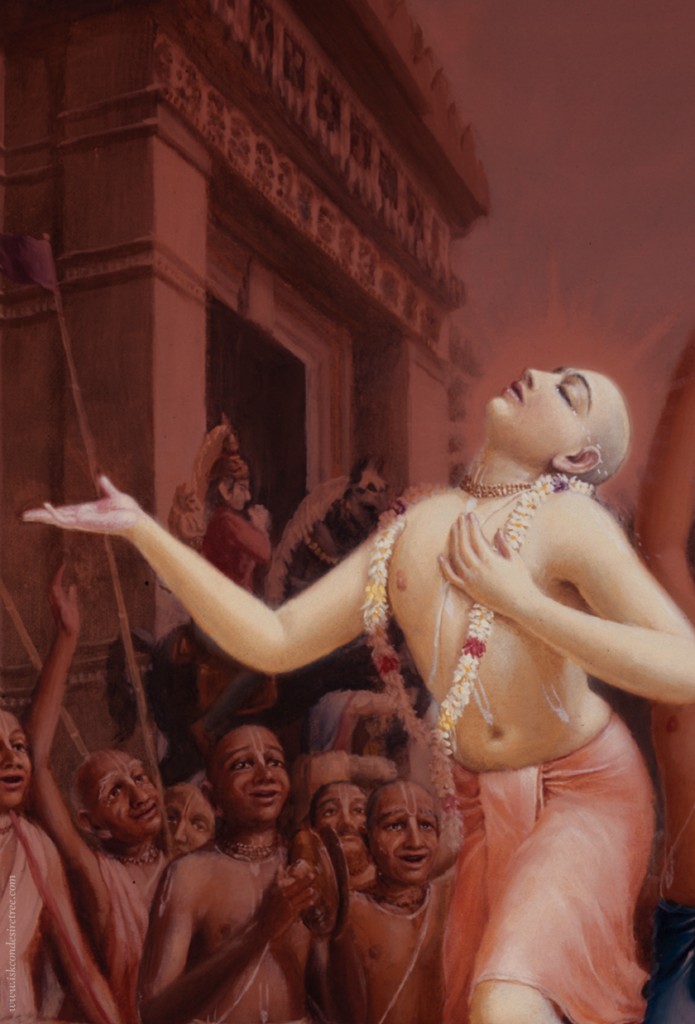
Srila Prabhuapda: Generally a human being is interested in religion, economic development, sense gratification and liberation, but love of God is above all these. A bona fide spiritual master chants the holy names-Hare Kṛṣṇa, Hare Kṛṣṇa, Kṛṣṇa Kṛṣṇa, Hare Hare/ Hare Rāma, Hare Rāma, Rāma Rāma, Hare Hare-and the transcendental sound vibration enters into the ear of the disciple, and if a disciple follows in the footsteps of his spiritual master and chants the holy name with similar respect, he actually comes to worship the transcendental name. When the transcendental name is worshiped by the devotee, the name Himself spreads His glories within the heart of a devotee. When a devotee is perfectly qualified in chanting the transcendental vibration of the holy name, he is quite fit to become a spiritual master and to deliver all the people of the world. The chanting of the holy name is so powerful that it gradually establishes its supremacy above everything in the world. The devotee who chants it becomes transcendentally situated in ecstasy and sometimes laughs, cries and dances in his ecstasy. Sometimes the unintelligent put hindrances in the path of chanting this mahā-mantra, but one who is situated on the platform of love of Godhead chants the holy name loudly for all concerned. As a result, everyone becomes initiated in the chanting of the holy names-Hare Kṛṣṇa, Hare Kṛṣṇa, Kṛṣṇa Kṛṣṇa, Hare Hare/ Hare Rāma, Hare Rāma, Rāma Rāma, Hare Hare. By chanting and hearing the holy names of Kṛṣṇa, a person can remember the forms and qualities of Kṛṣṇa. (Teachings of Lord Caitanya – 1968 Edition, Chapter 18)
It seems there is world wide fear over the outbreak of the Coronavirus disease (COVID-19). Most people infected with the COVID-19 virus will experience mild to moderate respiratory illness and recover without requiring special treatment. Older people, such as myself , and those with underlying medical problems like cardiovascular disease, diabetes, chronic respiratory disease, and cancer are more likely to develop serious illness. But I refuse to live in fear, although we have accepted a self imposed quarantine, I have gone about my business working alone in my woodworking shop, and chanting the holy name. Hare Krishna! -V
Living beings who are entangled in the complicated meshes of birth and death can be freed immediately by even unconsciously chanting the holy name of Kṛṣṇa, which is feared by fear personified. (SB 1.1.14)
… It is stated herein that the name of Kṛṣṇa is feared even by fear personified. This indicates that the name of Kṛṣṇa is nondifferent from Kṛṣṇa. Therefore, the name of Kṛṣṇa is as powerful as Lord Kṛṣṇa Himself. There is no difference at all. Anyone, therefore, can take advantage of the holy names of Lord Śrī Kṛṣṇa even in the midst of greatest dangers. The transcendental name of Kṛṣṇa, even though uttered unconsciously or by force of circumstances, can help one obtain freedom from the hurdle of birth and death. (from purport)
“Our prayer of the Hare Krishna Mantra means addressing Radha and Krishna for being engaged in Their service. Hare Krishna means “Oh Hare, Oh Radharani! Oh Krishna! Please engage me in Your service so that I can get relief from the service of Maya.” (Letter to Subala das July 8, 1969)
” Simply our prayer should be, My dear Krishna, please remind me to always chant Your Holy Name, please do not put me into forgetfulness. You are sitting within me as Supersoul, so you can put me into forgetfulness or into remembering You. So please do not put me into forgetfulness. Please always remind me to chant, even You send me into the hell, it doesn’t matter, just so long as I can always chant Hare Krishna…” (from Srila Prabhupada’s letter to Devananda dated Nov.23,1968)
…In the Sixth and Eighth Chapters of Bhagavad-gītā, Lord Śrī Kṛṣṇa, the Supreme Personality of Godhead, explains that the eightfold yoga system is a means to control the mind and senses. This method, however, is very difficult for people to perform, especially in this age of Kali, an age characterized by ignorance and chaos.
Although this eightfold yoga system is particularly recommended in the Sixth Chapter of Bhagavad-gītā, the Lord emphasizes that the process of karma-yoga, action in Kṛṣṇa consciousness, is superior.
…No one really wants to sit down and meditate. Why should we? We’re meant for positive activity, for recreation, for pleasure. In Kṛṣṇa consciousness, our recreation is dancing and chanting, and when we get tired, we take prasāda. Is dancing difficult? Is chanting difficult? We don’t charge anything to dance in the temple. If you go to a ballroom, you have to pay to enter, but we do not charge. It is natural to enjoy music and dancing and palatable foods. These are our recreations, and this is our method of meditation. So this yoga system is not at all laborious. It is simply recreation, susukham. It is stated in the Ninth Chapter of Bhagavad-gītā (9.2) that this yoga is susukham—very happy. “It is everlasting, and it is joyfully performed.” It is natural, automatic, and spontaneous. It is our real life in the spiritual world. (The Path of Perfection)
This morning I was reading from the Nectar of Devotion the chapter entitled “The Mahā-mantra”. We have posted the entire chapter as well as some other related quotes from the Nectar of Devotion on the Maha-mantra.
In the Padma Purāṇa there is a statement: “For any person who is chanting the holy name either softly or loudly, the paths to liberation and even heavenly happiness are at once open.”
When a mantra or hymn is chanted softly and slowly, that is called japa. The same mantra, when chanted loudly, is called kīrtana. For example, the mahā-mantra (Hare Kṛṣṇa, Hare Kṛṣṇa, Kṛṣṇa Kṛṣṇa, Hare Hare/ Hare Rāma, Hare Rāma, Rāma Rāma, Hare Hare) when uttered very softly only for one’s own hearing is called japa. The same mantra, when chanted loudly for being heard by all others, is called kīrtana. The mahā-mantra can be used for japa and kīrtana also. When japa is practiced it is for the personal benefit of the chanter, but when kīrtana is performed it is for the benefit of all others who may hear.
In the Liṅga Purāṇa there is a statement about glorifying and singing about the Lord. It is said there: “A brāhmaṇa who is constantly engaged in singing the glories of the Lord is surely elevated to the same planet as the Supreme Personality of Godhead. Lord Kṛṣṇa appreciates this singing even more than the prayers offered by Lord Śiva.”
In the Viṣṇu-dharma there is a statement glorifying this process of congregational chanting: “My dear King, this word ‘Kṛṣṇa’ is so auspicious that anyone who chants this holy name immediately gets rid of the resultant actions of sinful activities from many, many births.” That is a fact. There is the following statement in Caitanya-caritāmṛta: “A person who chants the holy name of Kṛṣṇa once can counteract the resultant actions of more sinful activities than he is able to perform.” A sinful man can perform many, many sinful activities, but he is unable to perform so many that they cannot be wiped out by one single uttering of “Kṛṣṇa.”
“Anyone who is engaged in chanting My transcendental name must be considered to be always associating with Me. And I may tell you frankly that for such a devotee I become easily purchased.”
In the Padma Purāṇa also it is stated: “The chanting of the Hare Kṛṣṇa mantra is present only on the lips of a person who has for many births worshiped Vāsudeva.” It is further said in the Padma Purāṇa, “There is no difference between the holy name of the Lord and the Lord Himself. As such, the holy name is as perfect as the Lord Himself in fullness, purity and eternity. The holy name is no material sound vibration, nor has it any material contamination.”
..Simply by chanting the holy name of Kṛṣṇa:Hare Kṛṣṇa, Hare Kṛṣṇa, Kṛṣṇa Kṛṣṇa, Hare Hare/ Hare Rāma, Hare Rāma, Rāma Rāma, Hare Haresimply by chanting the holy name…,”kīrtanād eva kṛṣṇasya,“he becomes free from all these contaminations, by one thing, simply chanting Hare Kṛṣṇa.”
Kīrtanād eva kṛṣṇasya, mukta-saṅgaḥ paraṁ vrajet
…although Kali-yuga is an ocean of faults, there is still one good quality about this age: Simply by chanting the Hare Kṛṣṇa mahā-mantra, one can become free from material bondage and be promoted to the transcendental kingdom.
This is a very important sloka (verse), as can be confirmed by the number of times Srila Prabhupada has cited it. I was curious about this verse so I went to the incomparable web page Vani Quotes and did a search on the phrase kīrtanād eva kṛṣṇasya, mukta-saṅgaḥ paraṁ vrajet, and was surprised to find just how many times Srila Prabhupada used this verse in his preaching. I think this will be the next verse I try to memorize.
Full verse:
kaler doṣa-nidhe rājann
asti hy eko mahān guṇaḥ
kīrtanād eva kṛṣṇasya
mukta-saṅgaḥ paraṁ vrajet
kaleḥ—of the age of Kali; doṣa-nidheḥ—in the ocean of faults; rājan—O King; asti—there is; hi—certainly; ekaḥ—one; mahān—very great; guṇaḥ—good quality; kīrtanāt—by chanting; eva—certainly; kṛṣṇasya—of the holy name of Kṛṣṇa; mukta-saṅgaḥ—liberated from material bondage; param—to the transcendental spiritual kingdom; vrajet—one can go.
My dear King, although Kali-yuga is an ocean of faults, there is still one good quality about this age: Simply by chanting the Hare Kṛṣṇa mahā-mantra, one can become free from material bondage and be promoted to the transcendental kingdom. (SB 12.3.510
“In the sastra it is said this Kali-yuga is full of faults, so many faults. It is the ocean of faults. But there is a very nice thing, asti hy eko mahan gunah, a very great quality. What is that? Kirtanad eva krsnasya mukta-sangah param vrajet [SB 12.3.51]. If you simply chant Hare Krishna mantra, then you become perfect. Is it very difficult? Chant Hare Krishna and you become perfect. But we are so unfortunate, we are not even prepared to chant. This is our position. So you have to make little determination that ‘I shall chant henceforward Hare Krishna mantra.’ Then everything is all right.” (Srila Prabhupada from Lecture)
and this from Srimad Bhagavatam 8.5.23
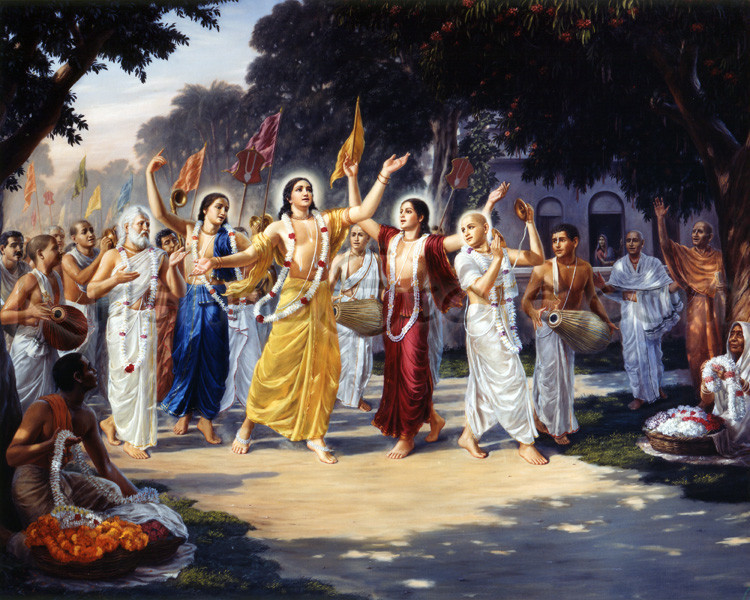
When Kṛṣṇa appeared, He gave His orders, and when Kṛṣṇa Himself appeared as a devotee, as Śrī Caitanya Mahāprabhu, He showed us the path by which to cross the ocean of Kali-yuga. That is the path of The Hare Kṛṣṇa Movement. When Śrī Caitanya Mahāprabhu appeared, He ushered in the era for the saṅkīrtana movement. It is also said that for ten thousand years this era will continue. This means that simply by accepting the saṅkīrtana movement and chanting the Hare Kṛṣṇa mahā-mantra, the fallen souls of this Kali-yuga will be delivered. After the Battle of Kurukṣetra, at which Bhagavad-gītā was spoken, Kali-yuga continues for 432,000 years, of which only 5,000 years have passed. Thus there is still a balance of 427,000 years to come. Of these 427,000 years, the 10,000 years of the saṅkīrtana movement inaugurated by Śrī Caitanya Mahāprabhu 500 years ago provide the opportunity for the fallen souls of Kali-yuga to take to the Kṛṣṇa consciousness movement, chant the Hare Kṛṣṇa mahā-mantra and thus be delivered from the clutches of material existence and return home, back to Godhead.
He who meditates on the Supreme Personality of Godhead, his mind constantly engaged in remembering Me…is sure to reach Me.
…In this verse Lord Kṛṣṇa stresses the importance of remembering Him. One’s memory of Kṛṣṇa is revived by chanting the mahāmantra, Hare Kṛṣṇa. By this practice of chanting and hearing the sound vibration of the Supreme Lord, one’s ear, tongue and mind are engaged. This mystic meditation is very easy to practice, and it helps one attain the Supreme Lord. (from purport to Bhagavad-gita 8.8)






 The Hare Krishna Movement