Transcendental Love (Bhava)

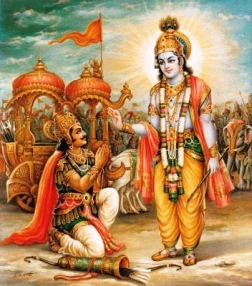
Radha Krishna Bhava

Here is a new word for your Vaisnava Vocabulary: Bhāva. In the Glossary in the back of the Bhagavad-gita As It Is, 1972 Edition, the word Bhāva is defined as; the preliminary stage of transcendental love of Godhead. Bhāva is a big word and has various meanings

The last stage of the devotional life is called bhāva, or transcendental love of Godhead.

“In the beginning one must have a preliminary desire for self-realization.This taste leads one further forward to attachment for Kṛṣṇa consciousness, which is matured in bhāva, or the preliminary stage of transcendental love of God. Real love for God is called premā, the highest perfectional stage of life.” In the premā stage there is constant engagement in the transcendental loving service of the Lord. So, by the slow process of devotional service, under the guidance of the bona fide spiritual master, one can attain the highest stage, being freed from all material attachment, from the fearfulness of one’s individual spiritual personality, and from the frustrations resulting from void philosophy. Then one can ultimately attain to the abode of the Supreme Lord. (Bhagavad-gita 4.11)

So it seem that bhāva is not only the preliminary stage of transcendental love of Godhead but we find that this preliminary stage of transcendental love is also the path to the highest perfectional stage of life, pure love or premā. There are two ways to approach the Lord, one is with awe and reverence and the other is with affection; bhāva. One who approaches the Lord with affection, is sure to advance spiritually.

In the Srimad Bhagavatam we find many references to the word Bhāva and highlighted some of them here.

More
Mothers Day, Seven Mothers

Here in the West Mothers Day is being celebrated; a day to honor our Mothers.

…According to scriptures also, there are seven mothers: (1) the real mother, (2) the wife of the spiritual master, (3) the wife of a brāhmaṇa, (4) the wife of the king, (5) the cow, (6) the nurse, and (7) the earth. All of them are mothers.

Srimad Bhagavatam
By His Divine Grace A.C. Bhaktivedanta Swaim Prabhupada
from Canto 1, Chapter 11, Text 28-

Seven Mothers

praviṣṭas tu gṛhaṁ pitroḥ
pariṣvaktaḥ sva-mātṛbhiḥ
vavande śirasā sapta
devakī-pramukhā mudā

praviṣṭaḥ—after entering; tu—but; gṛham—houses; pitroḥ—of the father; pariṣvaktaḥ—embraced; sva-mātṛbhiḥ—by His own mothers; vavande—offered obeisances; śirasā—His head; sapta—seven; devakī—Devakī; pramukhā—headed by; mudā—gladly.

After entering the house of His father, He was embraced by the mothers present, and the Lord offered His obeisances unto them by placing His head at their feet. The mothers were headed by Devakī [His real mother].

It appears that Vasudeva, the father of Lord Kṛṣṇa, had completely separate residential quarters where he lived with his eighteen wives, out of whom Śrīmatī Devakī is the real mother of Lord Kṛṣṇa. But in spite of this, all other stepmothers were equally affectionate to Him, as will be evident from the following verse. Lord Kṛṣṇa also did not distinguish His real mother from His stepmothers, and He equally offered His obeisances unto all the wives of Vasudeva present on the occasion. According to scriptures also, there are seven mothers: (1) the real mother, (2) the wife of the spiritual master, (3) the wife of a brāhmaṇa, (4) the wife of the king, (5) the cow, (6) the nurse, and (7) the earth. All of them are mothers. Even by this injunction of the śāstras, the stepmother, who is the wife of the father, is also as good as the mother because the father is also one of the spiritual masters. Lord Kṛṣṇa, the Lord of the universe, plays the part of an ideal son just to teach others how to treat their stepmothers.

tāḥ putram aṅkam āropya
sneha-snuta-payodharāḥ
harṣa-vihvalitātmānaḥ
siṣicur netrajair jalaiḥ

tāḥ—all of them; putram—the son; aṅkam—the lap; āropya—having placed on; sneha-snuta—moistened by affection; payodharāḥ—breasts filled up; harṣa—delight; vihvalita-ātmānaḥ—overwhelmed by; siṣicuḥ—wet; netrajaiḥ—from the eyes; jalaiḥ—water.

The mothers, after embracing their son, sat Him on their laps. Due to pure affection, milk sprang from their breasts. They were overwhelmed with delight, and the tears from their eyes wetted the Lord.

When Lord Kṛṣṇa was at Vṛndāvana even the cows would become moistened by affection towards Him, and He would draw milk from the nipples of every affectionate living being, so what to speak of the stepmothers who were already as good as His own mother.

108 Imporant Slokas from the 1972 Bhagavad-gita As It Is

Click on image to go to Post

Click on image to go to Post

The Hare Krishna Cookbook

Songs of the Vaisnava Acaryas

Bhagavad-gita As It Is 1972 Edition “Online”

click on image

click on image to visit site

Srimad Bhagavatam Online

click on image

Raja-Vidya the King of Knowledge

click on image

click on image

Blog Stats

  • 4,550,958 hits

Enter your email address to subscribe to this blog and receive notifications of new posts by email.

Join 3,909 other subscribers

Important Slokas from the Brahma-samhita

click on image

click on image

Slokas from the Sri Isopanisad

click on image

click on image

Prayers By Queen Kunti (Slokas)

click on image

Gajendra’s Prayers of Surrender (Slokas)

click on image

A Short Statement of the Philosophy of Krishna Consciousness

click on image

click on image

July 9th Letter

click on image

click on image

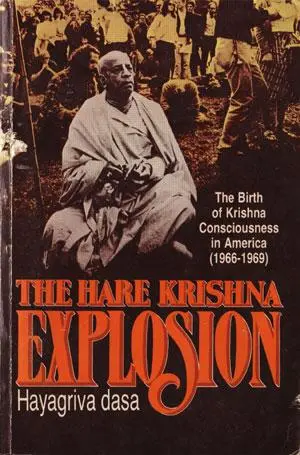
The Hare Krishna Explosion

Reference Material/Study Guide

click on image

click on image

  • LINKS