Prabhupada Farm Hawaii

The Energy is Flowing for the new Prabhupada Focused Self Sufficient Farm Community & Goloka Cow Sanctuary. Big Island, Hawaii. All are Welcome

“Simple Living, High Thinking”

His Divine Grace A.C. Bhaktivedanta Swami Prabhupada wanted to establish self-sufficient farm communities and cow sanctuaries all over the world. But where is that farm which is focused purely on Prabhupada?

Prabhupada left this world in 1977, but his compassionate divine vibration is eternally alive.

He knew living conditions would become harsh, the food, land, air & water would become polluted, we would suffer with so many diseases, we can’t trust the government, oil would become scarce, it’s very hard to continue a materialistic way of life without having to pay for it with so much suffering and hardship for ourselves, other species and mother earth and that many people would lose their jobs due do economic collapse.

Prabhupada knew we would need to create safe, self-sufficient peaceful places to live with nature, depending less on industry, materialism and instant gratifying city life…

Prabhupada teaches us how to create that peaceful place where ever we are.

Prabhupada teaches us the way to sustain a peaceful, clean & pure lifestyle, within & without. Consciousness! Where are you? Prabhupada shows us the way, if we will simply come together and hear him. Focused on Prabhupada, he will guide us and together we will help each other gently towards a more simple and self-sustainable way of living. Krishna consciousness community.

One is starting one on the Big Island, Hawaii!!!

A dream come true, and it’s happeninig!!!

More

Basic Chapati Recipe

From The Hare KRSNA Cookbook 1972

Basic Chapati
1 cup Whole Weat Flour
1/4 cup Melted Butter
Warm water

Mix the flour and water together, adding water gradually until dough is soft but not wet, and can be kneaded. Knead the dough until it’s fairly soft (8 to 10 minutes). Cover and let dough rest for one hour. Sprinkle flour on rolling area and makes 1-1/2 inch balls out of dough. Flatten balls and roll out to about 4-5″ diameter. Place the chapati on a heated skillet (dry, free from oil) and cook until bubbles appear. Turn chapati quickly and let cook until bubbles appear again. Using tongs, remove chapati from pan, and hold over an open flame or burner to make it puff up. Heat it first on the side that was first cooked. You can lay directly on the burner for a brief moment, but don’t let it stick. When chapati puffs up, turn quickly and repeat on other side till it puffs. Remove, butter both sides, and cover with a clean cloth to keep in heat while remaining chapatis are cooked.

Pasted from; http://www.harekrsna.com/practice/prasadam/recipes/breads.htm

The Hare Krishna Cookbook (Free PDF Download)

click on link at bottom to download entire book in pdf format

The Hare Krsna Cookbook
1973 Bhaktivedanta Book Trust
Compiled by Krsna devi dasi and Sama devi dasi

“The Hare Krsna Cookbook”, originally published in 1973, was the first widely distributed book of vegetarian recipes, throughout the Movement. This was the book myself and many early devotees learned to cook from, and remains today my all time favorite cookbook, and is a constant companion in our kitchen. We offer the complete book on a PDF Format as a gift to all our readers this Holiday Season.

Dedication

Prasadam means mercy, and this Prasadam Cookbook is dedicated to the fountainhead of all mercy, the spiritual master, His Divine Grace A.C. Bhaktivedanta Swami Prabhupada. He is by nature kind to every living entity, but that ocean of mercy becomes fully visible in his devotees.

Srila Prabhupada has not given us some dry, canned philosophy to chew; he has given us the nectar for which we have sought so long: he has taught us how to render transcendental loving service to the Lord in all our daily activities. This book illustrates on of them.

The Process of Krsna Consciousness is usually described as one of dinging, dancing and feasting. We have already demonstrated to the world how anyone can sing and dance to the holy names of God, Hare Krsna, and now, with the publication of this Prasadam Cookbook, we hope that the whole world will feast in honor of the Supreme Lord. That will make this world like Vrndavana, the transcendental abode of Krsna, where Krsna, Balarama and the monkeys visit every kitchen with thieving intend and bless the devotees with pure love of God. (Dedication from The Hare Krsna Cookbook)

Dwonload PDF Format 5.6MB The Hare KRSNA Cookbook

Vegetarian Health and Nutrition

Vegetarian Health and Nutrition
From the book “The Hare Krishna Book of Vegetarian Cooking”
By Adiraja Dasa

“Can a vegetarian diet improve or restore health? Can it prevent certain diseases?

Advocates of vegetarianism have said yes for many years, although they didn’t have much support from modern science until recently. Now, medical researchers have discovered evidence of a link between meat-eating and such killers as heart disease and cancer, so they’re giving vegetarianism another look.

Since the 1960s, scientists have suspected that a meat-based diet is somehow related to the development of arteriosclerosis and heart disease. As early as 1961, the Journal of the American Medical Association said: “Ninety to ninety-seven percent of heart disease can be prevented by a vegetarian diet.” Since that time, several well-organized studies have scientifically shown that after tobacco and alcohol, the consumption of meat is the greatest single cause of mortality in Western Europe, the United States, Australia, and other affluent areas of the world.

More

Eggless Pumpkin Pie Recipe

Eggless Pumpkin Pie


Eggless Pumpkin Pie Recipe
By: Divine Taste

This recipe called for freshly-ground whole allspice berries. Since I didn’t have them on hand, I substituted it with cinnamon, clove, nutmeg and dry ginger.

Ingredients:

For the crust:
• 140 gm (1 cup) unbleached plain flour
• 1/3 cup cold butter
• 1/2 teaspoon salt
• 5-7 tablespoons cold water

For the filling

• 2 cups (500 ml) Pumpkin puree
• 400g, 1 1/4 cups, sweetened condensed milk
• 2 tablespoons cornflour (cornstarch)
• 1 1/2 teaspoon cinnamon powder
• 3/4 teaspoon freshly-grated nutmeg
• 1/2 tsp ground cloves
• 1/2 tsp ginger powder
• 1/2 teaspoon salt

Prepare the crust:

Mix the flour with the salt and cut the cold butter into the flour using a pastry blender or with your fingers until you get coarse breadcrumbs. Alternatively, combine the flour, butter and salt in a food processor and process with 12-15 short bursts until it resembles coarse breadcrumbs. Put in the cold water and form into a soft dough. Do not handle the dough more than required at this stage. Gather the dough into a ball and chill well for an hour or two. Place the dough on a floured surface. Roll out the dough to a circle, approximately 12″ in diameter to line a 22.5cm (9-inch) pie dish or tart pan with removable bottom. Prepare the edges and chill while you prepare the filling.

Prepare the filling:
For the pumpkin puree:

Cut the pumpkin into wedges. Scoop out the seeds, pith and fibre with the help of a spoon. Pre heat the oven to 350F/180C/4G. Place the pumpkin wedges cut side down on a lightly oiled baking sheet and bake in the oven for about 45 minutes to an hour or until the pumpkin is tender when pierced with a knife. Scoop flesh out of the skins and puree with a hand blender or mash well by hand.

To make the pie:

Pre-heat the oven to 200 C/390 F. In a bowl, mix in the pumpkin puree, condensed milk,  cornflour, spices and salt and beat until there are no lumps. Spoon the filling into the chilled crust and level with the help of a palette knife. Bake for about 40 minutes or until the filling is set and the top crust is a nice golden brown. Allow to cool, cut into wedges and serve with whipped cream, vanilla ice cream or sweetened yogurt.

Pasted from http://www.divinetaste.com/archives/eggless-pumpkin-pie/

Spiritual Food

Spiritual Food

The Hare Krishna’s are famous for their delicious vegetarian food. Get a cookbook from The Hare Krishna Movement today, and begin your journey into the joys of cooking foods in the mode of goodness.

Bhagavad-gita As It Is
Macmillan 1972 Edition
By His Divine Grace A.C. Bhaktivedanta Swami Prabhupada
Chapter 17 The Divisions of Faith
Text 8-10

Foods in the mode of goodness increase the duration of life, purify one’s existence and give strength, health, happiness and satisfaction. Such nourishing foods are sweet, juicy, fattening and palatable. Foods that are too bitter, too sour, salty, pungent, dry and hot, are liked by people in the modes of passion. Such foods cause pain, distress, and disease. Food cooked more than three hours before being eaten, which is tasteless, stale, putrid, decomposed and unclean, is food liked by people in the mode of ignorance.

PURPORT

Thc purpose of food is to increase the duration of life, purify the mind and aid bodily strength. This is its only purpose. In the past, great authorities selected those foods that best aid health and increase life’s duration, such as milk products, sugar, rice, wheat, fruits and vegetables. These foods are very dear to those in the mode of goodness. Some other foods, such as baked corn and molasses, while not very palatable in themselves, can be made pleasant when mixed with milk or other foods. They are then in the mode of goodness. All these foods are pure by nature. They are quite distinct from untouchable things like meat and liquor. Fatty foods, as mentioned in the eighth verse, have no connection with animal fat obtained by slaughter. Animal fat is available in the form of milk, which is the most wonderful of all foods. Milk, butter, cheese and similar products give animal fat in a form which rules out any need for the killing of innocent creatures. It is only through brute mentality that this killing goes on. The civilized method of obtaining needed fat is by milk. Slaughter is the way of subhumans. Protein is amply available through split peas, dhall, whole wheat, etc.

Foods in the mode of passion, which are bitter, too salty, or too hot or overly mixed with red pepper, cause misery by producing mucous in the stomach, leading to disease. Foods in the mode of ignorance or darkness are essentially those that are not fresh. Any food cooked more than three hours before it is eaten (except prasādam, food offered to the Lord) is considered to be in the mode of darkness. Because they are decomposing, such foods give a bad odor, which often attracts people in this mode but repulses those in the mode of goodness.

Remnants of food may be eaten only when they are part of a meal that was first offered to the Supreme Lord or first eaten by saintly persons, especially the spiritual master. Otherwise the remnants of food are considered to be in the mode of darkness, and they increase infection or disease. Such foodstuffs, although very palatable to persons in the mode of darkness, are neither liked nor even touched by those in the mode of goodness. The best food is the remnant of what is offered to the Supreme Personality of Godhead. In Bhagavad-gītā the Supreme Lord says that He accepts preparations of vegetables, flour and milk when offered with devotion. Patraṁ puṣpaṁ phalaṁ toyam. Of course, devotion and love are the chief things which the Supreme Personality of Godhead accepts. But it is also mentioned that the prasādam should be prepared in a particular way. Any food prepared by the injunction of the scripture offered to the Supreme Personality of Godhead can be taken even if prepared long, long ago, because such food is transcendental. Therefore to make food antiseptic, eatable and palatable for all persons, one should offer food to the Supreme Personality of Godhead.

Basic Cooking Ingredients

The Hare Krsna Cookbook
Chapter One

Basic Cooking Ingredients

In the Vedic scriptures it is stated that the Supreme Lord has provided ample varieties of food-stuffs for all living creatures and that one should take only that which is allotted to him by the Lord, not more. For Humanity the Lord has set aside simple foods such as grains, vegetables, fruit and milk products and He has requested that we offer Him such pure and nourishing foods. In this way, there are hundred and thousands of palatable dishes that may be prepared and then offered to Lord Krishna.

Listed below are some of the ingredients most commonly used in preparing Krsna prasadam.

white flour (unbleached if available)
whole mung beans *
chick-pea flour, somtimes called besan or gram flour *
whole chick-peas
yellow split peas
split, cleaned urad dahl *
split, claned mung dahl *
powdered milk
almonds (raw and shelled)
walnuts (raw and shelled)
peanuts (raw and shelled)
white rice flour *
sugar

Most of these ingredients are readily abailable from regular grocery stores. The items marked was asterisks would more likely be found at Chinese food stores or Indian specialty stores.

Note; There are of course many more key ingredients, but it is our humble attempt to present “The Hare Krsna Cookbook” the way it was written back in 1973. Next post will be on Spices, which are the jewels of cooking for Krsna.

“FLUFFY EGGLESS PANCAKES”


“FLUFFY EGGLESS PANCAKES”
Submitted by: Dawn Linke

Ingredients

1 cup all-purpose flour
1 teaspoon sugar
1 teaspoon cinnamon
2 teaspoon baking powder
1 cup whole milk
1 tablespoon vegetable oil
1 tablespoon water
1 teaspoon vanilla extract
2 tablespoon butter

Method

Combine dry ingredients and mix slightly. Add milk, oil, water, and vanilla. Whisk together until just combined. Be careful not to over mix – it should still be slightly lumpy. Set aside to rest for a few minutes.

Heat a large skillet over medium-high heat until hot. While pan is heating, add butter. As soon as the butter is melted, add melted butter to pancake batter.

Return pan to stove and stir butter into batter.

When pan is hot, with a measuring cup or ladle, pour 1/4 cup of batter into the skillet for each pancake.

Cook until bubbles form on the surface. Carefully flip pancakes with turner/spatula and cook until golden brown.

Note: This recipe also works well with whole wheat flour. Chopped fruit or nuts can be added to batter before cooking for a unique treat, serve with honey.

Offer to Prabhupada.

The Hare Krishna Book on Vegetarian Cooking


The Hare Krishna Book on Vegetarian Cooking

One of the Best books on Vegetarian Cooking
By Adiraja Dasa

An introduction to Indian vegetarian cooking. Over 100 recipes and detailed instructions on preparing all the essential, unique ingredients that make up Indian vegetarian cuisine.

From the simple to the advanced. You’ll first learn how to use utensils already in your kitchen to replace some of those found in Indian kitchens. The 11-page chapter on spices and herbs is the best around. The ancient art of planning which dishes for each menu and how a meal is served is clearly explained. Learn the art of combining dishes in menu-planning, and preparing, offering and eating an Indian meal. Then come 120 tested recepies, carefully chosen by the best cooks in the Hare Krishna movement for their diversity and ease of preparation, for breakfast, lunch and dinner.

Preface by actress Hayley Mills.
Introduction on Vegetarian cooking
Chapters on Utensils, Menus, Spices & Herbs, The Science of Eating and Good Health etc.
Hardbound, 318 pages, 39 color photos, 6″ x 9″.
120 recipies, suggested menus, Appendixes, Glossary, Index, About the Author etc.
Price: $16.95
Company: BBT

You can order this book as well as many others by visiting us at http://www.theharekrishnamovement.com/page/vegetarian-cooking

Next Newer Entries

108 Imporant Slokas from the 1972 Bhagavad-gita As It Is

Click on image to go to Post

Click on image to go to Post

The Hare Krishna Cookbook

Songs of the Vaisnava Acaryas

Bhagavad-gita As It Is 1972 Edition “Online”

click on image

click on image to visit site

Srimad Bhagavatam Online

click on image

Raja-Vidya the King of Knowledge

click on image

click on image

Blog Stats

  • 4,591,514 hits

Enter your email address to subscribe to this blog and receive notifications of new posts by email.

Join 3,908 other subscribers

Important Slokas from the Brahma-samhita

click on image

click on image

Slokas from the Sri Isopanisad

click on image

click on image

Prayers By Queen Kunti (Slokas)

click on image

Gajendra’s Prayers of Surrender (Slokas)

click on image

A Short Statement of the Philosophy of Krishna Consciousness

click on image

click on image

July 9th Letter

click on image

click on image

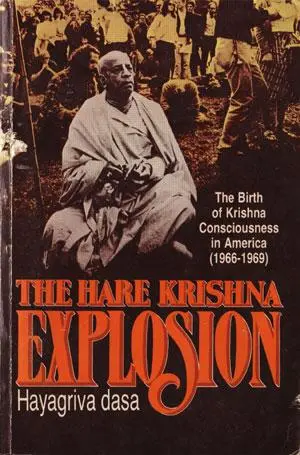
The Hare Krishna Explosion

Reference Material/Study Guide

click on image

click on image

  • LINKS