Chanting Hare Krishna/Mystic Meditation

Vishnujana ecstatic     Harinama Sankirtan_

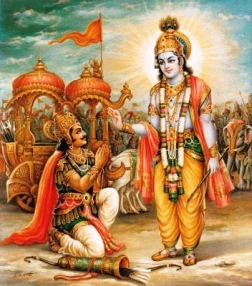
He who meditates on the Supreme Personality of Godhead, his mind constantly engaged in remembering Me…is sure to reach Me.

…In this verse Lord Kṛṣṇa stresses the importance of remembering Him. One’s memory of Kṛṣṇa is revived by chanting the mahāmantra, Hare Kṛṣṇa. By this practice of chanting and hearing the sound vibration of the Supreme Lord, one’s ear, tongue and mind are engaged. This mystic meditation is very easy to practice, and it helps one attain the Supreme Lord. (from purport to Bhagavad-gita 8.8)

More

Meditation upon the Transcendental Form of Viṣṇu

In our previous post Fix your mind upon the Supreme Personality of Godhead it was recommended that we should fix one’s mind in the service of the Personality of Godhead. Now the next step is to meditate upon the form of the Lord. To move from the impersonal to the more personal aspects of the Absolute Truth.

Thereafter, you should meditate upon the limbs of Viṣṇu, one after another, without being deviated from the conception of the complete body. Thus the mind becomes free from all sense objects. There should be no other thing to be thought upon. Because the Supreme Personality of Godhead, Viṣṇu, is the Ultimate Truth, the mind becomes completely reconciled in Him only.

…Therefore, thinking of Viṣṇu or meditating upon the transcendental form of Viṣṇu, specifically upon Lord Kṛṣṇa, is the last word on the subject of meditation.

…it is definitely assured that the Supreme Lord is not impersonal. He is a person, but His body is different from those of conditioned persons like us. Otherwise, meditation beginning from the praṇava (oṁkāra) up to the limbs of the personal body of Viṣṇu would not have been recommended by Śukadeva Gosvāmī for the attainment of complete spiritual perfection. The Viṣṇu forms of worship in great temples of India are not, therefore, arrangements of idol worship, as they are wrongly interpreted to be by a class of men with a poor fund of knowledge; rather, they are different spiritual centers of meditation on the transcendental limbs of the body of Viṣṇu. The worshipable Deity in the temple of Viṣṇu is identical with Lord Viṣṇu by the inconceivable potency of the Lord.

More

Fix Your Mind Upon the Personality of Godhead

In our previous post Om, Oṁkāra, or the Praṇava, is the Seed of Transcendental Realization Oṁkāra, or the praṇava, which is the seed of transcendental realization, and it is composed of the three transcendental letters a-u-m, was discussed. By its chanting by the mind, in conjunction with the breathing process, was a means of changing the habit of the mind, to bring the mind under control. But in this next verse, Śukadeva Gosvāmī recommends the next step in God Realization, namely to fix one’s mind in the service of the Personality of Godhead.

Gradually, as the mind becomes progressively spiritualized, withdraw it from sense activities, and by intelligence the senses will be controlled. The mind too absorbed in material activities can be engaged in the service of the Personality of Godhead and become fixed in full transcendental consciousness.

More

Om, Oṁkāra, or the Praṇava, is the Seed of Transcendental Realization

…Oṁkāra, or the praṇava, is the seed of transcendental realization, and it is composed of the three transcendental letters a-u-m. By its chanting by the mind, in conjunction with the breathing process, which is a transcendental but mechanical way of getting into trance, as devised by the experience of great mystics, one is able to bring the mind, which is materially absorbed, under control.

Oṁkāra is the seed of all transcendental sound and it is only the transcendental sound which can bring about the desired change of the mind and the senses. Mind or desire cannot be stopped, but to develop a desire to function for spiritual realization, the quality of engagement by the mind has to be changed.

In the Bhagavad-gītā, the praṇava (oṁkāra) has been accepted as the direct, literal representation of the Supreme Absolute Truth. One who is not able to chant directly the holy name of the Lord, as recommended above, can easily chant the praṇava (oṁkāra). This oṁkāra is a note of address, such as “O my Lord,” just as oṁ hari om means “O my Lord, the Supreme Personality of Godhead.” As we have explained before, the Lord’s holy name is identical with the Lord Himself. So also is oṁkāra. But persons who are unable to realize the transcendental personal form or name of the Lord on account of their imperfect senses (in other words, the neophytes) are trained to the practice of self-realization by this mechanical process of regulating the breathing function and simultaneously repeating the praṇava (oṁkāra) within the mind.

More

Meditation Through Transcendental Sound

Journey of Self-Discovery
By His Divine Grace A.C. Bhaktivedanta Swami Prabhupada
Chapter 5, Yoga & Meditation

Meditation Through Transcendental Sound

Lecturing at Boston’s Northeastern University in the summer of 1969, Śrīla Prabhupāda introduces a meditation system renowned for its extraordinary power and the fact that it can be easily practiced almost anywhere and at any time. “If you take up this simple process,” he says, “chanting Hare Kṛṣṇa, Hare Kṛṣṇa, Kṛṣṇa Kṛṣṇa, Hare Hare/ Hare Rāma, Hare Rāma, Rāma Rāma Hare Hare, you are immediately elevated to the transcendental platform.” He adds, “No other meditation is possible while you are walking on the street.”

My dear boys and girls, I thank you very much for attending this meeting. We are spreading this Kṛṣṇa consciousness movement because there is a great need of this consciousness throughout the world. And the process is very easy—that is the advantage.

First of all, we must try to understand what the transcendental platform is. As far as our present condition is concerned, we are on various platforms. So we have to first of all stand on the transcendental platform; then there can be a question of transcendental meditation.

In the Third Chapter of Bhagavad-gītā, you’ll find an explanation of the various statuses of conditioned life. The first is the bodily conception of life (indriyāṇi parāṇy āhuḥ). Everyone in this material world is under this bodily concept of life. Someone is thinking, “I am Indian.” You are thinking, “I am American.” Somebody’s thinking, “I am Russian.” Somebody’s thinking he is something else. So everyone is thinking, “I am the body.”

More

Meditation

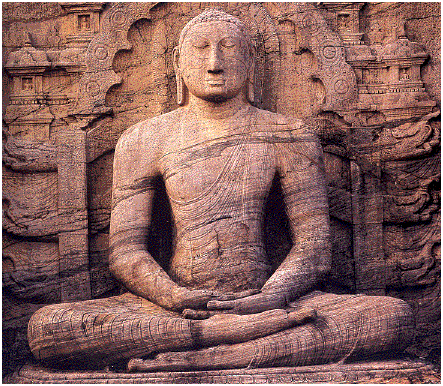
Meditation means to engage the mind in thinking of the form of the Lord, of the qualities of the Lord, of the activities of the Lord and of the service of the Lord. Meditation does not mean anything impersonal or void. According to Vedic literature, meditation is always on the form of Viṣṇu.

The Nectar of Devotion 1970 Edition
By His Divine Grace A.C. Bhaktivedanta Swami Prabhupada
Chapter 10 “Techniques of Hearing and Memorizing”

In the Nṛsiṁha Purāṇa there is a statement about meditation on the form of the Lord. It is said there: “Meditation focusing on the lotus feet of the Supreme Personality of Godhead has been accepted as transcendental and beyond the experience of material pain and pleasure. By such meditation even one who is grossly miscreant can be delivered from the sinful reactions of his life.”

In the Viṣṇu-dharma there is a statement about meditation on the transcendental quality of the Lord. It is said, “Persons who are constantly engaged in Kṛṣṇa consciousness, and who remember the transcendental qualities of the Lord, become free from all reactions to sinful activities, and after being so cleansed they become fit to enter into the kingdom of God.” In other words, no one can enter into the kingdom of God without being freed from all sinful reactions. Sinful reactions can be avoided simply by remembering the form, qualities, pastimes, etc., of the Lord.

In the Padma Purāṇa there is a statement about remembering the activities of the Lord: “A person who is always engaged in meditation on the sweet pastimes and wonderful activities of the Lord surely becomes freed from all material contamination.”

Meditation on Executing Devotional Service More

Lord Kṛṣṇa’s Daily Activities

Krishna in meditation

Lord Kṛṣṇa used to lie down with His sixteen thousand wives, but also He would rise up from bed very early in the morning, three hours before sunrise. By nature’s arrangement the crowing of the cocks warns of the brāhma-muhūrta hour. There is no need of alarm clocks; as soon as the cocks crow early in the morning, it is to be understood that it is time to rise from bed. Hearing that sound, Kṛṣṇa would get up from bed, but His rising early was not very much to the liking of His wives. The wives of Kṛṣṇa were so much attached to Him that they would lie in bed embracing Him, but as soon as the cocks crowed, Kṛṣṇa’s wives would be very sorry and would immediately condemn the crowing.

After rising from bed, Lord Kṛṣṇa would wash His mouth, hands and feet and would immediately sit down and meditate on Himself. This does not mean, however, that we should also sit down and meditate on ourselves. We have to meditate upon Kṛṣṇa, Rādhā-Kṛṣṇa. That is real meditation, Kṛṣṇa is Kṛṣṇa Himself; therefore He was teaching us that brāhma-muhūrta should be utilized for meditation on Rādhā-Kṛṣṇa. By doing so, Kṛṣṇa would feel very much satisfied, and similarly we will also feel transcendentally pleased and satisfied if we utilize the brāhma-muhūrta period to meditate on Rādhā and Kṛṣṇa and if we think of how Śrī Rukmiṇīdevī and Kṛṣṇa acted as ideal householders to teach the whole human society to rise early in the morning and immediately engage in Kṛṣṇa consciousness.

KRSNA, The Supreme Personality of Godhead – 1970 Edition
By His Divine Grace A.C. Bhaktivedanta Swami Prabhupada
Vol. 2, Chapter 15

Lord Kṛṣṇa’s Daily Activities

From the Vedic mantras we learn that the Supreme Personality of Godhead has nothing to do: na tasya karyaṁ kranaṁ ca vidyate. If the Supreme Lord has nothing to do, then how can we speak of the activities of the Supreme Lord? From the previous chapter it is clear that no one can act in the way that Lord Kṛṣṇa does. We should clearly note this fact: the activities of the Lord should be followed, but they cannot be imitated. For example, Kṛṣṇa’s ideal life as a householder can be followed, but if one wants to imitate Kṛṣṇa by expanding into many forms, that is not possible. We should always remember, therefore, that Lord Kṛṣṇa, although playing the part of a human being, nevertheless simultaneously maintains the position of the Supreme Personality of Godhead. We can follow Lord Kṛṣṇa’s dealing with His wives as an ordinary human being, but His dealing with more than sixteen thousand wives at one time cannot be imitated. The conclusion is that to become ideal householders we should follow in the footsteps of Lord Kṛṣṇa as He displayed His daily activities, but we cannot imitate Him at any stage of our life.

More

Next Newer Entries

108 Imporant Slokas from the 1972 Bhagavad-gita As It Is

Click on image to go to Post

Click on image to go to Post

The Hare Krishna Cookbook

Songs of the Vaisnava Acaryas

Bhagavad-gita As It Is 1972 Edition “Online”

click on image

click on image to visit site

Srimad Bhagavatam Online

click on image

Raja-Vidya the King of Knowledge

click on image

click on image

Blog Stats

  • 4,534,171 hits

Enter your email address to subscribe to this blog and receive notifications of new posts by email.

Join 3,912 other subscribers

Important Slokas from the Brahma-samhita

click on image

click on image

Slokas from the Sri Isopanisad

click on image

click on image

Prayers By Queen Kunti (Slokas)

click on image

Gajendra’s Prayers of Surrender (Slokas)

click on image

A Short Statement of the Philosophy of Krishna Consciousness

click on image

click on image

July 9th Letter

click on image

click on image

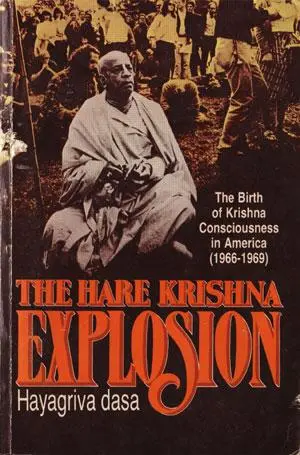
The Hare Krishna Explosion

Reference Material/Study Guide

click on image

click on image

  • LINKS