
A strange thing happened to me while we were in India. We were at Radha Kund (Srimati Radharani’s bathing ghat), and after sprinkling 3 drops of water on my head, I offered my obeisances, and I prayed, please take away the lust, anger, greed and envy from my heart. This surprised me because I never prayed for that before. But it got me thinking…if you take away Lust, what is left, is Love. Take away Anger, and you are left with Happiness, take away Greed, and you have Charity or Generosity, and if you take away Envy, you are left with Kindness to others.
I guess to be truthful, I did pray to have the Lord take away the lust from my heart, because I remember some 50 years ago, when I started my first devotee journal, the first entry was:
“My Lord, I know that young girls have natural affection for young boys, and that young boys have natural affection for young girls. I am praying at Your lotus feet that my mind may become attracted unto You in the same spontaneous way.”
But at that time, I was a brahmachari practicing celibacy, and it was the hardest thing I ever had to do. I was out on the streets every day passing out books and magazines, and dealing with women of all ages, and descriptions, and it was hard not to be attracted. So I had to force myself to think of Krishna.
“I am praying at Your lotus feet that my mind may become attracted unto You in the same spontaneous way.”
As far as Anger,and Greed …I never really thought of myself that way, but in retrospect, I have been very angry at times, greedy at times, and of course envious of others.
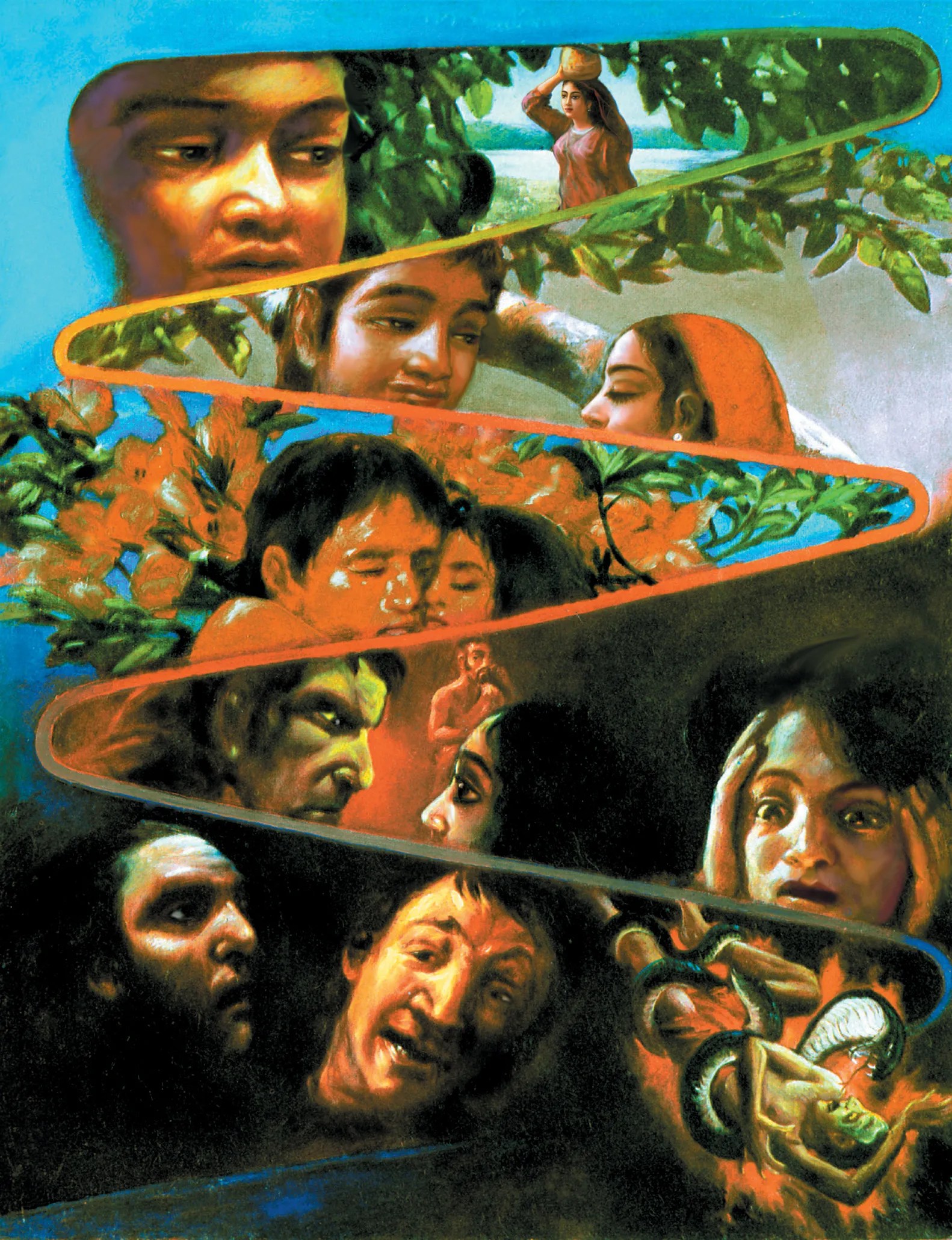
There are three gates leading to this hell—lust, anger, and greed. Every sane man should give these up, for they lead to the degradation of the soul. (Bg. 21)
PURPORT
The beginning of demoniac life is described herein. One tries to satisfy his lust, and when he cannot, anger and greed arise. A sane man who does not want to glide down to the species of demoniac life must try to give up these three enemies which can kill the self to such an extent that there will be no possibility of liberation from this material entanglement.
While contemplating the objects of the senses, a person develops attachment for them, and from such attachment lust develops, and from lust anger arises. (Bg. 2.62)
PURPORT
One who is not Kṛṣṇa conscious is subjected to material desires while contemplating the objects of senses. The senses require real engagements, and if they are not engaged in the transcendental loving service of the Lord, they will certainly seek engagement in the service of materialism. In the material world everyone, including Lord Śiva and Lord Brahmā-to say nothing of other demigods in the heavenly planets-is subjected to the influence of sense objects, and the only method to get out of this puzzle of material existence is to become Kṛṣṇa conscious. Lord Śiva was deep in meditation, but when Pārvatī agitated him for sense pleasure, he agreed to the proposal, and as a result Kārtikeya was born. When Haridāsa Ṭhākur was a young devotee of the Lord, he was similarly allured by the incarnation of Māyā Devī, but Haridāsa easily passed the test because of his unalloyed devotion to Lord Kṛṣṇa. As illustrated in the above-mentioned verse of Śrī Yāmunācārya, a sincere devotee of the Lord shuns all material sense enjoyment due to his higher taste for spiritual enjoyment in the association of the Lord. That is the secret of success. One who is not, therefore, in Kṛṣṇa consciousness, however powerful he may be in controlling the senses by artificial repression, is sure ultimately to fail, for the slightest thought of sense pleasure will agitate him to gratify his desires.
From anger, delusion arises, and from delusion bewilderment of memory. When memory is bewildered, intelligence is lost, and when intelligence is lost, one falls down again into the material pool. (Bg. 2.63)
PURPORT
By development of Kṛṣṇa consciousness one can know that everything has its use in the service of the Lord. Those who are without knowledge of Kṛṣṇa consciousness artificially try to avoid material objects, and as a result, although they desire liberation from material bondage, they do not attain to the perfect stage of renunciation. On the other hand, a person in Kṛṣṇa consciousness knows how to use everything in the service of the Lord; therefore he does not become a victim of material consciousness. For example, for an impersonalist, the Lord, or the Absolute, being impersonal, cannot eat. Whereas an impersonalist tries to avoid good eatables, a devotee knows that Kṛṣṇa is the supreme enjoyer and that He eats all that is offered to Him in devotion. So, after offering good eatables to the Lord, the devotee takes the remnants, called prasādam. Thus everything becomes spiritualized and there is no danger of a downfall. The devotee takes prasādam in Kṛṣṇa consciousness, whereas the nondevotee rejects it as material. The impersonalist, therefore, cannot enjoy life due to his artificial renunciation; and for this reason, a slight agitation of the mind pulls him down again into the pool of material existence. It is said that such a soul, even though rising up to the point of liberation, falls down again due to his not having support in devotional service.
As far as Envy is concerned, most of us don’t think of ourselves as envious. If someone is more powerful than us, or more wealthy, more beautiful, or enjoying a better life style, we often become envious even without knowing it. We find some fault, to justify our feelings. Srila Prabhupada describes envy in the purport to Bg. 12.15 as follows:
…Generally a materialistic person becomes very happy when there is something for his sense gratification and his body, but when he sees that others have something for their sense gratification and he hasn’t, he is sorry and envious.”
One who is not Kṛṣṇa conscious is subjected to material desires while contemplating the objects of senses. The senses require real engagements, and if they are not engaged in the transcendental loving service of the Lord, they will certainly seek engagement in the service of materialism.
Hare Krishna! -V



 The Hare Krishna Movement