Kartik: Month of Prayer and Giving

This Month of Damodara or Kartik, has always been my favorite month for many reasons. The weather is usually good, there is a harvest moon, the trees change color, and we get to sing the Sri Damodararastaka prayers and offer a candle or ghee lamp every evening. It is the best month for spiritual advancement, as we are reminded of Krishna‘s childhood pastimes.

Kartik: Month of Prayer and Giving

Kartik, or the month of Damodar, is considered the best of months and is most auspicious for spiritual advancement. In the Skanda Purana it is stated:

“As Satya-yuga is the best of yugas, as the Vedas are the best of scriptures, as Ganga is the best of rivers, so Kartik is the best of months, the most dear to Lord Sri Krishna.”.

Also in the Skanda Purana it is stated:

“A person who offers a ghee lamp to Lord Krishna during Kartik burns away a collection of sins as big as Mt. Meru or Mt. Mandara, will not take birth again in this world and attains to the eternal spiritual realm where there is no suffering. Even if there are no mantras, no piety, and no purity, everything becomes perfect by such an offering.”

The Padma Purana describes the month of Kartik as Krishna’s favorite month. Devotional activities performed during this holy month are rewarded with greater spiritual results than usual so devotees often take vows to increase their spiritual practices or to simplify their material needs for the entire month. It is a way that they can remember Krishna more and increase their service to Him.

Dipavali (Diwali)

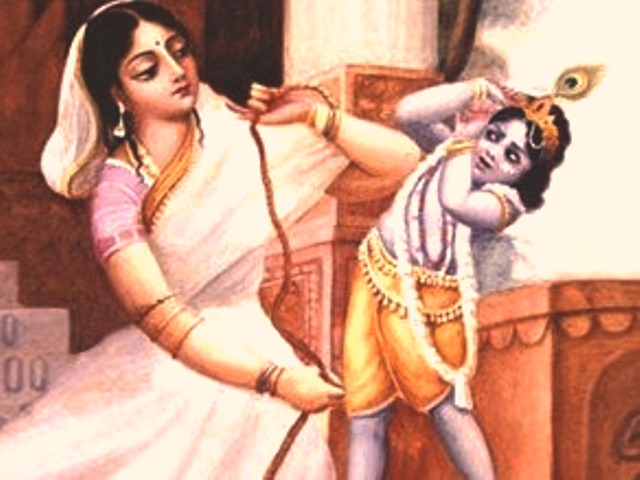
krsna-breaks-the-yogart-pot

Today marks the festival of Dipavali. Dipavali [Diwali} Sunday, October 30, 2016 [Mayapura, West Bengal, India time]. The Dīpāvalī festival takes place on the dark-moon night in the month of Kārttika (October-November).

Diwali or Deepavali is the Hindu festival of lights celebrated every year in autumn in the northern hemisphere (spring in southern hemisphere) is one of the major festivals of Hinduism. It spiritually signifies the victory of light over darkness, good over evil, knowledge over ignorance, and hope over despair. Its celebration includes millions of lights shining on housetops, outside doors and windows, around temples and other buildings in the communities and countries where it is observed. The festival preparations and rituals typically extend over a five-day period, but the main festival night of Diwali coincides with the darkest, new moon night of the Hindu Lunisolar month Kartika in Bikram Sambat calendar. (excerpted from Wikipedia)

Although we do not celebrate in typical Hindu fashion, we do honor Dipavli as Srila Prabhupada has explained that the actual meaning of Dipavali celebration is Lord Krsna breaking the pot of yogurt and being bound by Yasodamayi.

Srila Prabhupada Explains Dipavali (Diwali)

…Śrīla Viśvanātha Cakravartī Ṭhākura, quoting from the Vaiṣṇava-toṣaṇī of Śrīla Sanātana Gosvāmī, says that the incident of Kṛṣṇa’s breaking the pot of yogurt and being bound by mother Yaśodā took place on the Dipavali Day, or Dīpa-mālikā. Even today in India, this festival is generally celebrated very gorgeously in the month of Kārtika by fireworks and lights, especially in Bombay. It is to be understood that among all the cows of Nanda Mahārāja, several of mother Yaśodā’s cows ate only grasses so flavorful that the grasses would automatically flavor the milk. Mother Yaśodā wanted to collect the milk from these cows, make it into yogurt and churn it into butter personally, since she thought that this child Kṛṣṇa was going to the houses of neighborhood gopas and gopīs to steal butter because He did not like the milk and yogurt ordinarily prepared. (from purport to SB 10.9.1-2)

Full text and Purport More

108 Imporant Slokas from the 1972 Bhagavad-gita As It Is

Click on image to go to Post

Click on image to go to Post

The Hare Krishna Cookbook

Songs of the Vaisnava Acaryas

Bhagavad-gita As It Is 1972 Edition “Online”

click on image

click on image to visit site

Srimad Bhagavatam Online

click on image

Raja-Vidya the King of Knowledge

click on image

click on image

Blog Stats

  • 4,899,616 hits

Enter your email address to subscribe to this blog and receive notifications of new posts by email.

Join 3,888 other subscribers

Important Slokas from the Brahma-samhita

click on image

click on image

Slokas from the Sri Isopanisad

click on image

click on image

Prayers By Queen Kunti (Slokas)

click on image

Gajendra’s Prayers of Surrender (Slokas)

click on image

A Short Statement of the Philosophy of Krishna Consciousness

click on image

click on image

July 9th Letter

click on image

click on image

The Hare Krishna Explosion

Reference Material/Study Guide

click on image

click on image

  • LINKS