Krsna’s Scent

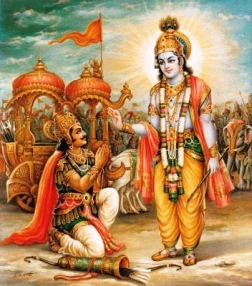
” ‘The scent of Kṛṣṇa’s transcendental body surpasses the aroma of musk and attracts the minds of all women. The eight lotus like parts of His body distribute the fragrance of lotuses mixed with that of camphor. His body is anointed with aromatic substances like musk, camphor, sandalwood and aguru. O My dear friend, that Personality of Godhead, also known as the enchanter of Cupid, always increases the desire of My nostrils.’

Sri-Caitanya-caritamrta 1975 Edition
By His Divine Grace A.C. Bhaktivedanta Swami Prabhupada
Antya 19 Text 88-106
The Inconceivable Behavior of Lord Sri Caitanya Mahaprabhu

The entire garden was filled with the scent of Lord Śrī Kṛṣṇa’s transcendental body. When Srī Caitanya Mahāprabhu smelled it, He fell unconscious at once.

The scent of Kṛṣṇa’s body, however, incessantly entered His nostrils, and the Lord became mad to relish it.

Śrīmatī Rādhārāṇī expressed to Her gopī friends how She hankers for the transcendental scent of Kṛṣṇa’s body. Śrī Caitanya Mahāprabhu recited that same verse and made its meaning clear.

More

With Srila Prabhupada in Vrndavana

“We should try to make Krsna happy like the gopis of Vrndavana. In Vrndavana everyone is trying to please Krsna—the birds, trees, cows, the river and all His associates. It is not that Vrndavana is only here. We can have Vrndavana everywhere. Krsna is not limited. We should not think that Krsna is far away in Goloka Vrndavana and cannot accept food from us. If you offer food with love, Krsna eats. Krsna does not leave Goloka Vrndavana, but His expansion goes and accepts food. This Vrndavana, which so happens to appear in India, is as worshipable as Krsna. As Krsna is worshipable, His dhama [residence] is also worshipable. So we cannot offend His dhama. If we live in Vrndavana, we are living with Krsna, for Vrndavana is nondifferent from Krsna. There is no difference between the original Vrndavana and this Vrndavana. Vrndavana is so powerful.”

With Srila Prabhupada in Vrndavana
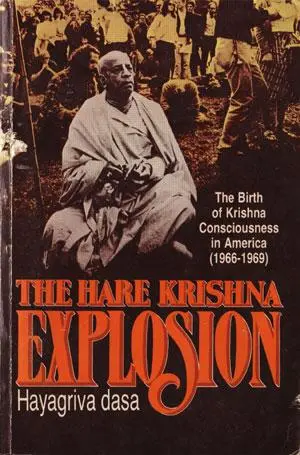
By Hayagriva Dasa

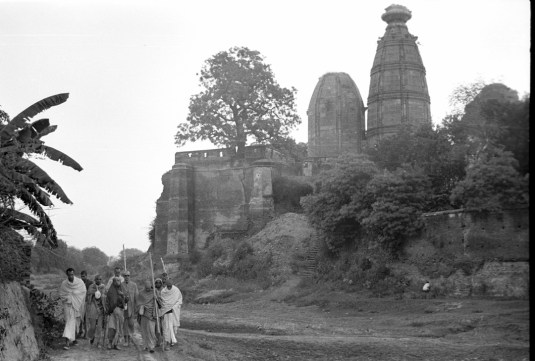
Vrndavana, India, the land of Krsna five thousand years after the disappearance of the Supreme Person, is invaded by eighty American and European disciples of Srila Prabhupada. The white and saffron robed pilgrims arrive in Vrndavana for Karttika, a celebration of Krsna’s rasa dance with the cowherd girls (gopis) of Vrndavana. Yearly, Vrndavana is crowded with Karttika pilgrims from October 15th to November 15th, the best time of year for Vrndavana, a month of clear, pleasant days and cool nights.

Vrndavana is approached by train from Delhi to Mathura, about ninety miles to the Southeast of Delhi. From Mathura, one takes a bus some eight miles to the village of Vrndavana bordered on three sides by the holy River Yamuna. As a cowherd boy, Krsna sported in the Yamuna, and Vaisnavas consider its waters more purifying than the Ganges itself. In Krsna’s time, Vrndavana was a forest, as its name indicates. Today it is a congested holy-town forgotten by the tourist maps, a town of crumbling temples, memories, chanting devotees, filth and poverty-stricken masses. Tourists whiz by it on the Delhi-Agra Express, unaware of passing Krsna’s old abode. Vrndavana was rediscovered by Lord Caitanya Mahaprabhu and His disciples Rupa and Sanatana Gosvami in the early 16th Century. Many magnificent temples were built in honor of Lord Krsna, but despite the sanctity of the place, it has not been kept up.

More

Unity in Diversity


Material nature means dissension and disagreement, especially in this Kali yuga. But, for this Krsna consciousness movement its success will depend on agreement, even though there are varieties of engagements. In the material world there are varieties, but there is no agreement. In the spiritual world there are varieties, but there is agreement. That is the difference. The materialist without being able to adjust the varieties and the disagreements makes everything zero. They cannot come into agreement with varieties, but if we keep Krsna in the center, then there will be agreement in varieties. This is called unity in diversity.

In an October 18, 1973 letter, Srila Prabhupada wrote to Kirtanananda

My Dear Kirtanananda Maharaja:

Please accept my blessings, and I beg to acknowledge receipt of your letter dated October 16, 1973 and I have noted the contents carefully..

Now this displeasing of god brothers has already begun and gives me too much agitation in my mind. Our Gaudiya Math people fought with one another after the demise of Guru Maharaja but my disciples have already begun fighting even in my presence. So I am greatly concerned about it.

Following in the footprints of Lord Caitanya Mahaprabhu:

trnad api su-nicena taror iva sahisnuna
amanina manadena kirtaniya sada harih

“One should chant the holy name of the Lord in a humble state of mind, thinking oneself lower than the straw in the street; one should be more tolerant than a tree, devoid of all sense of false prestige and should be ready to offer all respect to others. In such a state of mind one can chant the holy name of the Lord constantly.”

We must always remember this verse and be as tolerant as the tree, as we execute the Krsna consciousness movement. Without this mentality we cannot be successful.

More

Origin of the Hare Krishna Movement

Lord Sri Krishna Caitanya's Sankirtan Movement


During Sankirtan the learned and the fool, the rich and the poor, the Hindu and the Moslem, the Englishman and the Indian, the common man and the priest—all can give aural reception to the transcendental sound vibration of Hare Krishna, and thereby cleanse the dust from the mirror of the mind.

Origin of the Hare Krishna Movement
By His Divine Grace A.C. Bhaktivedanta Swami Prabhupada

Back to Godhead Magazine Volume 01, Number 20, 1968

Lord Sri Krishna Chaitanya Mahaprabhu, the Great Apostle of love of God and the Father of the Sankirtan Movement, advented Himself in the City of Nabadwipa in Bengal, India. This was in February, 1486, by Christian reckoning.

By the will of the Lord there was a lunar eclipse on that evening. It is the custom of the Hindu public to bathe in the Ganges of any other sacred river during the hours of eclispe, and to chant the Vedic mantras for purification. When Lord Chaitanya was born during the eclipse, then, the whole India was roaring with the holy sound of Hare Krishna, Hare Krishna, Krishna Krishna, Hare Hare/ Hare Rama, Hare Rama, Rama Rama, Hare Hare.

These sixteen Names of the Lord are mentioned in many Puranas and Upanishads, and they are described as “Tarak Brahman,” the Names for this age. It is stated in the “Shashtras,” the accepted Scriptures, that offenseless chanting of the Holy Names of the Lord can deliver a fallen soul from material bondage. There inumerable Names for the Lord both in India and elsewhere, and all of them are equally good because all of them indicate the Supreme Personality of Godhead. But because these sixteen Names are especially recommended for this Age, called Kali Yuga, it is better for people to take the path of the great Acharyas, the saintly teachers who attained success by practice of this system.

More

Srila Prabhupada: The Unique Acarya

Srila Prabhupada: The Unique Acarya
By Sri Yasodanandana Dasa

The unique position of His Divine Grace Srila Prabhupada in the Gaudiya Vaisnava sampradaya is supported as follows:

As the Acarya of his movement-
“I wish that each and every center shall keep the Acarya in the center and keep their separate identity” (1967 letter).

His unique position as the foremost spiritual authority for the golden age-
“My books will be the law books for the next ten thousand years”
(Srila Prabhupada statement in Los Angeles, 1976).

Statement by Locana das Thakura (middle of the 16th century)-
In the Caitanya Mangala the future appearance of a great senapati bhakta who would preach Krishna consciousness all over the world is predicted.

Statement by Sri Caitanya Mahaprabhu-
In the Caitanya-caritamrta the Lord Himself predicts “Prthivite ache yadi nagaradi grama, sarvatra pracara hoibe more nama” (translation: “My holy name will be chanted in every town and village”). Srila Prabhupada fulfilled that prediction by his factual accomplishments.

More

Next Newer Entries

108 Imporant Slokas from the 1972 Bhagavad-gita As It Is

Click on image to go to Post

Click on image to go to Post

The Hare Krishna Cookbook

Songs of the Vaisnava Acaryas

Bhagavad-gita As It Is 1972 Edition “Online”

click on image

click on image to visit site

Srimad Bhagavatam Online

click on image

Raja-Vidya the King of Knowledge

click on image

click on image

Blog Stats

  • 4,565,156 hits

Enter your email address to subscribe to this blog and receive notifications of new posts by email.

Join 3,909 other subscribers

Important Slokas from the Brahma-samhita

click on image

click on image

Slokas from the Sri Isopanisad

click on image

click on image

Prayers By Queen Kunti (Slokas)

click on image

Gajendra’s Prayers of Surrender (Slokas)

click on image

A Short Statement of the Philosophy of Krishna Consciousness

click on image

click on image

July 9th Letter

click on image

click on image

The Hare Krishna Explosion

Reference Material/Study Guide

click on image

click on image

  • LINKS