
Prayers of Queen Kunti
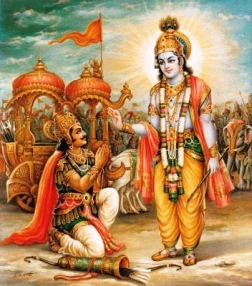
As Kunti approached the Lord’s chariot and began to address Him, her immediate purpose was to persuade Him to remain in Hastinapura and protect the Pandava govemment from reprisals:
O my Lord… are You leaving us today, though we are completely dependent on Your mercy and have no one else to protect us, now when all kings are at enmity with us? (Srimad-Bhagavatam 1.8.37)
From this supplication we should not mistakenly conclude that Kunti’s prayers were self-serving. Although her sufferings were far greater than those any ordinary person could endure, she does not beg relief. On the contrary, she prays to suffer even more, for she reasons that her suffering will increase her devotion to the Lord and bring her ultimate liberation:
My dear Krsna, Your Lordship has protected us from the poisoned cake, from a great fire, from cannibals, from the vicious assembly, from sufferings during our exile in the forest, and from the battle where great generals fought…. I wish that all those calamities would happen again and again so that we could see You again and again, for seeing You means that we will no longer see repeated births and deaths. (SB. 1.8.24-25)
Kunti’s words — the simple and illuminating outpourings of the soul of a great and saintly woman devotee — reveal both the deepest transcendental emotions of the heart and the most profound philosophical and theological penetrations of the intellect. Her words are words of glorification impelled by a divine love steeped in wisdom: O Lord of Madhu, as the Ganges forever flows to the sea without hindrance, let my attraction be constantly drawn unto You without being diverted to anyone else. (SB. 1.8.42)

Let There Be Calamities
“I wish that all those calamities would happen again and again so that we could see You again and again, for seeing You means that we will no longer see repeated births and deaths.” [SB 1.8.25]
Therefore Kuntidevi says, vipadah santu: “Let there be calamities.” Vipadah santu tah sasvat: “Let all those calamities happen again and again.” Because she knows how to remember Krishna at times of danger, she is welcoming danger. “My dear Lord,” she says, “I welcome dangers, because when dangers come I can remember You.”
O Krishna, those who continuously hear, chant and repeat Your transcendental activities, or take pleasure in others’ doing so, certainly see Your lotus feet, which alone can stop the repetition of birth and death.



 The Hare Krishna Movement